MONTREAL — A former Deep Sky executive said the company’s method of carbon reduction is too slow and costly to have any significant effect on climate change.
Skip to content

News
Former Deep Sky exec claims firm’s carbon removal tech is too slow and expensive
The Montreal-based firm plans to suck carbon out of the atmosphere to try and fight climate change. A former senior executive says its technology isn’t up to the task.
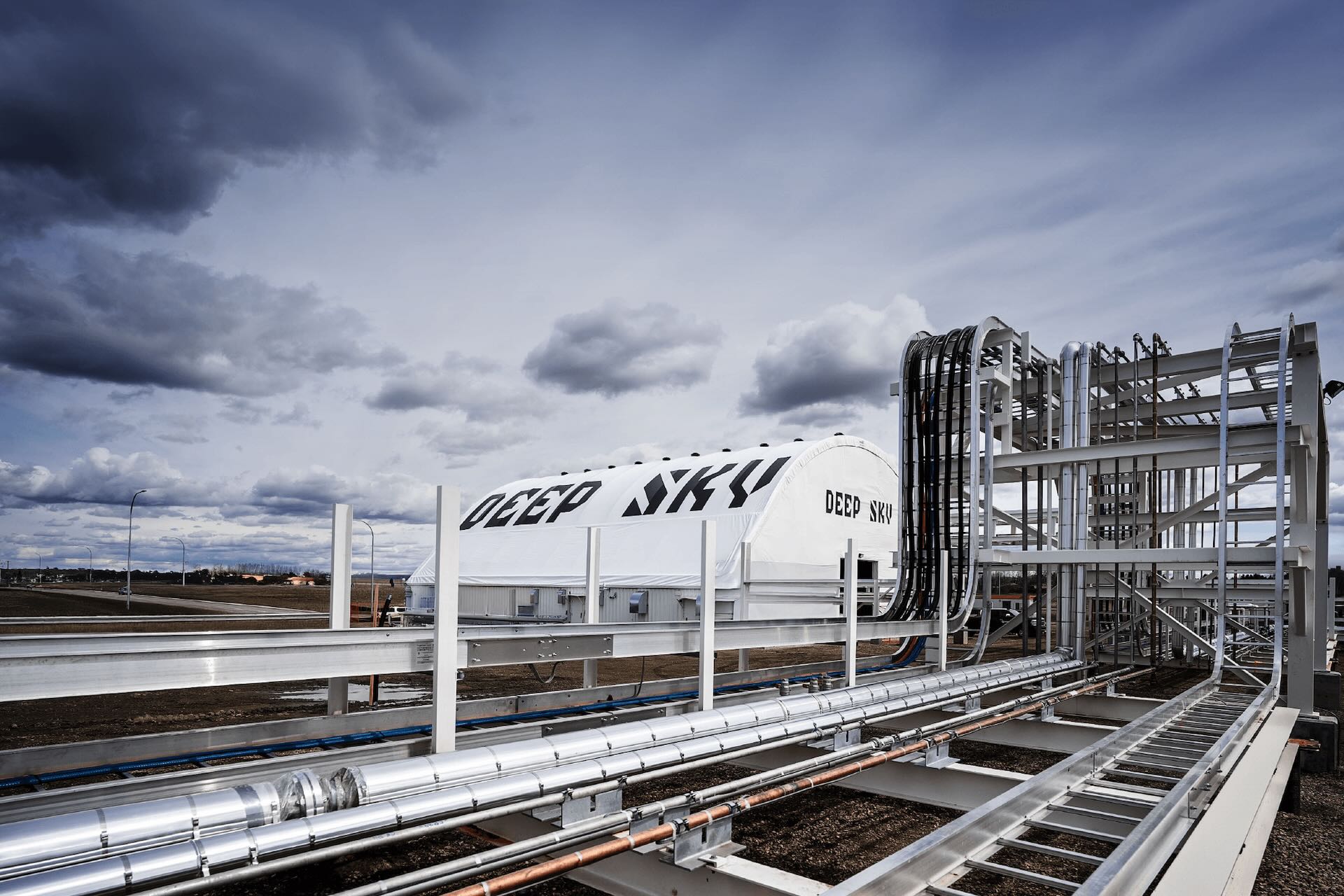
Deep Sky’s Alpha facility in Innisfail, Alta. The Montreal-based firm plans to test an array of direct air capture technologies at the site, located about 100 kilometres north of Calgary. Photo: Deep Sky/Handout
MONTREAL — A former Deep Sky executive said the company’s method of carbon reduction is too slow and costly to have any significant effect on climate change.
Phil De Luna, who left in July after two years at the company as head of engineering and chief commercial and science officer, told The Logic that Deep Sky’s plan to suck carbon from the atmosphere, a process known as direct air capture, also lacked significant revenue streams to make it economically viable.
Talking Points
- Former Deep Sky executive Phil De Luna said direct air capture lacks revenue streams beyond carbon credits
- Cura, De Luna’s new greentech venture, aims to capture carbon from the cement production process at the source
Since leaving Deep Sky, De Luna has founded Cura, a greentech startup that is developing technology to remove carbon from the cement curing process. The Vancouver-based firm, which emerged from stealth today, is currently raising a seed round. “I felt that I could probably make a bigger impact on industrial carbon emissions” with Cura, De Luna said.
Co-founded by Hopper co-founder Frederic Lalonde in 2022, Montreal-based Deep Sky brought its first direct air capture test facility online in Alberta in August, and more recently announced plans to build a plant in Manitoba.
Related Articles

Yet the company has faced questions about using direct air capture as a means of atmospheric carbon reduction. The process remains expensive, while Lalonde has been vague about the sources of electrical power needed for the energy-intensive process. “The only revenue-generating model [for direct air capture] is carbon credits, which are a tough sell in today’s environment,” De Luna said.
Deep Sky spokesperson Brooks Wallace didn’t respond to a request for comment.
De Luna co-founded Cura with CEO Erin Bobicki, COO Sabrina Scott and science advisor Curtis Berlinguette. The company’s proprietary technology uses electricity to remove carbon dioxide from lime, a key material used in cement production—and a major source of the atmosphere warming gas, which accounts for roughly eight per cent of global carbon emissions.
Cura says its technology can be retrofitted to existing cement plants at a cost of $200 million for a 500,000-tonne-per-year system. De Luna said the company plans to build its first test facility in Alberta, and is in negotiations to sell its tech to a large cement producer in the province.
Bobicki said the firm is also looking at building out facilities to produce decarbonized limestone to sell to cement companies at a similar price to the carbon-heavy version. “There’s $4 trillion of sunk assets in the cement industry, so why would you walk away from that if you can decarbonize what’s existing at a lower cost point?” Bobicki said.
Cura is considering Canadian and European funds as co-leads in its seed round, De Luna said.



Loading...
Thanks for sharing!
You have shared 5 articles this month and reached the maximum amount of shares available.
CloseThis account has reached its share limit.
If you would like to purchase a sharing license please contact The Logic support at [email protected].
CloseGift the full article!
You have gifted 0 article(s) this month and have 5 remaining.
Recipients will be able to read the full text of the article after submitting their email address. They will not have access to other articles or subscriber benefits.
Photo: Deep Sky/Handout
Most Popular This Week




In-depth, agenda-setting reporting
Great journalism delivered straight to your inbox.
The Big Read
Beacon is building an AI empire by fixing Main Street’s software
Briefing
Inovia raises US$200M for new VC fund as it eyes AI’s impact
43% of eligible Albertans voted ahead of Monday’s referendum
AI chip company Tenstorrent raises US$1.5B, valuing it at US$6.2B
Best business newsletter in Canada
Get up to speed in minutes with insights and analysis on the most important stories of the day, every weekday.
Exclusive events
See the bigger picture with reporters and industry experts in subscriber-exclusive events.
Membership in The Logic Council
Membership provides access to our popular Slack channel, participation in subscriber surveys and invitations to exclusive events with our journalists and special guests.