SASKATOON — Alberta Premier Danielle Smith believes Mark Carney is serious about constructing an oil pipeline to the North Coast of B.C., but says the prime minister must do more than speed up approvals to get anyone besides the federal government to build and pay for it.
Skip to content


News
Danielle Smith wants Ottawa to do more to attract private investment in a new pipeline
Government support alone won’t get oil flowing to B.C.’s North Coast, the Alberta premier tells The Logic
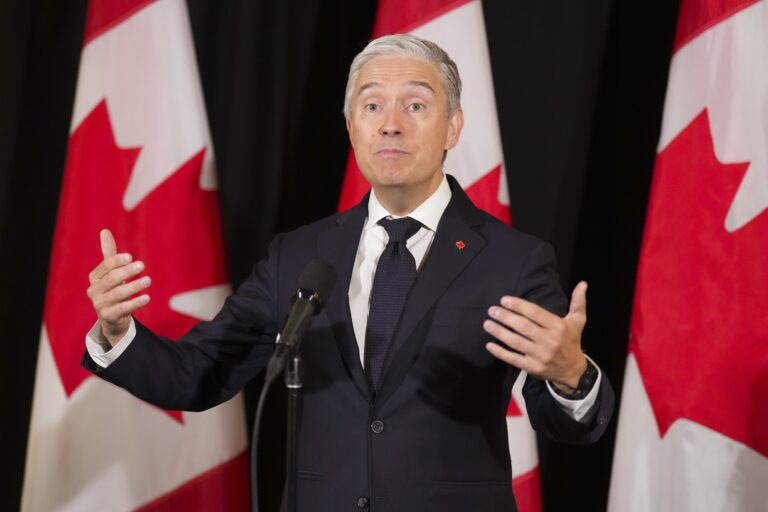
Alberta Premier Danielle Smith says a new pipeline project would require private investment to succeed. Photo: The Canadian Press/Liam Richards
SASKATOON — Alberta Premier Danielle Smith believes Mark Carney is serious about constructing an oil pipeline to the North Coast of B.C., but says the prime minister must do more than speed up approvals to get anyone besides the federal government to build and pay for it.
“That’s going to be a necessary condition if he wants to have private sector investment in these kinds of projects,” Smith said in an interview with The Logic on Monday after the premiers wrapped up their meeting with Carney in Saskatoon.
Talking Points
- Premier Danielle Smith believes Prime Minister Mark Carney is serious about increasing Alberta oilsands producers’ access to Asian markets with a pipeline to the North Coast of B.C., but urged him to overhaul Liberal climate policies to attract private investors
- Smith suggested Carney’s actions will determine whether Albertans want to go ahead with potential referendum on separation next year
Smith went into the meeting with a big demand, and warnings of even bigger consequences if Ottawa and the other provinces do not meet it. Smith urged Carney to include a bitumen pipeline to Prince Rupert, B.C., on the list of “nation-building projects” to be fast-tracked to help strengthen Canada’s economy under threat from U.S. President Donald Trump. “Failure to have an oil pipeline on the initial list will perpetuate current investment uncertainty and send an unwelcome signal to Albertans concerned about Ottawa’s commitment to national unity,” she wrote in a May 16 letter to Carney.
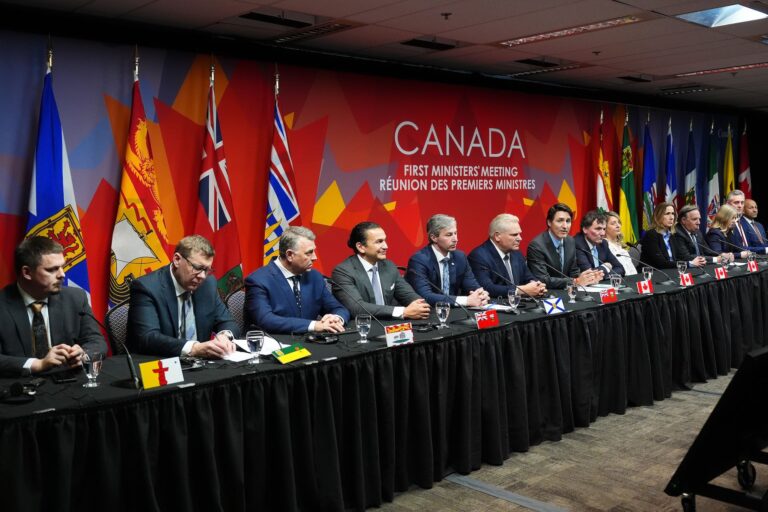
The premiers did not settle their list by the end of Monday’s meeting, but Carney said they discussed creating a western and Arctic trade and energy corridor that could include “an oil pipeline to get to tidewater.” He specified it would be in the national interest to move decarbonized oil and gas through any such pipeline and stressed that the concept of a corridor is bigger than any one project. Besides, the federal government is not the only one to win over. Before the meeting, B.C. deputy premier Niki Sharma told reporters her province and Alberta have “a difference of opinion” about whether a pipeline should go to northern B.C. Still, Carney said “there’s real potential there”; if the idea firms up, Ottawa would look to advance it, he said.
The Alberta premier took the win. Lasting success, she said, will require Ottawa to take other steps crucial to attracting private investment to turn her priority into a real project: overhauling or abandoning climate policies the Liberals brought in under former prime minister Justin Trudeau that she and oil and gas executives say are getting in the way.
Related Articles
“You can’t build a pipeline to the northwest coast and still have a tanker ban. You cannot have an emissions cap that is so aggressive that companies would have to shut [operations] in order to achieve it. You can’t have enthusiasm to export natural gas and win the AI data war and then have punitive policies against natural gas on your electricity grid,” she said in the interview. “We’re either going to be an energy superpower on all fronts, or we’re not.”
Smith said there are many different ways to reach net-zero emissions—a target Alberta has set for 2050. “I think that there are some who think the only way to do it is with wind and solar and batteries,” she said, but she argued Alberta has shown it can also do it with carbon sequestration. At the joint press conference with Carney and the premiers Monday, Smith described “a grand bargain” that would involve Ottawa fast-tracking both a pipeline carrying bitumen to Prince Rupert and a $16.5-billion carbon capture and storage project championed by Pathways Alliance, a consortium of major oilsands producers.
“We’re either going to be an energy superpower on all fronts, or we’re not”
Last week, the head of Trans Mountain Corp. said the Crown corporation is ready to back more pipeline projects in the absence of a private investor. “If that can’t happen, and it’s in the national interest, Trans Mountain is here,” CEO Mark Maki told The Canadian Press. The federal government bought the pipeline from Kinder Morgan for $4.5 billion in 2018 after years of regulatory delays prompted the U.S.-based energy company to suspend work on an expansion. The cost had skyrocketed to $34 billion by the time the new part of the pipeline began moving Alberta crude to B.C., from where it can reach Asian markets. Smith wants to avoid a repeat.
“I don’t think it will be successful if the federal government has to build another pipeline,” she said. “I think that will be a demonstration that we didn’t get the fundamentals right. And I want to see both. I’d like to see a project get a fast track, but I’d also like to get the fundamentals right.”
Smith emerged from the meeting saying she was “encouraged by the immediate change of tone” from Ottawa, pointing out that Carney talked about Canada becoming an energy superpower. That was a noticeable change from her own tone in mid-January, when Smith refused to add her name to the joint statement from a premiers’ meeting with Trudeau, citing Ottawa’s refusal to rule out restrictions on energy exports from possible retaliation against Trump’s tariffs.
Still, Smith is not about to stop linking the federal government’s treatment of the Alberta oil and gas sector to the greater issue of national unity. The day after the federal election, her government introduced legislation that lowered the threshold for citizen-led democracy initiatives. It received royal assent on May 15. Smith said she would prefer to negotiate a better deal with Ottawa, but committed to holding a referendum on Alberta separation next year if supporters gather the 177,000 signatures needed to trigger one.
The Logic asked Smith what she would say to businesses nervous to invest in Alberta during a time of such political uncertainty in the province. She shifted responsibility to the federal government and its new prime minister. “As long as Ottawa is treating Alberta unfairly, there’s always a danger that those sentiments are going to flare up, but there’s an easy way to solve it: Just treat Alberta fairly. Just allow Alberta to develop its resources,” she said. “The ball really is in Mark Carney’s court.”



Loading...
Thanks for sharing!
You have shared 5 articles this month and reached the maximum amount of shares available.
CloseThis account has reached its share limit.
If you would like to purchase a sharing license please contact The Logic support at [email protected].
CloseGift the full article!
You have gifted 0 article(s) this month and have 5 remaining.
Recipients will be able to read the full text of the article after submitting their email address. They will not have access to other articles or subscriber benefits.
Photo: The Canadian Press/Liam Richards
Most Popular This Week



In-depth, agenda-setting reporting
Great journalism delivered straight to your inbox.
News
India wants to buy less Canadian uranium. Canada’s nuclear lab is helping
Briefing
Aritzia shares pop after earnings rise 204%
First Nation in Alberta goes to court over fast-tracked oil pipeline
Chinese EV maker Geely Auto Group to launch in Canadian market in 2027
Best business newsletter in Canada
Get up to speed in minutes with insights and analysis on the most important stories of the day, every weekday.
Exclusive events
See the bigger picture with reporters and industry experts in subscriber-exclusive events.
Membership in The Logic Council
Membership provides access to our popular Slack channel, participation in subscriber surveys and invitations to exclusive events with our journalists and special guests.