OTTAWA — The Canada Revenue Agency plans to collect money under the capital gains tax hike announced in the last federal budget even though the Liberals have failed to get the new policy through Parliament.
Skip to content


News
CRA going ahead with capital gains hike despite lack of legislation
Parliament prorogued before the tax change passed. Could Ottawa be forced to give money back?
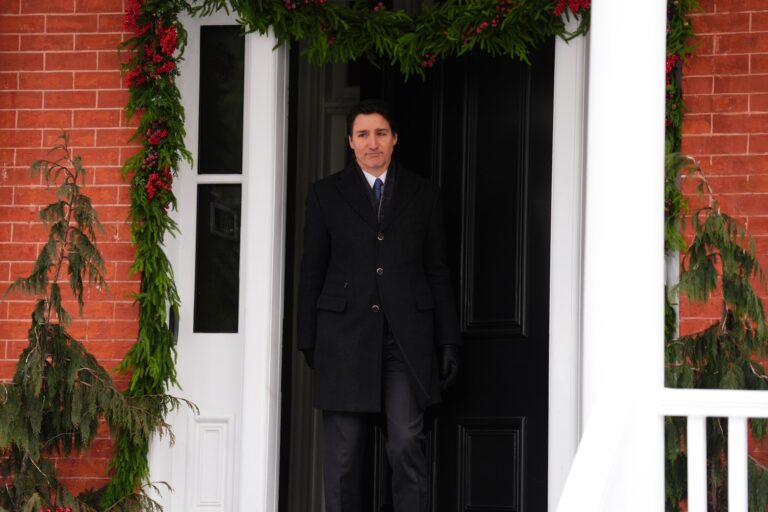
Photo: The Canadian Press/Sean Kilpatrick
OTTAWA — The Canada Revenue Agency plans to collect money under the capital gains tax hike announced in the last federal budget even though the Liberals have failed to get the new policy through Parliament.
Prime Minister Justin Trudeau announced his plans on Monday to resign and asked the Governor General to prorogue Parliament while the Liberals look for a new leader.
Talking Points
- Changes to the capital gains tax took effect in June, but the Liberal minority government failed to pass the supporting legislation in the House of Commons
- The Canada Revenue Agency, citing parliamentary convention, says it’s collecting the money anyway
- Uncertainty about the changes has rekindled calls from investment leaders to scrap them and raised questions about possible restitution if the bill never passes
The new tax policy came into effect in June, prompting companies and individuals to start remitting portions of capital gains that fell under the revised rules. Trudeau’s decision to prorogue, however, will send the process to ratify the change back to square one in the House of Commons when Parliament resumes in late March.
While it’s still technically possible, odds are very low that the legislation will make it through the House of Commons before a confidence vote triggers an election.
“Parliamentary convention dictates that taxation proposals are effective as soon as the government tables a Notice of Ways and Means Motion; this approach provides consistency and fairness in the treatment of all taxpayers,” Finance Department spokesperson Benoit Mayrand said in a statement Tuesday.
“In the event that Parliament is prorogued, or dissolved, the CRA will generally continue to administer proposed legislation consistent with its established guidelines.”
The Canadian Federation of Independent Business, which has long opposed the change, said it disagrees with the CRA.
“We will be talking to a few experts on the legality of CRA’s approach. My gut tells me this is in a grey area and a case can be made either way,” the group’s president Dan Kelly said in a statement Tuesday.
The federation will have to weigh the pros and cons of taking legal action, he said.
Related Articles

Investment and capital markets firms contacted by The Logic said companies have been remitting funds on the assumption the new measures would pass into law.
Failure to pay the tax outright can lead to penalties and interest on the amount owed to the CRA.
If the CRA keeps collecting, though, the status of the billions of additional dollars the government expects the changes to bring in this year will be uncertain.
“I’m just not sure what happens if this never passes. Does the government open itself up to a lawsuit because things have gone up in value?” said Greg Taylor, chief investment officer at Toronto-based Purpose Investments.
The CRA says it doesn’t have the data to determine how much money has already been collected under the new policy, and the Finance Department did not respond to a request for the information.
Nor did the department answer questions about whether the money collected would be returned if the policy never becomes law.
Mayrand did say the agency would “cease to administer” the new rules if no bill is passed when the House resumes sitting and if “the government signals its intent to not proceed with the proposed measures.”
Retroactive tax policy is common practice in Canada, though politicians and policy makers have warned of its pitfalls for decades.
The Supreme Court in 1989 ruled taxes collected unconstitutionally couldn’t be given back citing the “fiscal chaos” it would create, renowned constitutional expert Peter Hogg wrote in 2008.
That changed with a Supreme Court ruling in the 2007 case of Kingstreet Investments, which saw New Brunswick pay back all “user fees” charged to night clubs licensed to sell liquor.
“Kingstreet decides that taxes levied without statutory authority are recoverable by the taxpayer as a matter of constitutional right,” Hogg wrote.
The Liberal minority government’s April budget proposed to increase the inclusion rate on capital gains from one-half to two-thirds for corporations and trusts, and on individual’s gains over $250,000.
They billed the changes as a Robin Hood-esque campaign to tax high-earning investments and use the money to fund programs to improve affordability for younger Canadians.
The $19.4 billion the government expected the new policy to net the treasury over five years was also key to former finance minister Chrystia Freeland’s goal of reducing the federal debt-to-GDP ratio.
Whether the government is able to keep the money it collects will depend on the political machinations of the next few months.
The Liberals could put the change back on the legislative agenda when Parliament resumes, but the Conservatives and the NDP have vowed to topple the government at the first opportunity.
That means the issue will likely be decided during the next election.
Conservative finance critic Jasraj Singh Hallan said a Tory government would oppose the capital gains tax changes and instead bring in a series of tax cuts on “work, hiring and production.”
The “haphazard and uncertain” progress doesn’t inspire much confidence when it comes to attracting foreign investment to Canada, Taylor said.
“It just feels like it’s something that starts to be more of a punishment to innovation and entrepreneurship—which is not what you want when the country is not really growing as much as we like,” he said.
The policy limbo started in the spring, when the government chose to separate the tax change from an omnibus bill that contained the rest of the proposals from the budget. The idea was to force the Conservatives and their leader, Pierre Poilievre, to take a public position on the tax hikes for high earners.
The Liberals took that approach a step further in October when they planned to put the tax changes to a confidence vote. The House ground to a halt shortly after—along with the legislative process.
“People have been making investing decisions based on that, and it’s not formal,” said John McKenzie, chief executive of TMX, the company that oversees the Toronto Stock Exchange and the TSX Venture Exchange.
The plan to increase the inclusion rate was panned from the get-go by business groups, venture capitalists and start-up executives, who argue it will discourage investment and drive entrepreneurs out of the country.
Those criticisms have intensified in light of U.S. president-elect Donald Trump’s promise to cut domestic taxes while slapping severe tariffs on Canadian goods—policies intended to drive investment and manufacturing south of the border.
“It was a bad idea when announced, it’s a worse idea now,” McKenzie said of Canada’s capital gains changes. “We’ve got a new finance minister coming in … take the opportunity to relook it.”
Dominic LeBlanc, who took over the finance portfolio when Freeland quit cabinet in December, did not respond to a request for comment.
With files from Kevin Carmichael



Loading...
Thanks for sharing!
You have shared 5 articles this month and reached the maximum amount of shares available.
CloseThis account has reached its share limit.
If you would like to purchase a sharing license please contact The Logic support at [email protected].
CloseGift the full article!
You have gifted 0 article(s) this month and have 5 remaining.
Recipients will be able to read the full text of the article after submitting their email address. They will not have access to other articles or subscriber benefits.
Photo: The Canadian Press/Sean Kilpatrick
Most Popular This Week




In-depth, agenda-setting reporting
Great journalism delivered straight to your inbox.
The Big Read
Alberta’s referendum is just the start of the turmoil
Briefing
EverWind plans $10B data centre and wind development in Nova Scotia
Canada ready to force Stelco to sell its Canadian operations, Joly says
Feds plan a 60 MW defence-oriented data centre for Ottawa
Best business newsletter in Canada
Get up to speed in minutes with insights and analysis on the most important stories of the day, every weekday.
Exclusive events
See the bigger picture with reporters and industry experts in subscriber-exclusive events.
Membership in The Logic Council
Membership provides access to our popular Slack channel, participation in subscriber surveys and invitations to exclusive events with our journalists and special guests.






