China issued a set of new restrictions and warnings against the country’s tech sector and capital markets Monday. The announcements are part of the government’s intensifying efforts to rein in the private-sector’s influence following years of unbridled growth. Here’s what you need to know:
Skip to content
News
China’s crackdowns ‘continue cascading’ with curbs on children’s gaming, private equity
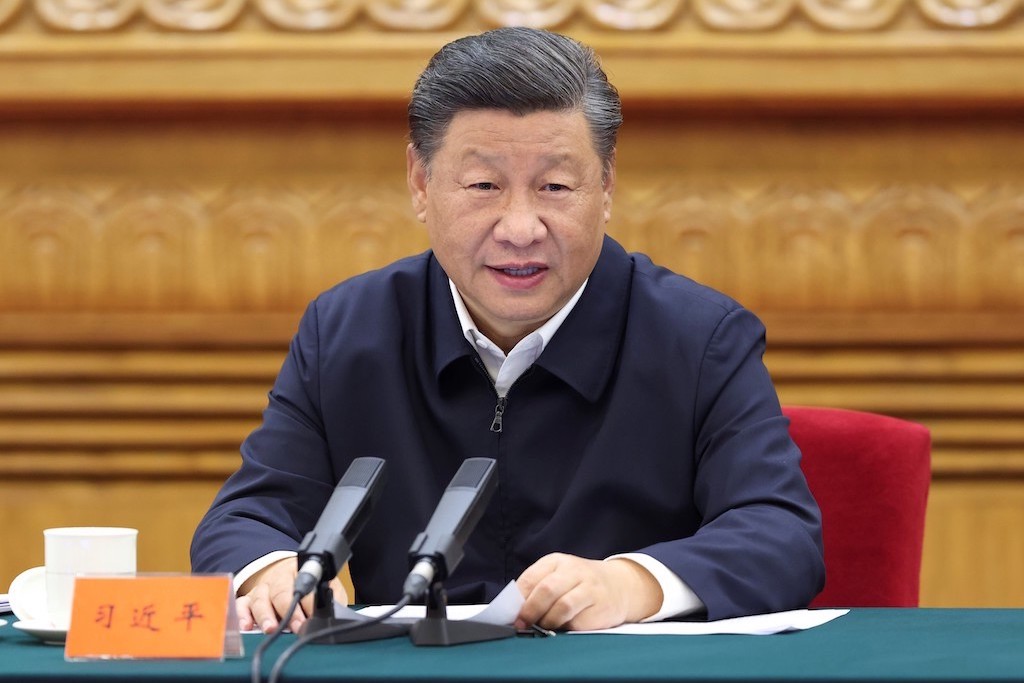
Chinese President Xi Jinping in Beijing in August 2021. Photo: Pang Xinglei/Xinhua via Getty Images
China issued a set of new restrictions and warnings against the country’s tech sector and capital markets Monday. The announcements are part of the government’s intensifying efforts to rein in the private-sector’s influence following years of unbridled growth. Here’s what you need to know:
“Private equity” on notice: China’s top securities regulator said the government plans to root out venture capital and buyout funds that are being pitched as investment vehicles for the general public. The move is meant to curb embezzlement in the industry. It follows Beijing’s earlier pledge to bar private equity funds from raising money to invest in residential real estate developments, in a bid to stymie illegal capital flowing into the heated market.
Game over: School-aged kids are also feeling the government’s wrath. The National Press and Publication Administration issued strict new rules limiting minors to three hours of video gaming a week. It will be completely banned from Monday to Thursday, leaving minors to play just one hour a day—from 8 p.m. to 9 p.m.—on Friday, Saturday, Sunday and public holidays. Gamers subject to the regulations will have to connect to a government-operated “anti-addiction” system using their real names and government-issued ID. China’s state-run news agency Xinhua said the rules, which take effect Wednesday, are meant to “effectively protect the physical and mental health of minors.”
“The earlier wide growth of internet platforms is gone forever,” Winston Ma, an adjunct professor of law at New York University focused on the global digital economy and a founding partner of CloudTree Ventures, told The Logic. “This will weigh heavily on the outlook for profits and valuations of the internet sector in China.”
The back story: China’s private sector is in the midst of a broad government crackdown, touching on everything from data privacy to private tutoring to antitrust issues. It started last November, with the Shanghai Stock Exchange suspending the public listing of Jack Ma’s fintech Ant Group. Since then, several high-profile tech firms, including ride-hailing company Didi and e-commerce giant Alibaba, have faced investigations and fines, while Beijing has also issued and announced plans for a string of more general laws to curb the sector’s autonomy. Ma said he doesn’t expect the clampdown to relent any time soon. “I would say it is risky at this point to bet that the Chinese regulators’ lawmaking is coming to the final phase for the internet industry that had little regulation last decade.”
The market reaction: The steady stream of regulations and warnings triggered a steep sell-off of Chinese tech stocks in recent months. The market rallied Monday (Shenzhen-based video-game titan Tencent not included), as some investors jumped at buying opportunities in newly discounted tech stocks.
Meanwhile, billionaire investor George Soros warned against funneling cash into Chinese stocks that may not meet environmental, social and governance standards and which are volatile right now. Chinese President Xi Jinping “regards all Chinese companies as instruments of a one-party state,” Soros wrote in a Financial Times op-ed. “Investors buying into the rally are facing a rude awakening.” In the article, Soros called out BlackRock, the world’s largest asset manager, and index maker MSCI for including Chinese firms in their ESG indices and promoting their stocks to investors.



Loading...
Thanks for sharing!
You have shared 5 articles this month and reached the maximum amount of shares available.
CloseThis account has reached its share limit.
If you would like to purchase a sharing license please contact The Logic support at [email protected].
CloseGift the full article!
You have gifted 0 article(s) this month and have 5 remaining.
Recipients will be able to read the full text of the article after submitting their email address. They will not have access to other articles or subscriber benefits.
Photo: Pang Xinglei/Xinhua via Getty Images
Most Popular This Week




In-depth, agenda-setting reporting
Great journalism delivered straight to your inbox.
News
Ottawa is softening its ban on stablecoin yield
Briefing
Rio Tinto gets nearly $165M in additional federal funds for Quebec aluminum
U.S. to lift tariffs on some Canadian products crucial to Maine: Collins
Carney warns of tech dependence after Starlink disruptions in Ukraine
Best business newsletter in Canada
Get up to speed in minutes with insights and analysis on the most important stories of the day, every weekday.
Exclusive events
See the bigger picture with reporters and industry experts in subscriber-exclusive events.
Membership in The Logic Council
Membership provides access to our popular Slack channel, participation in subscriber surveys and invitations to exclusive events with our journalists and special guests.






