OTTAWA — As the Canadian military tries to instill “character” in its recruits, it’s taking a lesson from unexpected places: Apple stores.
Skip to content
 Gen. Wayne Eyre, Canada's chief of defence staff, salutes a graduating class at the Royal Military College in Kingston, Ont., in May 2022. Photo: The Canadian Press/Lars Hagberg

News
Genius Bar fix: Canada’s military looks to Apple on building ‘character’ in ranks
Values and ideals come first for tech giant when training recruits, notes briefing to minister
Gen. Wayne Eyre, Canada's chief of defence staff, salutes a graduating class at the Royal Military College in Kingston, Ont., in May 2022. Photo: The Canadian Press/Lars Hagberg
OTTAWA — As the Canadian military tries to instill “character” in its recruits, it’s taking a lesson from unexpected places: Apple stores.
The problem: Top soldier Gen. Wayne Eyre and the deputy minister who leads the civilian side of the Department of National Defence have “recognized that there exists a gap between the culture that is espoused in the Canadian Armed Forces and the Department of National Defence and that which is practised,” said a briefing prepared for Eyre last August, which The Logic obtained through an access-to-information request.
The military has made structural changes following years of scandals over bad conduct in its ranks, following recommendations from separate investigations by former Supreme Court justices Marie Deschamps, Morris Fish and Louise Arbour. Defence Minister Bill Blair took the latest step Thursday, introducing a bill to overhaul the military justice system to try to address its failures in dealing with sexual offences.
Talking Points
- After years of trying structural fixes to deal with misconduct and assaults in its ranks, the Canadian military has decided it needs to emphasize “character” in the people it recruits, trains and promotes
- Senior officers and staff pointed the chief of the defence staff, Gen. Wayne Eyre, to Apple’s retail stores for an example of how to emphasize character with new hires and recruits from their first hours
Despite all that, “there is no coherent plan in place for embedding character across Defence Team policies and processes and coordinating its implementation,” the briefing said.
Looking for solutions: To close the gap between words and deeds, the military needs to “systematically and strategically embed” its ideals of good character in everything it does, the note said, from recruitment to training to promotions to the way leaders model good behaviour.
Thinking different: The briefers pointed to Apple, and particularly its retail operations, for an example to consider in how the Canadian Forces train new recruits.
Apple stores’ culture has been examined in public a lot. More recent coverage suggests it’s not necessarily what it used to be, but (despite early naysaying) it’s played a part in Apple’s growth from near extinction to one of the world’s most valuable companies.
“Instead of starting with the skills necessary to generate revenue for the organization, Apple starts by teaching their team members how to operate in the Apple environment and how to interact with their customers and co-workers with empathy, curiosity and humility (i.e., with character),” Eyre’s briefing said. Practically any employer has some sort of orientation for new people, but the focus at Apple is “to develop an association with the culture and values above all else.”
Related Articles
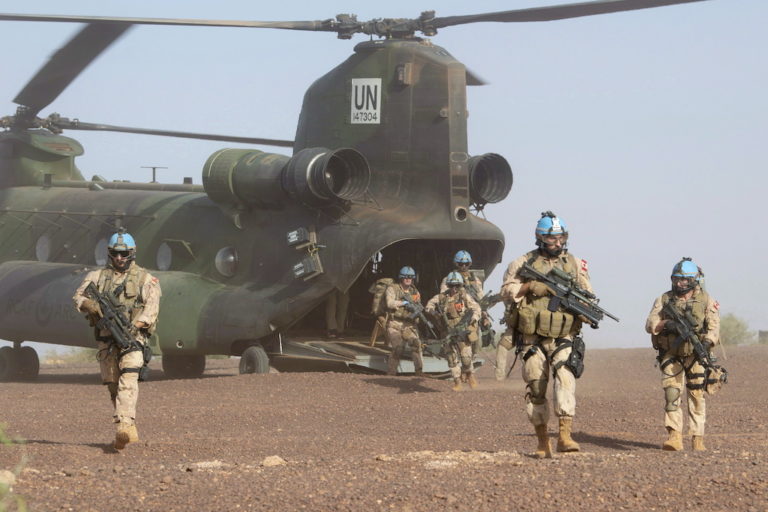

The military could do that in training new officers and non-commissioned officers, the briefing said. Civilian employees aren’t ordinarily onboarded in groups, but that side of the team could hold regular workshops to make sure new hires get character instruction within three months of starting.
Execution: The Canadian Forces put a version of this recommendation into action last month, National Defence spokesperson Andrée-Anne Poulin told The Logic in an email. The military has a five-segment training program on conduct and culture, she wrote, and “as of February 2024, character development is reflected in training requirements in the first two development periods.”
The military has also developed dozens of “vignettes” about sticky situations—from office tensions between civilian and uniformed coworkers to peacekeeping operations—to spur discussions about ethical principles.
“To build a character-based organization, we must first attract, recruit, and develop personnel with character as a primary consideration, in line with our essential ethical principles and values. Good character must be modelled and reinforced, and gaps given priority attention,” Poulin wrote.
One of Eyre’s predecessors at the top of the military, Gen. Jonathan Vance, illustrated the mismatch between words and modelling personally. Vance went into his post vowing to end sexual misconduct in the military and ended up pleading guilty to obstruction of justice over his attempts to cover up his own sexual misconduct with a subordinate.
Remaining gap: One point the 2023 briefing emphasized was the need for one person who is responsible for all the character-building efforts: “At this time, there appears to be no clear designated lead for these efforts, which has stymied efforts to ensure that character is embedded across [defence team] systems in a coherent manner.”
There still is no such person, Poulin acknowledged. Responsibility is shared among top generals and admirals in the military, and assistant deputy ministers on the civilian side of the team.



Loading...
Thanks for sharing!
You have shared 5 articles this month and reached the maximum amount of shares available.
CloseThis account has reached its share limit.
If you would like to purchase a sharing license please contact The Logic support at [email protected].
CloseGift the full article!
You have gifted 0 article(s) this month and have 5 remaining.
Recipients will be able to read the full text of the article after submitting their email address. They will not have access to other articles or subscriber benefits.
Photo: The Canadian Press/Lars Hagberg
Most Popular This Week



In-depth, agenda-setting reporting
Great journalism delivered straight to your inbox.
The Big Read
Alberta’s referendum is just the start of the turmoil
Briefing
EverWind plans $10B data centre and wind development in Nova Scotia
Canada ready to force Stelco to sell its Canadian operations, Joly says
Feds plan a 60 MW defence-oriented data centre for Ottawa
Best business newsletter in Canada
Get up to speed in minutes with insights and analysis on the most important stories of the day, every weekday.
Exclusive events
See the bigger picture with reporters and industry experts in subscriber-exclusive events.
Membership in The Logic Council
Membership provides access to our popular Slack channel, participation in subscriber surveys and invitations to exclusive events with our journalists and special guests.






