Listen Now
0:00
OTTAWA — President Donald Trump is set to outright ban imports of many Canadian alcoholic beverages, as well as whey protein and motorcycles, in the next phase of his trade war against his northern neighbour, while relieving some other consumer goods from additional 50 per cent tariffs.
Talking Points
- President Donald Trump responded Tuesday to Ottawa’s retaliatory tariffs by announcing a ban on imports of Canadian booze, motorcycles and whey protein to take effect Sept. 29
- Trump added more Canadian products to the list of goods hit with 50 per cent tariffs, while removing those duties from toilet paper, fishing rods and some other products
In a flurry of White House proclamations issued Tuesday, Trump declared that Canada had not backed off what he characterized as discrimination against U.S. dairy, alcohol and motor vehicles that prompted him to announce 50 per cent tariffs on nearly $28 billion worth of Canadian goods under Section 338 of the Tariff Act of 1930. Trump went ahead with those tariffs on Aug. 22 shortly after Prime Minister Mark Carney called off trade talks with U.S. negotiators. Canada responded with counter-tariffs of 15 to 50 per cent on the equivalent value of U.S. products, including cheese, cosmetics and home appliances. They took effect Tuesday at 12:01 a.m. EDT.
In the case of alcohol, Trump had taken issue with the fact that most provinces had forbidden the sale of U.S. booze in provincial liquor stores. The White House had made lifting those bans a top priority in trade negotiations, but premiers kept them in place after talks collapsed. Saskatchewan, which, along with Alberta, has no such ban, has since imposed a 50 per cent retaliatory levy on U.S. booze. Trump pointed to that move by Premier Scott Moe as one reason for the import ban.
The bans, which do not apply to the full range of products Trump hit with the Section 338 tariffs, are set to take effect Sept. 29 at 12:01 a.m. EDT. They cover wine, beer, cider and many kinds of hard liquor, including sakè and tequila, as well as molasses and non-alcoholic beer.
The president added a range of new Canadian goods to be hit with 50 per cent tariffs under Section 338 beginning Sept. 15 at 12:01 a.m. EDT, including mattresses, golf carts, printer paper, motorboats and animal hides and furs. The duties would also apply to a wider range of cheese, steel and aluminum products.
Related Articles
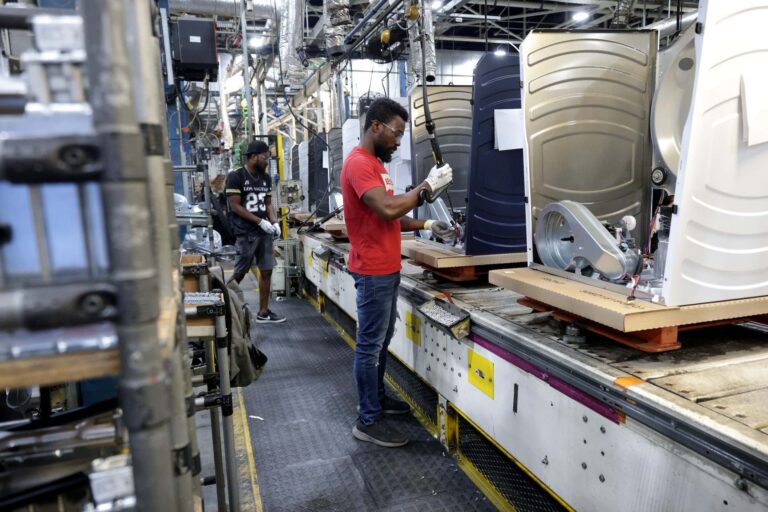

Meanwhile, Trump announced he is removing those tariffs from some other products from Canada, including bed sheets, fishing rods, salt, cement and toilet paper. Those changes, which would also take effect Sept. 15, are meant to “offset the burden or disadvantage on U.S. commerce,” Trump wrote in one of the proclamations.
Neither Carney nor Canada-U.S. Trade Minister Dominic LeBlanc issued an immediate response to the moves Tuesday night. Earlier, Carney defended his choice to “walk away” last month from a deal with the White House, a decision that had prompted Trump to make good on his threat to slap additional 50 per cent tariffs on nearly $28 billion worth of Canadian goods, including dairy products, alcoholic beverages, cement, electronic equipment and furniture.
In a video statement, Carney said the U.S. had “wanted dependency, not a true economic partnership” from Canada. The prime minister said the U.S. tariffs will create some short-term “challenges,” and acknowledged the “harsh reality” that some regions and sectors would be hit harder than others. But, he added, “Canada is a nation forged in adversity—a country that prides itself on doing what is right, not what is easy.”
Separately, Trump threatened Tuesday to bar Canadian companies from government procurement contracts, although it was not immediately clear what value or range of Canadian goods the measure would hit or when it would take effect.
“Canada has been ripping us off for years, but what many do not realize is that the Canadian Government, including Canadian Provinces, have banned American Small Businesses and Companies from selling into their Government Procurement Markets,” Trump wrote in a post on his Truth Social platform. “That is not reciprocity, it is a Canadian Trade Scam. From now on, NO RECIPROCITY—NO ACCESS!”
Carney launched a Buy Canadian policy last year, largely in response to threats from Trump. It gives domestic businesses and supplies preference in the awarding of federal contracts worth at least $5 million. Federal defence and construction procurement valued at $25 million or more must use at least $250,000 worth of Canadian steel, aluminum or wood products where possible. Meanwhile, Ontario, Quebec and British Columbia brought in measures to prioritize Canadian businesses in provincial government tenders. U.S. Trade Representative Jamieson Greer included the Buy Canadian policies this year in his annual list of trade irritants.
On Tuesday, Trump said he would direct the General Services Administration, which is the U.S. federal agency that oversees procurement, to work with the Office of the U.S. Trade Representative to remove products of Canadian origin from its “Multiple Award Schedule.” The program lets U.S. federal, state and local government agencies buy goods and services from pre-approved sellers with pre-negotiated prices. Trump said this would be the case “unless Canada restores full and fair reciprocity for American Farmers and Companies,” but did not specify what that meant.
The U.S. Embassy in Ottawa referred a request for comment to the White House, which by Tuesday evening had not published official documentation of Trump’s procurement directive.
The U.S. also has policies that favour domestic suppliers. There are several layers of “Buy America,” including one that sets the minimum use of U.S. steel and iron and other goods in infrastructure projects that receive federal funding, such as through the U.S. Federal Transit Administration. The Buy American Act, which has been around since 1933, also sets minimum levels for content produced in the U.S. This does not apply to Canadian companies for contracts subject to the World Trade Organization Agreement on Government Procurement. In 2022, that covered about $184 billion worth of U.S. procurement opportunities per year.