Skip to content

Canada's Business and Tech Newsroom

  • Professional Subscription
  • Partnerships & Advertising
  • Licensing & Syndication
Log In Subscribe
Welcome,
  • My Account
  • Log Out
  • Business
  • Tech
  • National
  • The Big Read
  • Briefings
  • Commentary
Search
Log In Subscribe
Welcome,
  • My Account
  • Log Out
Shift newsletter

Gaps in U.S. rules targeting China may hurt Canadian EV firms, some warn

Washington’s curbs on China’s battery industry may not go far enough, some Canadian companies are arguing.

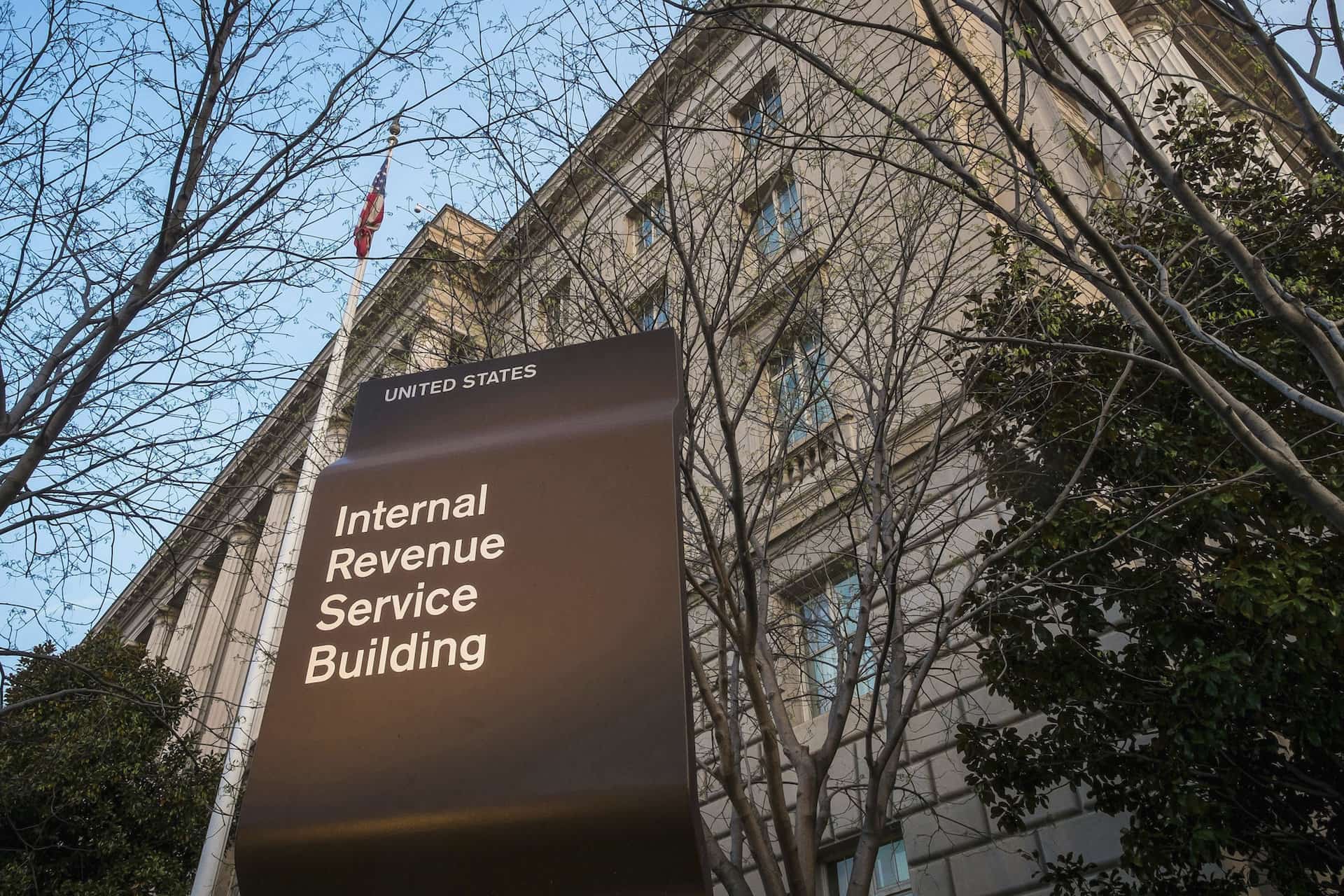
The plan: The U.S. Internal Revenue Service is consulting on changes it plans to make to the country’s tax code to reflect tax credits the Biden administration is offering EV buyers under the Inflation Reduction Act. The proposed changes also attempt to limit the role that so-called foreign entities of concern (FEOC)—companies based in countries like China, Russia, Iran and North Korea—play in the North American battery supply chain.

The problem: The likes of Nano One and Novonix, as well as the Quebec government, are warning the proposed rules contain loopholes that could limit their effectiveness—and make it harder for Canadian players to compete.

“Quebec is worried,” says the province’s submission to the IRS consultations. It warns the tax agency’s proposal could actually encourage “over-subsidized operations by state-owned enterprises” in countries of concern, with the potential to “increase unfair trade practices, contributing to an uneven playing field and the resultant harmful effects on world markets.”

Shift newsletter

Gaps in U.S. rules targeting China may hurt Canadian EV firms, some warn

With tensions high, local players worry loopholes could favour foreign companies

By Anita Balakrishnan
The Internal Revenue Service headquarters building in Washington in April 2014. Photo: AP Photo/J. David Ake
Jul 27, 2023
A A
A Small A Medium A Large
Share

Share

Washington’s curbs on China’s battery industry may not go far enough, some Canadian companies are arguing.

The plan: The U.S. Internal Revenue Service is consulting on changes it plans to make to the country’s tax code to reflect tax credits the Biden administration is offering EV buyers under the Inflation Reduction Act. The proposed changes also attempt to limit the role that so-called foreign entities of concern (FEOC)—companies based in countries like China, Russia, Iran and North Korea—play in the North American battery supply chain.

The problem: The likes of Nano One and Novonix, as well as the Quebec government, are warning the proposed rules contain loopholes that could limit their effectiveness—and make it harder for Canadian players to compete.

“Quebec is worried,” says the province’s submission to the IRS consultations. It warns the tax agency’s proposal could actually encourage “over-subsidized operations by state-owned enterprises” in countries of concern, with the potential to “increase unfair trade practices, contributing to an uneven playing field and the resultant harmful effects on world markets.”

Related Articles

EVs spice up Canada’s long love affair with pickups

By Anita Balakrishnan

How Canada’s EV charging progress stacks up

By Anita Balakrishnan

The backdrop: Concern about China’s role in North America’s battery supply chain is nearing a boiling point. This week, two U.S. House committees asked Ford to provide more detailed information on its plans to partner with CATL to build a gigafactory in Michigan that could employ workers from China, amid allegations about the Chinese battery giant’s past ties to forced labour.

“The overall political climate in the U.S. is increasingly aligned toward a hawkish perspective on China,” said Milo McBride, a Eurasia Group analyst who co-leads the firm’s critical-mineral practice. “That’s something that Canadian counterparts are demonstrating in their own ways.” 

The details—and the debate: The Inflation Reduction Act’s EV tax credits currently exclude vehicles with batteries for which FEOCs have assembled components or extracted, processed or recycled the critical minerals used in them. 

B.C.-based battery company Nano One argued in its submission that the IRS’s proposals do little to protect key materials like battery-grade iron or phosphorus, and appear to let FEOCs participate in the EV supply chain “by either extracting OR processing the critical mineral, so long as they don’t do both.” 

Nano One CEO Dan Blondal said in an interview that companies like Ford are welcome to work with CATL, but he doesn’t think taxpayers should underwrite such partnerships.

“We have a cleaner, greener, faster way of making [battery materials]. … We can do it cost-competitively against China, even on North American soil,” said Blondal. “The risk is … it becomes harder for the newer players, the newer entrants in critical minerals, or midstream like ourselves, to build the business. They don’t have the protections to gain a foothold, and flourish and ultimately become cost-competitive.” 

Not everyone agrees. Volkswagen’s submissions argue that without access to certain FEOCs, the market for new clean vehicles could “collapse.” 

Novonix, a Nova Scotia-founded battery company, argued China’s control of the key battery ingredient graphite is “the biggest risk to the industry.” Lack of clarity about how the IRA’s battery tax credit will treat the battery mineral is hampering the firm’s ability to close deals at a “critical time for domestic industry.” 

The takeaway: “Essentially doing everything in China is cheaper,” said Novonix CEO Chris Burns in an interview. “But from an environmental standpoint, at its simplest, you cannot copy a plant out of China and put it in the United States. 

“We know it, we live and breathe it. … That’s one of the reasons that the U.S. and the Canadian government need to understand how they can support companies.” 

Read Shift—The Logic’s authoritative weekly newsletter on automotive technology industry news—for more; and if you know someone who should be reading it, they can sign up here.
#CATL #electric vehicles #Ford #Inflation Reduction Act #Nano One #Novonix #Quebec #The Logic's Shift #Volkswagen

Sponsored Content

How to shift your workforce from AI experimentation to adoption

By Jessica Aftimus Rosa

The real-world economic offshoots of sovereign AI

By Deborah Aarts
Illustration of a plane flying above a mailbox

Increasing healthcare access across Canada

By Deborah Aarts
Paid promotional content

Loading...

Thanks for sharing!

You have shared 5 articles this month and reached the maximum amount of shares available.

Close
This account has reached its share limit.

If you would like to purchase a sharing license please contact The Logic support at [email protected].

Close
Want to share this article?

Upgrade to all-access now

Close
Gift the full article!

You have gifted 0 article(s) this month and have 5 remaining.

Copy link and gift
Copy Link
Email to a friend
Send Email
Gift on Social Media

Recipients will be able to read the full text of the article after submitting their email address. They will not have access to other articles or subscriber benefits.

Photo: AP Photo/J. David Ake

Most Popular This Week

People stand in large room split into several aisles by banners promoting startups. A video screen on the back wall has the logo for the CDL Super Session on it.
News

The Creative Destruction Lab is using data to reveal what makes startups successful

By Murad Hemmadi
Close-up of a red American roadside call box marked “Made in the U.S.A.,” with a blurred semi-truck approaching on Gordie Howe International Bridge.
News

U.S. industry leaders plead for truce as tariff fight escalates

By Anita Balakrishnan
Exterior of a University of Toronto building
News

Canadian universities are still struggling to commercialize their research, new data shows

By Catherine McIntyre
An aerial shot of a massive factory complex with a sprawling parking lot in the foreground. There are rows of vans and pickups in the lot.
News

Automakers warn Trump’s 50% tariffs would be ‘devastating’

By Joanna Smith

In-depth, agenda-setting reporting

Great journalism delivered straight to your inbox.

A row of school children at computers wearing brightly coloured headphones.
Subscriber Survey

Half of you think AI tools belong in the classroom

By Leila El Shennawy

Briefing

Alto rail project might cost over $150B, counting decades of operating expenses but not revenue

By David Reevely   |   Aug 31, 2026 | 1:30 PM ET

Canadian contractors brace for retaliatory duties on U.S. nuts and bolts

By Joanna Smith   |   Aug 28, 2026

Blue Owl leads deal to lend Iren US$2.4B to buy equipment for B.C. data centre

By Claire Brownell   |   Aug 28, 2026

Best business newsletter in Canada

Get up to speed in minutes with insights and analysis on the most important stories of the day, every weekday.

Exclusive events

See the bigger picture with reporters and industry experts in subscriber-exclusive events.

Membership in The Logic Council

Membership provides access to our popular Slack channel, participation in subscriber surveys and invitations to exclusive events with our journalists and special guests.

Recent Popular Stories

News

Canadian investors are dumping U.S. government debt for American corporate bonds

By Chaimae Chouiekh   |   Aug 24, 2026
An image of tall buildings against a cloudy blue sky.
News

Canadian universities are still struggling to commercialize their research, new data shows

By Catherine McIntyre   |   Aug 25, 2026
Exterior of a University of Toronto building
Commentary

Carmichael: America’s wobbly bonds are Canada’s advantage in the trade war. Here’s why

By Kevin Carmichael   |   Aug 24, 2026
A photo of Mark Carney on his way into a news conference, trailed by Dominic LeBlanc. There is a row of Canadian flags on stands behind the lectern Carney is approaching.
News

Xanadu gets $195M from federal government to build a quantum computer factory in Toronto

By Murad Hemmadi   |   Aug 28, 2026
Christian Weedbrook stands in a vacant warehouse next to a Canadian flag at a podium labelled for the Strategic Response Fund.
News

Thomson Reuters launches its own AI model to reduce reliance on big tech

By Anita Balakrishnan   |   Aug 24, 2026
News

U.S. industry leaders plead for truce as tariff fight escalates

By Anita Balakrishnan   |   Aug 26, 2026
Close-up of a red American roadside call box marked “Made in the U.S.A.,” with a blurred semi-truck approaching on Gordie Howe International Bridge.

Canada's most influential executives and policymakers are reading The Logic

  • CPP Investments
  • Sun Life Financial
  • C100
  • Amazon
  • Telus
  • Mastercard
  • bdc
  • Shopify
  • Rogers
  • RBC
  • General Motors
  • MaRS
  • Government of Canada
  • Uber
  • Loblaw Companies Limited
logic-logo

Canada's Business and Tech Newsroom

100% human-crafted journalism

Newsroom

  • News Tips
  • AI Policy
  • Editorial Disclosures
  • Story Pitches

Company

  • About Us
  • Terms of Service
  • Privacy Statement
  • Corporate Information

Contact

  • Contact Us
  • Advertise
  • FAQs
  • Work at The Logic

© 2026 The Logic Inc. All Rights Reserved.

Trusted by leaders

Error

Account creation failed.

Please email us at [email protected].

Create Account

[wppb-register form_name=”cozmo-registration-form-for-modal”]

I do have an account
Login
or

[wppb-login]

I don’t have an account