When a senior Honda executive sounded notes of caution last week about the prospects of his company’s electric vehicle business, his words might’ve landed harder in Canada than any country.
Skip to content
 Volkswagen unveiled plans in April 2023 to build an electric vehicle battery plant in St. Thomas, Ont. Photo: The Canadian Press/Tara Walton
News
Canada’s auto sector is bracing for Trump’s tariff war
Honda’s production warning shows the industry is preparing for the worst
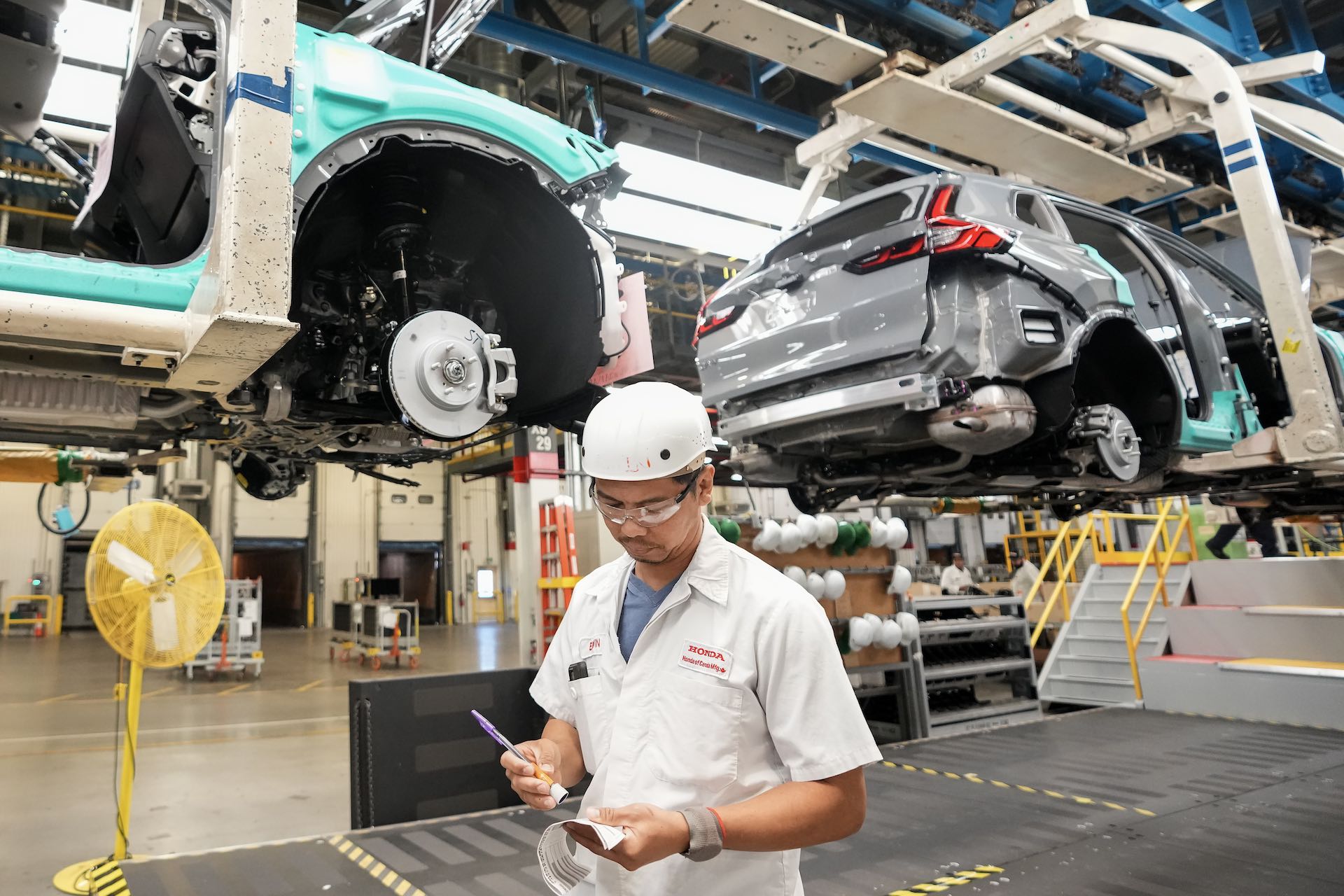
The CRV assembly line at Honda Canada's plant in Alliston, Ont., in April 2024. Photo: The Canadian Press/Nathan Denette
When a senior Honda executive sounded notes of caution last week about the prospects of his company’s electric vehicle business, his words might’ve landed harder in Canada than any country.
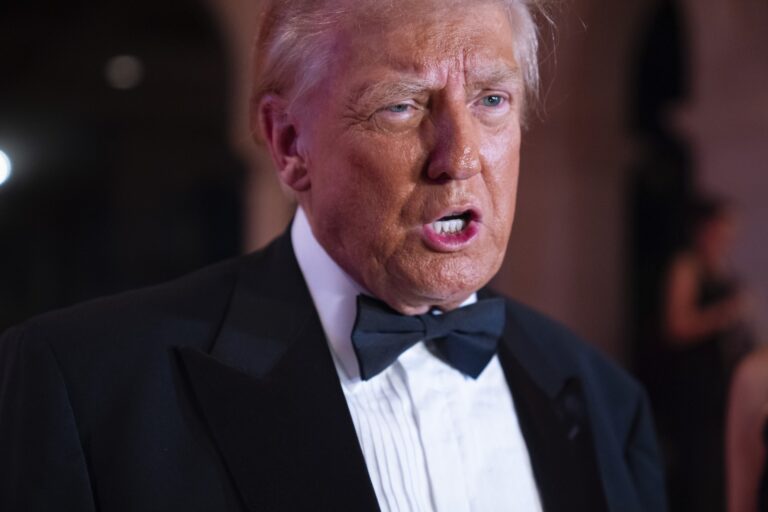
Honda will be “very careful” about starting EV production in light of sweeping policy changes promised by U.S. president-elect Donald Trump, executive vice-president Noriya Kaihara said on the sidelines of the CES tech conference in Las Vegas. That includes the company’s battery production in Canada, he noted.
Talking Points
- A Honda executive’s warning that the company may delay EV production due to Donald Trump’s trade threats hit hard in Canada, where the company is planning a $15-billion complex, including four new EV plants
- Other companies in the Canadian auto sector are preparing for the worst as Trump’s swearing-in nears, though some say they remain committed to their plans to produce EVs and batteries
While auto industry leaders in this country have said for weeks their business will be punished disproportionately if Trump follows through on his threats, Kaihara’s mild expression of doubt—and his invocation of the country’s name—clarified the stakes as few warnings have.
Honda Canada’s new $15 billion complex in Ontario is not just the biggest-ever investment in the country’s auto industry; the plan for four new electric-vehicle plants is the largest single foreign direct investment in Canada’s history by a wide margin, according to Dimitry Anastakis, a business historian at the University of Toronto.
Trump’s pledge to roll back green incentives while slapping blanket 25 per cent tariffs on the U.S.’s largest trading partners are a direct threat to those ambitions, and Kaihara’s comments show how seriously the industry takes the incoming president’s rhetoric.
Honda Canada, for its part, told The Logic it remains committed to the $15-billion plan.
“We cannot speculate about what impact the new U.S. administration will have on our operations,” said Ken Chiu, a spokesperson for the automaker’s Canadian operations. “Our Canadian EV value chain investment plans are for the long term and already include flexibilities to allow us to adapt present and future operations where necessary and reflect any changes in market conditions.”
Related Articles

Still, for Canadians watching the auto sector, Kaihara’s warning is a stark reminder of how urgently the country needs to prepare—to invest in its own supply chains; to strengthen government programs like employment insurance and procurement; and to rally around Canada’s competitive advantages like critical minerals.
A research note from Oxford Economics counted the auto industry among the three at greatest risk under the 25 per cent tariff scenario (energy and heavy manufacturing were the others), and big players like Honda are uniquely exposed. Not only would U.S. import tariffs throw their closely integrated cross-border operations into chaos, their investments in batteries and EVs would suffer should Trump fulfill his promise to roll back the Inflation Reduction Act’s EV purchase and manufacturing incentives.
No surprise, then, that Ontario Economic Development Minister Vic Fedeli has been making the rounds to auto companies as Trump’s Jan. 20 swearing-in draws near. Fedeli has been in “regular contact” with Honda to discuss the company’s planned investment in its complex in Alliston, Ont., said his press secretary Jennifer Cunliffe. He’s also met with Ford executives at the Michigan headquarters, and visited Stellantis and LG’s joint venture in Windsor, Ont.
Last week, he met with German automotive supplier Bosch, which has a Waterloo, Ont., office and has begun analyzing different scenarios to deal with the proposed tariffs.
“Everybody’s doing these war room scenarios and trying to figure out what’s next.”
Honda may be the biggest investor to make the news, but it isn’t the only company trying to prepare for potential changes to the market. While Canadian politicians are on a charm offensive, many companies involved in cross-border trade are examining the data and making defensive plans.
Few are getting as close a look at those plans as Neil Cawse, CEO of Geotab, an Oakville, Ont.-based company that tracks data on commercial fleet movements, and whose customers include logistics companies that ferry goods across the border.
Cawse said a large number of American companies are already stocking up on supplies from Canada ahead of Trump’s first day in office, when the president-elect has promised to impose his tariffs. “We are definitely seeing pre-buying,” Cawse said. “Everybody’s doing these war room scenarios and trying to figure out what’s next.”
Some in the auto industry remain confident that they can bargain their way out of the dilemma. Ahead of the public opening of the Detroit Auto Show, Ford CEO Jim Farley voiced hope that he and company chair Bill Ford were making inroads with Trump on both the tariff issue and the IRA.
Still, Andreas Schotter, who teaches international business at the Ivey Business School at Western University, expects that executives at auto companies will be under pressure.
“If I were CEO of Volkswagen, considering I’m already in trouble around the globe…I would maybe reconsider that battery plant,” he said, referring to the German automaker’s struggles to compete with Chinese rivals and pressure to cut manufacturing in its own country.
For the country as a whole, Schotter cautioned against panic. Canada should be united, he said, and not jumping every time someone rattles its cage. But he thinks Canadian companies should be building at least six months of cash reserves, reviewing their cross-border contracts and considering tools like AI inventory management.
Government, meanwhile, should be fast-tracking approvals for critical manufacturing projects, encouraging educational programs for full-time workers and doubling down on natural resources like battery materials, Schotter said.
Matthew Fortier, who leads the EV industry group Accelerate, agreed that Canada should play to strengths like its ability to supply critical minerals to the rest of North America, and invest more in advanced manufacturing to stay competitive. Accelerate’s members have been in frequent contact with EV associations in the U.S. to build alliances, he added.
Canadian companies at all stages of the EV chain “are very alive” to the damage the tariffs would do, said Fortier. “What we emphasized was, with the U.S. lacking sufficient domestic supply of critical minerals to meet the needs of battery manufacturing and other new technologies, Canada can play a really vital role as reliable partners.”
Unifor national president Lana Payne, whose union represents Canadian auto workers, said she’s confident that the automakers Unifor negotiated with in 2020 and 2023—Ford, Stellantis and General Motors—will fulfil their commitments, but is worried about securing future investments. Payne said she’s been working the phones round the clock, often with “elbows fully out,” to prevent future “investment flight.”
Stellantis, which is building a battery plant with LG in Windsor, Ont., remains on track with its Canadian investments, said company rep LouAnn Gosselin. Its NextStar plant is set to start battery cell manufacturing this year as planned, said spokesperson Daniela Ferro.
VW spokesperson Jeffrey Lewis, meanwhile, said the company remains in hiring mode and focused on choosing partners for the construction of its St. Thomas, Ont., battery plant, which is scheduled to start this spring.
Trump’s unpredictability makes it hard to prepare, Payne noted. But workers are seeking more job security, she said, which has led Unifor to organize new workplaces in the sector, including a Honda supplier. In the meantime, Payne said she’s contacting “every politician that you can imagine” about issues like adding additional backstops to employment insurance, in the event Trump’s moves cost Canadian jobs.
“This is as serious as it gets,” she said.



Loading...
Thanks for sharing!
You have shared 5 articles this month and reached the maximum amount of shares available.
CloseThis account has reached its share limit.
If you would like to purchase a sharing license please contact The Logic support at [email protected].
CloseGift the full article!
You have gifted 0 article(s) this month and have 5 remaining.
Recipients will be able to read the full text of the article after submitting their email address. They will not have access to other articles or subscriber benefits.
Photo: The Canadian Press/Nathan Denette
Volkswagen unveiled plans in April 2023 to build an electric vehicle battery plant in St. Thomas, Ont.
Most Popular This Week




In-depth, agenda-setting reporting
Great journalism delivered straight to your inbox.
News
Adam Waterous proposes massive crude exports to Asia by rail through northern B.C.
Briefing
Rivals may be ‘horrified’ to realize how exposed their investments are to AI, Aviva CIO warns
Shopify, Sequoia co-lead US$200M investment in online-selling platform Whop
Amid revenue gains, 1Password bets on tools to protect data from AI agents
Best business newsletter in Canada
Get up to speed in minutes with insights and analysis on the most important stories of the day, every weekday.
Exclusive events
See the bigger picture with reporters and industry experts in subscriber-exclusive events.
Membership in The Logic Council
Membership provides access to our popular Slack channel, participation in subscriber surveys and invitations to exclusive events with our journalists and special guests.







