Canada fires back at U.S. with auto tariffs equal to Trump’s
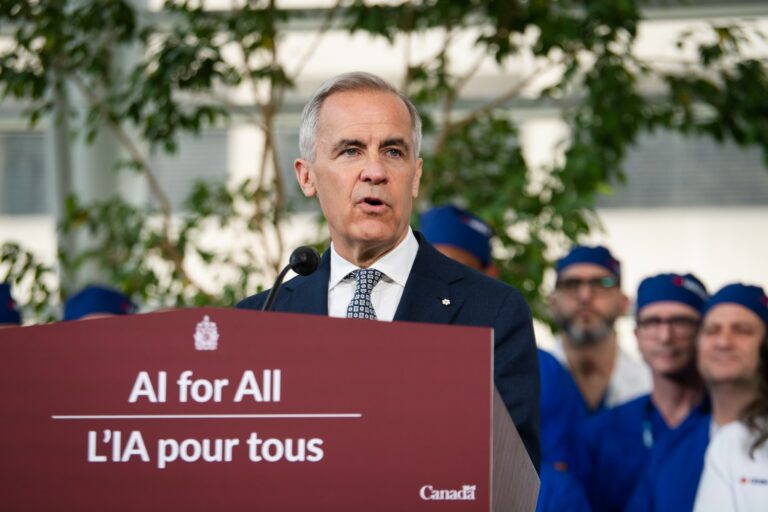
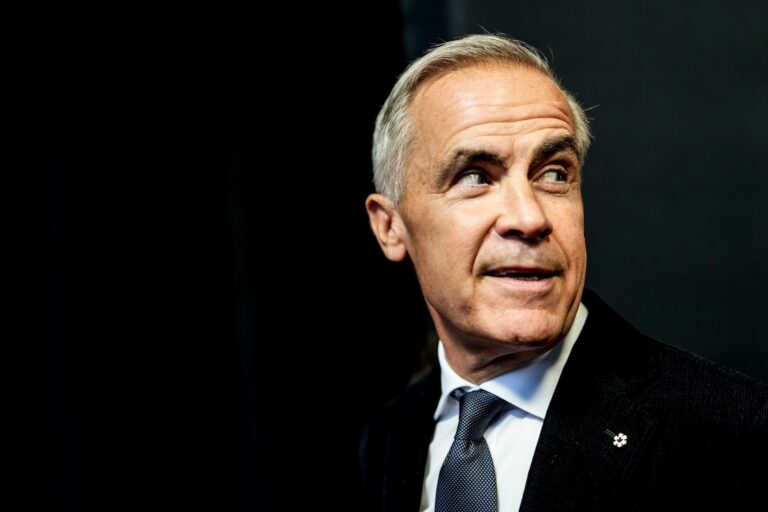
OTTAWA — In his capacity as prime minister, Liberal Leader Mark Carney met with the premiers Thursday morning and announced Canada’s response to U.S. tariffs on imported cars that President Donald Trump put into effect at 12:01 a.m. EDT.
Here’s what you need to know.
News
Canada fires back at U.S. with auto tariffs equal to Trump’s
25% counter-tariffs will apply to U.S.-made cars that don’t comply with North American free-trade pact
OTTAWA — In his capacity as prime minister, Liberal Leader Mark Carney met with the premiers Thursday morning and announced Canada’s response to U.S. tariffs on imported cars that President Donald Trump put into effect at 12:01 a.m. EDT.
American-made vehicles that don’t qualify as U.S. products under the United States-Mexico-Canada Agreement (USMCA) on trade will be hit with reciprocal tariffs of 25 per cent, said Carney, who is prime minister throughout the election period.
Even vehicles that are compliant with the treaty will be subject to 25 per cent tariffs on whatever content in them does not originate in Canada or Mexico, a subsequent written explanation said.
Carney said he expects that will mean $8 billion in revenue, which would go directly to autoworkers and companies in the sector affected by the trade war.
The counter-tariffs won’t apply to auto parts, he said, and the government is working on a system to give automakers relief, “as long as they maintain their production and investment in our country.”
Meanwhile, though, the government pulled back on plans for a big new wave of retaliatory tariffs on other goods.
After Trump’s first tariffs kicked in on Canada, then-finance minister Dominic LeBlanc started a round of consultations on proposed tariffs on $125 billion worth of imports from the United States. The federal government had said those counter-tariffs would take effect Wednesday, but then revised its “notice of intent” to say only that it might tariff those goods in the future if the U.S. doesn’t back down.
Thinking beyond
The U.S. has broken the USMCA treaty so badly under Trump that it needs a prompt renegotiation, Carney said, as soon as possible after the April 28 election. Trump put sudden tariffs on Canadian steel and aluminum, for instance, when there’s a written agreement to not do such things without at least 60 days of warning.
“There have been so many of these violations that there is a need to have a renegotiation and a reaffirmation of which elements of the commercial relationship, the trading relationship, stand,” Carney said.
Even more broadly, with no sign that Trump will back off tariffs until they cause so much domestic pain that Americans demand it, Carney said he wants to lead a global coalition of countries that want to keep something like the current global trading order, even without the United States.
“We believe in international co-operation. We believe in the free and open exchange of goods, services and ideas. And if the United States no longer wants to lead, Canada will,” Carney said.
Conservative alternative
At a factory making refrigeration products in Kingston, Ont., Conservative Leader Pierre Poilievre said a Tory government would take the federal sales tax off Canadian-made automobiles.
“This will have the double effect of supporting workers in the auto sector and also tackling the Liberal inflation crisis that has made everything more expensive,” he said, while calling on premiers to cut provincial sales taxes on cars, too.
“Until yesterday, many Canadians, including me, still held out hope that President Trump might come to his senses,” Poilievre said. Carney’s call with Trump last week must not have done much good, he added.
Poilievre also repeated a promise to create a $3-billion fund that would lend money to tariff-affected businesses to keep workers on, rather than laying them off and severing employment relationships that would be hard to rebuild.
About those U.S. tariffs
The politicians were responding to measures that many in cross-border trade and the auto sector were still trying to grasp.
Auto industry consultant Stephen Beatty said the U.S. has offered to cut tariff rates on Canadian vehicles with American-made parts that are USMCA compliant, but noted the calculation is not straightforward. With a zero-tolerance policy for miscalculations, he added, automakers will need to put a “magnifying glass” to each part of their supply chain before moving forward.
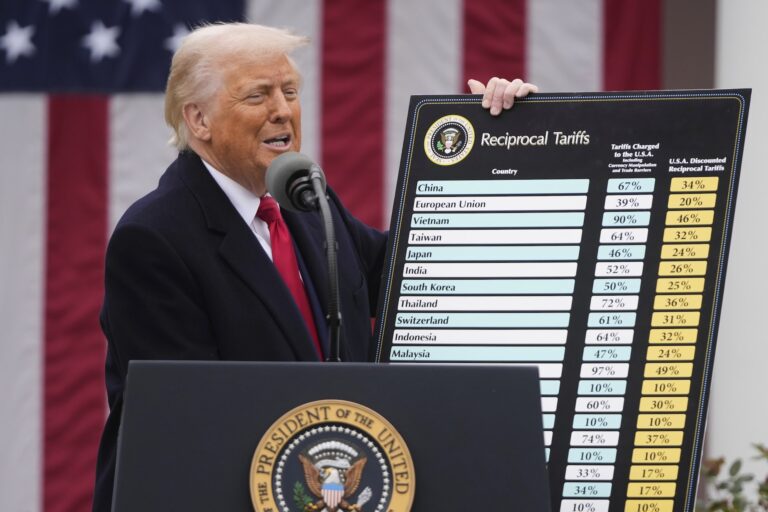
Trump’s March 26 executive order on auto tariffs said the 25 per cent will be applied only to the value of non-U.S. content in a vehicle—provided the importer has submitted documentation declaring how much of the auto is U.S.-made, and that it complies with the North American trade deal. On Thursday, after the tariffs went into effect, the administration revealed details on which products it will be examining.
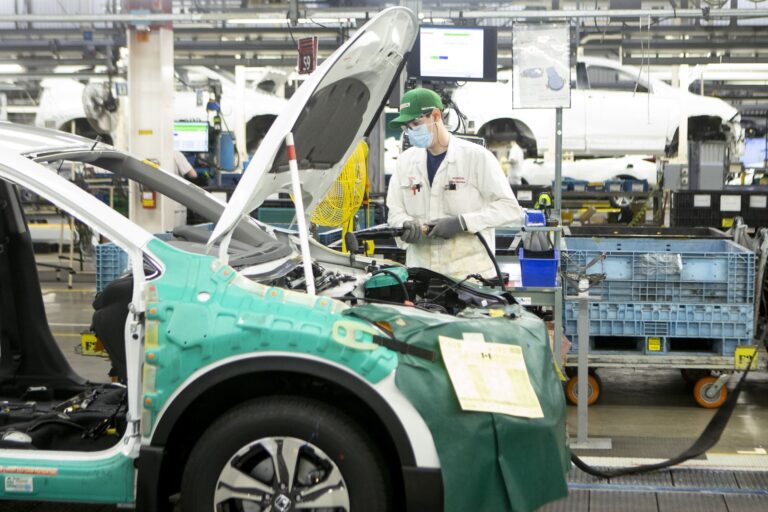
Whatever the math, the effects are already being felt. Citing the tariffs, Stellantis paused operations at its plant in Windsor, Ont., until April 21, and cut down production at plants in the U.S. and Mexico.
Hints of U.S. resistance
Democratic Sen. Maria Cantwell introduced a bill—backed by Republican Sen. Chuck Grassley—that would hem in Trump’s tariffing powers, which are delegated to the president by Congress in the first place.
As it stands, the Senate and House of Representatives together can choose to stop a tariff the president imposes. Democratic senators, with a handful of renegade Republicans, passed a resolution to do that with Trump’s Canada tariffs Wednesday. It’s expected to go nowhere in the House, but Jamie Tronnes, executive director at the Washington-based Center for North American Prosperity and Security, said it does mean not everyone in the U.S.—even Republicans—support what Trump is doing. Canadians, she said Thursday, “should take heart that we have allies and friends down here.”
Cantwell’s and Grassley’s bill would reverse the onus, cancelling any new tariff automatically unless Congress ratified it within 60 days.
Grassley, who has been an Iowa senator since 1981, wasn’t in the breakaway Republican bloc opposing the tariffs on Canada, suggesting there are multiple forms of opposition to Trump’s trade policies brewing within his own party.
With files from Anita Balakrishnan and Joanna Smith
This story was updated to add quotes and more detailed information on how tariffs will be applied
Recipients will be able to read the full text of the article after submitting their email address. They will not have access to other articles or subscriber benefits.
Great journalism delivered straight to your inbox.
News
Cenovus announces $5.7B takeover of Athabasca, with a nod to Carney’s Mega Deduction
By
Meghan Potkins
Briefing
Defence minister picks longtime CCI executive as new chief of staff
By Murad Hemmadi |
U of T launches $100M program to draw top-tier PhD students to focus on key social issues
By David Reevely |
Brookfield says there’s ‘enough to go around’ as it partners with rivals on AI investments
By Anita Balakrishnan |
Best business newsletter in Canada
Get up to speed in minutes with insights and analysis on the most important stories of the day, every weekday.
Exclusive events
See the bigger picture with reporters and industry experts in subscriber-exclusive events.
Membership in The Logic Council
Membership provides access to our popular Slack channel, participation in subscriber surveys and invitations to exclusive events with our journalists and special guests.