Listen Now
0:00
TORONTO — Canada’s new national AI strategy touts open source as a freer path to its ambitions of adoption and sovereignty, but tech executives say Ottawa must back up that promise with geopolitical and financial capital.
The AI market is “rapidly consolidating around a small number of proprietary systems,” warned the federal plan, released earlier this month. It cites open source as an alternative. Ottawa is proposing to spearhead a “global, multi-stakeholder effort” to develop versions of the technology not tied to tech giants, and to set up a “shared library of access tools” for small and medium-sized businesses, non-profits and other users.
Talking Points
- The new national AI strategy promises to lead an international effort to advance open-source AI, as well as help small businesses and non-profits adopt it
- Canada can work with allies to fill the gaps in the open source technology stack, and apply it to broader economic and social goals, tech executives say
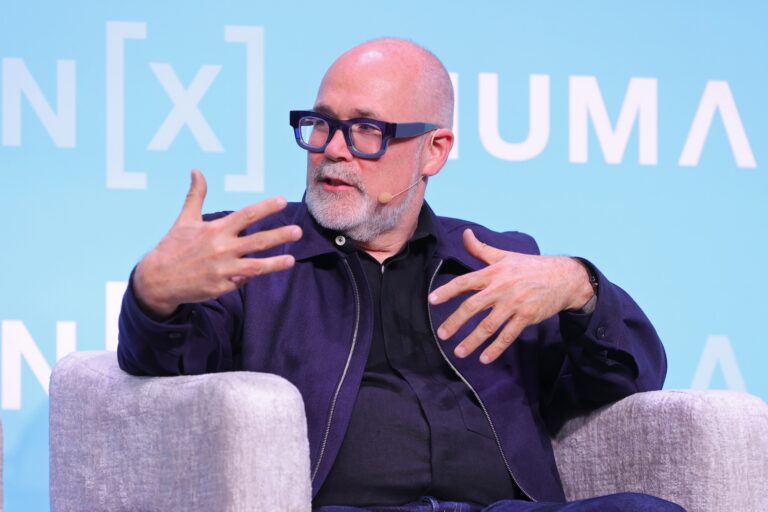
Canada’s focus on international collaboration is welcome, Mozilla president Mark Surman told The Logic. “If we want to use open source to get ahead in the AI economy, we don’t have to do it alone,” said Surman, who is based near Toronto. The San Francisco-based developer of the Firefox web browser is working to map the open source AI stack, identifying which layers of software and hardware are currently freely available and which need to be filled in.
Allies with whom Ottawa is trying to build closer economic and technology ties are also showing interest in the field. The European Union’s tech sovereignty package, released earlier this month, includes a strategy to support open source startups and development. The U.K. is providing compute to open source AI toolmakers. And France has championed Mistral AI, a Paris-headquartered firm that open sources its AI models and sells technology and services around them.
Governments could divvy up and fill in the gaps in the open source AI stack, said Marc Etienne Ouimette, founder of Montreal-based consultancy Cardinal Policy. “Collectively, you are investing and building out an alternative infrastructure and hedge capability that it would be very difficult for one country to do.” He added that Canada could also work on bilateral projects with other countries that have shared interests—for example, with Finland on open source Arctic monitoring technology.
Related Articles

To maintain its economy and security, Canada needs multiple AI options, said Jaxson Khan, CEO of consultancy firm Aperture AI. Developing open source AI could be a third way to shore up the country’s position, alongside bolstering domestic champions like Cohere and negotiating continued access to the leading-edge frontier models developed in the U.S.
Open source AI gives firms and governments more control over their systems, said Audrey Herblin-Stoop, senior vice-president of global affairs and communications at Mistral. The French firm is part of a coalition led by chip giant Nvidia that’s working to advance the technology. “The scientific discussion around open source models is really helping move forward what the technology can do,” Herblin-Stoop said on a recent visit to Montreal, where Mistral is opening an office. She cited the potential to collectively improve the capabilities of AI tools, as well as detect and fix problems.
Open source models and software aren’t yet quite as good as commercial AI products like ChatGPT or Claude, but they’re “capable enough,” said Surman. “What we lack is an easy way—with a single click or command line—to get a whole system up and running.”
Many large firms and developers are already switching to open source technology, including leading Chinese models, as the cost of heavy AI usage stacks up. Small businesses can benefit even more from cheaper options, but often lack the technical talent to bolt together their own open source stack, said Ouimette. “The incentive is cost, and the barrier is know-how.”
Ottawa could help by providing a playbook for firms to adopt open source AI, as other countries have done. In Singapore, for example, the government has created industry-specific plans that include potential applications of AI, and a list of products and consultants to help companies implement them.
In sectors where the federal government wants to boost low rates of AI adoption, firms could benefit from knowing “what already pre-exists and has been vetted by other companies,” said Ouimette, who previously led AI policy at Amazon Web Services and Montreal-based Element AI.
Beyond its new international development and domestic adoption efforts, tech executives say Canada could use open source technology to fulfill many of the other goals and promises of the AI strategy.
Ouimette said open source technology could be part of the effort to launch publicly-funded AI missions in priority sectors like health, transportation and agriculture.
The federal government has also promised to protect Canadians and safeguard democracy from AI harms. To help achieve that, Surman said Ottawa should back the partnership between Montreal’s Mila AI institute and Robust Open Online Safety Tools (ROOST). The U.S. non-profit has built technology for detecting and moderating harmful content on social platforms, giving “smaller companies and governments the same kind of trust and safety tools, using open source, that Facebook or YouTube has,” said Surman, a ROOST board member.
The strategy also commits to giving all post-secondary students “access to trusted AI agents,” although Ottawa hasn’t specified when, how or which ones. Open source tools are “the kind of technology that we want to put in the hands of young people,” said Surman, and “do it affordably and robustly, without becoming dependent on a bunch of the big American hyperscalers.”
The open source section of the strategy needs more filling in than other parts, according to Khan. For example, Ottawa has more tangibly promised to set up a $500-million new growth fund to finance scaling firms, and to expand its program for recruiting and retaining star researchers from 143 chair positions to nearly 200. Such detail is lacking when it comes to how, specifically, Canada will champion open source AI.
“There’s some commitment to investing in sustaining open source development,” Khan said, but, he added, there needs to be “more specificity around what their goals are.”