Across the Detroit River, temporary bracing was installed this week to connect the Gordie Howe International Bridge that will eventually link the busiest border crossing between Canada and the U.S. It’s a fitting symbol for the two countries’ relationship—one hanging in the balance—evoked by Bank of Montreal’s chief executive Darryl White at the U.S.-Canada Summit held in downtown Toronto Tuesday.
Skip to content
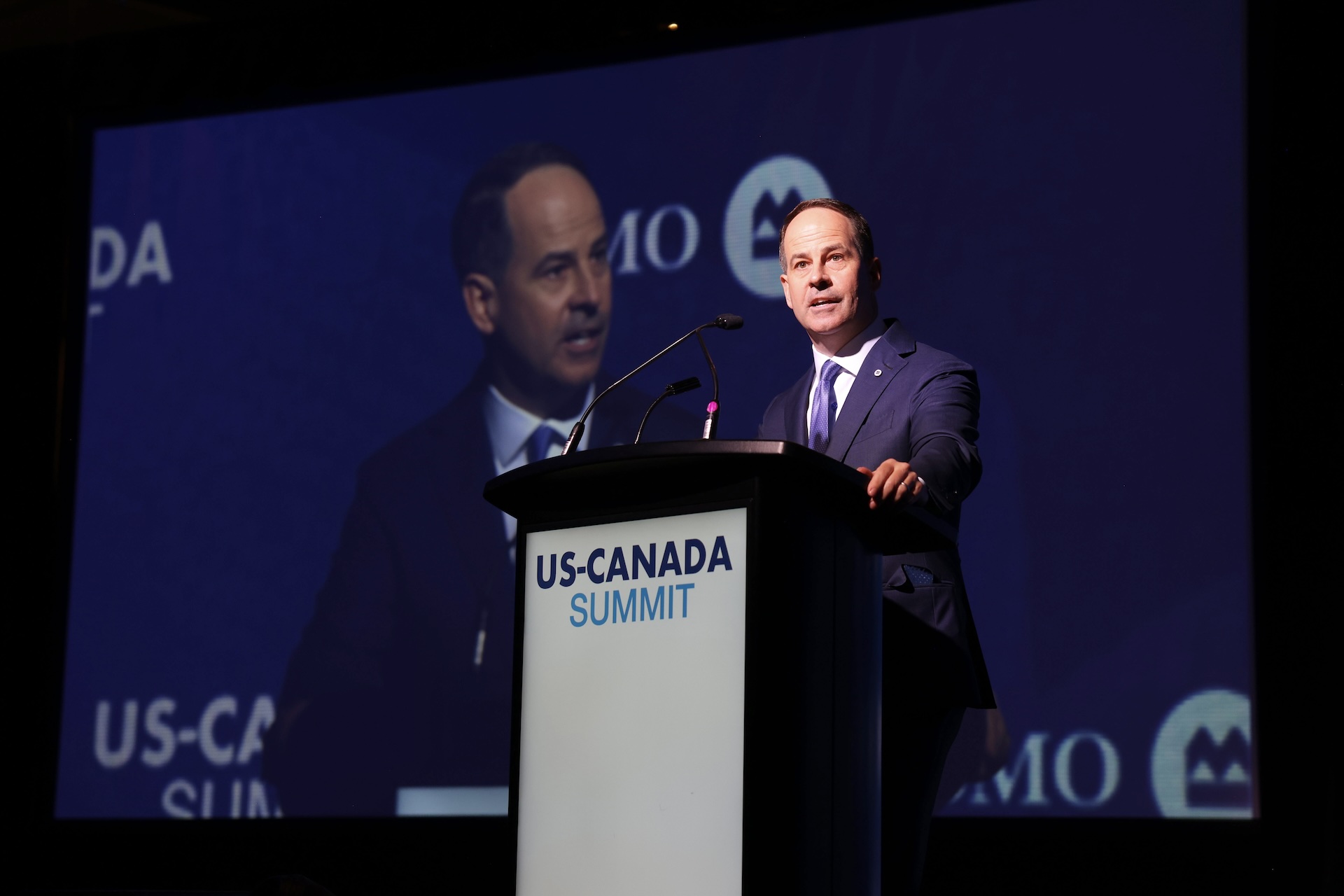 Bank of Montreal CEO Darryl White at the U.S.-Canada Summit in Toronto, hosted by Eurasia Group and BMO. Photo: Handout/U.S.-Canada Summit

News
BMO CEO urges Canada ‘to be more ready’ ahead of Biden-Trump rematch
‘We remain each others’ most important customers and best suppliers’
Bank of Montreal CEO Darryl White at the U.S.-Canada Summit in Toronto, hosted by Eurasia Group and BMO. Photo: Handout/U.S.-Canada Summit
Across the Detroit River, temporary bracing was installed this week to connect the Gordie Howe International Bridge that will eventually link the busiest border crossing between Canada and the U.S. It’s a fitting symbol for the two countries’ relationship—one hanging in the balance—evoked by Bank of Montreal’s chief executive Darryl White at the U.S.-Canada Summit held in downtown Toronto Tuesday.
As the U.S. prepares to re-elect either Joe Biden or Donald Trump as president in November, Canada is bracing for who will become the country’s key trade negotiation partner at a time of global instability and mounting competition with less friendly partners. “We remain each others’ most important customers and each others’ best suppliers. Full stop,” White said to an audience of policymakers, business leaders and economists at the event hosted by BMO and political consultancy Eurasia Group.
The statement rang as a plea for cooperation in the plausible event that Trump—who sparked a turbulent period for the world’s largest trading relationship—serves a second term, during which the countries are slated to review their main trade contract.
Here are the key takeaways from the summit:
Related Articles
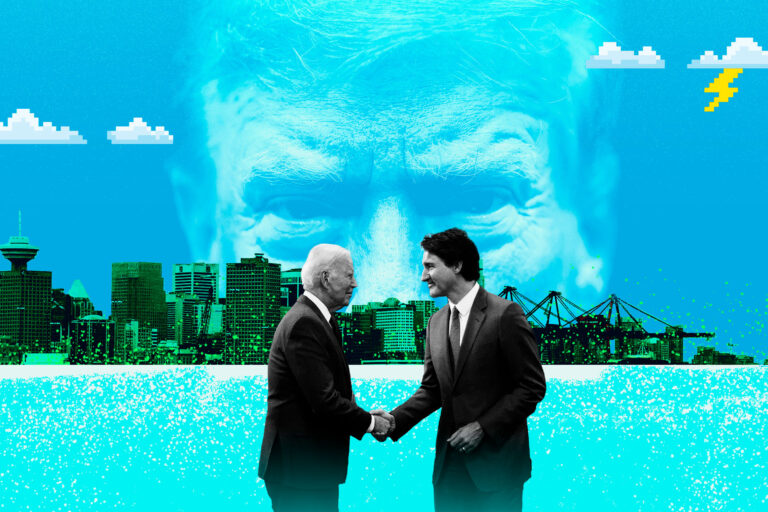
‘We need to be more ready’: The new NAFTA (or USMCA) deal struck during Trump’s first term is up for review in 2026. “I know everybody in this room realizes it’s uncomfortably soon,” said White. While not a full renegotiation, Canada should prepare for pushback, he said, especially under Trump. “I’m not sure that many Canadians truly understood the level of opposition that NAFTA had brewing south of the border.”
White framed the deal as a critical alliance in coping with competition from China. “This is incredibly important for the consumers in both our countries,” he said. “It helps lower prices and help support jobs. And it creates better opportunities for businesses to scale and enhance productivity.”
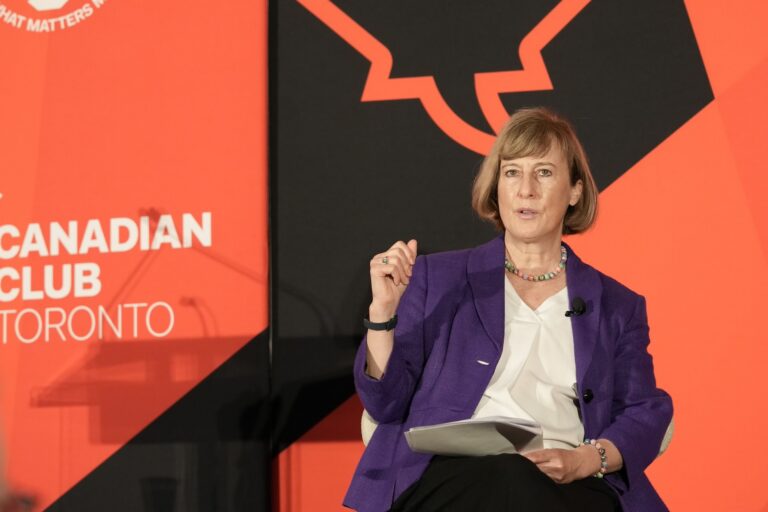
Diverging economies: The U.S. appears to have averted a recession. But in Canada, the economic picture is less clear. “Growth is decelerating,” said Manulife Investment Management chief economist Frances Donald on a panel moderated by The Logic’s Kevin Carmichael. “Canadians feel very much like they’re in a recession,” she said, pointing to shrinking retail sales and business investment and the deepening housing affordability crisis. Faced with these urgent challenges, said Donald, takes focus away from long-term, structural considerations for the economy.
Canada on defence: Christopher Liddell, former White House deputy chief of staff and a former executive at Microsoft and GM, said Trump will want to see Canada meet its full commitment to spend two per cent of its GDP on defence—a target it’s long failed to hit. On a panel with U.S. Senator Chris Coons, Canada’s foreign affairs minister Mélanie Joly defended Ottawa’s recent commitment to up its spending to 1.76 per cent of GDP, saying the government “is working on this…and more is coming in that regard.” Coons said a “credible path” to the two per cent commitment “would go a long way to strengthening our defense relationship.”



Loading...
Thanks for sharing!
You have shared 5 articles this month and reached the maximum amount of shares available.
CloseThis account has reached its share limit.
If you would like to purchase a sharing license please contact The Logic support at [email protected].
CloseGift the full article!
You have gifted 0 article(s) this month and have 5 remaining.
Recipients will be able to read the full text of the article after submitting their email address. They will not have access to other articles or subscriber benefits.
Photo: Handout/U.S.-Canada Summit
Most Popular This Week



In-depth, agenda-setting reporting
Great journalism delivered straight to your inbox.
The Big Read
Alberta’s referendum is just the start of the turmoil
Briefing
EverWind plans $10B data centre and wind development in Nova Scotia
Canada ready to force Stelco to sell its Canadian operations, Joly says
Feds plan a 60 MW defence-oriented data centre for Ottawa
Best business newsletter in Canada
Get up to speed in minutes with insights and analysis on the most important stories of the day, every weekday.
Exclusive events
See the bigger picture with reporters and industry experts in subscriber-exclusive events.
Membership in The Logic Council
Membership provides access to our popular Slack channel, participation in subscriber surveys and invitations to exclusive events with our journalists and special guests.






