OTTAWA — Projects to pump carbon dioxide underground in British Columbia are set to qualify for the federal carbon-capture tax credit, joining those in Alberta and Saskatchewan.
Skip to content


News
B.C.’s carbon-storage rules get federal OK for tax-credit eligibility
Long-promised carbon-capture tax credit was to apply only in Alberta, Saskatchewan
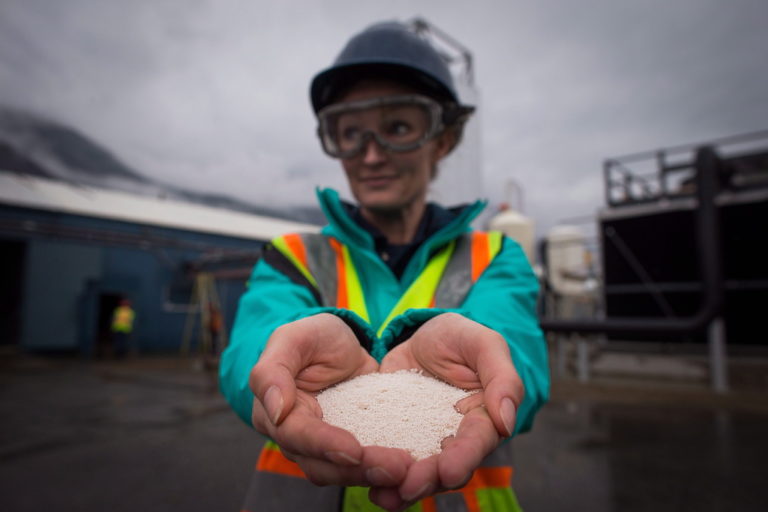
Carbon Engineering's plant in Squamish, B.C., extracts carbon dioxide directly from air, and compresses it to be stored underground or reused. Photo: Darryl Dyck/The Canadian Press
OTTAWA — Projects to pump carbon dioxide underground in British Columbia are set to qualify for the federal carbon-capture tax credit, joining those in Alberta and Saskatchewan.
The agreement has not been announced yet, but B.C. got Environment Canada’s approval in November, a spokesperson for the provincial government told The Logic. That means the owners of geological storage projects in B.C. can get the carbon-capture, -utilization and -storage (CCUS) credit.
Talking Points
- In 2021, the federal Liberals promised a tax credit for carbon-capture and -storage projects, but it would only be available for projects in Alberta and Saskatchewan at first
- British Columbia got Environment and Climate Change Canada’s seal of approval in November, before the tax credit is put into law
“Our government worked closely with Environment and Climate Change Canada (ECCC) and Natural Resources Canada over the past several months in a detailed review of B.C.’s regulatory framework regarding geological sequestration,” Peter Lonergan wrote in an email. “Following the review, ECCC informed B.C. in mid-November that it has approved B.C. as a prescribed jurisdiction under the federal CCUS investment tax credit.”
The key to eligibility is convincing ECCC that a province’s rules on geological storage are strong enough to make sure that carbon dioxide injected underground stays there for good.
In an effort to promote private investment in trapping carbon dioxide from industrial processes before it’s vented into the atmosphere and contributes to climate change, the 2022 federal budget promised a 50 per cent tax credit on the capital costs for carbon-capture equipment, and 37.5 per cent on “transportation, storage and use equipment.”
Direct-air capture, which means filtering CO2 out of the ambient atmosphere rather than getting it from a specific source, gets slightly more generous treatment—a 60 per cent credit on capital expenses.
The Liberals hope to see such projects done sooner rather than later: after 2030, the tax-credit rates get cut in half.
Related Articles
Once the carbon dioxide is collected, it needs to go somewhere where it will stay, if capturing it is to be any use in averting climate change.
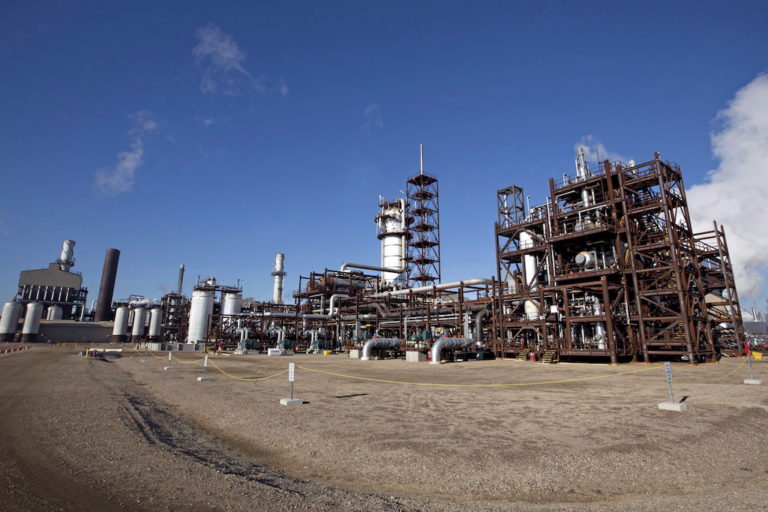
Although some fledgling technologies promise other ways of locking carbon dioxide that would otherwise go into the air—like embedding it in concrete—dozens of geological storage sites are already in operation around the world, including in Canada.
Some of them use pressurized CO2 to pump more oil or gas out of partly depleted deposits; projects like those aren’t eligible for the federal tax credit.
Alberta and Saskatchewan geological storage projects were approved for the tax credit from the get-go, when it was introduced in this year’s federal budget. The fact that only they qualified, among the provinces, was in a companion document giving technical details of the budget’s tax measures.
“In the case of qualifying dedicated geological storage, the CCUS tax credit will only be available to projects in jurisdictions where there are sufficient regulations to ensure that CO2 is permanently stored as determined by [ECCC],” it said. “Initially, the CCUS tax credit will only be available to CCUS projects that store the CO2 in Saskatchewan or Alberta.”
The department, and Environment Minister Steven Guilbeault (through a spokesperson) refused to comment on B.C.’s eligibility, or what it takes to begin a review of any province’s geological storage regulations.
The conditions for sequestration in northeastern B.C. are similar to those in Alberta. There, the Western Canada Sedimentary Basin, the geological feature that underlies Alberta and Saskatchewan oil fields, extends into British Columbia before reaching the Rocky Mountains.
The province has been actively studying the geological sequestration of CO2 since the 2000s and has a CCUS industry. Squamish’s Carbon Engineering, for instance, is working on direct-air capture technology—largely for customers outside Canada.
The tax credit is not yet in effect. The Liberals announced in the 2021 budget their intention to create it, and offered more details this year (to tepid response from the oil patch), but have not yet put it into legislation.
The U.S. Inflation Reduction Act expanded the American version of a CCUS credit in August, pushing the Canadian government to reconsider whether its credit would be generous enough to be competitive.
Finance Minister Chrystia Freeland’s fall economic statement reaffirmed the federal government’s intention to create the incentive, but it’s not in the bill that puts measures in that statement into effect. Unlike, for instance, doubling the mineral-exploration tax credit if you’re looking specifically for “critical” minerals, which the Liberals also promised in the 2022 budget.
The delay means that whenever the tax credit becomes law, British Columbia will likely make the initial list, after all.



Loading...
Thanks for sharing!
You have shared 5 articles this month and reached the maximum amount of shares available.
CloseThis account has reached its share limit.
If you would like to purchase a sharing license please contact The Logic support at [email protected].
CloseGift the full article!
You have gifted 0 article(s) this month and have 5 remaining.
Recipients will be able to read the full text of the article after submitting their email address. They will not have access to other articles or subscriber benefits.
Photo: Darryl Dyck/The Canadian Press
Most Popular This Week


In-depth, agenda-setting reporting
Great journalism delivered straight to your inbox.
News
Ottawa is softening its ban on stablecoin yield
Briefing
Rio Tinto gets nearly $165M in additional federal funds for Quebec aluminum
U.S. to lift tariffs on some Canadian products crucial to Maine: Collins
Carney warns of tech dependence after Starlink disruptions in Ukraine
Best business newsletter in Canada
Get up to speed in minutes with insights and analysis on the most important stories of the day, every weekday.
Exclusive events
See the bigger picture with reporters and industry experts in subscriber-exclusive events.
Membership in The Logic Council
Membership provides access to our popular Slack channel, participation in subscriber surveys and invitations to exclusive events with our journalists and special guests.






