OTTAWA — U.S. President Donald Trump granted the auto sector a temporary break from the tariffs he has imposed on Canada and Mexico, but warned carmakers the only way to avoid duties entirely would be to shift their production to the United States.
Skip to content


News
Automakers get a reprieve from tariffs, but Trump and Trudeau remain at odds
Canada won’t lift its tariffs until the U.S. withdraws theirs, Trudeau says
U.S. President Donald Trump addresses a joint session of Congress in Washington on Tuesday. On Wednesday, the White House announced a temporary reprieve from tariffs for some automakers in Canada and Mexico. Photo: AP Photo/Ben Curtis
OTTAWA — U.S. President Donald Trump granted the auto sector a temporary break from the tariffs he has imposed on Canada and Mexico, but warned carmakers the only way to avoid duties entirely would be to shift their production to the United States.
“We are going to give a one-month exemption on any autos coming through [the United States-Mexico-Canada Agreement],” White House press secretary Karoline Leavitt said Wednesday as she read from a statement issued by Trump.
Talking Points
- President Donald Trump granted a “one-month exemption” from tariffs for autos through the United States-Mexico-Canada Agreement (USMCA), but is firm on reciprocal tariffs coming April 2
- Trump and Prime Minister Justin Trudeau spoke for the first time since the U.S. slapped steep tariffs on Canadian goods, discussing “trade and fentanyl”
She said the decision came after Trump spoke with the “Big Three” U.S. automakers—Ford, General Motors and Stellantis.
“Reciprocal tariffs will still go into effect on April 2,” the statement from Trump continued, “but at the request of the companies associated with USMCA, the president is giving them an exemption for one month so they are not at an economic disadvantage.”
In addition to the 25 per cent tariffs Trump imposed Tuesday on Canadian and Mexican goods, save energy products, which have a 10 per cent tariff, he has announced his intention to impose reciprocal tariffs on other countries that have set up trade barriers to the U.S. Those barriers include subsidies and value-added taxes. Trump has repeatedly said April 2 is the date those tariffs are coming.
Leavitt did not shut the door on the possibility there might be carve-outs for sectors other than automotive. “The president is open to hearing about additional exemptions. He always has open dialogue, and he’ll always do … what he believes is right for the American people,” she said. Neither did she keep it wide open. “The reciprocal tariffs will go into effect on April 2 and he feels strongly about that. No matter what: no exemption,” she said when asked for the rationale behind the length of the month-long reprieve for autos.
Related Articles
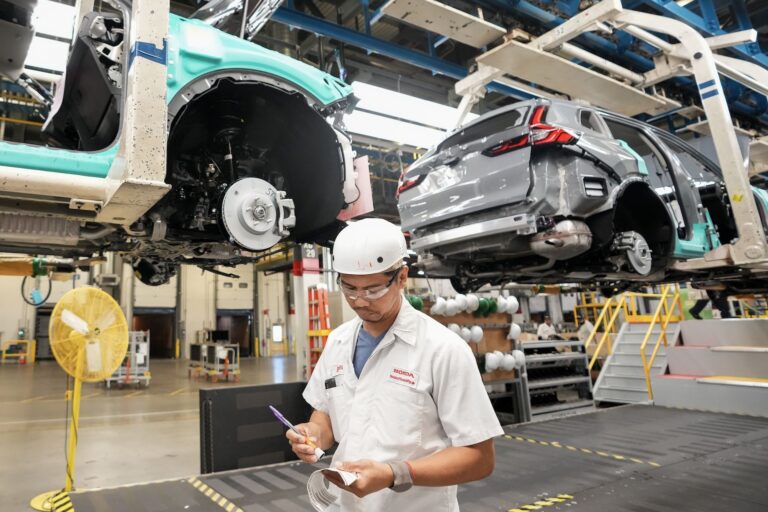

Brian Kingston, president and CEO of the Canadian Vehicle Manufacturers’ Association, welcomed the news. “We look forward to working on a permanent solution that recognizes the integration of the North American market,” he said in a statement.
“Under CUSMA, the automotive industry has developed an integrated manufacturing base and supply chain to support our region to be globally competitive,” Jennifer Wright, a spokesperson for General Motors, said in a statement.
Leavitt suggested Trump told the automakers there is one way to avoid tariffs entirely: “He told them that they should get on it. Start investing, start moving, shift production here to the United States of America, where they will pay no tariff. That’s the ultimate goal.”
The automakers were not the only ones making their case directly to Trump.
Prime Minister Justin Trudeau and Trump also spoke Wednesday for the first time since the president made good on his tariff threat, and since Trudeau responded with the first phase of its retaliation plan, imposing 25 per cent tariffs on $30 billion worth of American products such as orange juice, wine and cosmetics.
“The prime minister and president spoke today about trade and fentanyl,” said a short readout of the call issued by the Prime Minister’s Office, adding that both countries would remain in contact.
Trump had more to say.
“I told him that many people have died from fentanyl that came through the borders of Canada and Mexico, and nothing has convinced me that it has stopped,” Trump said on social media. “He said that it’s gotten better, but I said, ‘That’s not good enough.’ The call ended in a ‘somewhat’ friendly manner!”
Trudeau has rejected as “completely false” Trump’s linking the broad-based tariffs to Canada’s inaction on fentanyl. “The one thing he has said repeatedly [is] that what he wants is to see a total collapse of the Canadian economy, because that will make it easier to annex us,” he said Tuesday on Parliament Hill.
On Tuesday, U.S. Commerce Secretary Howard Lutnick had hinted that some relief on tariffs would be coming as early as Wednesday, suggesting Trump was willing to meet Canada and Mexico “in the middle” on tariffs.
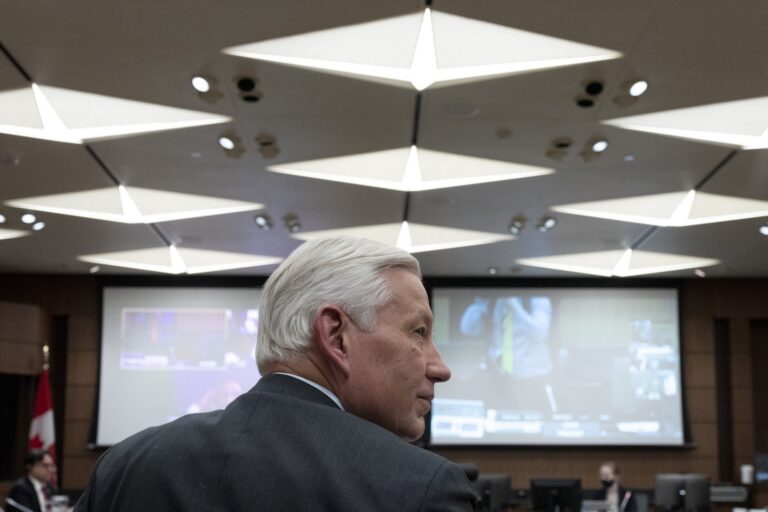
Canada’s Finance Minister Dominic LeBlanc dismissed that idea, saying he wants the U.S. to respect its trade agreement with both countries. “We’re not interested in meeting in the middle,” he said Wednesday in an interview with CBC Radio’s The Current.
The federal government plans to hit the U.S. with a second wave of counter-tariffs on another $125 billion worth of goods after a 21-day consultation period. That list, which has not yet been published, would target more foods, electronics, steel, aluminum, electric vehicles, trucks and buses.
Foreign Affairs Minister Mélanie Joly said Canada does not want to go through a “psychodrama” of seeking relief from tariffs every month.
“Our goal is to make sure that we’re having conversations to bring back much more certainty,” she said Wednesday following an event with the Toronto Region Board of Trade.
On Tuesday, Trudeau shared his conditions for ending the retaliation: “Our tariffs will remain in place until the U.S. tariffs are withdrawn, and not a moment sooner.”



Loading...
Thanks for sharing!
You have shared 5 articles this month and reached the maximum amount of shares available.
CloseThis account has reached its share limit.
If you would like to purchase a sharing license please contact The Logic support at [email protected].
CloseGift the full article!
You have gifted 0 article(s) this month and have 5 remaining.
Recipients will be able to read the full text of the article after submitting their email address. They will not have access to other articles or subscriber benefits.
Photo: AP Photo/Ben Curtis
Most Popular This Week

In-depth, agenda-setting reporting
Great journalism delivered straight to your inbox.
News
Canada’s banking regulator weighs new rules for AI risks
Briefing
Mecka raises US$60M to gather data for robot training
Businesses should expect AI to get better, but not necessarily cheaper
Weston family and Fairfax agree to buy drugstore Boots for US$8.9B
Best business newsletter in Canada
Get up to speed in minutes with insights and analysis on the most important stories of the day, every weekday.
Exclusive events
See the bigger picture with reporters and industry experts in subscriber-exclusive events.
Membership in The Logic Council
Membership provides access to our popular Slack channel, participation in subscriber surveys and invitations to exclusive events with our journalists and special guests.