Listen Now
0:00
Canada’s Big Six banks are positioning themselves to play a role in the Defence, Security and Resilience Bank (DSRB) after decades of steering clear of the defence sector—a shift industry leaders say was unsurprising, even if the immediate payoff for lenders remains unclear.
The DSRB, first proposed last March by Rob Murray, NATO’s former head of innovation, is designed as a triple-A-rated multilateral institution reportedly aiming to raise up to £100 billion ($184 billion) to help NATO and allied countries fund defence projects. It would do this by providing low-cost loans, credit guarantees and supporting the purchase of military goods.
Talking Points
- Canada’s biggest lenders have backed the Defence, Security and Resilience Bank (DSRB), a multilateral institution reportedly aiming to raise up to £100 billion to help NATO and allied countries fund defence projects
- The Big Six’s support of defence financing marks a shift after decades of avoiding the sector over ESG concerns
Canada has emerged as the initiative’s most vocal proponent, with Montreal, Toronto, Ottawa and Vancouver vying to host the lender’s headquarters. Last Monday, 18 countries gathered in Montreal to begin drafting a charter outlining the bank’s governance and operations.
Of the 11 commercial banks backing the DSRB, six are Canadian. RBC was the first to pledge its support last summer, followed by the rest earlier this year. International lenders include American firm JPMorgan, Dutch bank ING Group, and Germany’s Deutsche Bank, Commerzbank AG, and Landesbank Baden-Württemberg, all of which endorsed the initiative in 2025.
Related Articles
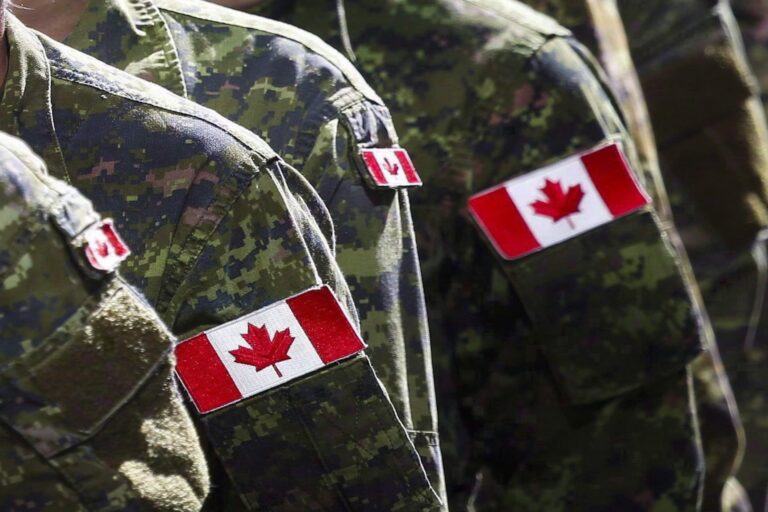

Commercial banks would play a key role by extending loans to defence firms—potentially at lower interest rates—thanks to guarantees provided by the defence bank.
Maoyuan Chen, a bank analyst at Morningstar, said the details of those guarantees remain unclear, but could be tied to participating governments’ creditworthiness and fiscal strength, making the loans less risky than typical corporate borrowing.
Still, Chen said the Big Six’s involvement with DSRB is unlikely to “move the needle” for net interest margins. Individual contributions would represent only a small fraction of total assets, some of which run into the trillions of dollars, she said. Smaller banks would account for an even more modest share, she added, and are unlikely to participate on the same scale as larger peers. “Banks usually have internal industry limits in how much lending they want to contribute to each industry sector,” Chen said.
The banks have said little publicly about the size of their commitments. TD, CIBC, and Scotiabank declined to comment on their financial contributions to the DSRB or whether they see any risks in participating. RBC and BMO did not respond to requests for comment, while National Bank spokesperson Merick Seguin said the lender is “participating financially.” Other banks are reportedly providing technical support to help get the institution up and running, and Dutch lender ING has provided a startup loan.
The shift is notable given banks’ longstanding caution toward defence. After the Cold War, Canada cut defence spending as geopolitical tensions eased, according to a Dentons report. As banks increasingly focused on Environmental, Social, and Governance (ESG) goals, their caution deepened, often seeing weapons manufacturers as incompatible with those objectives, Chen said.
For years, that translated into limited appetite for defence lending, Chen said, because the exposure “look[ed] bad in terms of their ESG progress.” But as political backlash against ESG and DEI frameworks has intensified, “attitudes towards super-strict ESG awareness in lending have been paring down in the past year or two,” she said.
Gerry Faustino, a partner at Deloitte, said another reason the Big Six have been “very conservative with respect to their lending practices” is the difficulty of distinguishing defence companies that produce “acceptable” materials like standard munitions and those that might also build “red line” products banned by international agreements.
“It’s a segment that’s currently underserved,” and one that could become a significant financing stream for banks over time, Faustino said.
Faustino stressed that banks are not reversing ESG principles wholesale and that “whatever is not acceptable will continue to not be acceptable.” However, he said the DSRB provides a way to assess what fits within banks’ risk and ESG thresholds, requiring lenders to “beef up” due diligence on defence deals.
The Big Six control about 93 per cent of Canada’s banking assets and liabilities and, in Chen’s view, operate within a system where regulators provide stability in exchange for banks not taking any risky investments.
“It’s kind of expected for the banks to take part in that initiative,” Chen said, noting their closer ties to the government than their U.S. peers.
Internationally, however, the project remains in flux. The U.K., which had previously ruled out joining, is now reconsidering after Prime Minister Mark Carney made the case for it. Luxembourg has agreed to participate, while Germany remains out and France has yet to commit. Despite the growing attention around the DSRB, no government has formally committed funding. Countries joining as shareholders are reportedly expected to contribute a total of between US$65 billion and US$70 billion in capital.
In addition to long-established institutions like the European Investment Bank, competing efforts to pool private capital towards defence are emerging, with the U.K., Finland and the Netherlands working on a similar initiative to the DSRB.
Business Development Bank CEO Isabelle Hudon is leading Canada’s efforts with international partners and has said that Canada could contribute more than $1 billion to DSRB. Hudon declined a request for comment on the country’s role in the bank.
Kevin Reed, the DSRB Development Group’s president and chief operating officer, has previously said a Canadian head office could create up to 4,000 jobs, though no timeline has been announced for when the bank would begin operating. David Oliver, a spokesperson for the DSRB, declined multiple requests to comment on details including funding commitments and governance.
Faustino said staffing challenges are likely to be the biggest issue delaying the DSRB’s mandate in Canada. Banks are redeploying staff, often with uneven experience, into defence-related work and some are getting into the sector for the first time, he said. Faustino did not rule out banks going further to bridge the talent gap by sending staff to help the DSRB establish itself in Canada.
“[The DSRB] is a good thing for Canada,” Faustino said. “The main challenge is going to be execution.”