
Listen Now
0:00
Software company founders are scrambling to defend against AI model makers like Anthropic and OpenAI. While many in the Canadian startup space say that specialized verticals like legal technology are safe, investors aren’t so sure.
Toronto-based Thomson Reuters has shed over nearly 35 per cent of its market value year to date, after Anthropic’s new legal AI application, which launched in early February, triggered a Wall Street frenzy. Trading volume spiked from about 1.6 million shares per day to 4.65 million between Feb. 3 and 13. Shares of rival Relx, which owns legal software firm LexisNexis, and Dutch software company Wolters Kluwer fell nearly 25 per cent and over 27 per cent respectively, over the same period.
Talking Points
- Investors are dumping software stocks, with legal technology bearing early, heavy losses, as they bet that giant model makers like Anthropic and OpenAI could upend the business models of established incumbents
- Despite the market rout, founders, investors and analysts say there are ways to avoid a winner-takes-all software war
Legal technology has borne the brunt of the investor panic. Anthropic touted its new update to its Claude platform as particularly adept at legal reasoning, but other software stocks are suffering too. January was one of the worst months for software stocks on record, according to CIBC. Few are immune. Global software stocks like ServiceNow are suffering, as are Canadian tech darlings like Shopify. Even insurance brokers are being pressed by Wall Street on how they’re competing against ChatGPT.
Nazuk Thakkar, a Toronto-based venture capitalist at Drive Capital, is seeking “cockroach” founders—a tongue-in-cheek reference to the insects’ reputation for being able to survive decapitation, starvation and oxygen deprivation.
“Those are the folks that you know can be light on their feet and adapt to all of the news breaking and all the things that are coming out. They don’t let that paralyze them with fear,” she said.
Related Articles

It’s easier said than done. Tech investors’ wobbling confidence is a “wake-up call” that some companies might need to pivot significantly, said Daniel Wigdor, CEO of AXL, which partners with companies, including law firms like Dentons, to create new startups.
The question is what to pivot toward when you’re up against a company like Anthropic, which has now raised US$57 billion to date, or OpenAI, which is reportedly looking to raise US$100 billion at a valuation of US$830 billion. Even former Berkshire Hathaway CEO Warren Buffett, who popularized the concept of an economic “moat” to protect companies from potential conquerors, has admitted he’s leery of analyzing businesses that “must deal with fast-moving technology.”
Other software makers are watching how the legaltech business reacts as AI model makers near the drawbridges and valuations plummet. Canadian legaltech founders and investors say they’re focused on building relationships and caches of proprietary data in ways that a massive global company can’t replicate.
Thakkar said owning “sacred data” is one of the strongest defences. For a consumer app, that might be years of Spotify playlists or Facebook message archives. For startups that make enterprise technology, it’s digitizing a company’s legal history, their financial ledger, or even their supply chain logs, said Thakkar, which makes it hard to switch to another service without losing access to important records.
That’s one of the strategies of B.C.-based legaltech company Clio. The legal sales cycle is exhaustive, said Ed Walters, the company’s vice-president of legal innovation and strategy. He’s been trying to land some clients since the early 2000s—but once on board, customers become loyal enough to “step in front of a bus” to defend the product.
“Especially for global law firms, the relationships really do matter. I’ll go a step farther. I think trust matters, and I think trust is not something that you can build in a day,” said Walters.
“Clio has managed, for example, the billing for law firms for a decade. They have all of the information about a client and all of their matters in the past that provides really rich context for whatever happens next.”
Thomson Reuters defended its AI strategy on an earnings call earlier this month, touting its attorney researchers who gather records directly from courthouses, maintaining centuries’ worth of legal archives worldwide. Rob Hales, a senior equity analyst at Morningstar, said that while investors punished Thomson Reuters for its reliance on legaltech revenue, the executives have a point, writing that the company still has a wide moat. In a Feb. 4 research note, Hales wrote that the market reaction to Anthropic’s contract-review plug-in “doesn’t make sense” and that generative AI remains a positive trend for Thomson Reuters.
“There’s no competitor targeting legal research, as in real legal research, like trying to replicate [Thomson Reuters’] Westlaw or Lexis, because it’s just too hard. Where we see the competition is the kind of contract work, the documents, just the workflow of a lawyer,” said Hales in an interview.
“If you’re an upstart, native AI company, why go after the hard stuff? You can make money off the easy stuff.”
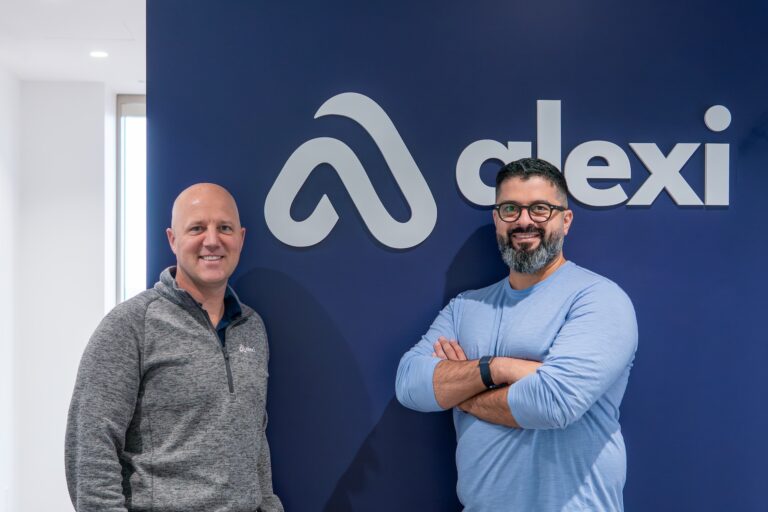
Mark Doble, CEO of legaltech company Alexi, challenged the notion that it’s a winner-take-all environment for the biggest and best AI model. Most lawyers surveyed by the American Bar Association are interested in ChatGPT, yet many also rely on Thomson Reuters and smaller companies like Alexi as part of their tech “stack.” Open-source AI tools could actually make it easier for smaller startups, he said.
Startups, he said, “can build on top of Anthropic faster.” Building software that depends on another tech company’s product, like a “wrapper” or “application layer,” has been seen as a “pejorative,” but that may be changing, he said. Just as many software-as-a-service companies distribute technology on digital stores owned by Apple and Google, “so much of the really valuable data is at the application layer,” said Doble.
Wigdor, who runs the venture studio, agrees. By that logic, he said, many early investors would have passed on Facebook, which can be viewed as a “wrapper” on top of the networking technology Cisco invented to message people on different networks.
The companies Wigdor worries most about are the ones that aren’t anticipating the technologies that will replace them. For example, a legal technology that drafts privacy policies isn’t just under siege from Anthropic, but also from software that monitors and prevents common policy violations to begin with.
Companies like Anthropic are well-funded and can dabble in new markets easily, but so-called cockroach companies will have to be more strategic, he said. Silicon Valley’s approach is to say, “We’re going to put a million monkeys at a million typewriters, fund them all with millions of dollars. And then one of them is going to give us Instagram,” he said. “We don’t have a million monkeys in Canada.”
“How can we look into the future,” said Wigdor, “and invent that company faster?”