TORONTO — Armilla AI now sells insurance to cover the legal costs and other losses that businesses might incur when AI systems make mistakes.
Skip to content
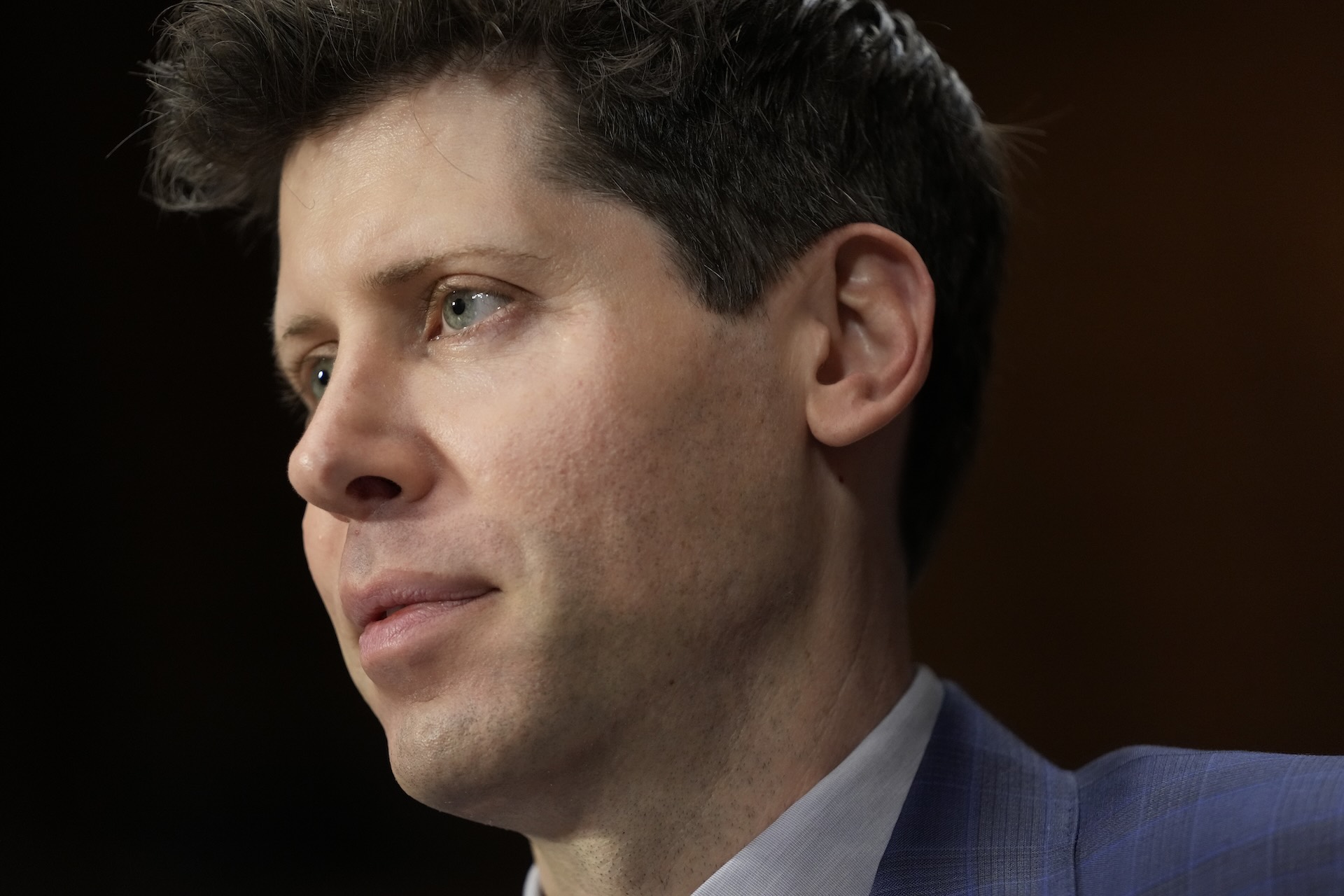
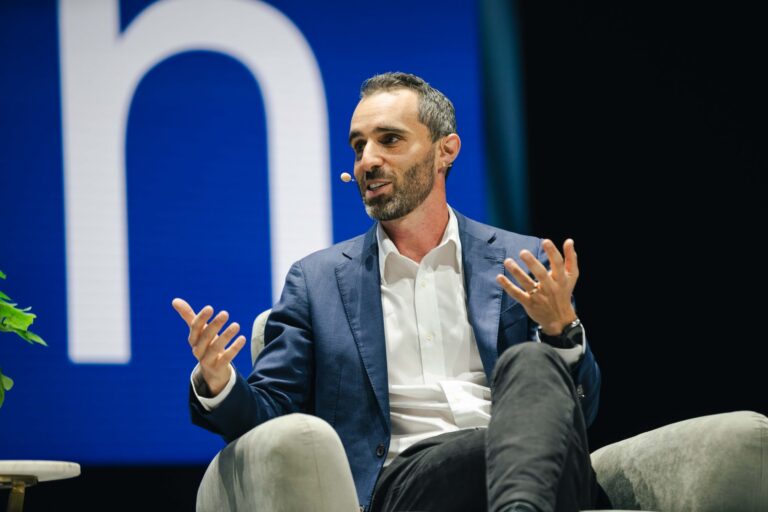
 Armilla AI CEO Karthik Ramakrishnan says insurers need to understand how the technology can go wrong, and what that will cost companies. Photo: Jenna Muirhead for The Logic
News
Insurance firms want to cash in on the AI boom
Premiums for AI insurance could hit US$4.77 billion by 2032. Insurers looking to grab a piece of the action are growing fast.
OpenAI CEO Sam Altman. There are more than 200 lawsuits related to AI systems in the U.S. Photo: AP Photo/Patrick Semansky
TORONTO — Armilla AI now sells insurance to cover the legal costs and other losses that businesses might incur when AI systems make mistakes.
The Toronto-based startup’s AI insurance covers third-party liability for malfunctioning tools, repaying companies’ expenses and damages up to US$15 million when customers sue or regulators investigate them.
Talking Points
- Toronto-based Armilla AI has launched AI insurance, covering clients when they get sued or investigated because the technology made mistakes
- Firms are adopting AI in search of efficiency, using chatbots to answer more customer questions or automated logistics systems to handle more inventory without having to add more staff. That can increase the damage if something goes wrong.
There are more than 200 lawsuits related to AI systems in the U.S., according to a database maintained by George Washington University. If even a few of those cases lead to big payouts, demand for AI insurance “will take off,” claimed Armilla CEO Karthik Ramakrishnan.
Canada has already seen one low-dollar but high-profile example. In February 2024, a British Columbia tribunal ordered Air Canada to pay a Vancouver man $812.02, including damages, in a dispute over reduced prices for passengers travelling because of a family member’s death. The carrier had said he could not apply for that bereavement rate after he travelled, even though a chatbot on its site had said he could. AI insurance could, in theory, have covered Air Canada expenses from the chatbot’s inaccurate response.
AI poses new challenges for the insurance industry, according to Ramakrishnan. Insurers usually set premiums and payouts based on large amounts of data about what customers have lost and claimed. “In AI, there’s not much history,” he said. Firms also need to understand the technology’s unique risks—for example, a chatbot hallucinating—as well as how regularly and expensively it could go wrong.
Many companies are adopting AI in search of efficiency, using the technology to answer more customer questions, route more inventory or make more credit decisions without having to add more staff. But that can increase the damage if something goes wrong, said Ramakrishnan. “With an AI system, one error can cascade.” For example, a customer service chatbot could give dozens of shoppers incorrect information about a retailer’s return policy before anyone notices the problem. By contrast, a team of human reps are unlikely to all make the same mistake over and over again.
Related Articles


That’s one reason why companies are facing so many class-action lawsuits related to AI, according to Lauren Nickerson, a Toronto-based associate at law firm Torys. “The scale issue is a very pressing concern.” As governments pass new AI laws and regulations on AI, companies could face legal repercussions for not following the rules in addition to being sued by unhappy customers. And courts haven’t yet settled whether responsibility for an AI system’s mistakes lands on the firm that made the model or the one that used it, Nickerson said; it’ll depend on the circumstances of the case.
Armilla is targeting businesses in North America, and covers both generative AI tools and more established machine-learning systems in sectors like financial services and supply-chain management. Armilla issues the insurance policies—which are financially backed by London-based Chaucer and Bermuda-headquartered Axis Capital—and takes a cut of the premiums.
Armilla tests clients’ AI tools before it insures them, checking for security vulnerabilities, bias and compliance with regulations. Over the last year, it has added executives who’ve previously worked at insurance firms Aviva and Swiss Re to its 12-person team.
The startup is not the only player in the field. German giant Munich Re has sold AI insurance products since 2018. Many businesses are already partially covered under their cybersecurity, errors or employment policies, Ramakrishnan acknowledged. But the insurers covering them may not fully understand the risks of AI, he said.
As AI booms, so do the potential insurance claims. Deloitte estimates that insurers will generate just US$80 million in premiums for AI insurance this year and US$4.77 billion by 2032. Armilla’s business has been brisk since it launched its new product late last month, Ramakrishnan claimed.
The startup is betting that companies will be more likely to adopt AI tools if they know they’re protected when something goes wrong.
Depending on what it covers, insurance “provides a bit of a safety blanket,” said Grant Worden, a Torys partner who co-leads the product liability practice. But the law firm advises clients to also reduce their AI-related risks by creating strong internal policies and negotiating protections into contracts with technology suppliers.
Armilla has raised US$5.48 million to date according to PitchBook data, from investors including Greycroft, Mistral Venture Partners, and Yoshua Bengio, the pioneering Université de Montréal AI researcher. The firm is looking to add more insurers to back its policies, and eventually to expand to the European and Asian markets.



Loading...
Thanks for sharing!
You have shared 5 articles this month and reached the maximum amount of shares available.
CloseThis account has reached its share limit.
If you would like to purchase a sharing license please contact The Logic support at [email protected].
CloseGift the full article!
You have gifted 0 article(s) this month and have 5 remaining.
Recipients will be able to read the full text of the article after submitting their email address. They will not have access to other articles or subscriber benefits.
Photo: AP Photo/Patrick Semansky
Armilla AI CEO Karthik Ramakrishnan says insurers need to understand how the technology can go wrong, and what that will cost companies.
Most Popular This Week



In-depth, agenda-setting reporting
Great journalism delivered straight to your inbox.
News
Ottawa is softening its ban on stablecoin yield
Briefing
Rio Tinto gets nearly $165M in additional federal funds for Quebec aluminum
U.S. to lift tariffs on some Canadian products crucial to Maine: Collins
Carney warns of tech dependence after Starlink disruptions in Ukraine
Best business newsletter in Canada
Get up to speed in minutes with insights and analysis on the most important stories of the day, every weekday.
Exclusive events
See the bigger picture with reporters and industry experts in subscriber-exclusive events.
Membership in The Logic Council
Membership provides access to our popular Slack channel, participation in subscriber surveys and invitations to exclusive events with our journalists and special guests.






