Listen Now
0:00
Corporate legal departments, once seen as the legal world’s back office, have emerged as the new power brokers on Bay Street as artificial intelligence startups clamour for their business.
In-house legal teams, typically led by a general counsel, corporate counsel or chief legal officer, often strike deals with external firms when they need extra help on complicated cases. They’ve long been looked down on as support roles compared with the prestigious, partnership tracks at big law firms, said Avi Weiss, who founded Counselwell, a professional development group for in-house lawyers. But AI startups are shaking that up, splashing out on dinners and retreats to get in front of a company’s chief legal officer, who controls purse strings that a law firm partner might not.
Talking Points
- After years of in-house lawyers feeling like second fiddles to prestigious law firms, AI companies have started courting corporate Canada’s overworked lawyers
- External counsel at law firms are building their own AI products to woo back clients amid estimates that billions of dollars of outsourced legal work could be brought in-house
“All of a sudden in-house legal departments, they are in the driver’s seat, so they are the ones who have leverage,” said Weiss.
Weiss has run Counselwell since 2020, and for most of that time, he had to chase companies for partnerships and training opportunities himself. About six months ago, that reversed, and he now sees inbound interest from legaltech companies every couple of days.
“In the beginning, they [general counsel] would ask each other questions like, ‘Does anyone have a recommendation… a U.S. lawyer in this state to help us with this issue?’” he said, describing how his dinner meetings for in-house lawyers have become more focused on AI. “Nowadays, I’m seeing less of those types of questions.”
Related Articles

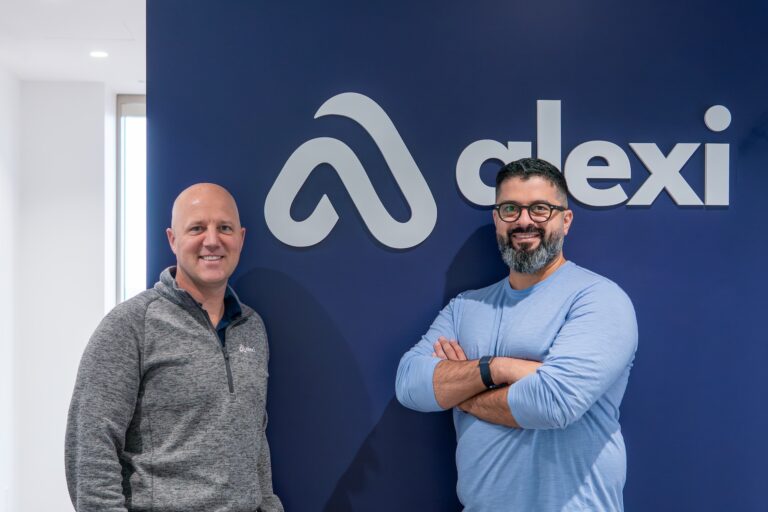
Canadian legaltech company Spellbook has benefited from the surge of interest in AI. In-house lawyers don’t benefit from billing longer hours, and face pressure when they feel like the “bottleneck” in their companies, so they’re open to tools that help them work faster, CEO Scott Stevenson said in an interview.
“Thirteen months ago, we had almost no in-house customers. Now, actually, in-house customers are our biggest segment,” said Stevenson.
In Silicon Valley, investors are betting this is just the start. Venture capital firm Sequoia estimated last month that as much as US$60 billion of outsourced legal work could be fully automated.
Law firms are being “challenged” by corporate counsel, who seek to keep more work in-house, Toronto legaltech giant Thomson Reuters said in its recent annual report. “While AI introduces productivity and efficiency improvement opportunities for law firms, it also adds uncertainties to how law firms and legal professionals need to evolve,” the report said.
Bay Street’s major corporate law firms insist they’re not being left behind, with several saying they are helping clients build AI products.
Gowling WLG has started building custom AI workflows for its clients, even for work that isn’t usually done through an external firm. Torys’ chief knowledge and innovation officer, Sukesh Kamra, estimates it has run between 50 to 60 custom AI sessions for clients, building tools like custom maps that predict potential competition law issues, a database of deal provisions from recent private equity investments and a similar tool for limited partnership agreements. Zain Rizvi, a mergers and acquisitions lawyer at Davies, said that if he is able to speed up the due diligence process with specialized AI, he could offer corporate clients lower fees on that part of the deal.
Still, the old guard isn’t stopping AI disruptors from eyeing the space.
Wordsmith, which focuses on the corporate counsel market and operates in the U.S. and U.K., expanded to Canada last month. Multinationals like Uber are recruiting part-time “fractional” counsel from Calgary-based Goodlawyer to supplement their in-house teams. Legaltech firm Harvey, which opened a Toronto office last year, raised US$200 million at a US$11 billion valuation at the end of March. Harvey’s chief business officer John Haddock told The Logic that the round will enable a “big investment” in Canada, including a deeper role in the in-house market.
The reason, he said, is that general counsel are becoming more influential—and more overworked. Over the past few years, their role has evolved from drafting contracts and memos to advising C-suite executives on high-stakes business risks and decisions, said Haddock, whose company is named partly after the iconic legal show Suits that happens to be filmed on Bay Street.
“The CEOs right now are just expecting to have typical day-to-day legal work to be done in-house the most efficiently possible, and these tools are really helping us,” said Patricia Atallah, who serves as a fractional general counsel for several companies. “I think external counsel are going to be more into litigation or very, very complicated transactions.”
Harvey’s Haddock isn’t convinced that AI companies entering the market are going to displace law firms in Canada—he’s seen quite the opposite, with law firms helping Harvey land new corporate clients.
Robert Fooks, a corporate lawyer at McLeod Law in Calgary, said that VC firms like Sequoia may be measuring how much time AI will save for lawyers, but they aren’t measuring the new work external counsel can do during that time.
“The expectation is that you’re going to use that extra time to focus on listening to clients, marketing, learning about their industries,” he said, adding, “just being better and more effective service providers.”
Editor’s note: This story has been updated to clarify comments from Zain Rizvi.