Trevor Grant founded a drone-reforestation company a few years ago after watching a David Attenborough documentary that alerted him to the need to plant trees—trillions of trees—to reverse harm humans have inflicted on the planet. Over the next few days, he stumbled across news articles about drone reforestation startups, and advances in technology that made it legally permissible in the U.S. to fly a drone beyond a pilot’s line of sight.
Skip to content
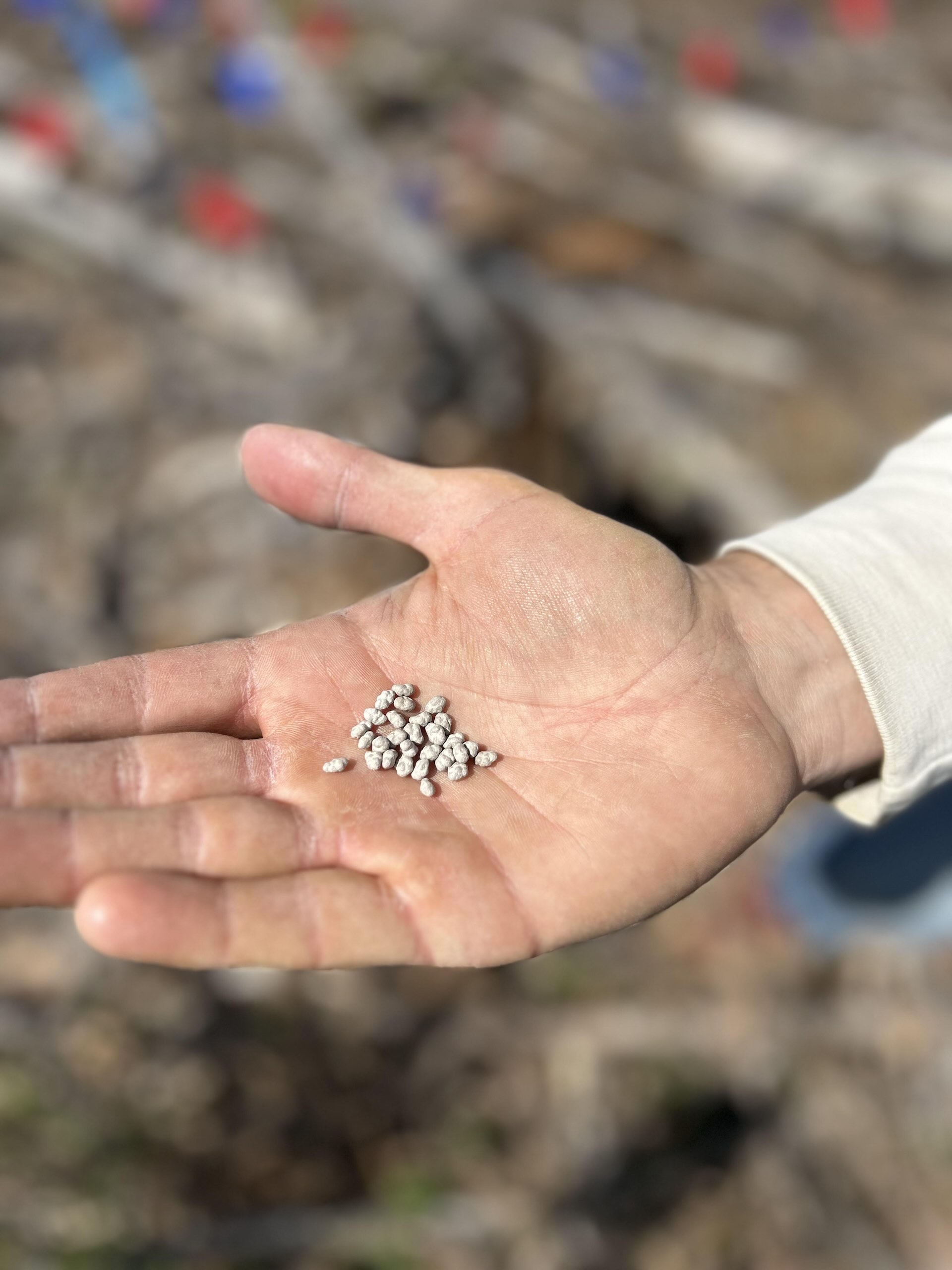 The seeds KiDrone uses are coated with nutrients to increase the odds they sprout and survive. Photo: KiDrone | Handout
 KiDrone founder Trevor Grant, second from left, and members of the firm's team near Fort St. James, B.C. in June 2023. Photo: KiDrone | Handout

News
Startup KiDrone flies into growing field of aerial reforestation
B.C. First Nation among first to try firm’s method of seeding hard-to-reach areas using drones
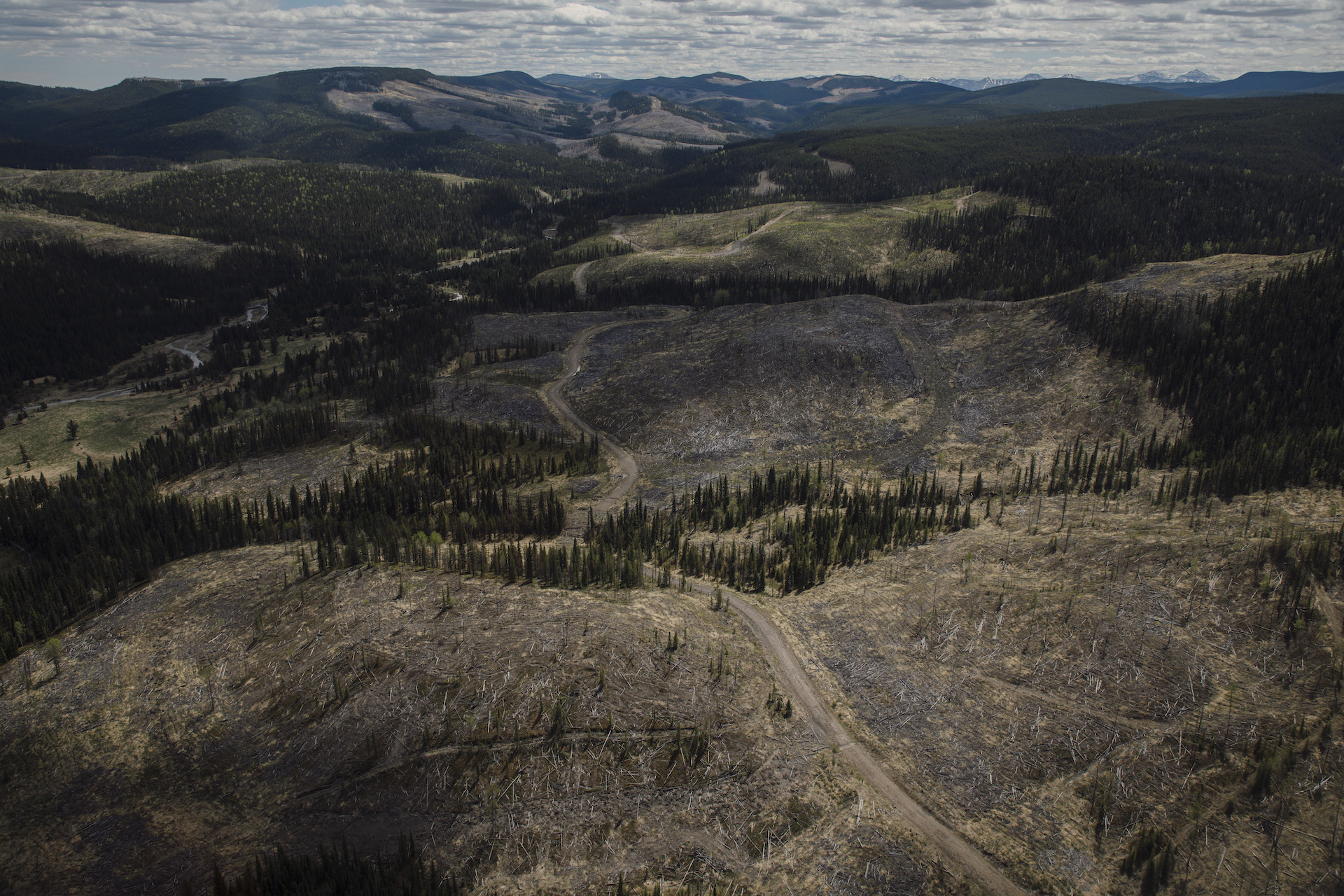
Logged areas west of Rocky Mountain House, Alta., in June 2021; KiDrone's technology could help reforest remote or hard-to-reach terrain. Photo: The Canadian Press/Amber Bracken
Trevor Grant founded a drone-reforestation company a few years ago after watching a David Attenborough documentary that alerted him to the need to plant trees—trillions of trees—to reverse harm humans have inflicted on the planet. Over the next few days, he stumbled across news articles about drone reforestation startups, and advances in technology that made it legally permissible in the U.S. to fly a drone beyond a pilot’s line of sight.
Grant, a commercial lawyer who lives in Toronto, knew he didn’t have the expertise to build a forestry startup alone, but banked on his experience bringing together disparate experts to help get his idea off the ground. KiDrone is now one of several startups vying to become the go-to provider in a promising new space.
Talking Points
- Founded in 2021, KiDrone is one of several startups vying to become a go-to provider of drone reforestation, a tree-planting process that can access remote areas and doesn’t put humans at risk
- The emerging field has yet to prove its efficacy, with few studies showing success rates; that’s partly due to firms’ reluctance to share proprietary information, and partly to how long the trees they’ve planted take to grow
Grant believes its developing tech, which will be guided by artificial intelligence, sets KiDrone apart from other companies using drones to seed new forests as a complement to the conventional shovel-to-ground method.
The same goes, he said, for its business model, in which the landholder can choose to sell carbon credits from reforestation, rather than KiDrone doing so. “That we view as a fundamental differentiator between us,” he said. The company plans to offer its service under the simplified brand name “Ki”.
Though drone reforestation is not intended to replace human planters entirely, the method has the potential to solve a long-standing challenge in reforestation by reaching areas where the terrain, conditions and wildlife pose risks to humans.
“This drone technology is hugely promising,” said Gregory Paradis, an assistant professor of forest resources management at the University of British Columbia. He points to advancements in building drones, as well as the machines that drop seeds and seed pods—bundles of seeds and nutrients to help survival odds.
Related Articles

Scientific data on the method’s efficacy remains thin, though, and the little there is suggests room for improvement. In one 2018 pilot project, fewer than 20 per cent of seeds dropped by drones took root and grew into trees.
KiDrone plans to use drones capable of carrying 50 kilograms and flying up to 1,000 kilometers for six hours at a time, which let the vehicles reach areas too remote for smaller drones. The vehicles will carry a proprietary seed-dispersal mechanism guided by an artificial intelligence algorithm—currently in development with researchers at the University of California, Berkeley—that will monitor ground conditions and adjust seed mixtures in flight.
The startup is also working with researchers from the University of Toronto to create better seed encapsulation, a process that coats seeds and shapes them into spheres, to make tree growth more likely.
KiDrone field tested the third generation of its seed work last fall in two B.C. locations—one near the northeastern town of Fort St. John, the other close to Cranbrook in the province’s mountainous southeast. It currently subcontracts helicopters equipped with the seed-dispersal device as it prepares to introduce drones.
The company has been looking for venture capital funding to purchase the drones, whose cost Grant pegs at $2.5 million. But he has pitched investors for the past two years without much luck, in part due to challenging conditions in capital markets. It doesn’t help that KiDrone is at the early-stage seed round, which excludes many funds, or that drone reforestation is an “unusual” space that many VCs don’t understand, Grant said.
He’s now focused on securing non-dilutive, grant funding for research. “At that point, I think we will go back to the market,” Grant said. He expects to return to fundraising this summer.
For KiDrone, as for other drone reforestation companies, the lack of data on outcomes raises cost uncertainty. “The number of seeds planted by a drone that are going to fail because they were just injected into a stupid location that was never going to work is probably relatively high,” noted Paradis.
If too few seeds grow into trees, the company might have to seed the area again, adding to the cost. “But if you can match the cost, or if the cost per surviving tree is lower with the drone technology, and it’s safer, then I would say you have clearly a dominant solution,” Paradis added.
It’s too early for Grant to say what share of the seeds KiDrone has planted so far will grow into trees. As for cost, KiDrone’s currently sits between one-quarter and one-third of what manual planting costs per hectare, he said.
Beyond its technology, Grant believes KiDrone’s decision not to sell carbon credits makes it unique. Its revenue will come from reforestation and monitoring work, he said, and it is happy to help facilitate carbon credit sales for clients it works with, should a project qualify.
That bar can be high, he noted. To sell a valid carbon offset, one has to demonstrate the reforested area is sequestering more carbon than it would without intervention. For areas burned by wildfire, that means the replanted forest has to outperform natural regeneration.
The choice not to sell carbon credits is partly moral. For treaty land or unceded traditional territory, the First Nation should receive the benefit, said Grant—likewise for Crown land and the taxpayer.
But for a company that hopes to land work on First Nations territory, it’s also a business decision. “If I started flipping carbon offsets in someone’s backyard for projects that they’re not consulted on and they don’t see a penny from,” Grant said, “I’m not going to be in business for very long.”
This arrangement could apply to the company’s upcoming contract with Skeetchestn Indian Band, which saw B.C.’s largest wildfire in 2021 burn through much of its territory near Kamloops. “Skeetchestn quickly recognized that there was going to be a need for a large-scale effort to do restoration work in the watershed,” said Devin Halcrow, a forestry co-ordinator with Skeetchestn Natural Resources. Natural Resources Canada is supporting the effort through its 2 Billion Trees program, with $18.7 million in federal funding to plant 10.5 million trees over nine years.
The band looked into drone planting for areas that are steep and susceptible to landslides, Halcrow said, and selected KiDrone because the company “was willing to give it a go on a small scale.” The parties have committed to seeding about 250 hectares starting this month. KiDrone will monitor results over the next five years.
Halcrow knows drone reforestation is still unproven, but hopes the project will help validate the method. “Being able to contribute to those numbers was valuable,” he said, “given that we had ground to do it.”



Loading...
Thanks for sharing!
You have shared 5 articles this month and reached the maximum amount of shares available.
CloseThis account has reached its share limit.
If you would like to purchase a sharing license please contact The Logic support at [email protected].
CloseGift the full article!
You have gifted 0 article(s) this month and have 5 remaining.
Recipients will be able to read the full text of the article after submitting their email address. They will not have access to other articles or subscriber benefits.
Photo: The Canadian Press/Amber Bracken
The seeds KiDrone uses are coated with nutrients to increase the odds they sprout and survive.
KiDrone founder Trevor Grant, second from left, and members of the firm's team near Fort St. James, B.C. in June 2023.
Most Popular This Week




In-depth, agenda-setting reporting
Great journalism delivered straight to your inbox.
The Big Read
Alberta’s referendum is just the start of the turmoil
Briefing
EverWind plans $10B data centre and wind development in Nova Scotia
Canada ready to force Stelco to sell its Canadian operations, Joly says
Feds plan a 60 MW defence-oriented data centre for Ottawa
Best business newsletter in Canada
Get up to speed in minutes with insights and analysis on the most important stories of the day, every weekday.
Exclusive events
See the bigger picture with reporters and industry experts in subscriber-exclusive events.
Membership in The Logic Council
Membership provides access to our popular Slack channel, participation in subscriber surveys and invitations to exclusive events with our journalists and special guests.






