Skip to content

Canada's Business and Tech Newsroom

  • Professional Subscription
  • Partnerships & Advertising
  • Licensing & Syndication
Log In Subscribe
Welcome,
  • My Account
  • Log Out
  • Business
  • Tech
  • National
  • The Big Read
  • Briefings
  • Commentary
Search
Log In Subscribe
Welcome,
  • My Account
  • Log Out
Subscriber Survey

Ottawa should allow more foreign competition in Canada’s telecom market, subscribers say

Canadian legislators should allow more foreign competition in the telecommunications market and impose price caps on wireless and internet services, according to The Logic’s subscribers.

About 72 per cent of subscribers said there should be more foreign competition. Thirty-seven per cent said they strongly agreed, while 35 per cent somewhat agreed.

Subscriber Survey

Ottawa should allow more foreign competition in Canada’s telecom market, subscribers say

By Hanna Lee
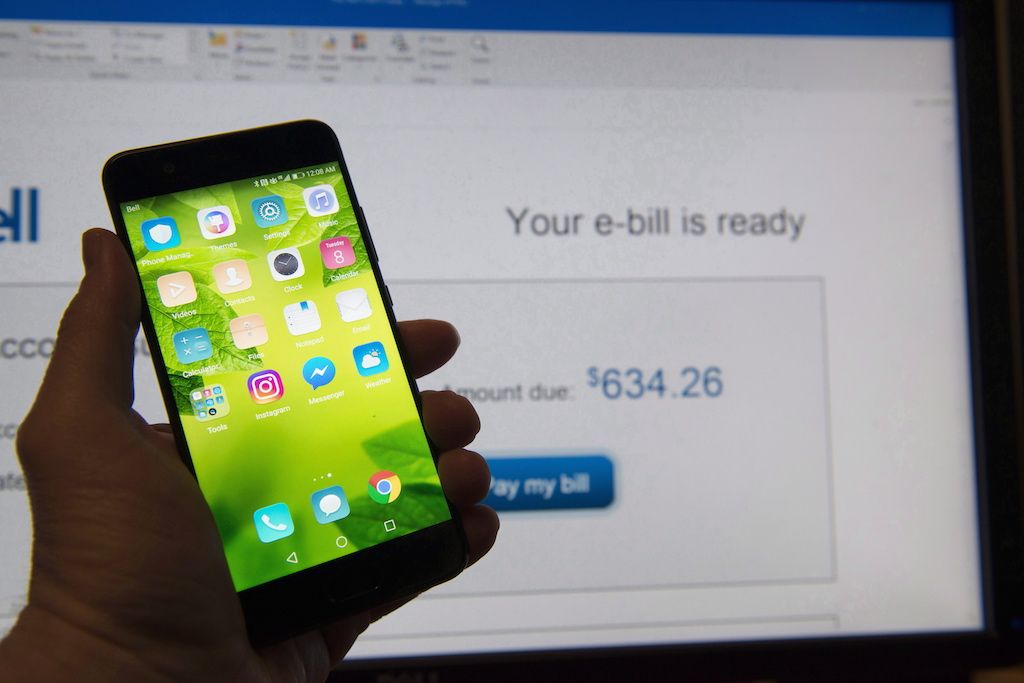
A cell phone is held up in front of video screen in this photo illustration
Photo: Doug Ives/CP
Oct 11, 2019
A A
A Small A Medium A Large
Share

Gift

Share

Canadian legislators should allow more foreign competition in the telecommunications market and impose price caps on wireless and internet services, according to The Logic’s subscribers.

About 72 per cent of subscribers said there should be more foreign competition. Thirty-seven per cent said they strongly agreed, while 35 per cent somewhat agreed.

Methodology

The results are from The Logic’s September 2019 subscriber survey. A private link was sent to subscribers by email and the survey was conducted online. All respondents were kept anonymous and duplicates were removed as needed. Subscribers were asked to provide responses to a series of questions. They were asked whether they agreed or disagreed with two statements. The first was “Canadian legislators should allow more foreign competition in the country’s telecommunications market.” The second was “Canadian legislators should impose price caps on the country’s internet and wireless service providers.” Their choices were: strongly disagree, somewhat disagree, neither disagree nor agree, somewhat agree, strongly agree.

“Our domestic providers are fleecing us,” wrote one subscriber. 

According to the Canadian Radio-television and Telecommunications Commission (CRTC), the prices of communications services (wireless, internet, television and home phone combined) fell by 11 per cent between 2016 and 2018. But Canadian wireless plans still cost more than those of most G7 countries—though the Big Three telecoms—Bell, Rogers and Telus—have argued their networks are higher quality. 

The three firms had 90 per cent mobile-subscriber market share, according to a 2018 CRTC report. “Canada’s wireless service market is dominated by the Top 3,” the commission noted.

Foreign firms are allowed to participate in the Canadian telecom market, but in limited ways. Overseas owners are not allowed to acquire over 20 per cent of the voting shares of any Canadian carrier with more than a 10 per cent market share. They also can’t own more than 33.3 per cent of the voting shares of a wireless provider’s holding company.  

“Canadians pay some of the highest telecom fees in the world,” wrote one subscriber. “With foreign competition, it will lower the cost for everyone.”

But another argued the regulatory environment is not what’s stopping international firms from setting up in Canada. “They choose not to because the industry is already competitive and there is not a business case for them to enter the market,” argued one subscriber. 

Many respondents said they preferred policies that would encourage more companies to offer wireless and internet services to measures that limit prices. 

“Increase competition and let the market do its work,” wrote one subscriber. “Price caps would lead to less investment.”

Nevertheless, about 63 per cent of respondents said Canada should impose price caps on its internet and wireless service providers. Around 32 per cent said they strongly agreed with the idea, while 30 per cent said they somewhat agreed. 

“I believe that telecommunications are a public good and a public service, which should be available to all, anywhere in the country,” wrote one subscriber, “and that they should be affordable, and revenue neutral.”

“Our rates [are] embarrassing,” wrote another. “I cannot believe that I now hate my cell phone bill and don’t mind my cable bill—I never believed that could happen.”

Opening the market to more foreign competition could lead to lower prices for internet and wireless plans and increase economic growth, according to internal government documents prepared for officials reviewing the Telecommunications Act in 2018, and obtained by The Logic. Doing so could also boost the stock prices of domestic giants like Rogers, Telus and Bell, the documents said. 

But Canadian carriers have opposed foreign firms’ attempts to enter Canada in the past. In 2013, the then-Conservative government’s new telecommunications policy attracted the interest of U.S. giant Verizon, which considered entering the Canadian market. In response, Bell, Rogers and Telus launched an ad campaign claiming the the regulations gave foreign carriers an unfair advantage in the market by allowing them to buy up smaller players. Verizon eventually lost interest in entering the market. 

Asked for comment, Bell and Rogers directed The Logic to the Canadian Wireless Telecommunications Association (CWTA), which represents wireless firms.

“The Canadian wireless market is fiercely competitive,” said association spokesperson Greg Burch. “Foreign investors are able to enter our market. but with multiple providers competing for a relatively small market, it is likely that investors see more lucrative opportunities elsewhere.”

Richard Gilhooley, Telus communications manager, said the company “has always expressed support for foreign investment and ownership in Canada, and we welcome competition from inside or outside of Canada provided it’s fair and equitable.” 

However, he said regulating domestic retail prices would be “unprecedented for a G7 country,” noting that wireless prices have decreased since 2014.

“[Price caps] stifle innovation and discourage investment in the expansion and upgrading of wireless infrastructure,” Burch said. He also argued declining wireless prices from “vigorous facilities-based competition” make them “unnecessary.” 

All four major parties have taken aim at telecoms charges during the current federal election campaign. 

Gift the full article

The Liberals have promised to lower wireless bills by 25 per cent if elected, saying they would open up the market to more competition and work with companies to get prices closer to global ones. If prices don’t decrease enough using those measures, they would implement more rules in two years.

The Conservatives have criticized the incumbent Liberals’ regulatory approach, calling it “heavy-handed.” The party has not yet proposed its own policies on wireless rates. 

The NDP has promised to put a price cap on wireless and internet bills based on what customers in other OECD countries pay. Leader Jagmeet Singh has also said the party wants “true, unlimited data plans,” as opposed to current offerings that throttle data speeds once a certain amount has been used.

The Greens’ platform states it would allow more domestic competition against the major telecoms to lower prices, creating “reforms to Canadian laws and fees” that would make it easier for smaller firms to do so.

#federal government #Subscriber Survey

Sponsored Content

The real-world economic offshoots of sovereign AI

By Deborah Aarts
Illustration of a plane flying above a mailbox

Increasing healthcare access across Canada

By Deborah Aarts

What it takes to lead a frontier firm

By Deborah Aarts
Paid promotional content

Loading...

Thanks for sharing!

You have shared 5 articles this month and reached the maximum amount of shares available.

Close
This account has reached its share limit.

If you would like to purchase a sharing license please contact The Logic support at [email protected].

Close
Want to share this article?

Upgrade to all-access now

Close
Gift the full article!

You have gifted 0 article(s) this month and have 5 remaining.

Copy link and gift
Copy Link
Email to a friend
Send Email
Gift on Social Media

Recipients will be able to read the full text of the article after submitting their email address. They will not have access to other articles or subscriber benefits.

A cell phone is held up in front of video screen in this photo illustration

Photo: Doug Ives/CP

Most Popular This Week

An image of a man in a dark suit and purple tie standing and speaking at a microphone. The man has a serious facial expression. A blue banner that reads "Milken Institute" is in the background.
News

Investor demand is what’s bringing the Milken Institute to Canada

By Chaimae Chouiekh
Janice Charette and Dominic LeBlanc walking toward the camera next to a white pavilion that bears the logo of the 2026 G7 meeting in France.
News

Canada ‘can’t even talk about anything else’ if Trump makes good on latest tariff threat

By Joanna Smith
A man walks across a large greenhouse with large glass ceilings. He is walking on a white path through rows of green lettuce growing on the ground.
News

Canadian businesses were bracing for a wave of retirees. Then along came AI

By Anita Balakrishnan
An image of a man wearing a dark suit jacket and tie. He is wearing a mic and looking slightly away from the camera.
News

Brookfield and Cohere execs among high-profile guests at CVCA summit

By Catherine McIntyre

In-depth, agenda-setting reporting

Great journalism delivered straight to your inbox.

A head-on shot of Mark Carney at a lectern embossed with a maple leaf carved from wood. There is a row of Canadian flags behind him, and he's looking at the camera with a serious expression.
News

How Mark Carney plans to wage trade war against the United States

By Laura Osman and Murad Hemmadi

Briefing

Roots to go private in deal led by Marquee Brands

By Catherine McIntyre   |   Aug 21, 2026

Negotiations once again down to the wire as tariff countdown ticks toward midnight

By Laura Osman   |   Aug 21, 2026

Domtar shutters B.C. pulp mill over reduced demand and poor prices

By Laura Osman   |   Aug 21, 2026

Best business newsletter in Canada

Get up to speed in minutes with insights and analysis on the most important stories of the day, every weekday.

Exclusive events

See the bigger picture with reporters and industry experts in subscriber-exclusive events.

Membership in The Logic Council

Membership provides access to our popular Slack channel, participation in subscriber surveys and invitations to exclusive events with our journalists and special guests.

Recent Popular Stories

Commentary

Carmichael: Canada’s biggest companies aren’t wired for growth. That’s a problem for us all

By Kevin Carmichael   |   Aug 15, 2026
An image of the Canadian flag against two tall buildings with glass windows in the background.
Exclusive

Star researcher Sanja Fidler raises over US$90M for world model startup

By Murad Hemmadi   |   Aug 19, 2026
A woman wearing a ponytail and a black leather jacket stands on a stage. She looks slightly away from the camera. She wears a microphone and appears to be speaking to an audience.
News

Canada ‘can’t even talk about anything else’ if Trump makes good on latest tariff threat

By Joanna Smith   |   Aug 14, 2026
Janice Charette and Dominic LeBlanc walking toward the camera next to a white pavilion that bears the logo of the 2026 G7 meeting in France.
News

Anthropic wants to add ‘gigawatts’ of AI compute in Canada

By Murad Hemmadi   |   Aug 19, 2026
An image of a man with glasses, wearing a dark blue suit and light blue collared shirt. The man looks slightly away from the camera and a microphone is visible in the foreground. A blue background that reads World Economic Forum is visible in the background.
News

Negotiators work on fine print of deal that would spare Canada new U.S. tariffs

By Joanna Smith   |   Aug 19, 2026
A shot taken through a crowd of reporters and boom mics showing Mark Carney seated beside Donald Trump in yellow chairs in the Oval Office. Seated before them on sofas are senior members of the leaders' respecting cabinets.
News

U.S. private equity is buying Canada’s biggest payments processor. Some people are worried about sovereignty

By Claire Brownell   |   Aug 12, 2026
In this photo illustration the Moneris logo is seen displayed on a smartphone.

Canada's most influential executives and policymakers are reading The Logic

  • CPP Investments
  • Sun Life Financial
  • C100
  • Amazon
  • Telus
  • Mastercard
  • bdc
  • Shopify
  • Rogers
  • RBC
  • General Motors
  • MaRS
  • Government of Canada
  • Uber
  • Loblaw Companies Limited
logic-logo

Canada's Business and Tech Newsroom

100% human-crafted journalism

Newsroom

  • News Tips
  • AI Policy
  • Editorial Disclosures
  • Story Pitches

Company

  • About Us
  • Terms of Service
  • Privacy Statement
  • Corporate Information

Contact

  • Contact Us
  • Advertise
  • FAQs
  • Work at The Logic

© 2026 The Logic Inc. All Rights Reserved.

Trusted by leaders

Error

Account creation failed.

Please email us at [email protected].

Create Account

[wppb-register form_name=”cozmo-registration-form-for-modal”]

I do have an account
Login
or

[wppb-login]

I don’t have an account