MONTREAL — Quebec Premier François Legault has long blamed immigrants for the housing crunch, the health-care crisis, the proliferation of crime and the alleged collapse of the province’s dominant language, among other societal ailments. So you might forgive him when he found comfort, succour and political opportunity in Donald Trump’s recent threat.
Skip to content


Commentary: Quebec Ink
François Legault fell right into Donald Trump’s tariff trap
When Trump threatened to hit Canada with a 25% tariff on all goods, Legault blindly saw political opportunity
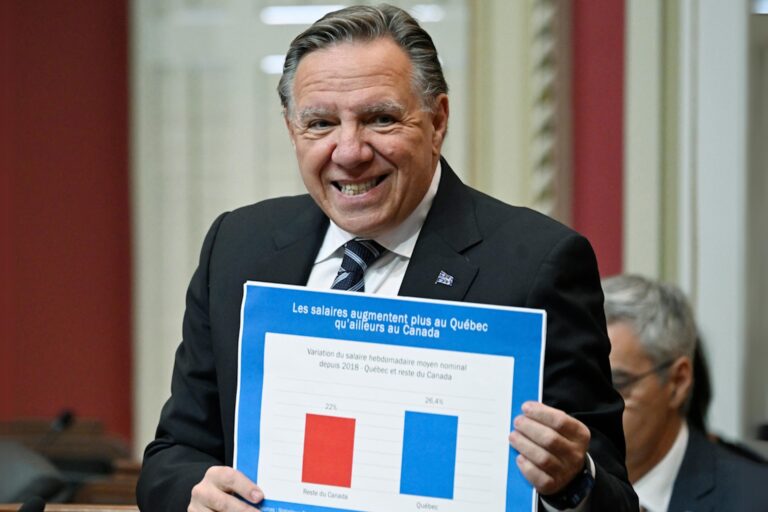
Legault said Canada “must secure the border” to prevent the bidirectional flow of illegal immigrants and drugs. Just 43 pounds of fentanyl was seized on the U.S.-Canada border in the last year. Photo: The Canadian Press/Jacques Boissinot
MONTREAL — Quebec Premier François Legault has long blamed immigrants for the housing crunch, the health-care crisis, the proliferation of crime and the alleged collapse of the province’s dominant language, among other societal ailments. So you might forgive him when he found comfort, succour and political opportunity in Donald Trump’s recent threat.
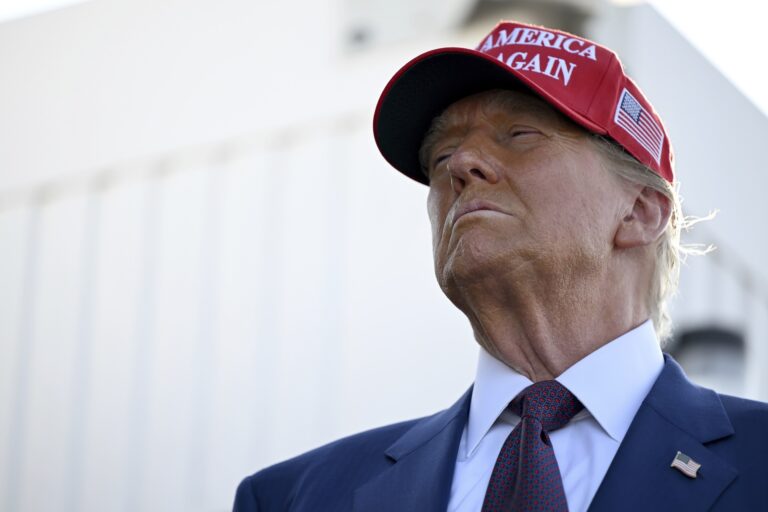
Trump, you’ll recall, promised to impose a 25 per cent tariff on all Canadian and Mexican goods until both countries stopped the flow of “Drugs” (fentanyl in particular) and “Illegal Aliens” into the United States. Casually equating America’s often dire southern border with the comparatively peaceable one to the north is a central-casting tier example of Trump’s allergy to truth—and yet it took Legault less than a day to wholeheartedly agree.
Justin Trudeau, Legault said mere hours after Trump’s dinner-hour Truth Social missive, “must secure the border” to prevent the bidirectional flow of illegal immigrants and the passage of “certain drugs” from Canada to the U.S. “It’s been years that I’ve been talking about the problems on the Canadian border,” Legault said grimly, before reiterating his demand for a seat at the table when negotiating with the U.S. After a meeting between Trudeau and provincial premiers Wednesday evening, Legault said he was “pleased” to hear that Ottawa agreed a plan was necessary.
Related Articles

Legault agreed with Trump because the two share a certain worldview, at least on a few choice identity issues. The incoming Trump administration has fever dreams about migrant convoys while blaming immigration for unaffordable housing, spiraling crime rates, overflowing schools and strained health care. The Legault government has done exactly the same during its tenure. To be fair, Legault didn’t claim (overwhelmingly legal) immigrants were eating cats and dogs, though he has said those arriving in Quebec are “suicidal” to the French language.
So when Legault essentially says Canada is Mexico North, it’s probably worth a fact check. Let’s start with the necessity of securing the border. In short, the federal government is already doing so. The annual budget of the Canadian Border Services Agency, the country’s first line of border defence, has increased by 44 per cent, to $2.7 billion, under the Trudeau government over the last decade, notably translating to a 22 per cent bump in headcount.
Though hefty, these increases can’t change facts on the ground—namely, the largest undefended border in the world. The U.S. can hardly deal with its 3,000-kilometre border with Mexico, much less build a proper wall along its length. The northern border is three times the size and cuts through vast, mostly unpopulated expanses.
As for the people sneaking over the border from Canada into the U.S., Legault is correct: the numbers have ticked upwards over the last two years. But suggesting the problem is akin to the southern border, as Legault tacitly did when endorsing Trump’s 153-word heap of hyperbole, would be laughable were it not for the very human stakes involved.
There were just under 200,000 apprehensions of illegal border crossers from Canada to the U.S. between October 2023 and September 2024, according to U.S. Customs and Border Protection statistics—a significant increase since 2022, sure, but still a fraction of the 2.1 million apprehensions on the U.S.-Mexico border in 2023–2024.
I wasn’t sure what Legault meant by “certain drugs”—I asked his office but didn’t hear back—though it’s safe to assume it’s fentanyl, given Trump’s reference. Again, facts belie the premier’s words. As my colleague Aimée Look recently reported, border officials seized just 43 pounds of fentanyl on the U.S.-Canada border between October 2023 and September 2024. During the same period, U.S. officials seized 21,100 pounds, or 490 times more fentanyl on its southern land border.
Also seized on the southern border was 959 pounds of heroin; 30,400 pounds of cocaine; and 158,000 pounds of methamphetamine—or 13 times, 13 times and 854 times more than on its northern border, respectively.
Legault’s cynical, self-serving take on Canada-U.S. relations is in stark contrast to that of Doug Ford. The premier of Ontario, no stranger to populist whimsy, instead pointed out how tariffs would be devastating to both economies, and that Canada would have to implement tariffs of its own against U.S. and Mexican goods in return. Ford then announced a multimillion-dollar ad campaign in the U.S. to drive these realities home. To put this in reductive Trumpian terms: Ford fights while Legault folds.
One last thing on immigration. Economists galore have warned that Trump’s promise to deport upwards of 11 million people and crack down on legal paths to U.S. citizenship will throttle the workforce and exacerbate inflation. It’s a reminder how, illegal or not, immigrants often perform the jobs Americans won’t.
Oddly, François Legault has gone in the opposite direction, increasing immigration rates to Quebec from just over 50,000 in 2018 to an expected 67,000 in 2025. It’s perhaps the nicest thing you can say about him. He may constantly demonize the immigrants, but at least he recognizes their importance to the economy.
Martin Patriquin is The Logic’s Quebec correspondent. He joined in 2019 after 10 years as Quebec bureau chief for Maclean’s. A National Magazine Award and SABEW winner, he has written for The New York Times, The Guardian, The Walrus, Vice, BuzzFeed and The Globe and Mail, among others. He is also a panelist on CBC’s “Power & Politics.”



Loading...
Thanks for sharing!
You have shared 5 articles this month and reached the maximum amount of shares available.
CloseThis account has reached its share limit.
If you would like to purchase a sharing license please contact The Logic support at [email protected].
CloseGift the full article!
You have gifted 0 article(s) this month and have 5 remaining.
Recipients will be able to read the full text of the article after submitting their email address. They will not have access to other articles or subscriber benefits.
Photo: The Canadian Press/Jacques Boissinot
Most Popular This Week




In-depth, agenda-setting reporting
Great journalism delivered straight to your inbox.
Commentary
Carmichael: Canadian ignorance about India is a strategic weakness
Briefing
Aritzia shares pop after earnings rise 204%
First Nation in Alberta goes to court over fast-tracked oil pipeline
Chinese EV maker Geely Auto Group to launch in Canadian market in 2027
Best business newsletter in Canada
Get up to speed in minutes with insights and analysis on the most important stories of the day, every weekday.
Exclusive events
See the bigger picture with reporters and industry experts in subscriber-exclusive events.
Membership in The Logic Council
Membership provides access to our popular Slack channel, participation in subscriber surveys and invitations to exclusive events with our journalists and special guests.





