MONTREAL — At this year’s Startupfest, the annual techy schmooze-a-thon held on the concrete banks of Montreal’s Old Port, a rank undertone crept through the halls and conference rooms: AI is coming for your business, and there’s a decent chance the experience will suck.
Skip to content


Commentary: Quebec Ink
The AI boom is doing strange things to Quebec’s tech sector
The province’s tech sector is outperforming similar-sized nations, and the rest of Canada. Some argue it can also be a winner in the AI race.
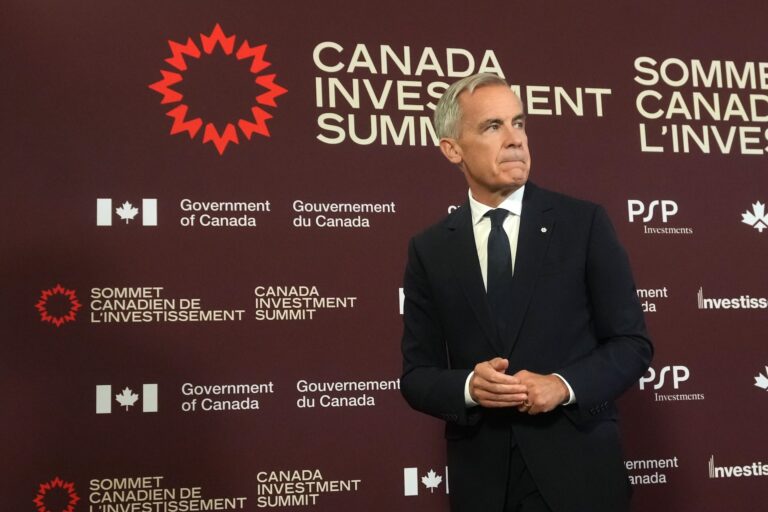
Quebec’s tech sector grew faster than the Canadian average between 2020 and 2025, and has raised more as a province than comparatively sized countries like Belgium, Austria and Ireland Photo: The Canadian Press Images/Mario Beauregard
MONTREAL — At this year’s Startupfest, the annual techy schmooze-a-thon held on the concrete banks of Montreal’s Old Port, a rank undertone crept through the halls and conference rooms: AI is coming for your business, and there’s a decent chance the experience will suck.
A glance at the itinerary gives a pretty decent picture of the pathos. AI could well rob founders of their intellectual property, decimate their sales, spark a king-hell market correction and otherwise delegate hitherto well-paying tech jobs to the ether. Watching AI’s spread is like witnessing a star explode—big, fast and near-undescribable. Or, if you prefer, AI is like Jell-O, as Panache Ventures chairman Mike Cegelski put it to me, in that trying to grasp it is folly.
Related Articles

Strange, then, that much of Quebec tech seems so chill these days. One of Startupfest’s few French-only panels was a breezy affair, with none of the angst typifying many other Startupfest chats. It featured Marc Campagna, a guy from Baie Comeau who sold four-year-old startup oxio to Cogeco for $100 million in 2023. Quebec, Campagna said, was a relative tech backwater 10 years ago. Today, its infrastructure of funders and founders has allowed him to to build out his current project, the telco SAAS Gaiia, without having to bugger off to Silicon Valley.
There are hard numbers behind Campagna’s, and the province’s, relative optimism. Quebec far outperforms the rest of Canada, not to mention the likes of Denmark and Norway, in its ability to birth “unicorns,” privately held companies with valuations of at least $1 billion, according to a new report from industry non-profit Québec Tech. Its tech sector grew faster than the Canadian average between 2020 and 2025, and has raised more as a province than comparatively sized countries like Belgium, Austria and Ireland, according to the report.
To be sure, venture capital dollars have shrunk in recent years, reflecting an industry-wide fundraising downturn. Even here, though, Quebec has been able to stanch the bleeding better than its brethren. Venture capital deal activity in Quebec tech companies was down 55 per cent to $1 billion in 2024, compared to the high water mark of 2021. This might not sound like something to write home about, until you consider the drop was way less than neighbouring Ontario, at 65 per cent.
I last spoke to Richard Chénier back in November. Chénier, the CEO of Québec Tech, was behind the wheel of his Tesla, a car he loves made by a man he hates, trying to find a silver lining in the sudden Trump doom cloud hovering over us all. Eight months later, he has seemingly found it in the very source of everyone else’s fears these days.
Much in the way that everyone and their cousin went hog wild on apps a decade ago, the current AI buzz will create a bubble from which Quebec is uniquely positioned to benefit. “Move fast, spray and pray,” he said of the ideal AI investment strategy in the province. That is to say, money-gun a lot of smaller cheques to many startups in a hurry. “Don’t start with a problem, put a bunch of people who have skills in AI and tell them to find something to solve and go deep,” he told me this week.
Quebec needn’t be scared of AI. After all, the province essentially invented it in the 1990s, when Yoshua Bengio came to the Université de Montréal to parse the intricacies of deep learning. It was thanks largely to Bengio that AI became commercialized—a fact he isn’t all that jazzed about these days. It’s also why Montreal is home to Canada’s AI supercluster, not to mention the highest concentration of deep learning researchers in the world.
There will be a ton of failures and false starts, no doubt. AI developments are potentially scary, and humanity has yet to fathom its implications. Still, it is comforting to think AI’s home town, and home province, stands to benefit from the chaos.
Martin Patriquin is The Logic’s Quebec correspondent. He joined in 2019 after 10 years as Quebec bureau chief for Maclean’s. A National Magazine Award and SABEW winner, he has written for The New York Times, The Guardian, The Walrus, Vice, BuzzFeed and The Globe and Mail, among others. He is also a panelist on CBC’s “Power & Politics.”



Loading...
Thanks for sharing!
You have shared 5 articles this month and reached the maximum amount of shares available.
CloseThis account has reached its share limit.
If you would like to purchase a sharing license please contact The Logic support at [email protected].
CloseGift the full article!
You have gifted 0 article(s) this month and have 5 remaining.
Recipients will be able to read the full text of the article after submitting their email address. They will not have access to other articles or subscriber benefits.
Photo: The Canadian Press Images/Mario Beauregard
Most Popular This Week




In-depth, agenda-setting reporting
Great journalism delivered straight to your inbox.
News
Panel decries Canada’s chaotic way of funding world-class science
Briefing
AI is pushing insurers to become asset managers, Canadian CEOs say
Trump administration faces lawsuit over 50% tariffs on Canadian goods
Canada-U.S. trade war to reduce real GDP by 1.4% over 2024 levels after five years: PBO
Best business newsletter in Canada
Get up to speed in minutes with insights and analysis on the most important stories of the day, every weekday.
Exclusive events
See the bigger picture with reporters and industry experts in subscriber-exclusive events.
Membership in The Logic Council
Membership provides access to our popular Slack channel, participation in subscriber surveys and invitations to exclusive events with our journalists and special guests.