MONTREAL — Montrealer and AI researcher Joëlle Pineau, currently forging the metaverse’s very DNA, can’t define exactly what the metaverse is. “To be honest, we’re still building it. And so to have a definitive definition of what it is so early in the process of creating is probably not the right approach,” she told me via Zoom recently.
Skip to content

Commentary: Quebec Ink
How Montreal is becoming the centre of the metaverse
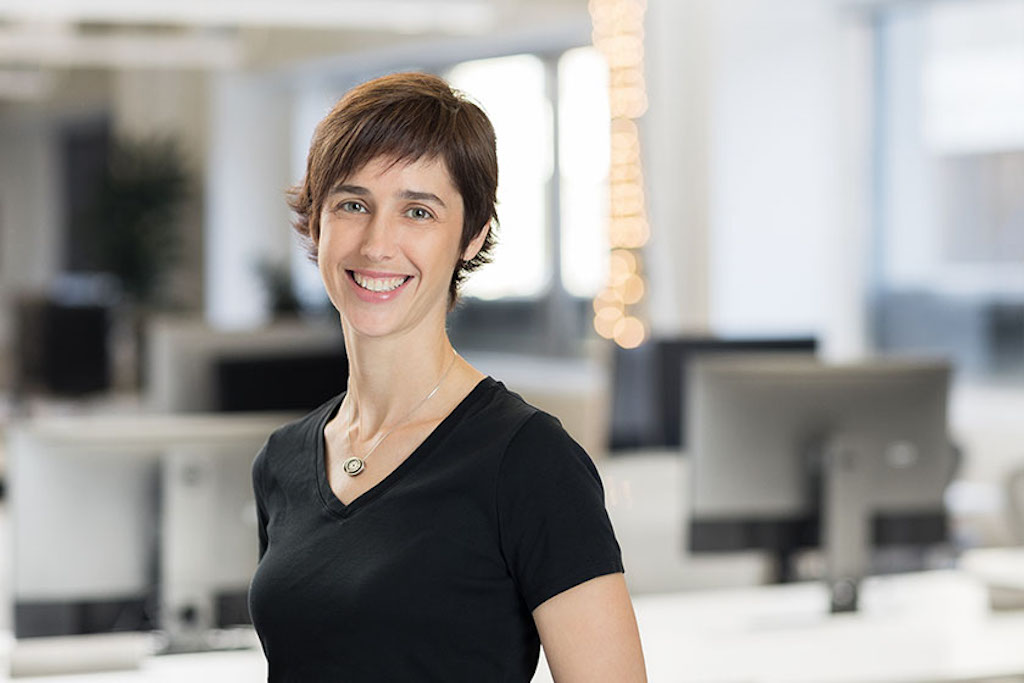
Joëlle Pineau bridges the worlds of education and private-sector research in deep learning Photo: Mila/Handout
MONTREAL — Montrealer and AI researcher Joëlle Pineau, currently forging the metaverse’s very DNA, can’t define exactly what the metaverse is. “To be honest, we’re still building it. And so to have a definitive definition of what it is so early in the process of creating is probably not the right approach,” she told me via Zoom recently.
Related Articles


The world of Big Tech, populated as it is with armies of public-relations types, isn’t known for its candour, so Pineau’s words are refreshing. They’re also telling. As managing director of fundamental AI research at Meta, Pineau oversees 12 of the company’s so-called Fundament AI Research (FAIR) labs around the world. FAIR might be a highly theoretical shop—“Questions Are All You Need to Train a Dense Passage Retriever” is the title of Pineau’s most recent co-authored paper—but its output is at the headwaters of Meta’s commercial enterprises. As FAIR’s chief AI researcher, Pineau is something of a god of the metaverse’s unbuilt cosmos. And she is far from the only person who doesn’t quite know what she’s creating.
Popular attempts to decipher the metaverse are exactly as old as Facebook’s aspirational rebrand to Meta in October 2021. It has been described as a video-game space, a VR-enabled social platform, a tech-addled dystopia, a futurist fever dream, an NFT storefront and potentially boffo real estate market. It is at once bigger than the internet yet as trifling as Mark Zuckerberg’s nerdy hubris.
What is clear is this: the very real city of Montreal has an outsized role in the creation of the metaverse. AI and machine learning are crucial to the metaverse, mostly because conjuring the fully immersive and frictionless cyberworld that Zuckerberg promises takes an unfathomable amount of data—too much for mere humans to manipulate and put to use on their own. That Pineau is riding herd from Montreal over the AI systems performing this heavy lifting is no coincidence, because AI is as Montreal as good bagels and bad roads.
The Coles Notes version of how this came to be: in the 1990s, fresh from postdoctoral studies at MIT, comp-sci prodigy Yoshua Bengio proselytizes the gospel of deep learning from his perch at the Université de Montréal. In large part spurred by Bengio, AI evolved from buzzword to research field to commercially exploitable commodity, culminating with Bengio’s founding in 1993 of the Montreal Institute for Learning Algorithms (MILA). In 2017, MILA became a joint venture between Université de Montréal and McGill University to foster a “unique space for innovation in artificial intelligence and technology transfer.” Pineau, a McGill prof since 2004, began splitting her time between the university and Meta in 2017, and says the metaverse is richer as a result.
“I love Montreal, I want to live in Montreal, so that’s kind of the non-negotiable piece of the equation for me,” she said in our interview. “I lead research labs across the world. I have labs in the U.S. I have labs in France, the U.K. and Tel Aviv. I have researchers across Europe. And that means that each of them gets to create a piece of the metaverse. It’s important to me that this kind of technology gets created from a much wider variety of people than just a group sitting in Silicon Valley.”
There is a Faustian aspect to Pineau’s partial defection to Meta, given that her gig with Big Tech means taking her away from the work that has long inspired her: training up the next generation of AI minds. McGill, though, sees it as a win-win. “Having Dr. Pineau work at Facebook and at McGill is good for both,” the university’s vice-principal for research and innovation, Martha Crago, told me. “She brings her research excellence to Facebook, leading their labs internationally.
“At the same time she brings her private sector experience into the lives of her students at McGill. She is a fine example of someone who can bridge both worlds and a wonderful model of an outstanding AI woman scientist.”
(I also reached out to Bengio to ask about MILA and Pineau. “Sorry but I won’t be able to contribute to this discussion,” he told me. “I don’t have anything to say about it.” What is it with fundamental researchers and radical candour?)
The metaverse, ill-defined as it is, has a massive problem looming on its virtual horizon. Facebook famously goosed its traffic by prioritizing “engagement” on the platform—a benign-sounding term for favouring divisive and even violent or hateful content. One need look no further than Myanmar, where thousands of Rohingya Muslims were victims of sexual violence and genocide in large part because of the misinformation spread on Facebook, to see the effects of this.
I asked Pineau how the metaverse would prevent similar content from permeating the metaverse, where moderation is infinitely more complex than simply removing a piece of content. “I just want to be a little careful about what is actually happening in terms of tackling these problems,” she said. “I’ve observed deeply that we’ve made a tremendous amount of progress in terms of content moderation, a lot of it driven by AI.
“That doesn’t mean that we’ll get it right in the metaverse,” she continued. “But I think the thing that makes me at least hopeful is that we will learn from the things we’ve done on the internet, that there’s a lot of what we did there that is transferable.”
It’s a fascinating, if fanciful, notion—as well as another bit of radical candour: the metaverse won’t be perfect, but will be perfectible thanks to AI. Now if only she knew what she was building.
Martin Patriquin is The Logic’s Quebec correspondent. He joined in 2019 after 10 years as Quebec bureau chief for Maclean’s. A National Magazine Award and SABEW winner, he has written for The New York Times, The Guardian, The Walrus, Vice, BuzzFeed and The Globe and Mail, among others. He is also a panelist on CBC’s “Power & Politics.” @MartinPatriquin



Loading...
Thanks for sharing!
You have shared 5 articles this month and reached the maximum amount of shares available.
CloseThis account has reached its share limit.
If you would like to purchase a sharing license please contact The Logic support at [email protected].
CloseGift the full article!
You have gifted 0 article(s) this month and have 5 remaining.
Recipients will be able to read the full text of the article after submitting their email address. They will not have access to other articles or subscriber benefits.
Photo: Mila/Handout
Most Popular This Week




In-depth, agenda-setting reporting
Great journalism delivered straight to your inbox.
News
Panel decries Canada’s chaotic way of funding world-class science
Briefing
Feds pledge $15M for U.S. satellite navigation company Xona to expand in Montreal
Inovia raises US$200M for new VC fund as it eyes AI’s impact
43% of eligible Albertans voted ahead of Monday’s referendum
Best business newsletter in Canada
Get up to speed in minutes with insights and analysis on the most important stories of the day, every weekday.
Exclusive events
See the bigger picture with reporters and industry experts in subscriber-exclusive events.
Membership in The Logic Council
Membership provides access to our popular Slack channel, participation in subscriber surveys and invitations to exclusive events with our journalists and special guests.





