Listen Now
0:00
MONTREAL — Nemaska Lithium is down in the dumps yet again.
Quebec opposition politicians recently lined up to pillory the company, saying it benefitted from $1.2 billion in taxpayer largesse without producing a sellable ounce of lithium. “A catastrophe,” said Liberal MNA André Fortin. “A fiasco,” said Paul St-Pierre Plamondon, the leader of the Parti Québécois. During a recent parliamentary hearing on the apparent fiasco, Caisse de dépôt president Charles Emond swore Quebec’s public pension fund manager wouldn’t invest another public cent in the company.
The reason for their ire: a 50-page auditor general critique of the public financing of critical mineral mining projects in Quebec. In short, the report says this process has few guardrails, with the provincial government failing to identify best value principles, running roughshod over its own environmental laws, and often keeping the public in the dark over what is approved and why.Nemaska isn’t named in the report, though everyone quickly figured out the company based in Bécancour was the main benefactor of this blinkered system. I asked Quebec’s natural resources ministry for its reaction to the report but the department didn’t respond by deadline.
Related Articles

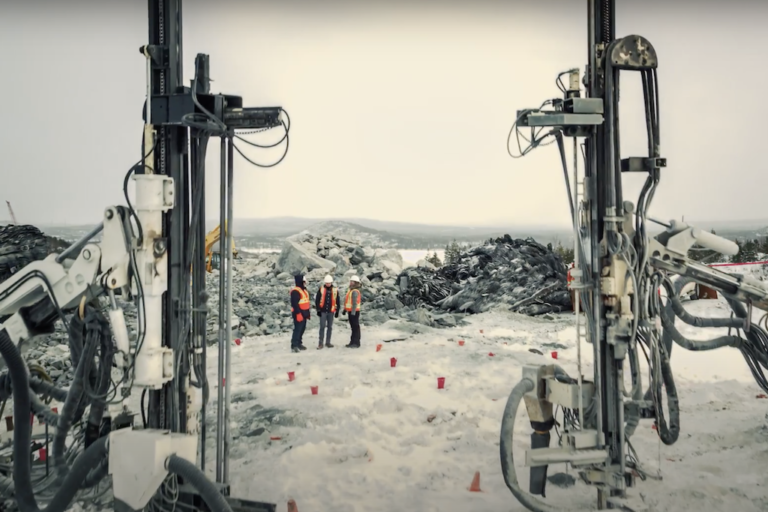
Nemaska’s travails are both expensive and rich with symbolism. Founded in 2007, when Tesla was barely a spot on the horizon, Nemaska promised to wring riches from the burgeoning appetite for metal by way of one of the world’s largest lithium deposits, located In Cree territory in northern Quebec.
Much like the market value of lithium itself, Nemaska was boom-and-bust, skirting bankruptcy and leaving tens of thousands of investors in the lurch by 2020. Nonetheless, the government championed the company not two years later, with then-economic minister Pierre Fitzgibbon declaring Nemaska “a pillar” of Quebec’s EV battery production strategy. Along with the likes of GM and Ford, Nemaska became a symbol of Quebec’s plan to power the next generation of automobiles. Four years later, it has become an example of this plan’s utter folly.
In Nemaska’s case, though, two things can be true. Yes, the government’s money gun-esque approach to funding the company was very likely self-serving, hype-driven and ultimately dumb. Yet it is probably even dumber for Quebec to stop investing in Nemaska now, as it promised to do earlier this year as the wretched headlines started stacking up.
First, consider the lithium market. Yes, it’s volatile, having traded for as much as US$38.47 and as little as US$2.72 per pound in the last five years. Yet this chaos masks lithium’s long-term appeal, with demand for the metal expected to triple by 2035, according to a 2025 International Energy Agency report, driven in large part by China’s gluttonous demand for batteries.
Canada is a pisher when it comes to lithium, despite having oodles of the stuff. Nemaska is a notable exception, both because of the deposits it controls and its eventual ability to turn lithium rocks into valuable white powder.
In February, mining giant Rio Tinto gained a majority stake in the company. Construction and engineering at Nemaska’s lithium hydroxide plant are at an advanced stage, and the mining giant has signalled it will dump more money to bring the project to fruition. Quebec’s stake will only diminish as Rio Tinto does so.
Nemaska’s corporative lot is also much better off now than in its wildly speculative early days. Rio Tinto, one of the world’s biggest mining companies, is unlikely to go anywhere. Its initial 2025 investment in Quebec lithium production, despite the Trump-spawned attack on the EV industry, is a blue-chip endorsement of Nemaska’s long-term commercial viability—as well as the viability of Quebec’s EV battery strategy as a whole.
I recently spoke to Donald Olivier, CEO of the Société du parc industriel et portuaire de Bécancour (SPIPB), Bécancour’s industrial and port authority. Given recent dark headlines regarding the EV sector in his backyard—including battery maker Northvolt’s collapse, BASF’s strategic retreat and GM’s cancellation of its second phase—I expected a lot of awkward silences to my questions.
Yet Olivier was weirdly optimistic. He pointed out that the remaining EV battery-related companies In Bécancour are big and wealthy, Nemaska very much included, meaning they can weather the industry’s short-term doldrums, unlike many startups. Olivier also noted how battery tech is also defence tech, and teased a few imminent defence industry spends in Bécancour. He’s already seen an uptick in activity at the site—there are as many as 1,000 cars parked on SPIPB properties each day, he said—and he expects it to get better after the U.S. midterms in the fall.
Nemaska Lithium is a convenient punching bag, particularly with a provincial election less than five months away. But short-term scapegoating will only hurt Quebec’s long-term investment prospects in the minerals buried within its borders. It’s been an expensive ride so far. Getting off too early will be pricier still.
Martin Patriquin is The Logic’s Quebec correspondent. He joined in 2019 after 10 years as Quebec bureau chief for Maclean’s. A National Magazine Award and SABEW winner, he has written for The New York Times, The Guardian, The Walrus, Vice, BuzzFeed and The Globe and Mail, among others. He is also a panellist on CBC’s “Power & Politics.”