The departure of CEO Peter Carlsson from the helm of Northvolt last week came just as the company’s bankers and advisers were painting a stark picture of its finances in U.S. bankruptcy proceedings. Dozens of documents filed in the case lay bare a company that invested heavily to compete against China’s goliath battery industry—then quickly ran out of juice.
Skip to content

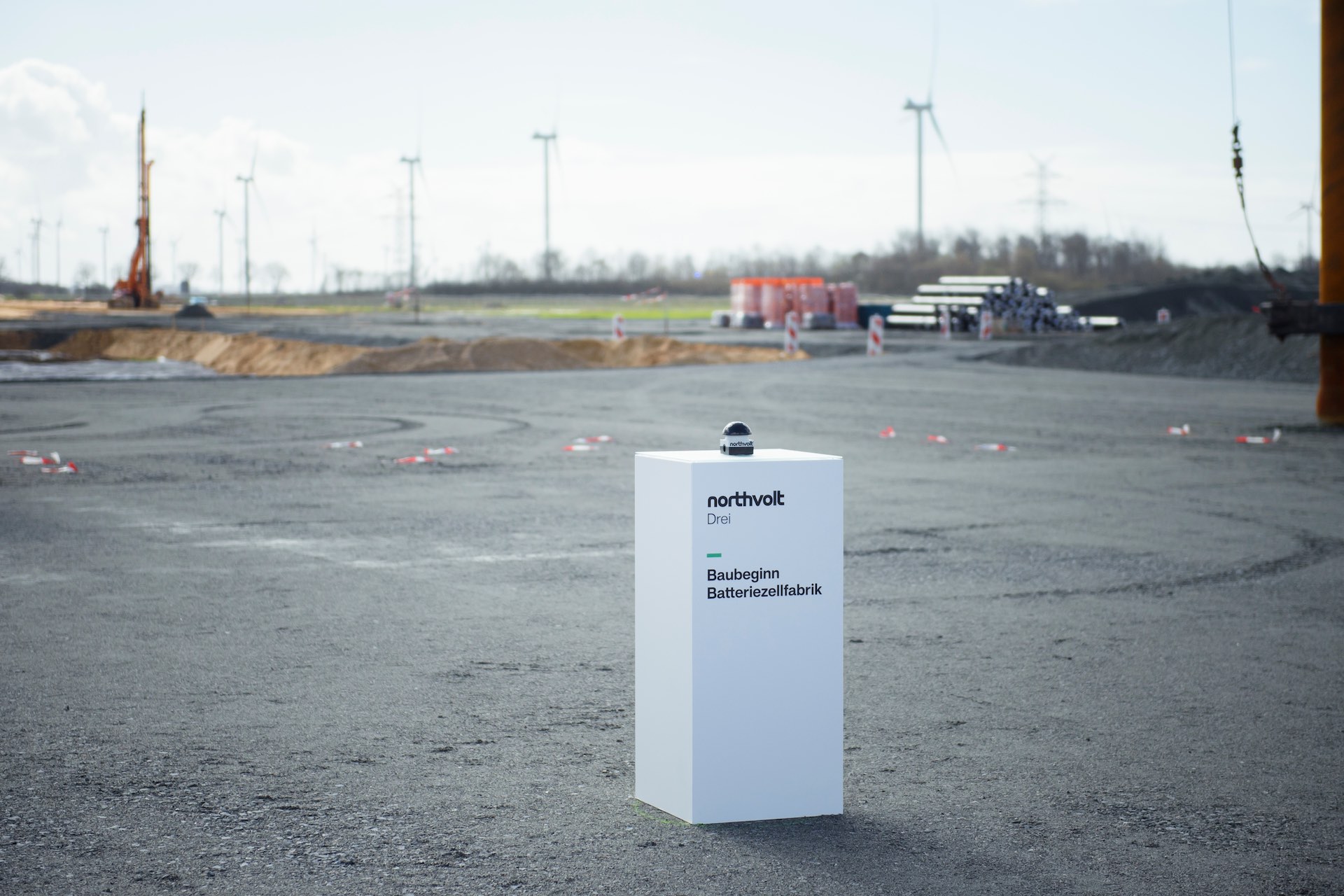 The ceremonial "launch button" dignitaries pressed on March 25, 2024, to mark the ground-breaking for Northvolt's gigafactory in Lohe-Rickelshof, Germany. Photo: Getty Images/Gregor Fischer
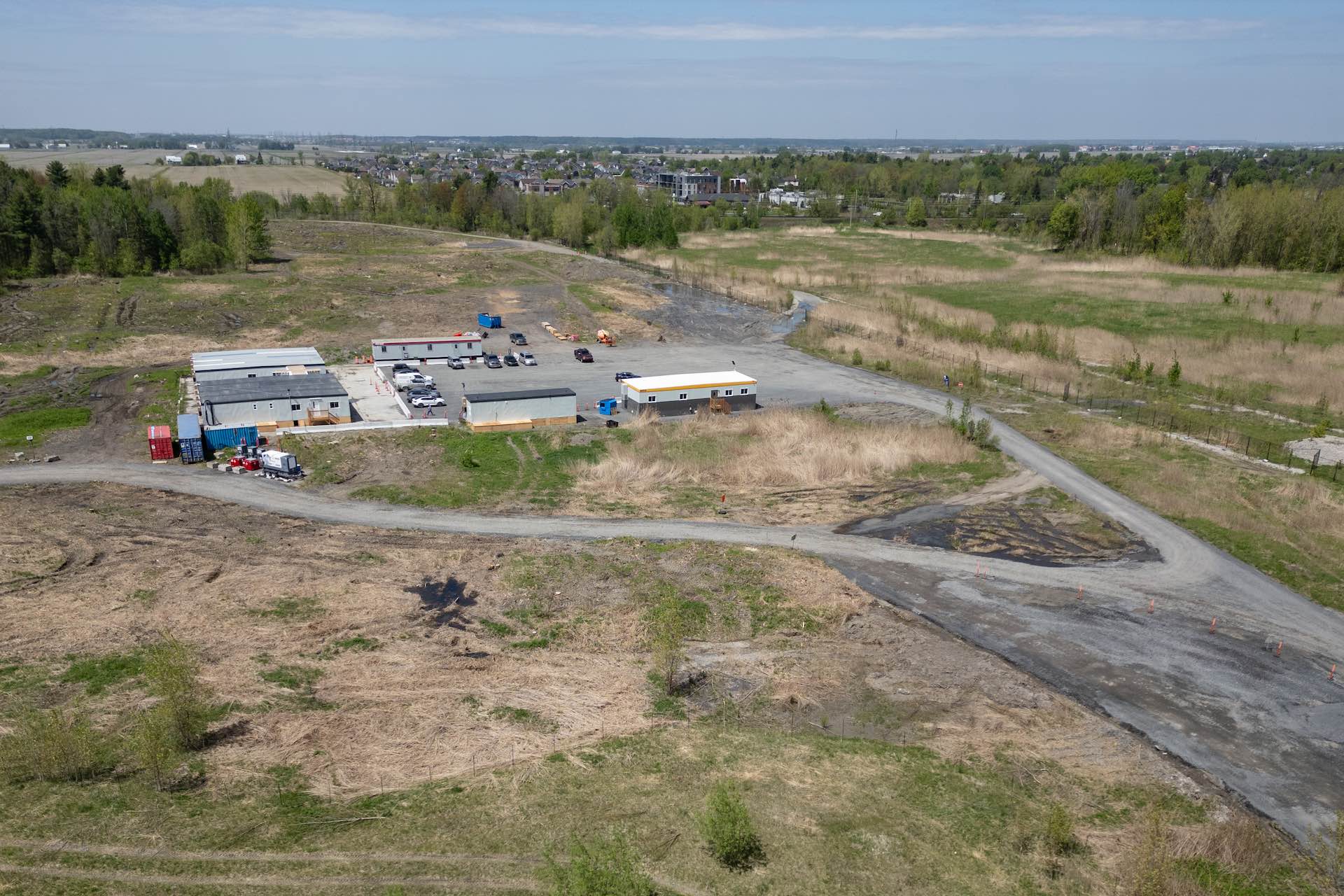 The site east of Montreal where Northvolt proposes to build a battery manufacturing plant. Photo: The Canadian Press/Christinne Muschi

News
How Northvolt burned through its billions
US$8B and political support in Europe and North America wasn’t enough to beat China’s battery empire
Christopher Gorelczenko, a senior director at Northvolt, holds a mockup of a Northvolt battery at a factory in Skellefteå, Sweden, in February 2022. The firm filed for creditor protection in the U.S. last week. Photo: AFP via Getty Images/Jonathan Nackstrand
The departure of CEO Peter Carlsson from the helm of Northvolt last week came just as the company’s bankers and advisers were painting a stark picture of its finances in U.S. bankruptcy proceedings. Dozens of documents filed in the case lay bare a company that invested heavily to compete against China’s goliath battery industry—then quickly ran out of juice.
The resulting portrait is one of a startup led by daring former Tesla executives whose business plan hinged on re-creating a capital-intensive business model—but in high-cost countries. Unlike Elon Musk, they enjoyed no hockey-stick spike in electric-vehicle demand when it came time to produce batteries and offset their company’s spiralling costs.
Talking Points
- Despite raising money at the level of top startups like Shein, Anthropic or Impossible Foods, Northvolt said it could not scale up at the pace of its Asian rivals
- Its failure raises questions about whether firms that are neither automakers nor joint ventures with Asian firms can succeed—and specifically, whether Northvolt can succeed in Quebec
Now, Northvolt’s spending patterns and its future business plans are raising questions about the remaining executive team’s fitness to steward the US$240 million in its Quebec bank accounts. It’s one of the biggest cash accounts left after the firm filed for Chapter 11 creditor protection, and one heavily funded by Quebec taxpayers.
The money remains in place because Northvolt’s subsidiaries in Canada and Germany aren’t included in the U.S. bankruptcy court proceedings, which were initiated in Texas. By its own calculation, though, the rest of Northvolt is burning through about US$30 million in cash per week, leaving the parent company with about one week’s worth of expenses when it filed for protection last Thursday.
“You’ve gone from this situation where money has been kind of free flowing and extremely positive about the possibility of Northvolt succeeding,” said Iola Hughes, head of research at Rho Motion, a data and consulting firm focused on the EV and battery markets. “This is definitely going to send shock waves through the industry.
Related Articles


“It’s certainly going to make it more difficult for people fundraising in the space now, when there’s evidence of failure.”
It’s a dramatic turn of events for a firm that had secured about US$55 billion in orders and raised at least US$8 billion in funding since January 2017. Founders Carlsson and Paolo Cerruti brought the company into being in 2015 with what Northvolt described in court filings as “nothing more than their industry experience and bold vision.” Both had worked in Tesla’s supply chain and operations.
With governments and automakers embracing the EV transition, the pair had little trouble selling that vision to investors. Before their technology development lab even came online in December 2019, they’d secured partnerships, investments or loans from firms like ABB, BMW, the European Investment Bank and Siemens. Nearly two and a half years before it produced its first lithium-ion battery cell, Northvolt had raised a US$1-billion round from investors including Goldman Sachs and Volkswagen Group.
The firm’s equity financing is now on par with companies like fast-fashion giant Shein and AI darling Anthropic, according to Crunchbase estimates, and surpasses the likes of Impossible Foods and Cohere. But the hope that money represented never translated into results. Northvolt’s annual net revenue stands at US$58 million and it has yet to turn a profit. Instead, its US$285-million net loss in 2022 widened to US$1.2 billion in 2023. It owes US$5.8 billion to its biggest lenders.
A year ago, Northvolt hired the investment bankers at Rothschild & Co. to assist with its much-anticipated IPO. Today, the financial advisory firm is working on Northvolt’s bankruptcy protection case.
The mistakes and shifting market forces that brought the company to this point are many. But one of its challenges is structural, said Greig Mordue, an associate professor at McMaster University, who previously led corporate planning efforts for Toyota’s Canadian manufacturing division. For years, he noted, automakers have had full oversight of their own engine designs—and must face the consequences when their plants fall behind or fail to meet quality standards.
In EV production, batteries are plainly an integral component, yet many automakers source them from outside suppliers. And suppliers, Mordue said, don’t get the same leeway. “It was probably inevitable that a company like Northvolt, which is basically a great big startup trying to find its way in the automotive industry, would have troubles,” he said.
The company’s breakneck plans to keep scaling and compete for high-priced talent in Europe and North America left it with a trail of complex financial systems. The filings show Northvolt has a network of 169 accounts across nine banks—so complex it has asked the court to keep them all open, because it would be difficult to untangle them. It has failed to reimburse US$20,000 of expenses fronted by employees, and owes US$3.1 million in unpaid health insurance and pension obligations. In the U.S., it owes US$921,000 in severance to employees it let go.
Even now, after making deep cuts to its workforce, the company says in the filings it’s willing to spend to improve employee morale. Its expenses have included relocation bonuses and benefits for bikes, gym memberships and English lessons. Its next payroll date is today.
Dimitrios Tsilikis, whose doctoral work at the University of Toronto focuses on U.S. bankruptcies, said liquidity problems and cash-management systems like Northvolt’s aren’t unusual in cases of this size. It would make sense for Northvolt to leave subsidiaries like its Canadian operations out of the proceedings if those entities have their own property and business plans, Tsilikis said. But subsidiaries can still change hands if the ownership of the parent company changes as a result of bankruptcy proceedings, he noted.
“This is definitely going to send shock waves through the industry.”
Lacklustre EV demand. The departure of the CEO. Trouble delivering batteries on time and up to standard. A sudden lack of interest among investors. To Tsilikis, all of it suggests Northvolt is undergoing something more severe than a liquidity crisis. Those factors might make Chapter 11 “a safe, temporary haven to plan a structured liquidation or sale rather than an actual reorganization,” he said.
Northvolt told the courts its business plan assumed the electric vehicle industry would continue its previous pattern of consistent growth. That’s the overarching reason for its current financial state, it said.
Instead, the company said, it faced both market and operational challenges, missing production targets amid technical difficulties while “established Asian manufacturers continued scaling up production and pushing down battery prices.” Eventually, Northvolt said, “attitudes of certain key stakeholders changed.” Rothschild approached 19 potential lenders this autumn. Other than existing customer Scania, none was interested in further investment.
Meanwhile, Northvolt is carrying several debt packages, each worth tens or even hundreds of millions, with some due as soon as early 2025. Among them is a C$240 million “land loan” from the Quebec government, which has a 4.99 per cent interest rate and matures in October 2038 (the court filings, which cite figures in U.S. dollars, say Northvolt currently owes about US$181 million on the loan, or nearly C$254 million at the current conversion rate). It also expects to owe US$21.6 million in taxes and fees this year across its business.
Then there’s the awkward matter of Chinese content in its manufacturing process and the batteries themselves. Northvolt has acknowledged that political backing from “actors who hoped to reduce Europe’s reliance on Asian battery manufacturers” was crucial in getting it off the ground. But the court filings disclose that it “remains reliant on Chinese suppliers for certain critical materials and machinery, which leaves the company vulnerable to supply chain disruptions.”
The company’s path forward remains murky. For now, its plans rely heavily on its yet-to-be-completed, $7-billion Quebec plant, which it describes as a “pillar of the company’s future growth strategy.” It has postponed construction of that facility while it looks for potential partners, proposals from whom it hopes to get by early December. Northvolt says its new business plan and yet-unnamed CEO will focus on “sustainable growth” and “operational efficiency.”
At the very least, it appears to have bought some time. Rho Motion’s Hughes predicts that 2025 will be a “testing year” for Europe’s EV ecosystem, which was wounded by Germany’s abrupt withdrawal of EV subsidies this year. Over the next 12 months, Hughes said, automakers will face a “step change” in regulations that will force them to sell more EVs or face fines.
Whether they’ll turn to Northvolt for batteries when those rules come into force remains to be seen. Hughes foresees more European automakers looking into joint ventures with Japanese or South Korean battery makers instead of going it alone against China.
“You have established Asian players who can guarantee high-quality product, ultimately at a much cheaper price,” said Hughes. “It just highlights how difficult it is to build batteries right now.”



Loading...
Thanks for sharing!
You have shared 5 articles this month and reached the maximum amount of shares available.
CloseThis account has reached its share limit.
If you would like to purchase a sharing license please contact The Logic support at [email protected].
CloseGift the full article!
You have gifted 0 article(s) this month and have 5 remaining.
Recipients will be able to read the full text of the article after submitting their email address. They will not have access to other articles or subscriber benefits.
Photo: AFP via Getty Images/Jonathan Nackstrand
The ceremonial "launch button" dignitaries pressed on March 25, 2024, to mark the ground-breaking for Northvolt's gigafactory in Lohe-Rickelshof, Germany.
The site east of Montreal where Northvolt proposes to build a battery manufacturing plant.
Most Popular This Week



In-depth, agenda-setting reporting
Great journalism delivered straight to your inbox.
Commentary
Carmichael: Being boxed in will help Canada focus on what matters
Briefing
Rio Tinto gets nearly $165M in additional federal funds for Quebec aluminum
U.S. to lift tariffs on some Canadian products crucial to Maine: Collins
Carney warns of tech dependence after Starlink disruptions in Ukraine
Best business newsletter in Canada
Get up to speed in minutes with insights and analysis on the most important stories of the day, every weekday.
Exclusive events
See the bigger picture with reporters and industry experts in subscriber-exclusive events.
Membership in The Logic Council
Membership provides access to our popular Slack channel, participation in subscriber surveys and invitations to exclusive events with our journalists and special guests.






