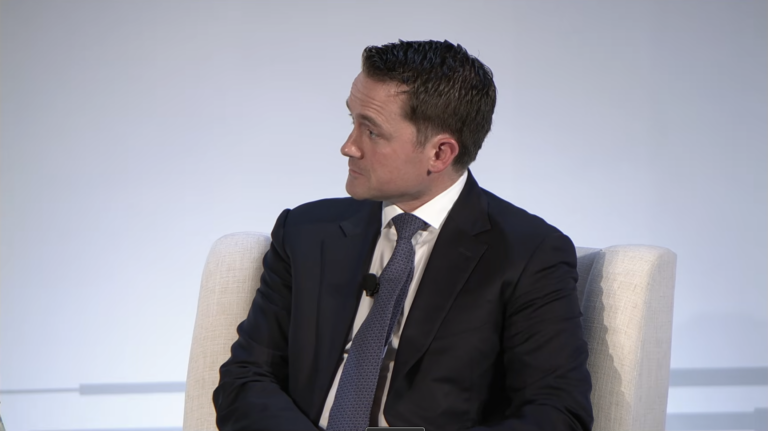
MONTREAL — Much like the company he oversees, Twitter independent chairman Patrick Pichette is a contradiction.
Twitter, the often shambolic social media platform, is part graffiti wall, part watering hole—an ode to Silicon Valley’s say-anything ethos, as well as the overindulgences it tends to engender.
But Twitter the company, which publicly espouses that other Valley ethos of open governance, is a closed book. Nowhere is this more obvious than in the case of Pichette, the Montreal-born former Google CFO and current partner at venture capital firm Inovia, who is somehow both one of the most prominent Canadians in Silicon Valley and among those with the lowest profile.
Talking Point
For much of his career, Montreal-born executive and investor Patrick Pichette has cultivated a low profile in Silicon Valley. As Twitter’s newly minted independent chairman, the former Google CFO oversees a world where invective and conflict generally rule the day. What exactly does Pichette do at Twitter? What does he think of CEO Jack Dorsey? And what of the compendium of lies and spite that is Donald Trump’s Twitter account? The answers certainly aren’t coming from him.
In June, Pichette was appointed Twitter’s first independent chairman after a three-year stint as a board member. The position of independent chairman, according to the boilerplate, is designed to provide “the board with leadership, and to harness the talents and energy contributed by each of the individual directors.”
Exactly how this applies to Twitter, a company whose governance still bears the vestiges of its “Gong Show”-esque origins, is an interesting question. Also interesting: what exactly does Pichette do? What is his management style? How does he get along with Twitter CEO Jack Dorsey?
And while we’re at it, what does he think of Donald Trump’s Twitter account, arguably the internet’s most-read compendium of lies, spite and knuckle-dragging fury?
These questions aren’t unimportant. Twitter created Pichette’s position in part to assuage New York-based activist hedge fund Elliott Management, which was frustrated by the company’s governance and wanted to remove Dorsey from his perch. Elliott’s aggressive stance—not unusual for the generally bellicose investing group—was bolstered by market fundamentals: despite its heft in the political and media spheres, Twitter has historically underperformed compared to larger rivals Facebook and Snap. (Elliott Management declined to comment.)
As a “hyper-growth” specialist who played a role in many of Google’s biggest-name acquisitions over the years, Pichette would seem to be uniquely suited to pulling Twitter from its doldrums—even if he’s never been much of a Twitter user.
His first contribution on the site arrived on Sept. 19, 2017, the very day the company announced his appointment to the board. The 57-year-old avid outdoorsman now uses the platform to chronicle his myriad adventures: mountain biking in New Mexico; camel rides in Jordan; a paddle through Kenauk Nature, the reserve he co-owns in Montebello, Que.
But even a cursory glance at his feed shows he’s firmly on the Valley’s progressive side. He’s open about his likes (affordable housing and universal health care) and dislikes (guns, Jet-Skis and Trump’s knee-jerk anti-environmentalism and “bullying and egotistic narcissism.”)
This puts him in an interesting position. Pichette’s a finance guy, in a job created in response to Elliott Management’s dissatisfaction with Twitter’s underachievement. Other parts of the March deal with Elliott included a pledge to grow Twitter’s user base, revenue and share of the digital ad market.
Like other social media platforms, Trump presents a challenge for Twitter. His own missives, and the circus surrounding them, make him the platform’s top draw, giving potential users a sense that if they’re not on Twitter, they’re missing out on the action.
At the same time, the noise and fury of Trump’s brand—name-calling, casual racism and systematic all-caps assault on the senses—clearly isn’t good for Twitter’s. The furore surrounding Trump has ramped up the platform’s reputation as a battlefield in the culture wars, a place those with extreme views go to fight those who disagree. If you’re a company looking to spend ad dollars, this might make you think twice about whether Twitter’s a safe place for your message. The company’s fundamental challenges are clear in its moribund second-quarter advertising results, which it blamed on “U.S. civil unrest.”
Twitter’s taken some tentative steps. The company began fact-checking Trump’s tweets earlier this year, before Pichette’s appointment, and recently began culling thousands of accounts associated with QAnon, which among other things believes Trump is the only thing standing between the U.S. and a global cabal of Satan-worshipping pedophiles.
Yet too much censorship could also drive users away, especially those who believe social media platforms are biased against conservatives. (Elliott Management founder Paul Singer, incidentally, is a major Republican donor.)
Official Twitter clams up when you ask about Pichette’s role. Inquiries to the company’s public relations in the U.S. went unanswered. In a reply to my questions about Pichette’s role at the company, Twitter Canada spokesperson Cam Gordon forwarded a link to Twitter’s corporate governance guidelines, which were amended three years before Pichette’s position even existed.
I also hassled several of Pichette’s current and former colleagues to see if he’d talk to me, to no avail. Inovia politely shut the door in my face. “Given it is election year in the US, and wanting to keep a low profile, Patrick is not doing any interviews at the moment,” Inovia executive assistant Deborah Lombardo wrote in an email.
Unofficially, however, Pichette’s getting good early reviews for his handling of a role that could be challenging, given the cool relationship between Elliott and Dorsey and the seething backdrop of a country in turmoil. “Patrick lives up to the title of independence,” a senior Twitter employee told me. “He’s around more than any other chairman of any board that I’ve ever encountered. He runs the show. And he certainly has opinions on the product.”
Pichette brings a CFO’s sensibility to the task of broadening Twitter’s user base and wringing more profits from the company, the employee said. (I’m not identifying them because they’re not supposed to be talking to me.) He and Dorsey “have an extremely respectful relationship,” and despite Elliott’s attempts to oust Dorsey, there is no indication that Pichette wants to see the CEO’s back.
However fundamental the questions posed by Trump’s use of the platform, Pichette doesn’t “get into” the subject. “The board is involved in a framework, not decisions,” the employee said. “It’s big-picture stuff.” But, they said, people generally appreciate having someone powerful around the office with “Canadian values and approaches.”
He’s a very private person. There’s a reason very little has been written about him.
If his low profile is an asset in his new job, it is one he has cultivated deliberately. I spent 40 minutes on the phone with one of Pichette’s friends, a big-name venture capital type, who praised Pichette’s management skills, business acumen, work ethic, passion, intellect, environmental consciousness and emotional intelligence, making him sound like a Patagonia-clad version of Steve Jobs, with dabs of David Suzuki and Mother Teresa.
But he recoiled at the suggestion of putting his name to these accolades. “He’s a very private person,” he said of Pichette. “There’s a reason very little has been written about him.”
This shows in Pichette’s press clippings. There’s a sense of detached awe in much of the Quebec business press’s coverage of him over the years—a factor, perhaps, of him staying quiet when reporters come calling. And he has kept a similarly healthy distance from the cloistered world of Quebec, Inc.
Graduating with an MA from the University of Oxford in 1989 as a Rhodes scholar, he served as vice-president of Sprint Canada before becoming a partner at McKinsey & Company, where he was a senior consultant serving the telecommunications field. Then it was off to Bell Canada in 2001 for stints in various executive positions before Google beckoned in 2008. He left Google in 2015, promising to live a “midlife crisis full of bliss and beauty.” Instead, he joined Twitter as an independent director in 2017 and Montreal-based Inovia Capital in 2018.
One of Pichette’s notable dalliances with Quebec, Inc. didn’t go well. In 2013, he joined the board of Bombardier, whose history and heft in the province has made it a continuing source of pride despite its decades-long slide. According to then-board member Sheila Fraser, Bombardier CEO at the time Pierre Beaudoin sought out Pichette, impressed by his name and position at Google.
Yet Pichette found himself butting up against Beaudoin and Bombardier’s arcane governance structure that allowed the controlling families to have near-absolute control over the company.
In 2017, Beaudoin and other Bombardier executives voted themselves a pay raise—even though the company, having thoroughly bungled the development and launch of its C Series airplane, was dangling from a nearly $2-billion lifeline courtesy of the federal and Quebec governments. Pichette was one of a handful of directors to vote against the raise.
“There was a lot of dissatisfaction with Pierre,” said Fraser, who served as Canada’s auditor general from 2001 to 2011. “There comes a time when you’re not sure you can really contribute anymore, so it was time for me to go. I would say Patrick left for the same reasons.” Pichette left the board in the fall of 2017, a few months after Fraser. His time on the Bombardier board is notably absent from his CV.
While his Google experience was the likely clincher for his new role at Twitter, Pichette’s experience dealing with Bombardier’s corporate dysfunction may prove at least as relevant.
Peter Greenberger, Twitter’s former global director of content partnerships, arrived at the social media company in 2011. He remembers being one in a tide of what he called “white guys from Google” who had sky-high hopes for the then-independent company that, despite its comparatively small size, was fast becoming the zeitgeist-nailing platform of choice for politicians, celebrities and media types.
He was quickly disillusioned, not so much with the platform itself, but with the people running it. “At Google, it just felt like management was super smart, super qualified, Patrick included. I had confidence in the leadership. I never believed that at Twitter,’” Greenberger, who left in 2018, told me.
An activist investor, a CEO under fire, an underperforming company that both benefits and suffers from being the conduit of choice for Trump’s frightful id. Oh, and the election is a month away.
No wonder Pichette didn’t call me back. It’s hard to talk when you’re sitting on a powderkeg.
Martin Patriquin is The Logic’s Quebec correspondent. He joined in 2019 after 10 years as Quebec bureau chief for Maclean’s. A National Magazine Award winner, he has written for The New York Times, The Guardian, The Walrus, Vice, BuzzFeed and The Globe and Mail, among others. He is also a panelist on CBC’s “Power & Politics.” @MartinPatriquin