MONTREAL — On paper, anyway, Québec solidaire is staunch in its opposition to Big Tech. Reading the leftie political party spiel, one is left to believe the likes of Meta and Google are vultures or worse, crippling Quebec’s “fragile” culture when they aren’t sucking its journalistic institutions dry. Putting an end to Big Tech’s “unfair competition”—mostly by taxing the bejesus out of it—was part of the party’s platform for an election nearly a year ago.
Skip to content
Commentary: Quebec Ink
Our politicians denounce Facebook. They’re also addicted to it
When it comes to campaign ads, it’s do as we say, not as we do
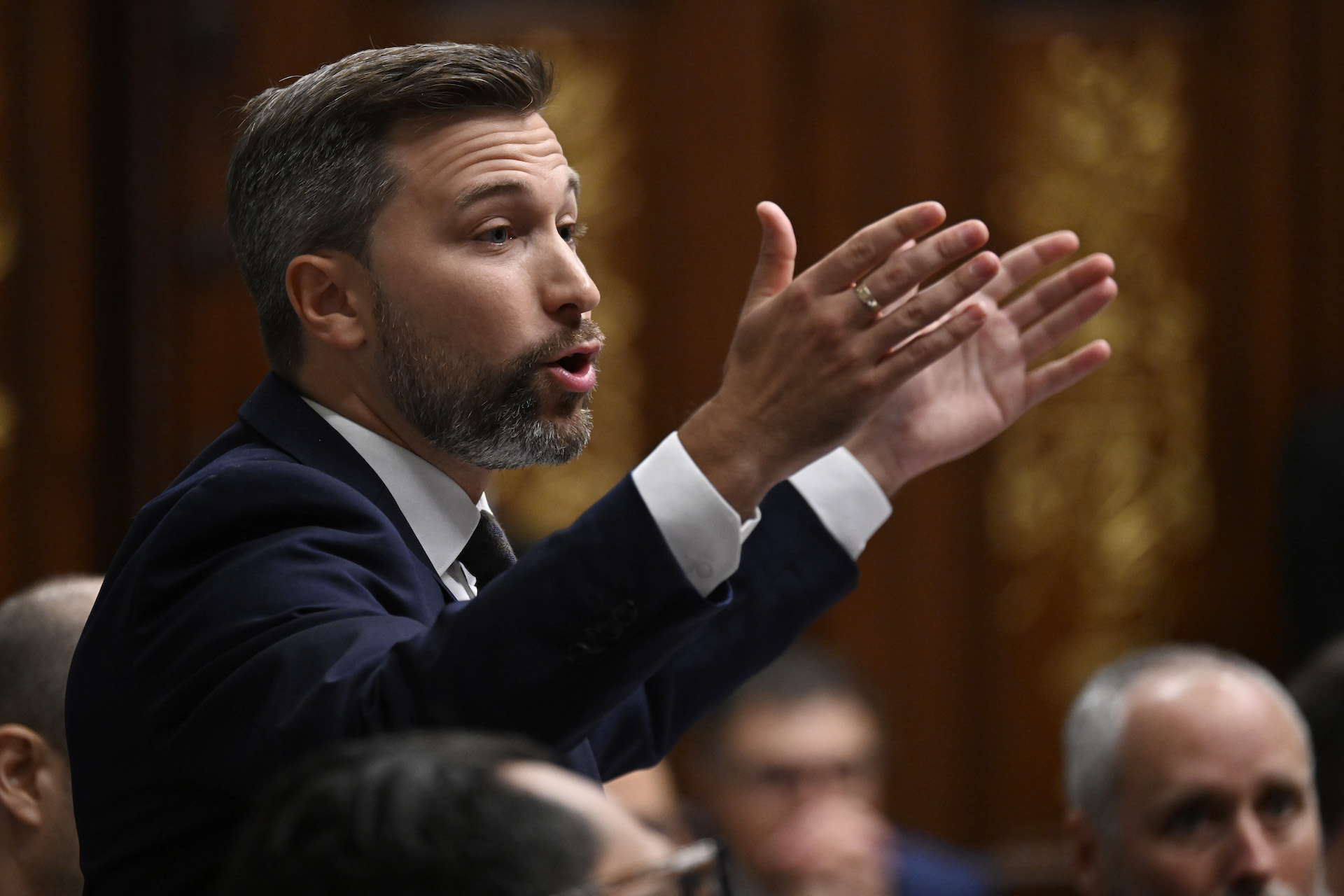
Québec solidaire Leader Gabriel Nadeau-Dubois at the legislature in Quebec City in September 2023. Photo: The Canadian Press/Jacques Boissinot
MONTREAL — On paper, anyway, Québec solidaire is staunch in its opposition to Big Tech. Reading the leftie political party spiel, one is left to believe the likes of Meta and Google are vultures or worse, crippling Quebec’s “fragile” culture when they aren’t sucking its journalistic institutions dry. Putting an end to Big Tech’s “unfair competition”—mostly by taxing the bejesus out of it—was part of the party’s platform for an election nearly a year ago.
But QS is also in the midst of a byelection campaign, and political expediency has led it to write its own rules. According to Meta’s ad library, the party has spent just under $250,000 on Facebook ads since June 2019, which is more than even the Coalition Avenir Québec (CAQ), the governing party Québec solidaire aims to replace. Québec solidaire’s use of the web platform—about 700 ads since 2019—includes a campaign for its byelection candidate Olivier Bolduc, launched last week.
To its credit, the CAQ has boycotted Facebook; both the Quebec Liberal Party and Québec solidaire said they would do so, as well, only to later reverse their position, with QS Leader Gabriel Nadeau-Dubois recently dismissing such boycotts as “symbolic.”
The point here isn’t to excoriate QS for its obvious hypocrisy—though hypocrisy it undeniably is. Rather, it’s to highlight how, five years after the fallout from the democracy-bending cautionary tale of Cambridge Analytica, Meta’s targeted-ad services remain a critical part of the political machinery the world over. “It has become an indispensable part of modern campaigning,” as the American journalist Sasha Issenberg told me recently.
Related Articles

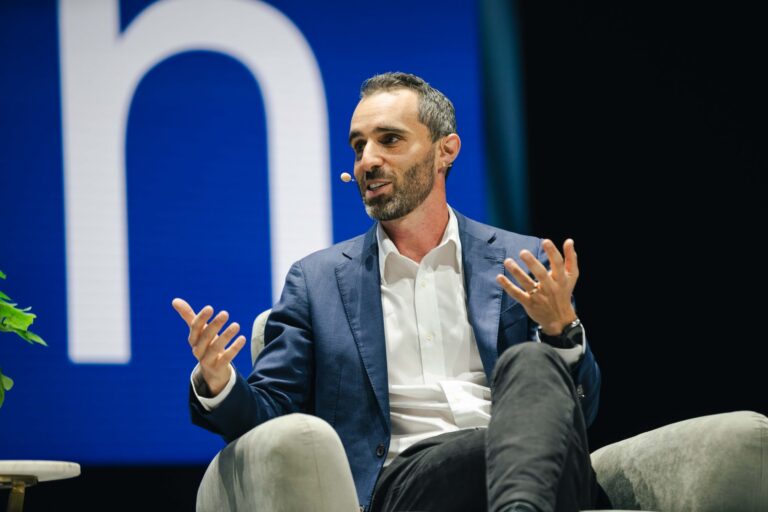
Issenberg wrote The Victory Lab, which chronicled the rise in use of data to target specific people as opposed to broad swaths of voters. The book, published in 2012, barely mentions the internet. Yet the advent of Meta has only reinforced one of its core ideas: that the art of getting people to vote for you is best practised on an individual level. For this reason, Meta’s ad services “are increasingly becoming utilities on the campaign landscape. It’s becoming harder to visualize how you opt out [of] using them, even if you claim to be unhappy about having to.”
Québec solidaire is hardly alone. Political parties the world over remain addicted to Meta’s cheap, readily accessible ubiquity, even as their leaders spout Facebook-rant-tier tirades against the social media platform. In Canada, this cognitive dissonance extends to the federal Liberals, who have heaped millions on Meta even as, in government, they accuse it of eroding democracy.
More on that in a sec. First, a note on Meta. Last year, Facebook removed many of the tools long coveted by political parties, including the ability to target based on political affiliation. Apple’s “do not track” option, rolled out in early 2021, suddenly starved Meta of all-important data, which cost the company an estimated US$10 billion in revenue in 2022. And Facebook is becoming less and less popular with younger demographics. In short, the company’s offer to potential advertisers isn’t what it was in the bad old days.
It remains crucial, though, to political parties and the politicians who lead them. In the U.S., both the Democratic and Republican parties regularly avail themselves of Meta’s wares. Ditto major political outfits in Germany, Brazil and France. British Prime Minister Rishi Sunak’s Conservative government recently passed the Online Safety Bill. Its provisions appear so constraining for Meta, Google et al that an online privacy rights group said it “will simply break the internet for British users.” Meanwhile, Sunak himself used Meta ads to help win his party leadership, which got him into 10 Downing.
Closer to home, the Liberal government passed its Online News Act in June, which compels social media companies to pay for links to journalism posted to their platforms. Meta has since blocked Canadian news on its platforms, with the government suspending online advertising with Meta as a result. This tit-for-tat culminated in Pablo Rodriguez, then the federal heritage minister, calling Facebook “unreasonable” and “irresponsible.”
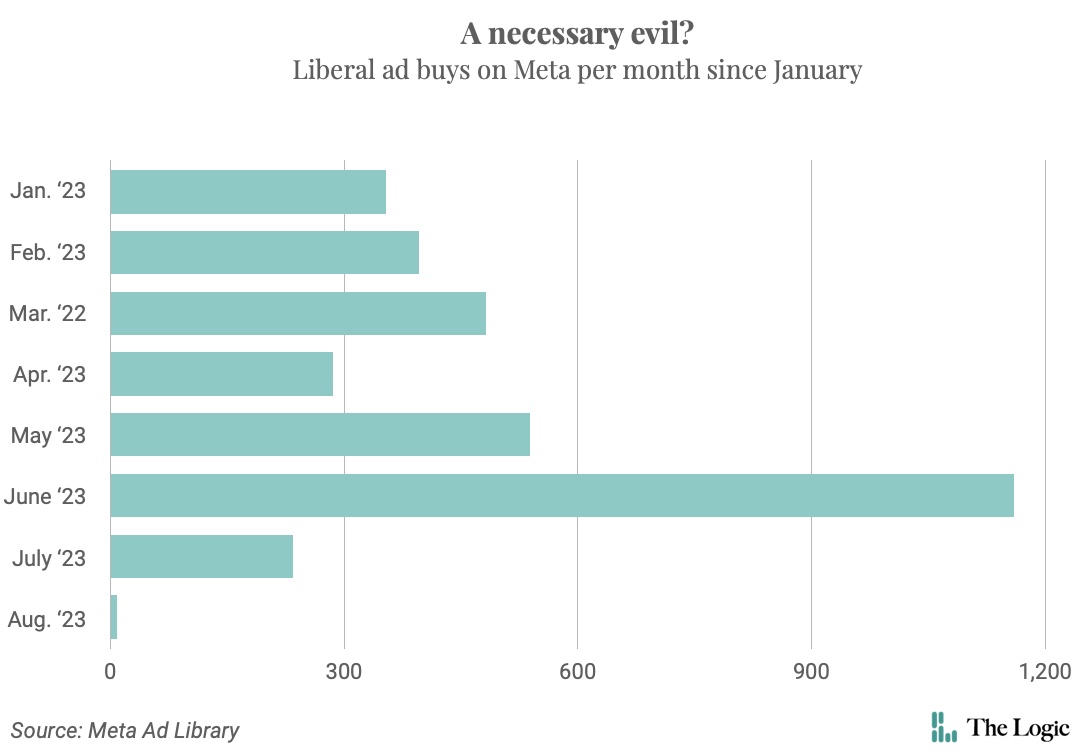
Yet June was a boffo month for Meta in ad sales to the Liberal Party of Canada. The Grits bought 1,160 ads on the platform the month of the Online News Act’s passage—the single highest number since at least November 2021, according to data compiled from Meta’s ad library.
Liberal spokesperson Parker Lund wouldn’t comment on the party’s “innovative digital campaigns,” though he did tee off on Conservative Leader Pierre Poilievre’s “advertising choices, reckless policies, and divisive rhetoric.” This sounds a lot like a Facebook-style attack ad, and I suppose it’s possible that the Liberals buy ads on Meta because their main opponent does, as well. Since 2019, the two parties have spent roughly the same amount on the platform—$4.3 million for the Liberals, about $4.7 million for the Conservatives—suggesting they’re in a perverse kind of arms race, with the planet’s largest social media concern as primary beneficiary. Yay, democracy.
Or it could be just that advertising on Meta works like hell. In a (different) byelection earlier this year, Québec solidaire ran roughly 55 Meta ads selling its candidate Guillaume Cliche-Rivard to the good people in the Montreal riding of Saint-Henri–Sainte-Anne, a Quebec Liberal bastion since 1992. Québec solidaire pulled off the upset. This isn’t to say their ad campaign was the only reason behind its victory; Québec solidaire is fairly popular in Montreal, and these days the Quebec Liberals are a leaderless, rudderless shambles.
Clearly, though, Meta’s contribution didn’t hurt. You might call it a necessary evil.
Martin Patriquin is The Logic’s Quebec correspondent. He joined in 2019 after 10 years as Quebec bureau chief for Maclean’s. A National Magazine Award and SABEW winner, he has written for The New York Times, The Guardian, The Walrus, Vice, BuzzFeed and The Globe and Mail, among others. He is also a panelist on CBC’s “Power & Politics.”



Loading...
Thanks for sharing!
You have shared 5 articles this month and reached the maximum amount of shares available.
CloseThis account has reached its share limit.
If you would like to purchase a sharing license please contact The Logic support at [email protected].
CloseGift the full article!
You have gifted 0 article(s) this month and have 5 remaining.
Recipients will be able to read the full text of the article after submitting their email address. They will not have access to other articles or subscriber benefits.
Photo: The Canadian Press/Jacques Boissinot
Most Popular This Week




In-depth, agenda-setting reporting
Great journalism delivered straight to your inbox.
News
Ottawa is softening its ban on stablecoin yield
Briefing
Rio Tinto gets nearly $165M in additional federal funds for Quebec aluminum
U.S. to lift tariffs on some Canadian products crucial to Maine: Collins
Carney warns of tech dependence after Starlink disruptions in Ukraine
Best business newsletter in Canada
Get up to speed in minutes with insights and analysis on the most important stories of the day, every weekday.
Exclusive events
See the bigger picture with reporters and industry experts in subscriber-exclusive events.
Membership in The Logic Council
Membership provides access to our popular Slack channel, participation in subscriber surveys and invitations to exclusive events with our journalists and special guests.






