MONTREAL — As planned, at least, the Northvolt battery production plant in Quebec is something of a greentech miracle. If and when it reaches full capacity in 2028 as scheduled, Northvolt Six gigafactory will produce enough batteries every year to power one million electric vehicles. The $7-billion plant will also recycle batteries—a crucial part of the EV battery circular economy. And how’s this for symbolism: a site that once produced dynamite and nitroglycerin from a coal-belching plant will now help power the trip towards a carbon-reduced future on a torrent of Quebec-made hydroelectric power.
Skip to content

 The construction site for Northvolt’s new EV battery plant in Saint-Basile-le-Grand, Que., on Jan. 19. Work had been suspended after the Quebec environmental group CQDE and three citizens requested an injunction. Photo: The Canadian Press/Christinne Muschi

Commentary: Quebec Ink
Northvolt battery project pits green against greentech
The planned gigafactory’s greatest adversary may be the environmental movement
Quebec Premier François Legault at a September 2023 news conference about Northvolt’s plans to build an electric vehicle battery plant near Montreal. Photo: The Canadian Press/Christinne Muschi
MONTREAL — As planned, at least, the Northvolt battery production plant in Quebec is something of a greentech miracle. If and when it reaches full capacity in 2028 as scheduled, Northvolt Six gigafactory will produce enough batteries every year to power one million electric vehicles. The $7-billion plant will also recycle batteries—a crucial part of the EV battery circular economy. And how’s this for symbolism: a site that once produced dynamite and nitroglycerin from a coal-belching plant will now help power the trip towards a carbon-reduced future on a torrent of Quebec-made hydroelectric power.
Now, though, there are question marks around the Northvolt’s green-tinged plans, placed by an unlikely source: Quebec’s environmental movement. Last week, tree clearing on Northvolt’s 171-hectare site in McMasterville and Saint-Basile-le-Grand, about 30 kilometres east of Montreal, came to a halt after Quebec environmental group Centre québécois du droit de l’environnement (CQDE) and three citizens requested an injunction.
Northvolt’s gigafactory, the group argued, will damage a crucial ecosystem and threaten the survival of several vulnerable species. The injunction bid failed—a Quebec Superior Court justice ruled on Friday that the province had acted reasonably in clearing the legal path for the project.
Related Articles
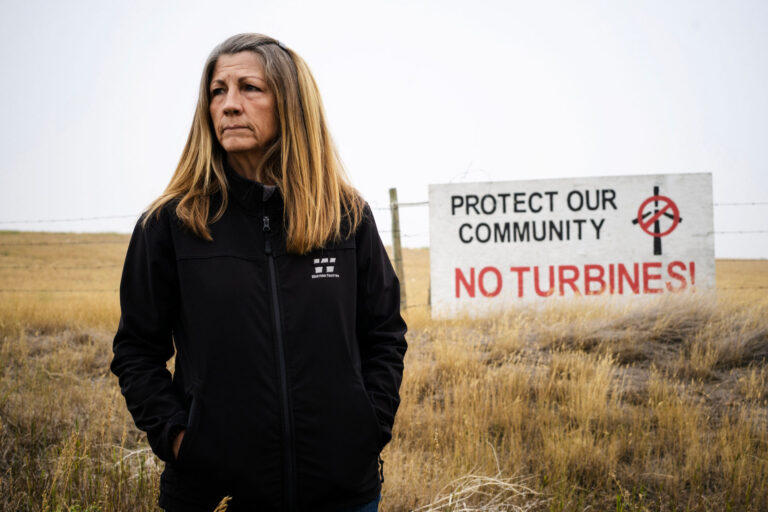

But by then opposition was snowballing. The Mohawk Council of Kahnawake, whose community south of Montreal has opposed pipelines in the past, filed a suit demanding consultation over the project with federal and provincial governments, and said it plans to challenge Quebec’s laws around wetlands. More disturbingly, back at the site, an anarchist group spiked an undetermined number of trees to stymie their felling—a form of sabotage long deployed against pipeline expansions and logging operations.
Call it green versus greentech. In the rush to build the infrastructure necessary for carbon reduction, governments and industry around the world increasingly find themselves at odds with the environmental movement. Whether it’s lithium mining in the U.S., graphite mining in Sweden, cobalt mining in the Democratic Republic of the Congo or a battery plant in Hungary, eco-activists are questioning the present-day fallout of building our allegedly green future.
The common theme of their arguments: governments are so heavily invested in these projects they’re willing to run roughshod over their own environmental laws to get the job done. In the case of the Northvolt plant in Quebec, the argument is pretty damned compelling.
Shortly after it was announced in the fall of 2023, Quebec Premier François Legault called the plant “the most important industrial project in Quebec’s history.” While he might be guilty of hyperbole (the Robert-Bourassa dam, the province’s largest, would like a word), Northvolt ticked a lengthy column of governmental boxes.
By choosing Quebec, the company became a bold-faced name in the province’s push to both produce EV batteries and extract the critical minerals they encase. It promised to employ 3,000 people in a place that, coincidentally or not, voted overwhelmingly for Legault’s party in the last two elections. The province beat out dozens of other potential sites, including in the U.S. Finally, the project was huge—the biggest private investment in Quebec’s history, according to the company. Quebec and the federal government each kicked in about $1.3 billion to Northvolt’s $4.3 billion.
There was just one snag. Because it would produce more than 50,000 tonnes of cathodes, the company was subject to an extensive environmental review known as a BAPE, which includes public consultations. Mysteriously, and with little notice until Radio-Canada dug it up last September, the government raised that threshold to 60,000 shortly before Northvolt bought the property, which was just shy of the company’s planned production of 56,000 tonnes of cathodes. One part of the project would still face a BAPE process, but only once the factory is operational. For the province’s purposes, the last box was checked.
CQDE lawyer Marc Bishai was circumspect when I asked him if he thought the government moved the legislative goalposts to accommodate Northvolt. “This is a question that deserves full attention,” he said the day before the court decision came down.
The chronology the group presented in its request speaks for itself, though. A few months before Northvolt purchased the site, Quebec’s environment ministry denied a proposal for a housing development on it, citing deleterious impacts on wetlands and wildlife. Yet a few months later, the government approved Northvolt’s application even though it would bulldoze nearly double the amount of wetland than the earlier project. (Environment Minister Benoit Charette didn’t respond to my interview request, and the ministry refused to comment.)
The case has put the environmental movement in an awkward spot. Every group from the David Suzuki Foundation to Equiterre, the Montreal-based shop co-founded by current federal Environment Minister Steven Guilbeault, has touted EVs as crucial to solving the climate crisis. Many, the Suzuki Foundation included, have advocated for accelerated EV sales targets that, arguably, make fast-tracking battery plants like Northvolt necessary, environmental reviews be damned.
Yet the Suzuki Foundation, Equiterre and 11 other environmental groups have signed a petition demanding that the government hold Northvolt to an independent environmental review. Some might call this cognitive dissonance. Others might prefer the word “hypocrisy.”
Whatever you call it, the pushback has piqued the ire of Economy Minister Pierre Fitzgibbon. “Let’s just say I’ve had discussions, and people were pretty clearly asking, ‘Are we welcome in Quebec?’” Fitzgibbon told Quebec radioman Paul Arcand recently. This is a familiar spiel from Fitzgibbon, the elbows-first minister tasked with bringing Big EV to the province. But it dripped with an unsettling undertone: don’t question the government, especially in court, because questioning the government is bad for business.
Though the injunction failed, it isn’t necessarily business as usual for Northvolt and the Quebec government. The Mohawk Council lawsuit is still on the horizon, while the CDQE says it is considering another injunction request to cease work on the site. And if history is any indication, groups who spike trees in the name of the environment don’t cower in the face of an unfavourable court decision. Often, they do just the opposite.
Martin Patriquin is The Logic’s Quebec correspondent. He joined in 2019 after 10 years as Quebec bureau chief for Maclean’s. A National Magazine Award and SABEW winner, he has written for The New York Times, The Guardian, The Walrus, Vice, BuzzFeed and The Globe and Mail, among others. He is also a panelist on CBC’s “Power & Politics.”



Loading...
Thanks for sharing!
You have shared 5 articles this month and reached the maximum amount of shares available.
CloseThis account has reached its share limit.
If you would like to purchase a sharing license please contact The Logic support at [email protected].
CloseGift the full article!
You have gifted 0 article(s) this month and have 5 remaining.
Recipients will be able to read the full text of the article after submitting their email address. They will not have access to other articles or subscriber benefits.
Photo: The Canadian Press/Christinne Muschi
The construction site for Northvolt’s new EV battery plant in Saint-Basile-le-Grand, Que., on Jan. 19. Work had been suspended after the Quebec environmental group CQDE and three citizens requested an injunction.
Most Popular This Week




In-depth, agenda-setting reporting
Great journalism delivered straight to your inbox.
The Big Read
Alberta’s referendum is just the start of the turmoil
Briefing
EverWind plans $10B data centre and wind development in Nova Scotia
Canada ready to force Stelco to sell its Canadian operations, Joly says
Feds plan a 60 MW defence-oriented data centre for Ottawa
Best business newsletter in Canada
Get up to speed in minutes with insights and analysis on the most important stories of the day, every weekday.
Exclusive events
See the bigger picture with reporters and industry experts in subscriber-exclusive events.
Membership in The Logic Council
Membership provides access to our popular Slack channel, participation in subscriber surveys and invitations to exclusive events with our journalists and special guests.






