MONTREAL — This city is a trash-strewn, drug-infested, traffic-snarled multiculturalist hellscape wallowing in the fetid waters of the St. Lawrence River. Its metro hardly works, its economy is stagnant, its potholed streets are at the mercy of privileged cyclists and unchecked criminality. If you’re visiting, you should leave. If you live here, good luck.
Skip to content

Commentary: Quebec Ink
How broken is Montreal, really?
The city’s tech luminaries claim Montreal has turned its back on innovation and faces an existential threat. As the city goes to the polls, the data tells a different story.
Business and tech leaders published an open letter decrying the red tape, complex bureaucracy and overall “culture of complacency and risk-aversion” in Montreal. Photo: The Canadian Press/Graham Hughes
MONTREAL — This city is a trash-strewn, drug-infested, traffic-snarled multiculturalist hellscape wallowing in the fetid waters of the St. Lawrence River. Its metro hardly works, its economy is stagnant, its potholed streets are at the mercy of privileged cyclists and unchecked criminality. If you’re visiting, you should leave. If you live here, good luck.
Such is the vibe emanating from some corners of the city of my birth these days, as the latest election in its 383-year history comes to an end today. Focused as they are on garbage collection, snow removal and other concerns sitting immediately outside one’s door, municipal elections tend to be spleen-venting exercises. In Montreal’s case, at least, they are often nostalgia-prone as well. The narrative is well-worn: Montreal used to look great and do big things. Now it’s a lethargic mess.
Which brings us to Montreal’s allegedly restive tech sector. Earlier this week, members of said sector published an open letter decrying the red tape, complex bureaucracy and overall “culture of complacency and risk-aversion.” Together, they present nothing short of an “existential threat” to the city.
Related Articles


Gone are the days of Expo 67 when Montreal could count itself among the New Yorks and Berlins of the world, the letter reads. “Let’s be honest: Montreal is not an innovative city right now,” it proclaims, pointing the finger of blame at Projet Montréal, the lefty municipal party that has governed Montreal since 2017. It implores Montrealers to vote not for Projet’s mayoral candidate Luc Rabouin but Ensemble Montréal’s Soraya Martinez Ferrada, the current front-runner in the race. Some 70 tech types have added their name to the letter.
I called Startupfest founder Philippe Telio, who co-authored the letter, to find out what metrics he used to inform its doomsday-adjacent take on Montreal. The answer: not many. “I don’t think we can point to anything that the city has done that demonstrates that they understand technology,” he said by way of explanation. His endorsement of Ferrada isn’t born of enthusiasm for the former federal cabinet minister; it’s more that she’s not the other guy.
On one level, the frustration is understandable, even inevitable. If, as studies suggest, municipal politics are more prone to vibey takes and anecdotal evidence, Montreal’s vibes and anecdotes aren’t always great.
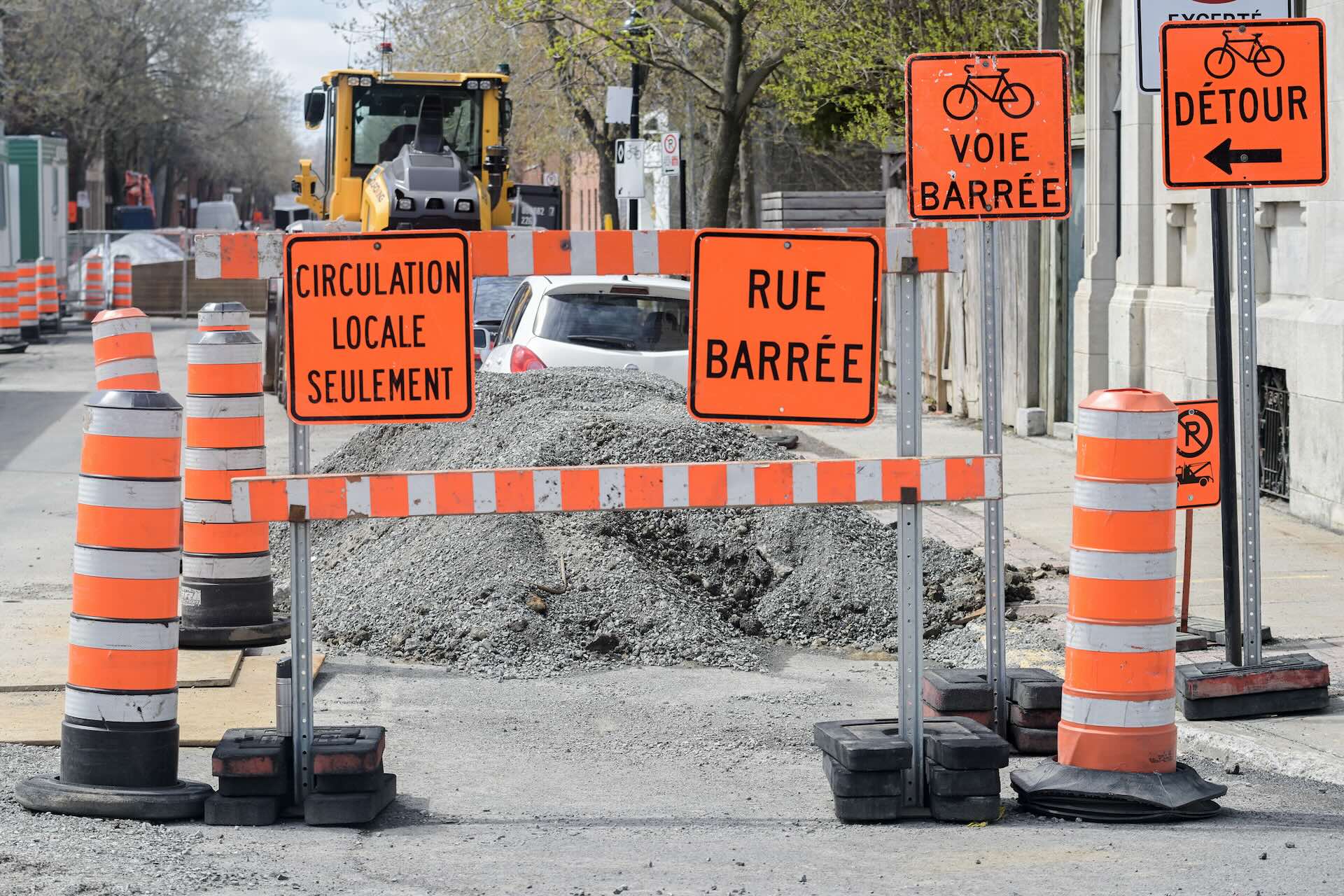
The city’s homeless population has exploded, the traffic is a mess and city infrastructure projects unleash an unrelenting plague of orange traffic cones on every arrondissement. Social media, where vibes become memes, is replete with Montreal’s overflowing garbage patches, nonsensical road signs and jackass-tier municipal construction sites. Having been in power for eight years, Projet Montréal is a reasonable enough scapegoat for these ailments.
But is Montreal really tiptoeing toward tech obsolescence, as the letter suggests? Not even close. In fact, evidence suggests the opposite.
Consider AI investment. Montreal has the highest university research funding in Canada, with more than $1.6 billion invested every year. Commercialized AI was effectively invented in the city, and Big Tech has certainly taken note. Google and DeepMind, along with IBM, Microsoft and Meta, all have significant research centres in the city.
Or consider funding for Quebec startups, 75 per cent of which are in Montreal, according to the latest figures from Rêseau Capital, a private equity association. They raised $2 billion in 2024, according to data tabulated by industry non-profit Québec Tech—up 54 per cent from 2018, the first full year of Projet Montréal’s tenure. By comparison, funding for Ontario startups increased by about 32 per cent during the same period.
Montreal may no longer do Expo 67-level things like ribbon the landscape with highways or construct an entire island in the middle of the St. Lawrence River. Yet to say the city has lacked ambition is to ignore how it has nurtured near-ideal conditions for businesses to thrive.
For one, it has had the best relative housing affordability, a comparison of housing prices to average salaries, of any major Canadian city for the last quarter century at least, according to the Canadian Mortgage and Housing Corporation (CMHC) data. That’s in part because the city continues to have the highest year-over-year increase in housing starts of any major city in the country. This trend, an inconvenient one for those who say you can’t get anything built in the city, has helped make Montreal a relative sweet spot for people, including more than 250,000 tech workers, who make their lives here.
Montreal is also, it turns out, good at getting things done. The city’s productivity growth has outpaced Toronto and was more than double the rate of growth in Vancouver between 2014 and 2023, according to a recent Institut du Québec report. It also outpaces both Toronto and Vancouver when it comes to employment rate and the percentage of the workforce in high-tech sectors. Downtown office vacancy rates are roughly on par with Toronto’s, according to CBRE data, putting to rest the commonly held belief that Montreal’s core is a burgeoning wasteland.
It would be idiotic to suggest the current occupant of city hall is solely responsible for these successes. Canadian cities are often at the mercy of the governments that fund them. Suffice to say, though, Montreal’s current government likely hasn’t hindered Montreal’s progress or stifled its future, as certain tech types seem to think.
Does Montreal have problems? Good lord, yes. We are laggards when it comes to productivity and growth compared to many tech-heavy American cities. Toronto, a bigger market with more access to capital, still trounces us when it comes to raising startup dollars. Shambolic by nature, maddening in its dysfunction, Montreal can sometimes feel like living on the wrong side of a dare. Yet, there’s success in all that shambolic dysfunction, vibes be damned.
Martin Patriquin is The Logic’s Quebec correspondent. He joined in 2019 after 10 years as Quebec bureau chief for Maclean’s. A National Magazine Award and SABEW winner, he has written for The New York Times, The Guardian, The Walrus, Vice, BuzzFeed and The Globe and Mail, among others. He is also a panellist on CBC’s “Power & Politics.”



Loading...
Thanks for sharing!
You have shared 5 articles this month and reached the maximum amount of shares available.
CloseThis account has reached its share limit.
If you would like to purchase a sharing license please contact The Logic support at [email protected].
CloseGift the full article!
You have gifted 0 article(s) this month and have 5 remaining.
Recipients will be able to read the full text of the article after submitting their email address. They will not have access to other articles or subscriber benefits.
Photo: The Canadian Press/Graham Hughes
Most Popular This Week




In-depth, agenda-setting reporting
Great journalism delivered straight to your inbox.
News
A tech firm born from post-Brexit trade chaos sets its sights on Canada
Briefing
Dozens of Canadian researchers join chorus of scientists calling for a global AI oversight
TC Energy strikes deal with Indigenous groups for ownership stake in Coastal GasLink pipeline
Canada’s Tailscale taps Google Moonshot alum to lead sovereign AI push
Best business newsletter in Canada
Get up to speed in minutes with insights and analysis on the most important stories of the day, every weekday.
Exclusive events
See the bigger picture with reporters and industry experts in subscriber-exclusive events.
Membership in The Logic Council
Membership provides access to our popular Slack channel, participation in subscriber surveys and invitations to exclusive events with our journalists and special guests.





