MONTREAL — Over three days in July, at a thing called Startupfest, the optimism flowed like the booze at the open bar. If tech shindigs are performatively smiley affairs as a rule, then Startupfest was laughing-gas happy—a photogenic ode to Montreal’s regained (and entirely deserved) swagger in all things tech and AI.
Skip to content

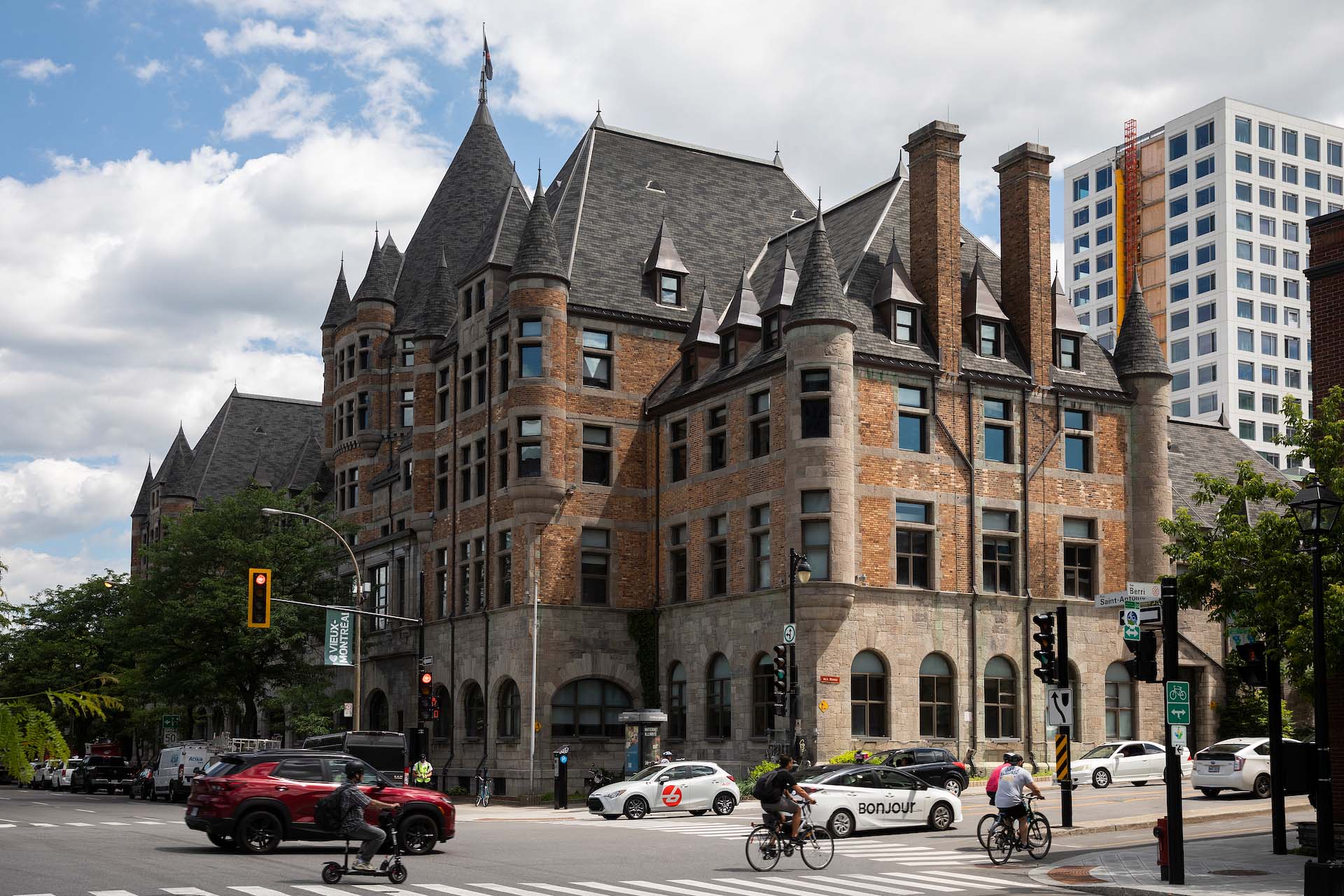 The exterior of Lightspeed’s office building in Montreal in June 2022. Photo: Roger Lemoyne for The Logic

Commentary: Quebec Ink
Is tech responsible for downtown Montreal’s woes?
The city has the country’s highest concentration of tech workers, and its core is hollowing out. Landlords and brokers are worried
A pedestrian walks past a closed storefront on Ste. Catherine Street in Montreal in October 2020. Photo: The Canadian Press/Ryan Remiorz
MONTREAL — Over three days in July, at a thing called Startupfest, the optimism flowed like the booze at the open bar. If tech shindigs are performatively smiley affairs as a rule, then Startupfest was laughing-gas happy—a photogenic ode to Montreal’s regained (and entirely deserved) swagger in all things tech and AI.
And yet on the very day Startupfest started up, some very different news landed in my inbox. Montreal’s downtown core, suggested figures from a report from the real estate company CBRE, remains mired in the hollowed-out, post-COVID doldrums.
The city’s office vacancy rate was at a record 17 per cent in the second quarter, up by about three per cent from the quarter before. Some 426,000 square feet of downtown and suburban office space—nearly 10 acres—flooded onto the market in the second quarter alone. The third quarter brought more bad news, with the vacancy rate ticking up to 17.4 per cent.
The swagger on display at Startupfest has actually exacerbated downtown Montreal’s continued misery. It’s counterintuitive, and it requires some explaining. But it comes down to this: the city is home to the highest concentration of tech jobs in the country, according to Montréal International, and they are among the least likely to go back to the office. Tech is a big reason why you could safely hit a golf ball in many of the city’s downtown offices these days. And fewer workers in downtown offices means fewer customers for cafes, restaurants and stores.
Related Articles


There are some caveats. Montreal isn’t unique in its struggle to lure warm bodies back to its downtown core. And Montreal is hardly the worst off of the lot. In Canada, that honour belongs to Calgary, where CBRE says nearly one in three square feet of downtown office space remains unoccupied. There are also benefits from a work-from-home workforce, with some evidence that by dint of their reluctance to leave their houses, techy types are happier, more productive and less carbon-intensive than the rest of us office-bound schmos.
This much is true, though: Montreal, chock full of tech workers, is particularly vulnerable to the whims of that industry. And pre-COVID, the industry demanded more square footage. Developers responded by building tech-focused office spaces—airy, outsized—for its worker armies. That these worker armies didn’t yet exist didn’t seem to matter.
“In 2019, people were grabbing hundreds of thousands of [square feet] for future expansion,” CBRE senior vice-president David Cervantes told me. “And then, essentially overnight, not only did they not need the expansion space, but their footprint’s suddenly less because a good portion of people worked from home.”
The tech companies have moved into their airy, outsized offices, but they are near empty. Last year I made a midweek visit to a Montreal startup, where I counted exactly two people rattling around amid the art-laden walls, well-stocked kitchen and banks of new computer terminals.
The point of greatest pressure on commercial leases, however, is still looming in the distance. Companies are often renewing their office leases for less square footage, if they aren’t giving them up outright. Because leases are typically five to 10 years in length, however, it will take years for the vacancy rate to catch up to the downturn in demand. I spoke to one broker, a clear-eyed fellow not given to hyperbole, who says the downtown Montreal’s vacancy rate could hit 30 per cent in the next few years.
If there’s a cautionary tale in all of this, it resides in San Francisco. In a push to coax tech companies to its downtown core after the 2008 crash, the city worked hard to make itself more livable, walkable and tax-friendly. It worked, but COVID put an abrupt end to the success story, and the comedown has been brutal. Foot traffic is down. Vacancy and violent-crime rates are up. Even Starbucks, possibly the world’s most caffeinated corporate cockroach, is fleeing downtown San Fran en masse.
To be clear, Montreal’s situation is nowhere near as dire as San Francisco’s, where decades-long struggles with issues like addiction and homelessness have exacerbated its current predicament. But the signposts are there, be they declining public transportation use or rising storefront vacancies on key downtown arteries.
The CBRE data brought to mind something that Isabelle Melançon, a former Quebec MNA who heads up the Urban Development Institute of Quebec, said to me the other day. “It’s starting to be very, very expensive collectively for individual well-being,” she said of the work-from-home phenomenon.
Yet some positive signs have imposed themselves on Montreal’s landscape. Take Gare Viger in Montreal’s Old Port district. In the works for over a decade, the project spun gold from a chunk of long-neglected real estate.
The historic site, abandoned since the early 2000s, is now home to Lightspeed’s 90,000-square-foot headquarters. A 177-room hotel, a 321-unit apartment building and seven floors of offices sit on what used to be a parking lot. As I reported last week, Sony recently snapped up more than 50,000 square feet in that building to house its video-game production outfit Haven Studios.
Gare Viger’s success underscores what real estate types hope is the beginning of a trend: the return of tech to Montreal’s downtown core. Across town, Cervantes told me, Microsoft has grabbed a floor of the newly erected (and very pricey) Maison Manuvie. Video-game developers are in the market for expansion once again, thanks in large part to Quebec’s eternally generous suite of tax credits for the industry. “They’re coming out large, at 100 employees, 200 employees,” Cervantes told me.
The same tech industry swagger that has hobbled Montreal may save it yet.
Martin Patriquin is The Logic’s Quebec correspondent. He joined in 2019 after 10 years as Quebec bureau chief for Maclean’s. A National Magazine Award and SABEW winner, he has written for The New York Times, The Guardian, The Walrus, Vice, BuzzFeed and The Globe and Mail, among others. He is also a panelist on CBC’s “Power & Politics.”



Loading...
Thanks for sharing!
You have shared 5 articles this month and reached the maximum amount of shares available.
CloseThis account has reached its share limit.
If you would like to purchase a sharing license please contact The Logic support at [email protected].
CloseGift the full article!
You have gifted 0 article(s) this month and have 5 remaining.
Recipients will be able to read the full text of the article after submitting their email address. They will not have access to other articles or subscriber benefits.
Photo: The Canadian Press/Ryan Remiorz
The exterior of Lightspeed’s office building in Montreal in June 2022.
Most Popular This Week




In-depth, agenda-setting reporting
Great journalism delivered straight to your inbox.
News
Panel decries Canada’s chaotic way of funding world-class science
Briefing
AI is pushing insurers to become asset managers, Canadian CEOs say
Trump administration faces lawsuit over 50% tariffs on Canadian goods
Canada-U.S. trade war to reduce real GDP by 1.4% over 2024 levels after five years: PBO
Best business newsletter in Canada
Get up to speed in minutes with insights and analysis on the most important stories of the day, every weekday.
Exclusive events
See the bigger picture with reporters and industry experts in subscriber-exclusive events.
Membership in The Logic Council
Membership provides access to our popular Slack channel, participation in subscriber surveys and invitations to exclusive events with our journalists and special guests.