Carmichael: Chaos in Ottawa offers a chance for Canada to do better
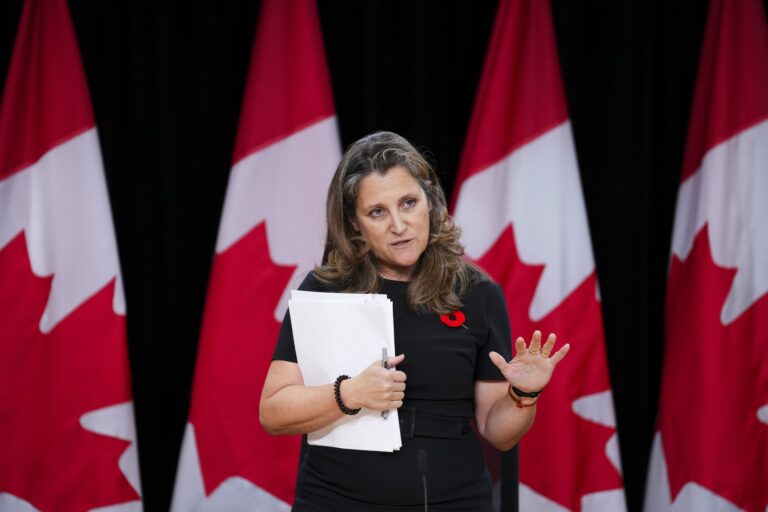
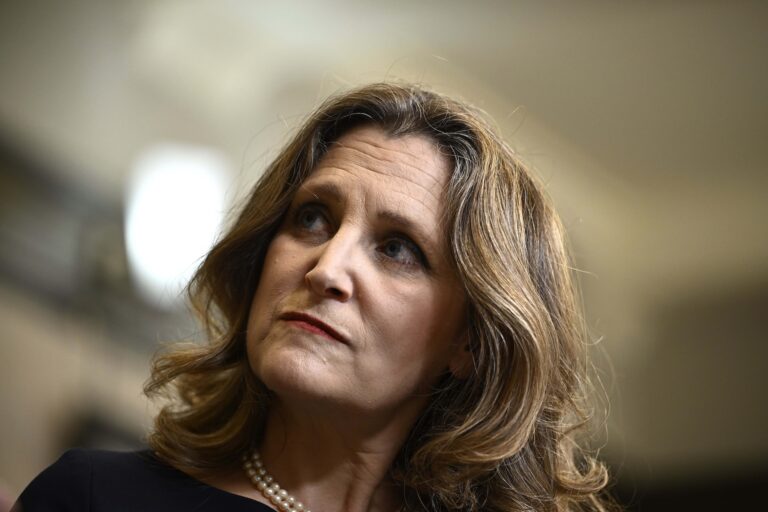
Chrystia Freeland can still bring it as a critic. The former Financial Times and Reuters business columnist said everything in her resignation letter to Prime Minister Justin Trudeau that I planned to say this week about this government’s lack of seriousness.
New Democratic Party Leader Jagmeet Singh still has it, too. In his case, by “it” I mean a pulse. His declaration Friday that the NDP will vote non-confidence in the government at the next opportunity upended received wisdom in Ottawa for the second time in a week.
Commentary
Carmichael: Chaos in Ottawa offers a chance for Canada to do better
A reminder for our political class: you’ll be measured by what you do with power, not how many elections you win
Chrystia Freeland can still bring it as a critic. The former Financial Times and Reuters business columnist said everything in her resignation letter to Prime Minister Justin Trudeau that I planned to say this week about this government’s lack of seriousness.
New Democratic Party Leader Jagmeet Singh still has it, too. In his case, by “it” I mean a pulse. His declaration Friday that the NDP will vote non-confidence in the government at the next opportunity upended received wisdom in Ottawa for the second time in a week.
Let’s start with Freeland and end with Singh.
These are the lines from the former finance minister’s resignation letter that I keep thinking about: Canadians “know when we are working for them, and they equally know when we are focused on ourselves,” she wrote. “Inevitably, our time in government will come to an end. But how we deal with the threat our country currently faces will define us for a generation, and perhaps longer.”
I just finished reading a history of Canada during the 1920s and 1930s, a period during which a collection of feckless, vainglorious and self-interested prime ministers, premiers and opposition leaders mostly failed their country amid economic calamity, surging migration, technological disruption and geopolitical strife.
Freeland reminded a political class obsessed with TikTok and YouTube that ultimately they will be measured on what they did with their power, not how many elections they won. William Lyon Mackenzie King served as prime minister for more than 21 years between 1921 and 1948, the most ever. What did he accomplish? Less than you might think, according to John Herd Thompson’s assessment of those years.
There’s some Mackenzie King in the current prime minister, another leader who started strong, but eventually let partisan calculation define him.
“We’re focused on Canadians, let the bankers worry about the economy,” Trudeau said at an event in Brampton, Ont., on Nov. 22.
The bankers were already worried. A day earlier, Trudeau announced the federal sales-tax holiday that started last week, and a plan to send $250 cheques to some 18.7 million people this spring. Former Bank of Canada governor David Dodge called the measures “stupid” considering the situation in which Canada finds itself. Output per hour worked has been in chronic decline since 2021 and Trump’s nationalistic policies could drive Canada’s export-dependent economy into recession.
“I do worry a lot about what’s going on here,” Dodge said in an interview at his office Ottawa, after he and colleagues at law firm Bennett Jones released their 2025 economic outlook, which warned that “Canada is entering a period of heightened uncertainty and deep structural change without strong economic momentum and with significant vulnerabilities.”
The best-case scenario would involve Trudeau averting tariffs by agreeing to spend more on border security and international military commitments. That’s why his $250 cheques were a terrible idea. The federal government had no budget for candy. Trudeau—who, according to pollster Kyla Ronellenfitsch, is disliked by 60 per cent of the electorate—decided to try to buy some love anyway.
The NDP’s pivot to scavenger from enabler was opportunistic. The list of former Liberal cabinet ministers is now more impressive than what is left of Team Trudeau. The Liberals trail the Conservatives by more than 20 percentage points, according to 338Canada, a poll aggregator, and are effectively tied with the NDP. Trudeau might have been able to hold out a bit longer with Singh’s help. An early election in 2025 now seems unavoidable.
Many will welcome that prospect. Saskatchewan Premier Scott Moe said earlier this month that Trudeau lacks a mandate to confront Trump. An election would also distract from preparing for whatever Trump’s presidency could bring. There were lots of measures in the fall economic statement that could help. An election would wipe all of that off the board, delaying an effective response to Trump for months.
There’s another way.
Pierre Elliot Trudeau was unpopular during his final years as prime minister. Brian Mulroney’s Progressive Conservatives would win one of the biggest majorities in Canadian history at the next election in 1984. But rather than cling to power, Trudeau used the time he had left to focus on national projects, including the Charter of Rights and Freedoms. “That’s what Justin Trudeau should be doing now. Forget the power games,” longtime Liberal MP and cabinet minister Lloyd Axworthy said on the Herle Burly podcast earlier this year. “Being part of that cabinet and caucus for me in ’80 to ’84, it was thrilling.”
The national project of 2025 should be adjusting to a new economic order.
By heralding chaos, Trump gave Canada a little time to get ready. The new Liberal cabinet could decide to concentrate on executing a series of non-partisan measures that would strengthen the economy, starting with the investment tax breaks in the budget update.
Finance Minister Dominic LeBlanc could initiate Conservative Leader Pierre Poilievre’s promise to review tax policy, a good idea because Trump’s plans to lower U.S. taxes would devastate Canadian competitiveness. The federal government could lead a push to finally eliminate interprovincial trade barriers. Liberals and Conservatives could agree to pass open banking legislation, since both support leveling the playing field between fintech and the big banks.
The point is that there are lots of things parties could do immediately at little or no political cost. The Liberals likely would go on to lose, while the Conservatives return to power. The incentive to co-operate, just a little in the months ahead, is that history will be kinder.
Kevin Carmichael is The Logic’s economics columnist and editor-at-large. He has spent more than two decades covering economics, business and finance for outlets including Bloomberg News, The Globe and Mail and the Financial Post, where he also served as editor-in-chief.
Recipients will be able to read the full text of the article after submitting their email address. They will not have access to other articles or subscriber benefits.
Great journalism delivered straight to your inbox.
The Big Read
Alberta’s referendum is just the start of the turmoil
By
Meghan Potkins
Briefing
EverWind plans $10B data centre and wind development in Nova Scotia
By Catherine McIntyre |
Canada ready to force Stelco to sell its Canadian operations, Joly says
By Joanna Smith |
Feds plan a 60 MW defence-oriented data centre for Ottawa
By David Reevely |
Best business newsletter in Canada
Get up to speed in minutes with insights and analysis on the most important stories of the day, every weekday.
Exclusive events
See the bigger picture with reporters and industry experts in subscriber-exclusive events.
Membership in The Logic Council
Membership provides access to our popular Slack channel, participation in subscriber surveys and invitations to exclusive events with our journalists and special guests.