Skip to content

Canada's Business and Tech Newsroom

  • Professional Subscription
  • Partnerships & Advertising
  • Licensing & Syndication
Log In Subscribe
Welcome,
  • My Account
  • Log Out
  • Business
  • Tech
  • National
  • The Big Read
  • Briefings
  • Commentary
Search
Log In Subscribe
Welcome,
  • My Account
  • Log Out
Commentary

Carmichael: Carney and Champagne’s budget sends the bond market a message

Listen Now
0:00
Commentary

Carmichael: Carney and Champagne’s budget sends the bond market a message

Amid panic elsewhere, the Liberals are trying to signal that they don’t take Canada’s credibility with investors for granted

By Kevin Carmichael
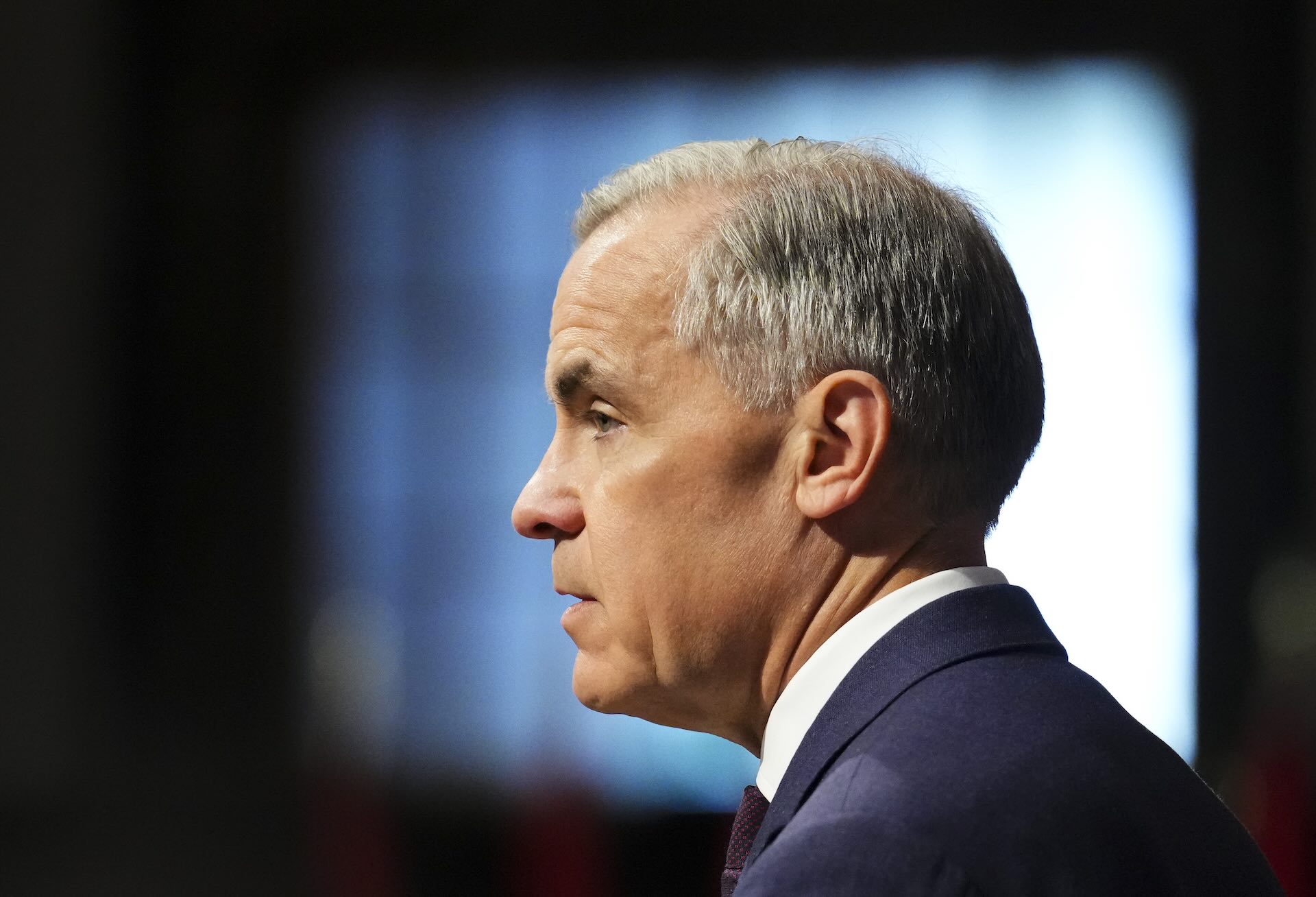
An image of Mark Carney against a light and dark background.
Prime Minister Mark Carney in Ottawa in June 2026. His second federal budget is, among other things, a signal to Canada’s creditors, Kevin Carmichael writes. Photo: The Canadian Press/Sean Kilpatrick
Nov 5, 2026 | 4:14 PM ET
A A
A Small A Medium A Large
Share

Gift

Share

Listen Now
0:00

As a former central banker, Prime Minister Mark Carney knows that markets can be a policymaker’s friend. Tell traders where you intend to go and they’ll beat you there. That’s why the interest rates that you and I pay had already risen when the Bank of Canada increased the benchmark rate last week. Investors bet that a central bank obsessed with inflation would have little choice but to respond to triple-digit oil prices with higher rates. 

Carney will also know that such sorcery has its limits. Every so often you have to show investors that you mean what you say. With his second budget, Carney did that. Facing the most hostile bond market in memory, he and Finance Minister François-Philippe Champagne sent Canada’s creditors a message. They stuck to their fiscal anchors and used a significant portion of a revenue windfall on measures that should create the kind of sustainable economic growth that will make Canada’s growing debt load manageable.

“Unlike what we are seeing in other advanced economies, Canadians—not the bond market—will determine our choices,” Carney and Champagne wrote in a foreword to the budget.

Related Articles

A painting depicting a sandy battlefield. Men wearing turbans stand behind a tall barrier, overlooking enemy camps and soldiers below.

Carmichael: Carney the prime minister still manages risk like a central banker

By Kevin Carmichael
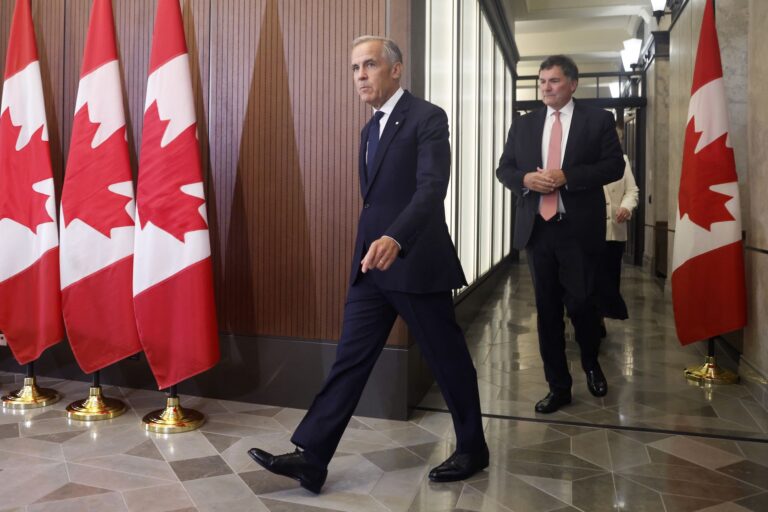
A photo of Mark Carney on his way into a news conference, trailed by Dominic LeBlanc. There is a row of Canadian flags on stands behind the lectern Carney is approaching.

Carmichael: America’s wobbly bonds are Canada’s advantage in the trade war. Here’s why

By Kevin Carmichael

The bond market might see things differently. Everyone’s borrowing costs have risen because of inflation, but the yields on Canadian bonds are significantly lower than countries such as the U.S., the U.K and France. We know why. Each of those nations has tested the patience of their creditors by demonstrating a disregard for responsible fiscal policy. The Bank of Canada reckons that most of the increase in British and French yields is the result of higher “term premiums,” the extra yield that investors demand to cover the risk that countries might default on their debt. 

Carney is attempting a historic overhaul of the Canadian economy while trying to manage widespread anxiety over the cost of living. But maybe the most important thing he needed to do with his second budget was signal that he doesn’t take his credibility with investors for granted. 

The chaos in France is a cautionary tale of what happens when day-to-day spending swamps investment in things that make an economy stronger. Not so long ago, yields on French 10-year debt were lower than that of Canada. Now, they are more than a percentage point higher, leaving France’s government to cope with a societal crisis and a budget crisis simultaneously. 

“Let’s not be like France,” Bank of Canada governor Tiff Macklem told the House of Commons finance committee this week. 

Read more of our federal budget coverage
Ottawa extends open banking principles to other sectors—but continues to delay original framework

By Claire Brownell

Tech CEOs and investors get big tax breaks in a Liberal budget that tries to spur innovation

By Catherine McIntyre
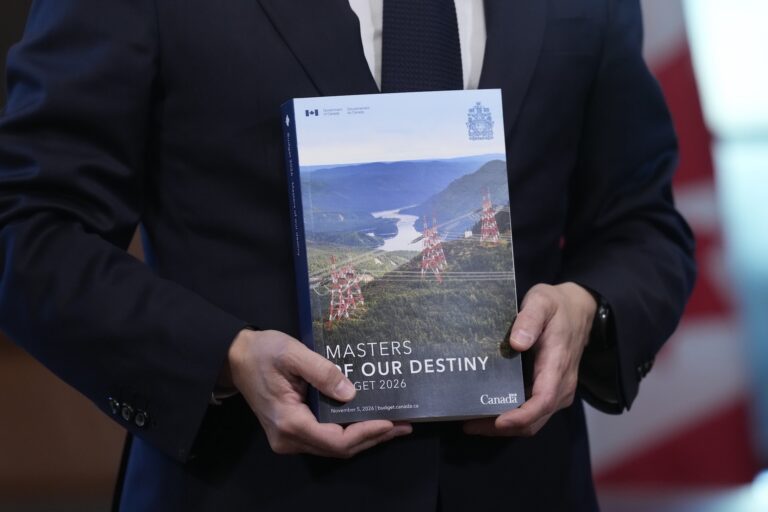
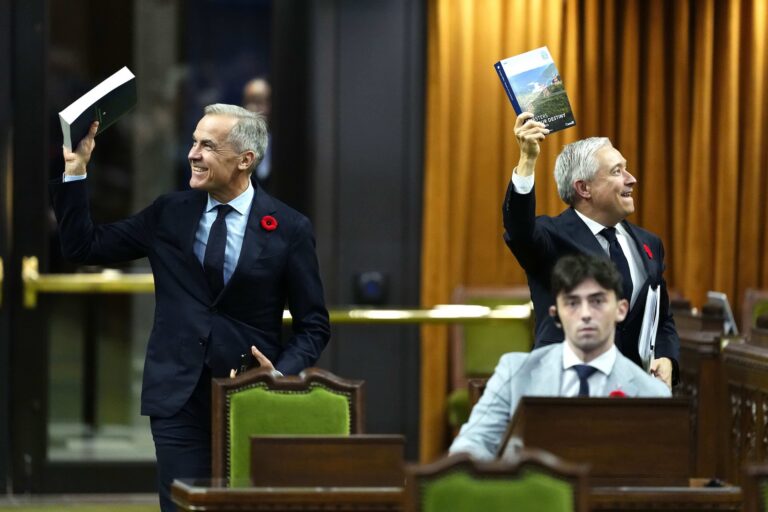
An image of a person holding a book titled, "Masters of our destiny: Budget 2026." The person is wearing a dark suit and tie and standing in front of a Canadian flag, visible in the background.

The Liberals are spending Canada’s energy windfall in a bid to boost productivity

By Joanna Smith

Canada prides itself on being the “cleanest dirty shirt” in a world where the International Monetary Fund projects that global public debt is headed to 100 per cent of gross domestic product by 2030. Canada’s boast isn’t quite true. The Bank of Canada’s research on term premiums shows that creditors are demanding about the same amount of extra cover from the government of Canada as they are from Donald Trump’s America, where the federal deficit is about six per cent of gross domestic product, compared with about two per cent in Canada. 

Germany, meanwhile, pays almost no term premium, according to the Bank of Canada. As a result, it has become the benchmark among rich economies. That’s not an argument for German-style austerity, but it does mean that if Carney wants to push fiscal responsibility as a Canadian advantage, he’ll have to work harder to show that his borrowing is intentional. 

The budget met that test. Because Canada is a net exporter of energy, triple-digit oil prices triggered a revenue windfall. Carney and Champagne spent a lot of it, but they resisted the urge to push their luck. The deficit in the fiscal year that ended on March 31 will be 1.2 per cent of GDP, compared with an estimate in the spring of 2.1 per cent. It will widen to 1.8 per cent of GDP this fiscal year and the following one, in line with previous forecasts. 

Federal debt as a percentage of GDP will hover around 40 per cent for the next five years, an improvement on the previous forecast that had it closer to 42 per cent. 

Bond markets should be able to live with that, in part because Carney and Champagne intend to use some of their windfall on measures that should ignite economic growth. The previously announced Mega Productivity Deduction and a new break on capital gains that are invested in Canadian companies will cost the federal treasury some $52 billion over five years. The government announced affordability measures worth some $30.7 billion, including $11.2 billion for an ambitious pledge to end homelessness in a decade. That spending will do little to address the productivity crisis, but it might buy some political stability. No government could ignore the cost of living when polls consistently show it ranks as voters’ greatest concern.

Gift the full article

There will be questions about the spending plan. Much of Carney’s spending is off-budget, as he’s chosen to classify anything that could boost economic growth as capital spending. Carney sees that as “good debt,” but some critics just see it as “more debt.” The federal government’s liabilities are set to rise by more than $800 billion over the next five years, pushing net debt to almost $2 trillion by 2030.

There’s nothing nefarious about that; the numbers are there for everyone to see. It’s a bet by the prime minister that he can convince bond markets to back an industrial policy that exceeds the ability of taxpayers to finance. Given his background, Carney has a lot of credibility with creditors, but not so much that he can get away with whatever he wants. He’ll need to be careful. 

Kevin Carmichael is The Logic’s economics columnist and editor-at-large. He has spent more than two decades covering economics, business and finance for outlets including Bloomberg News, The Globe and Mail and the Financial Post, where he also served as editor-in-chief.


#commentary #Federal Budget 2026

Sponsored Content

The road to risk-smart regulation

By Deborah Aarts

Why cybersecurity needs to match pace with AI

By Jessica Aftimus Rosa

How to shift your workforce from AI experimentation to adoption

By Jessica Aftimus Rosa
Paid promotional content

Loading...

Thanks for sharing!

You have shared 5 articles this month and reached the maximum amount of shares available.

Close
This account has reached its share limit.

If you would like to purchase a sharing license please contact The Logic support at [email protected].

Close
Want to share this article?

Upgrade to all-access now

Close
Gift the full article!

You have gifted 0 article(s) this month and have 5 remaining.

Copy link and gift
Copy Link
Email to a friend
Send Email
Gift on Social Media

Recipients will be able to read the full text of the article after submitting their email address. They will not have access to other articles or subscriber benefits.

An image of Mark Carney against a light and dark background.

Photo: The Canadian Press/Sean Kilpatrick

Most Popular This Week

A side shot of Annie Andrews passing a cluster of supporters with a hand outstretched and a joyful look on her face.
News

What the Democrats’ midterm sweep means for Canadian business

By Joanna Smith
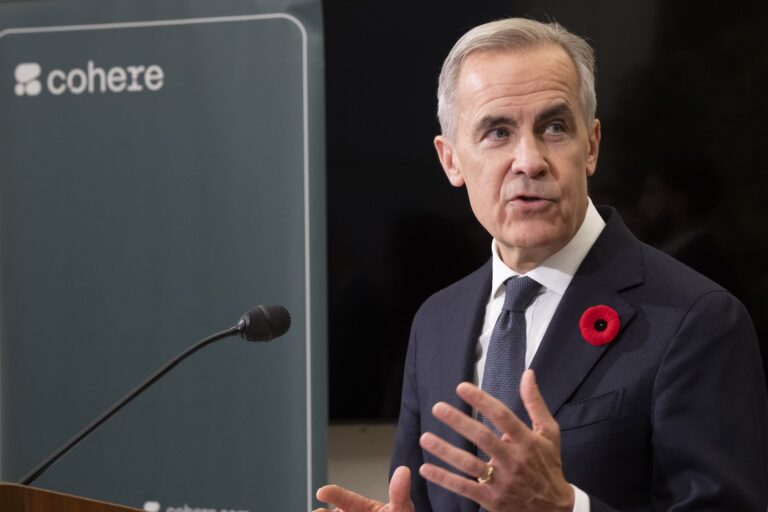
An image of Prime Minister Mark Carney, standing in front of a microphone and speaking. He is wearing a blue suit and tie, while looking away from the camera. He is standing in front of a dark background. The Cohere logo is visible in the background.
News

Conservatives challenge Ottawa to justify its $1.6B Cohere investment

By Catherine McIntyre
A logo that reads AI in blue lettering against a light yellow background.
News

BDC launches programs to test Canadian AI tools in small businesses

By Catherine McIntyre
A man wearing a headset microphone sits on a stage. He is speaking and gesturing with his hands. The background is dark blue.
News

Ottawa will invest up to $1.6B in Cohere as firm’s valuation hits $35.7B

By Catherine McIntyre

In-depth, agenda-setting reporting

Great journalism delivered straight to your inbox.

An image of a person holding a book titled, "Masters of our destiny: Budget 2026." The person is wearing a dark suit and tie and standing in front of a Canadian flag, visible in the background.
News

The Liberals are spending Canada’s energy windfall in a bid to boost productivity

By Joanna Smith

Briefing

Canada’s jobless rate climbs to 6.7% as hiring stagnates

By Kevin Carmichael   |   Nov 6, 2026 | 10:18 AM ET

Champagne tells the Bank of Canada to keep on fighting inflation

By Kevin Carmichael   |   Nov 5, 2026 | 5:13 PM ET

Federal budget gives Build Canada Homes an additional $13B over 10 years

By Sharon Lam   |   Nov 5, 2026 | 4:10 PM ET

Best business newsletter in Canada

Get up to speed in minutes with insights and analysis on the most important stories of the day, every weekday.

Exclusive events

See the bigger picture with reporters and industry experts in subscriber-exclusive events.

Membership in The Logic Council

Membership provides access to our popular Slack channel, participation in subscriber surveys and invitations to exclusive events with our journalists and special guests.

Recent Popular Stories

Analysis

Why a midterm sweep for the Democrats won’t end Canada’s trade nightmare

By Joanna Smith   |   Oct 29, 2026
Commentary

Carmichael: Canada’s Nobel-winning economist thinks Carney is on the right track

By Kevin Carmichael   |   Oct 31, 2026
A man wearing a dark suit jacket, blue button-down shirt and spotted brown-and-blue tie stands in front of a black and blue background, gesturing and speaking into a microphone.
News

Ottawa will invest up to $1.6B in Cohere as firm’s valuation hits $35.7B

By Catherine McIntyre   |   Oct 29, 2026
A man wearing a headset microphone sits on a stage. He is speaking and gesturing with his hands. The background is dark blue.
News

Former Ciena employee claims she was fired for reporting sexual assault by executive

By Catherine McIntyre   |   Nov 3, 2026
An exterior of a five-storey office building with two Canadian flags out front. Above the entrance is a four-storey window with Ciena's logotype written sideways.
News

The Canadian Forces were warned about safety gaps for 20 years before Wainwright disaster

By David Reevely   |   Oct 30, 2026
A side shot of a row of fully equipped soldiers making a beach landing from zodiac watercraft, rifles in hand.
News

Canada is buying military gear for a world where ‘pretty much everything’ changed

By David Reevely   |   Nov 2, 2026
Three people, wearing business clothing and red poppy pins, sit on chairs on a stage. The person in the middle is speaking. A blue background is visible behind them.

Canada's most influential executives and policymakers are reading The Logic

  • CPP Investments
  • Sun Life Financial
  • C100
  • Amazon
  • Telus
  • Mastercard
  • bdc
  • Shopify
  • Rogers
  • RBC
  • General Motors
  • MaRS
  • Government of Canada
  • Uber
  • Loblaw Companies Limited
logic-logo

Canada's Business and Tech Newsroom

100% human-crafted journalism

Newsroom

  • News Tips
  • AI Policy
  • Editorial Disclosures
  • Story Pitches

Company

  • About Us
  • Terms of Service
  • Privacy Statement
  • Corporate Information

Contact

  • Contact Us
  • Advertise
  • FAQs
  • Work at The Logic

© 2026 The Logic Inc. All Rights Reserved.

Trusted by leaders

Error

Account creation failed.

Please email us at [email protected].

Create Account

[wppb-register form_name=”cozmo-registration-form-for-modal”]

I do have an account
Login
or

[wppb-login]

I don’t have an account