Listen Now
0:00
Chicken Little was misunderstood. Yes, she inadvertently led Ducky-Lucky, Goosey-Loosey and the rest of her friends into the maw of the conniving Foxy-Loxy. But as far as Chicken Little knew, they were all facing certain death anyway. Though they ended up in a carnivore’s den, at least she gave them a chance to survive. If the sky really were falling, their odds of survival were zero.
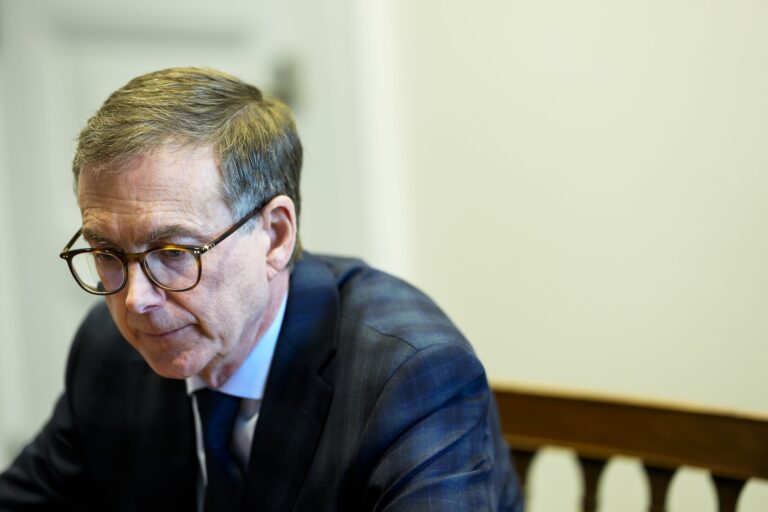
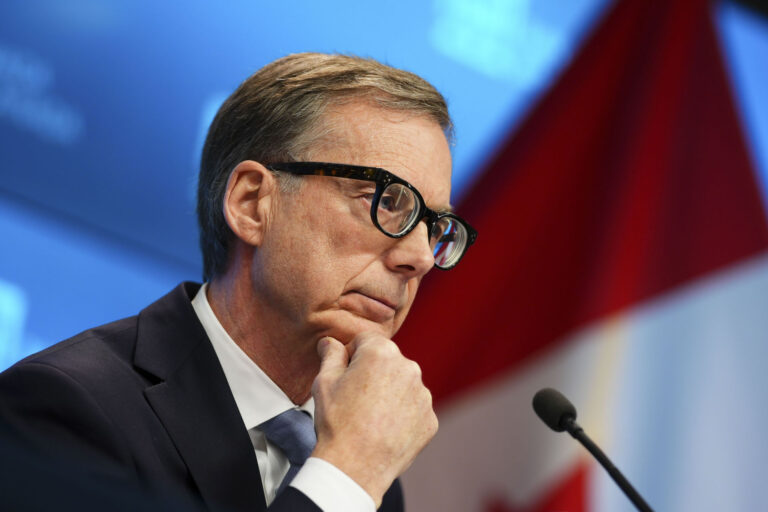
I think of the Chicken Little fable every time I hear a central banker or a finance minister warn about “global imbalances,” as Bank of Canada governor Tiff Macklem did this week in Paris. It was the second time in nine months that he used a speech to spotlight a subject that has a definite sky-is-falling vibe.
Related Articles

The U.S. budget deficit is unsustainably massive, we’re told. China’s trade surplus is unsustainably massive, we’re told. But you know what else is massive? The returns generated by American stock markets and the technological leaps taken by Chinese companies. That makes it hard to accept that there’s something wrong.
The story of Chicken Little is commonly understood as a warning about mass hysteria. But you could also read it as a description of the precautionary principle, an approach to regulation and policymaking that recognizes the scale of a threat might sometimes justify making a decision without the benefit of perfect knowledge. Climate change is an example. You do some things that you know could hurt in the short term because the long-term effect of doing nothing could be existential. The precautionary principle justified former prime minister Justin Trudeau’s bet on the retail carbon tax. The policy failed, but the thinking behind it was sound. The magnitude of the threat demanded that any responsible leader should try something.
The same idea applies to the global financial system. Financial markets have defied U.S. President Donald Trump’s tariffs and his chaotic war with Iran. Yet their apparent indestructibility isn’t a reason to dismiss all the warning signs. Macklem’s Paris speech showed how current conditions echo those that led to the collapse of the gold standard after the First World War, which brought the Great Depression and the Second World War; those surrounding the collapse of the Bretton Woods system of currency management, which brought stagflation and recession through the 1970s and early 1980s; and the global financial crisis of 2008 and 2009, which caused the Great Recession.
“When imbalances are left unaddressed, they can undermine the stability of the system,” Macklem said. “When domestic goals overwhelm international rules, the rules eventually give way.”
I feel like I should apologize for propagating the use of “imbalances,” a term that argues for making literature a mandatory credit for an economics degree. It’s as clunky as it is inaccurate. Like any ledger, global flows of trade and investment are perfectly balanced: China’s outsized surpluses are a mirror image of the U.S.’s outsized deficits.
When Macklem and others warn about global imbalances, they are making qualitative assessments. You’d like to see China and others spend more of their export earnings at home, rather than taking advantage of the U.S.’s willingness to borrow. You’d like to see the U.S. show some self-restraint, rather than constantly disrupting global trade with tariffs and sanctions. The imbalance is the extent to which the global financial system has become a one-way bet on U.S. consumption and financial assets.
Imports displace domestic production, stirring up local resentment and a desire for retaliation. The centrality of the U.S. dollar fuels demand for treasuries, and the dominance of its largest companies makes U.S. stock markets a magnet for global capital. Bubbles are everywhere. History suggests the question isn’t whether there will be a financial collapse, but which bubble bursts first: debt or equity?
Chicken Little is famous for stirring panic. But in some versions of the fable, she’s on a mission to inform the king that the sky is falling. She and her friends encounter the fox, who tells them they are going the wrong way. He diverts the well-meaning posse to his cave, where he conducts his slaughter. Only Chicken Little escapes.
Macklem’s speech is noteworthy because he isn’t panicking. Policymakers like him have spent the last two years talking about trade and investment flows at G7 meetings and at the International Monetary Fund. He said there’s a “growing consensus” that China must consume more, the U.S. must save more and Europe must invest more. He added that there are “encouraging signs” that each of those places knows what it has to do: China’s new five-year plan talks about consumption, European leaders talk seriously about boosting investment, the U.S. “aspires” to narrow its deficit.
But Macklem has read—and lived—too much financial history to forego delivering the king a warning. His speech is important for a domestic audience because he shows that the threat isn’t so abstract that there is nothing a country of Canada’s size can do. Macklem said the danger could be reduced by maintaining open trade, broadening the universe of investible assets and making financial transactions more transparent.
Canadian policymakers can help with all those things. I like the second suggestion. In May, the Government of Canada borrowed in U.S. dollars at a rate that was only marginally higher than actual U.S. treasuries, suggesting that international investors are looking for alternatives. Maybe the U.S. or China or Europe will ultimately cause the sky to fall on our heads, but that doesn’t mean we have to wait for it to happen. “Resilience is a choice,” Macklem said.
Kevin Carmichael is The Logic’s economics columnist and editor-at-large. He has spent more than two decades covering economics, business and finance for outlets including Bloomberg News, The Globe and Mail and the Financial Post, where he also served as editor-in-chief.