Two things caught my eye when I walked into Finance Minister Chrystia Freeland’s departmental office for an interview the day after she tabled the budget that has riled hundreds of the country’s most successful entrepreneurs by proposing to tax a greater percentage of their capital gains.
Skip to content

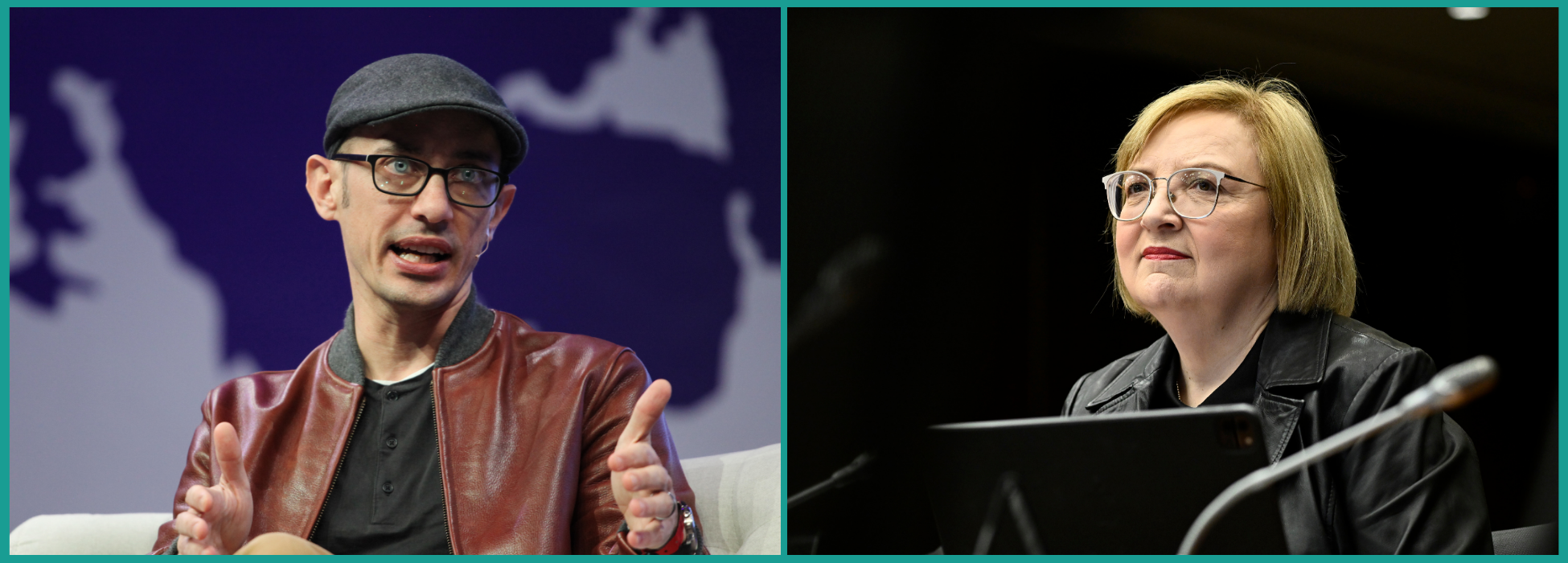 Neither Shopify CEO Tobi Lütke nor Unifor national president Lana Payne minced words in their appraisal of the capital gains tax hike. Photo: Tobi Lütke photo: The Logic; Lana Payne photo: The Canadian Press/Justin Tang
Commentary
Carmichael: The fight Chrystia Freeland chose
The finance minister sees the capital-gains tax hike as part of a struggle for the country’s future. So do its opponents
Anyone taking issue with Finance Minister Chrystia Freeland’s budget should be ready for an argument about safeguarding democracy as we know it. Photo: The Canadian Press/Sean Kilpatrick
Two things caught my eye when I walked into Finance Minister Chrystia Freeland’s departmental office for an interview the day after she tabled the budget that has riled hundreds of the country’s most successful entrepreneurs by proposing to tax a greater percentage of their capital gains.
Behind her desk, she’s hung a large painting of some wooden barns amid a field of canola in full bloom. The largest of the barns has been painted in the colours of the Canadian flag.
Sitting atop a stack of hardcovers on the coffee table where Freeland receives guests was a copy of Martin Wolf’s The Crisis of Democratic Capitalism, a jarring survey of the current world order. Wolf, the chief economics commentator at the Financial Times, concludes that extreme inequality has created the conditions for a swing to authoritarianism in the countries that grew rich and happy by combining democracy and free markets after the Second World War.
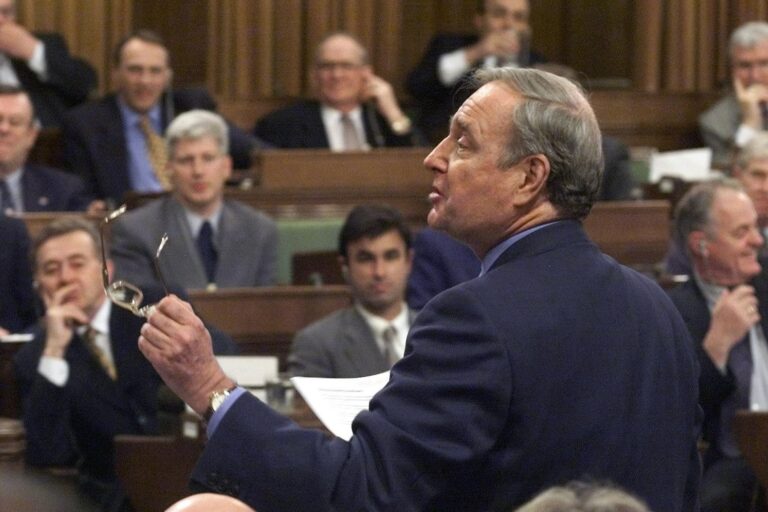
Freeland and Wolf are friends and former colleagues. You can decide for yourself whether Canada could take an authoritarian turn, but Freeland appears to have bought into Wolf’s thesis and is fearful that the serene and prosperous country depicted in the painting behind her desk is in peril. Anyone who believes she’s spending too much, or taxing too much, should be ready with an argument for what they would do to safeguard democracy as we know it.
Related Articles


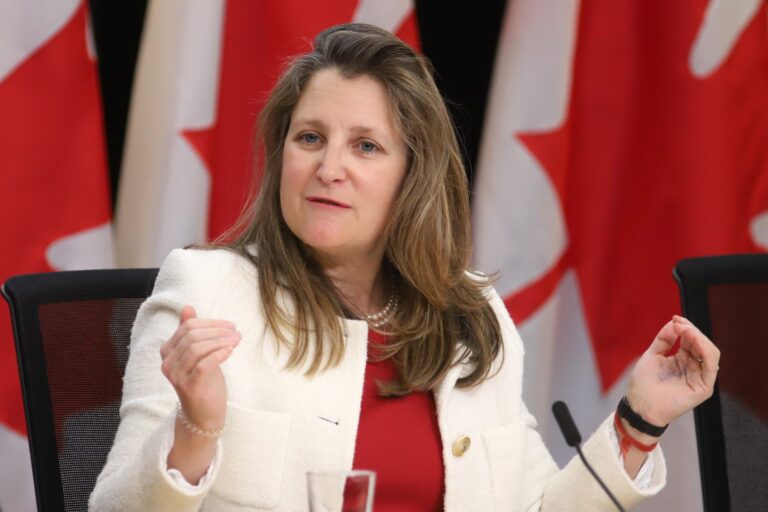
“There was a sort of a run at the end of my budget speech yesterday, where in a way, I tried to anticipate the concerns that people might have, who might find that this change would mean they personally might be paying a little bit more,” Freeland said. “That was the section where I said, ‘What kind of a Canada do you want to live in?’ I wrote those lines myself. And they were very sincere for me. And I think that has to be our starting point.”
That section certainly stood out from the rest. Freeland’s speech offered a dystopian vision of where the country could be headed if something isn’t done to make the middle class feel more secure. She asked Canada’s “one per cent” a series of rhetorical questions, including whether they wanted to live in a country where kids go to school hungry and the richest must enjoy their luxury behind “ever higher fences, using private health care and airplanes, because the public sphere is so degraded and the wrath of the vast majority of their less privileged compatriots burns so hot?”
It’s been a while since Canada has had to grapple with existential questions, and as the debate over the carbon tax shows, we’re not particularly good at it. Brian Mulroney’s death brought a wave of nostalgia for a time when the political class attempted big things. Less discussed was that when Mulroney resigned, he was deeply unpopular and his Progressive Conservatives won only two seats in the subsequent election. Democracies don’t always take kindly to change.
After Freeland unveiled the budget, LinkedIn and X lit up with angry posts from entrepreneurs who said her decision to raise capital gains taxes would snuff out investment and cause Canada’s best and brightest to build their businesses elsewhere. The outcry grew so loud that Freeland invited tech leaders to an impromptu meeting in Toronto on Friday.
The virtual debate over the tax increases quickly morphed into a version of the dystopian future to which Freeland alluded in her speech. Tobi Lütke, the founder and CEO of Shopify, characterized the measure as an innovation killer; union leader Lana Payne countered that Shopify fired some 2,000 people last year, and that its owners subsequently benefited from a higher stock price. “Now these millionaires are preaching to the rest of us about harm to the economy,” she said. “Cry me a river!”
Cartoonish, yes; but it’s indicative of an increasingly polarized political culture that is characterized by in-groups and out-groups. Pierre Poilievre mastered it, and he has the poll numbers to prove it. Freeland might be fearful of polarization, but electoral politics is a copycat league. The Liberals aren’t pitching a broad swath of the electorate; their latest batch of policies were designed to appeal to younger voters and their mothers and grandmothers.
The rest of us aren’t doing as badly as Payne lets on. Inflation has been hard on the poorest households, but the wealth of the “middle class” has grown more than prices since the end of 2019. Same for the younger generations that so preoccupied Freeland and the other authors of her latest budget. The average hourly wage of a worker aged 15 to 24 was $20.85 in March, about 19 per cent higher than at the end of 2019; the consumer price index increased 17 per cent over the same period. Gen Z might not be advancing as fast as it would like, but it’s not drowning either.
Yet, as Wolf observed in his book, political thinkers since Aristotle have insisted that a democracy “will survive only if it gives opportunity, security and dignity to the great majority of its people.” Many Canadians appear to feel they have been denied all or most of those things, and politicians have noticed.
Whether that leads to effective policy remains to be seen. Even a marginal disincentive to invest seems like a bad idea given Canada’s woeful productivity record. Freeland insisted that she thought carefully about her options and decided a tax on capital gains would cause the least amount of harm; increasing the deficit would have been inflationary, and a windfall tax on corporate profits would have hurt Canada’s reputation as a safe place to invest.
“I also think having a healthy, stable society, which is not riven by rage and polarization, which you get when people feel they can’t succeed, I think that can and should matter to investors too,” Freeland said.
Kevin Carmichael is The Logic’s economics columnist and editor-at-large. He has spent more than two decades covering economics, business and finance for outlets including Bloomberg News, The Globe and Mail and the Financial Post, where he also served as editor-in-chief.



Loading...
Thanks for sharing!
You have shared 5 articles this month and reached the maximum amount of shares available.
CloseThis account has reached its share limit.
If you would like to purchase a sharing license please contact The Logic support at [email protected].
CloseGift the full article!
You have gifted 0 article(s) this month and have 5 remaining.
Recipients will be able to read the full text of the article after submitting their email address. They will not have access to other articles or subscriber benefits.
Photo: The Canadian Press/Sean Kilpatrick
Neither Shopify CEO Tobi Lütke nor Unifor national president Lana Payne minced words in their appraisal of the capital gains tax hike.
Most Popular This Week


In-depth, agenda-setting reporting
Great journalism delivered straight to your inbox.
Commentary
Carmichael: Being boxed in will help Canada focus on what matters
Briefing
Rio Tinto gets nearly $165M in additional federal funds for Quebec aluminum
U.S. to lift tariffs on some Canadian products crucial to Maine: Collins
Carney warns of tech dependence after Starlink disruptions in Ukraine
Best business newsletter in Canada
Get up to speed in minutes with insights and analysis on the most important stories of the day, every weekday.
Exclusive events
See the bigger picture with reporters and industry experts in subscriber-exclusive events.
Membership in The Logic Council
Membership provides access to our popular Slack channel, participation in subscriber surveys and invitations to exclusive events with our journalists and special guests.






