David Adams Richards’s tragic 2019 novel Mary Cyr, about a misunderstood heiress, is sprinkled with disdain for a middle class that “pretended to know everything” and often anointed itself champion of the poor. The wealthy title character, Richards writes, “had met the poor everywhere and was more knowledgeable about them than were a host of middle-class activists that he had met over the years.”
The “he” in that passage is the book’s protagonist, John Delano. But it’s hard not to wonder if it’s also Richards, a native of the hard-luck Miramichi region of New Brunswick, taking a shot at the members of the comfortable literary circles he would have frequented when he relocated to Toronto, and perhaps also the politicos who run Ottawa, where he has served as a senator since 2017.
Richards, who has explored poverty and power in dozens of novels and essays since he was first published in the 1970s, was appointed to the Senate by Prime Minister Justin Trudeau, who, as anyone who pays even a little attention to Canadian politics knows, likes to talk about his Liberals as the party of the “middle class and those working hard to join it.”
Courting the middle class is good politics, but can lead to bad economic policy.
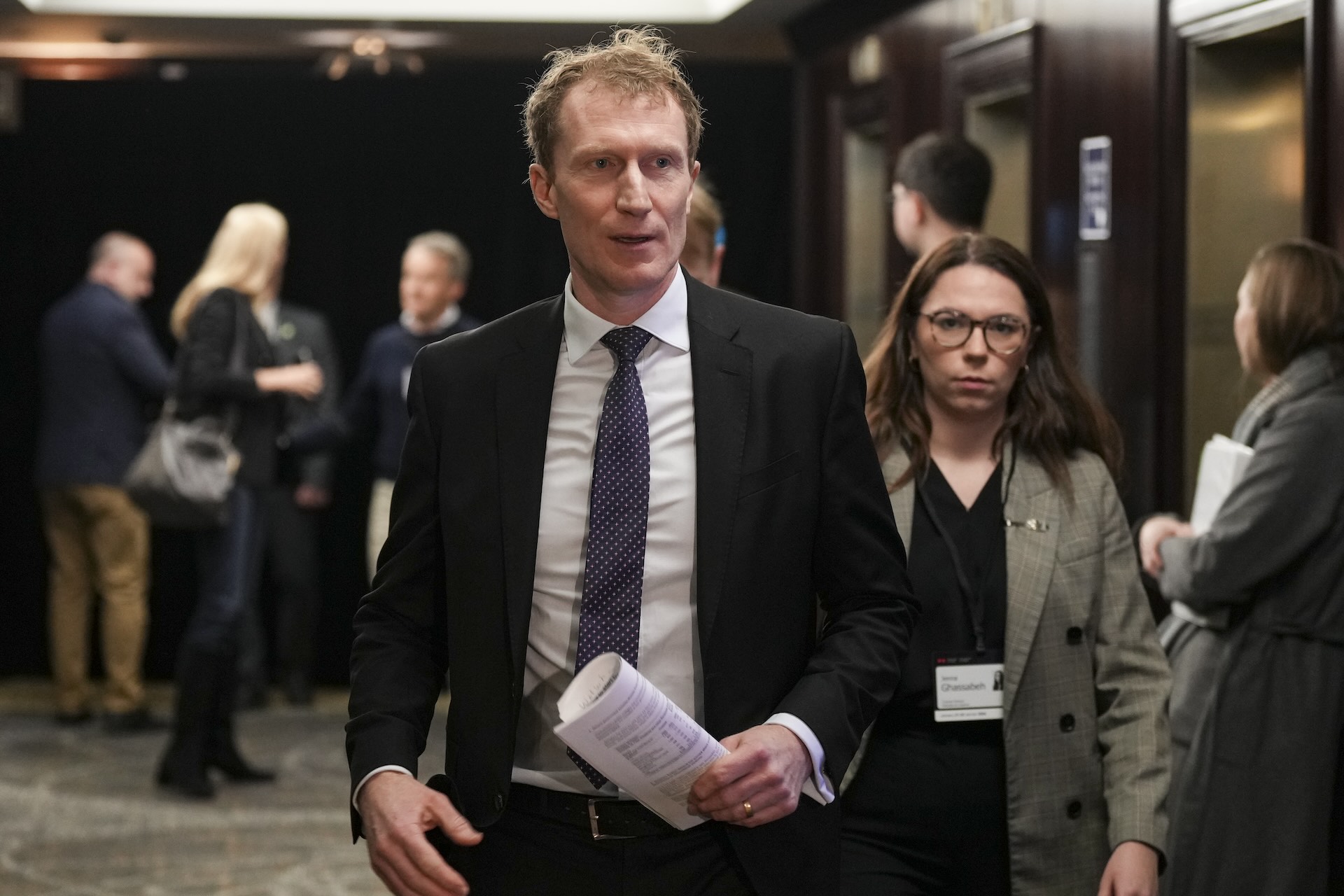
Trudeau and his ministers were in Montreal this week for a cabinet retreat that “focused on supporting the middle class and building an economy that works for everyone.” To that end, Immigration Minister Marc Miller announced a 35 per cent cut in international student visas this year amid evidence that a majority of voters now blame surging shelter costs on the federal government’s aggressive immigration policies.
Meti Basiri, CEO and co-founder of ApplyBoard, a Kitchener, Ont.-based educational technology company, called Miller’s decision “disheartening” and said in a LinkedIn post that the reputational damage “will hurt Canada for years to come.”
The political class measures time in weeks and months. At a press conference in Vancouver, Conservative Party Leader Pierre Poilievre said he agreed with the decision to curb student visas. His surging popularity, fuelled in part by talk about the housing crisis and the cost of living, offers some evidence of the waning tolerance of the Canadian electorate to make space for newcomers.
Trudeau is under no obligation to call an election before October 2025 and his standing in the polls offers no incentive to hold a vote before absolutely necessary. By then the middle class should be good and spoiled. The majority of Canadian households believe they are starring in a long tragedy about their lives getting worse, not better. For some, that might be true. But for most, it probably isn’t.
As the Liberals and Poilievre compete for the middle class’s attention, new data from Statistics Canada adds some context. The income gap between the richest Canadians and the poorest widened in the third quarter of 2023, as the wages and investment earnings of the country’s two wealthiest quintiles grew faster than those of the bottom two quintiles.
Whatever anxiety has been triggered by soaring inflation and higher-for-longer interest rates risks being exacerbated by a feeling of unfairness among the majority of households, because those best equipped to manage higher prices appear to be getting even richer. The average disposable income of the top quintile grew at the fastest pace in the third quarter, as wages increased 5.7 per cent from a year earlier and net investment income climbed 9.9 per cent.
Income and wealth inequality is a difficult subject for many economists. For the orthodox, inequality shouldn’t matter as long as everyone is getting wealthier. Some think that a certain amount of inequality is a good thing, as it acts as evidence for poorer people that there is a path to wealth.
That thinking now looks reductive. The aftermath of the Great Recession exposed structural barriers that make climbing the income ladder more difficult than being sufficiently motivated to get rich. Former Bank of Canada governor Stephen Poloz lists inequality as one of the “tectonic forces” that will determine economic outcomes in the decades ahead because it feeds political polarization and the policy decisions of vote-seeking politicians. You can see it in the way countries such as the United States and Canada are deploying hundreds of millions of dollars to reorder global supply chains. Yes, there is a geopolitical component, and the pandemic has put a renewed emphasis on the value of resiliency, but politicians are also quite happy to highlight all the manufacturing jobs they are creating in regions that globalization left behind.
“The reason globalization got a bad name is some poor people in rich countries were left out, and poor countries, or developing countries, were at the margin,” Ngozi Okonjo-Iweala, head of the World Trade Organization, said on a panel in Davos last week.
As with Richards, there was a hint of disdain in those remarks. Okonjo-Iweala is a former finance minister of Nigeria, a place where poverty is experienced very differently than in North America or Europe. “Please let us also diversify some supply chains, build them in developing countries, help to create jobs,” she said. “They don’t have the fiscal space to subsidize and have a very robust industrial policy.”
WTO Director-General Ngozi Okonjo-Iweala speaks at a panel at the World Economic Forum in Davos, Switzerland, on Jan. 17. Photo: AP Photo/Markus Schreiber
Here’s something Canada’s middle class will otherwise hear only from a Scotiabank commercial: you’re richer than you think.
The middle class is far better off today than it was on the eve of the pandemic, according to Statistics Canada’s measure of net wealth, which combines households’ income and assets while subtracting debt. The net wealth of the second quintile of households was about 48 per cent higher in the third quarter of 2023 than the fourth quarter of 2019, while the comparable figures for the third and fourth quintiles were about 43 per cent and 35 per cent, respectively.
It’s an imperfect science, slotting real people into categories. Someone in the bottom quartile in 2019 could be in the second or third quintiles today, while others will have dropped. But even though life got more expensive as inflation surged in 2021 and 2022, it’s difficult to make an objective case that Canada’s middle class is in serious trouble.
Of course, any politician who talks at a remove about economic data risks accusations of being out of touch with the lives of the voters who will determine their fate. So we’re unlikely to hear much in the months ahead about the data that shows most of us are fine, and we could end up with less than optimal economic policy because of it. As Richards’s protagonist in Mary Cyr observed in another passage, the middle class has to “always coddle their own.”
Kevin Carmichael is The Logic’s economics columnist and editor-at-large. He has spent more than two decades covering economics, business and finance for outlets including Bloomberg News, The Globe and Mail and the Financial Post, where he also served as editor-in-chief.