Few pollsters have been more dedicated to keeping tabs on how Canadian households have been coping with the post-pandemic economy than Maru Public Opinion’s John Wright.
In 2021, Wright started the Canadian Maru Household Index, a unique monthly pulse-taking of how households feel about the economy’s short-term prospects. Each month, he surveys about 1,500 random adults from the firm’s dedicated list of online panellists, asking questions such as whether the economy will improve over the next 60 days and if respondents have enough savings for the future.
Those monthly snapshots form a collage of misery and frustration. A score higher than 100 indicates households feel good about the economy, and a score below 100 indicates the opposite. Wright’s index hasn’t been above 100 since the fall of 2021. It bottomed at 83 in March 2023, recovered somewhat, and then dropped to 83 again in October. The April reading was 87, unchanged from the previous month. That’s the highest since May, but still some distance from happyland.
“The findings reveal a public profoundly discouraged about the state of the national economy, burdened by acute personal financial pressures, and harboring deepening insecurities about the economic trajectory for themselves personally and the nation,” Wright concluded in his latest assessment.
The persistence of the public’s intense dissatisfaction with the state of the economy is both understandable and confounding, and has surely been on the mind of Finance Minister Chrystia Freeland and her team as they prepared the budget they will deliver Tuesday. It has tanked the Liberals’ standing in the opinion polls, and quite likely explains the pre-budget roadshow on which she and Prime Minister Justin Trudeau have previewed billions of dollars worth spending plans almost daily since the end of March.
We know what killed the good vibes we were feeling after the COVID-19 lockdowns were lifted in 2021: the spike in inflation and interest rates. Canada had barely glimpsed inflation of more than three per cent since Brian Mulroney was prime minister, and the benchmark interest rate hasn’t been this high since early 2001. It has been a lot to take.
And yet, as economic catastrophes go, Canada came out of the COVID crisis pretty well. The recession was the deepest since the Great Depression, but it lasted only a month. The unemployment rate has been hovering near historic lows since the pandemic ended, and the Bank of Canada defied the odds by reversing inflation without the help of a recession. The central bank’s latest quarterly forecast raised its outlook for economic growth this year to 1.5 per cent from 0.8 per cent at the start of the year. That’s remarkable, considering how certain so many forecasters were that higher interest rates would cause a downturn.
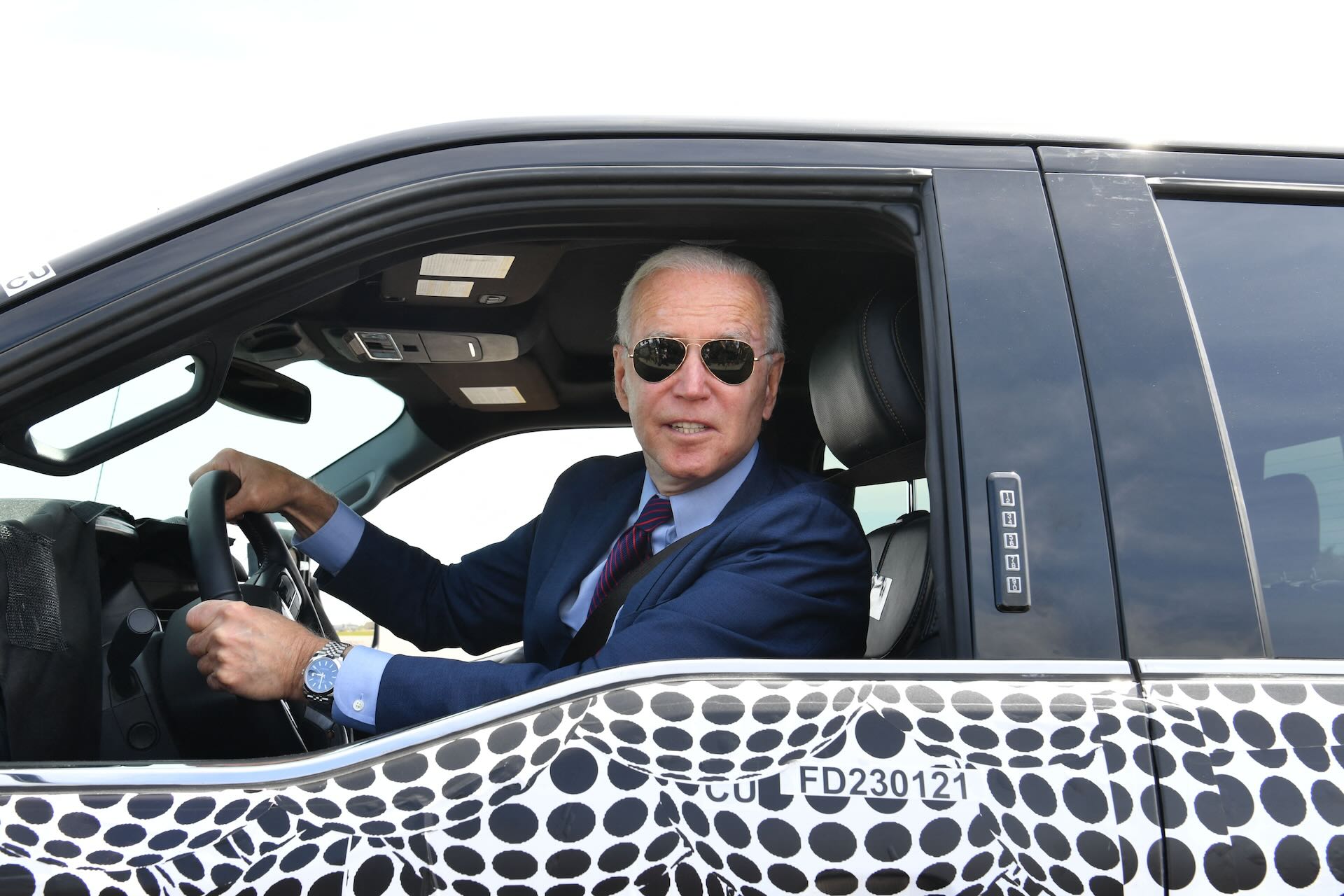
The “vibecession” is even more severe in the U.S., where voters seem loath to give President Joe Biden any credit for a record unemployment rate and a roaring stock market. Photo: Getty Images/Nicholas Kamm
Yet most sentiment data suggest we’re focused on the negatives. Abacus Data polled entrepreneurs last year for the Business Development Bank of Canada and found most were down on the economy’s prospects, even though a majority said their businesses were doing fine. Sixty-six per cent of respondents to the April Maru poll said they think the economy is on the “wrong track,” even though large majorities indicated they would have no problem purchasing essentials and keeping a roof over their heads, and 62 per cent said they thought they earned a “livable” wage.
The “vibecession” is even more severe in the United States, where some combination of the Federal Reserve’s handling of the inflation scare, the Biden administration’s industrial policy and the success of the Magnificent Seven tech companies has resulted in some of the strongest economic conditions since before the Great Recession. Yet poll after poll suggests Americans remain down on the economy, and are loath to give Biden any credit for a record unemployment rate and a roaring stock market.
Paul Krugman, the Nobel laureate and columnist for The New York Times, is among the economists who are wary of putting too much emphasis on sentiment data. The vibecession’s antithesis is “revenge travel,” a phenomenon that higher prices and angst over the cost of living aren’t always good predictors of discretionary spending. The Bank of Canada’s latest quarterly survey of consumer expectations suggests the general public thinks inflation is currently around five per cent, even though the consumer price index says it’s closer to three per cent and falling.
It’s tempting to dismiss sentiment and focus on hard data and theory. The better response probably would be to take all that behavioural science and neuroscience has learned about human behaviour over the past couple of decades and start applying it to policy, as Mohamed El-Erian, the former CEO of investing behemoth PIMCO, has been urging central banks to do since the aftermath of the Great Recession.
For his part, Wright reckons at least a couple of things are happening. Political polarization has worsened, and that’s affecting how partisans view the world. There is also lingering trauma from the pandemic. He does similar polling in the U.S. and the U.K. and the results there mirror what he sees in Canada.
The lockdowns were strange and tragic, but for many people they were also comfortable. Emergency aid from the government, combined with fewer temptations to spend, meant many households felt financially secure. Now, savings rates are falling and millions of homeowners face significant mortgage increases. It’s bad luck, but that doesn’t make misfortune any easier to swallow. “We actually feel like we had The Good Life during the bad times,” Wright said. “We had money in the bank. We were working from home for the first time. And now, you know what? Things aren’t so good.”
Most of the announcements on the government’s pre-budget tour have related to housing, a source of particular angst, and been directed at younger voters, the one demographic that displays a bit of optimism about the economy’s prospects, according to Wright.
The decision to break with tradition and reveal budget items before the document is tabled in the House of Commons was clever, as reaching large numbers of voters has become harder now that audiences have been splintered by digital media. Maybe the public will become less disillusioned if they see the government is acting on the biggest problems.
Or maybe they will become even more frustrated. Wright said he senses that people have come to see the budget as “nothing but fantasy,” as successive governments have turned something the public used to see as an anchor into a political document. The sight of politicians spending more money when polls suggest worry over the deficit is growing could backfire.
Canada avoided a real recession. It seems likely that the vibecession will linger.
Kevin Carmichael is The Logic’s economics columnist and editor-at-large. He has spent more than two decades covering economics, business and finance for outlets including Bloomberg News, The Globe and Mail and the Financial Post, where he also served as editor-in-chief.