Let’s go back to 2016. Here’s what was keeping newly minted finance minister Bill Morneau up at night: “My department brought me what we agreed was our most urgent economic risk—the increasing reliance on the appreciation in housing values for overall growth, and the wealth imbalances it was causing among different generations of Canadians.”
Skip to content

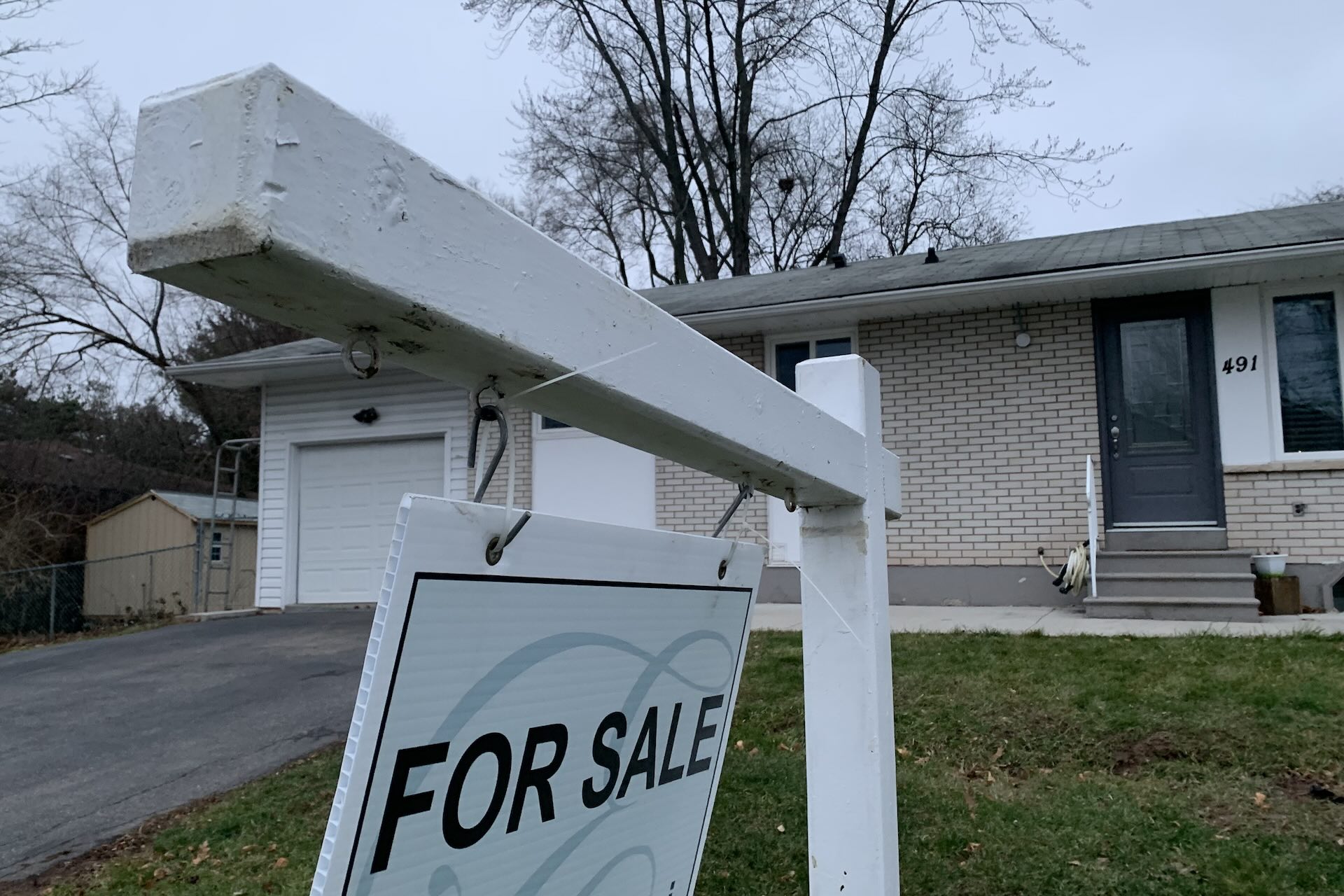 Real estate signage is shown in Oakville, Ont., west of Toronto, on Friday, Jan.12, 2024. Photo: The Canadian Press/Richard Buchan
Commentary
Carmichael: Does Canada need a housing correction? Could we handle one?
The patient may not survive the cure
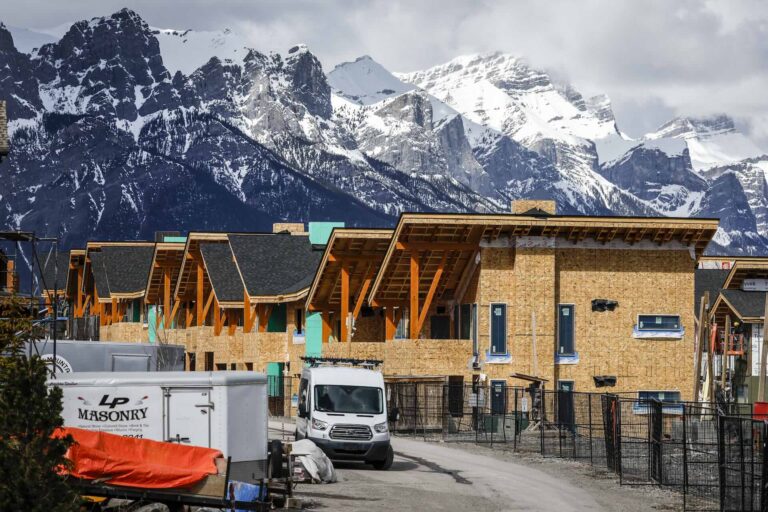
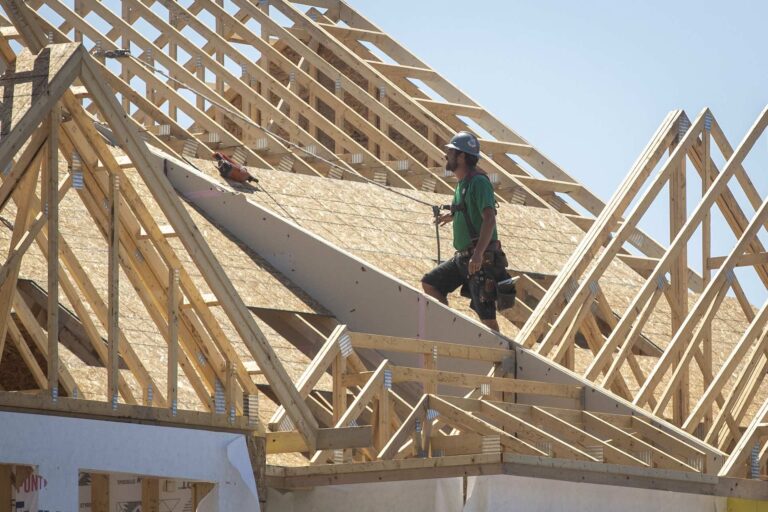
A construction worker is shown working on a new condo development in Montreal, Wednesday, Jan. 31, 2024. Photo: The Canadian Press/Graham Hughes
Let’s go back to 2016. Here’s what was keeping newly minted finance minister Bill Morneau up at night: “My department brought me what we agreed was our most urgent economic risk—the increasing reliance on the appreciation in housing values for overall growth, and the wealth imbalances it was causing among different generations of Canadians.”
That’s from Morneau’s political memoir, Where To From Here. It’s a statement on the limits of modern democratic governance. The country’s top economic policymaker and his advisers in the civil service identified a threat to peace and prosperity, yet lacked the wherewithal to address it.
First the all-hands-on-deck response to Donald Trump’s threat to end the North American Free Trade Agreement, then the pandemic—an actual crisis—gave the government about all it could handle. Maybe it’s unreasonable to expect more, but it’s nonetheless a shame that we’re incapable of dealing with threats until they barge through the door—as the risk that Morneau identified eight years ago now has done.
Related Articles
Morneau scored an early win in his attempt to end the Canadian economy’s addiction to real estate by raising the minimum downpayment for an insured mortgage. It wasn’t much, but the politics of housing make even incremental changes extremely hard, especially when your party’s core supporters live in Vancouver, the Greater Toronto Area and Montreal, as was the case for Morneau’s Liberals.
“Existing homeowners are not upset by rising prices, while first-time home buyers want incentives and financial assistance to get into a rising market, fueling demand for housing that raises prices even higher,” Morneau writes.
If the political class is convinced that votes and political donations are super sensitive to housing policy, then we should get used to life in a slow-growth economy characterized by weak productivity, elevated levels of household debt and all the societal issues that come with growing inequality. A hammer blow might be good for the economy over the longer term, but we’re probably too fragile to stand the shock it would take to set things right.
Charles St-Arnaud, chief economist at Alberta Central, the central bank for Alberta’s credit unions, has grown frustrated with the shallowness of the discourse over the affordability crisis. “I don’t think anyone has a clue what it means,” he said in an interview. “Are homeowners in Toronto willing to accept a 40 per cent decline in house prices to restore affordability? I don’t think so.”
St-Arnaud didn’t pull that 40 per cent number out of the air to make a point. He decided to do the math on what it would take to better align housing costs with incomes. He was in a good position to do the analysis because he keeps a heatmap of affordability in Canada’s biggest cities based on house prices relative to income, house prices relative to rent, mortgage payments relative to income, mortgage payments relative to rent, and the income that would be required to purchase the average home.
Based on St-Arnaud’s calculations, affordability in Vancouver and Toronto has never been lower, and Montreal, Ottawa and Winnipeg are at the lowest levels since the early 1980s—when mortgage rates were around 20 per cent. Calgary and Edmonton are green on the heatmap, but affordability in those cities is “eroding rapidly,” he wrote.
Canada hasn’t suffered a significant correction in the housing market since the 1990s. That’s both a blessing and curse. Stability is nice, but the housing market ran far ahead of wage increases. Now, based on average salaries and current interest rates, St-Arnaud reckons house prices would have to plunge 50 per cent in Toronto, 43 per cent in Montreal, 38 per cent in Ottawa and 35 per cent in Vancouver to make those markets affordable.
A correction of that magnitude would cause damage akin to what countries such as the U.S. and Ireland experienced during the Great Recession.
The pain might be worth it. One of the reasons the U.S. has been able to power through higher interest rates is because the financial crisis wiped out a lot of debt. American households are now freer to spend, whereas Canadians are extremely sensitive to higher borrowing costs because of all the debt we piled up chasing sky-high house prices.
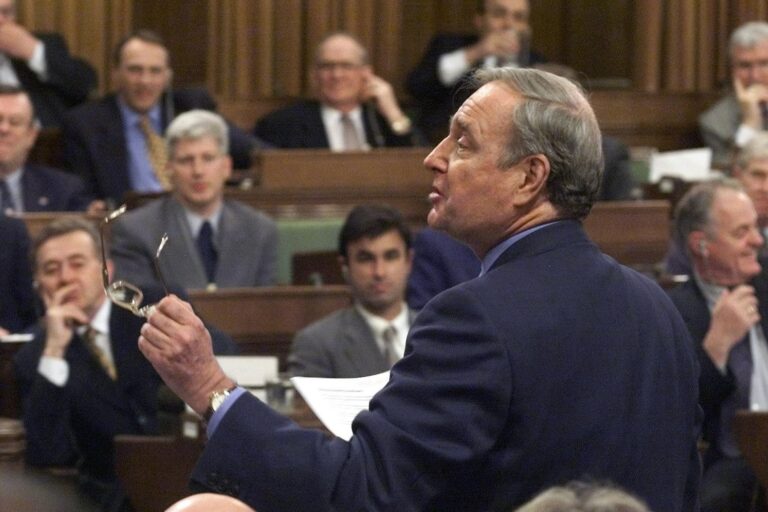
It seems unlikely any government would let such a correction happen. I witnessed Morneau tell an audience in 2017 that as a member of Parliament and cabinet minister, he felt Canadians were “counting on [him] to ensure their home keeps its value.” If that’s true, then the path to affordability will be a slog and the rest of the economy will continue to suffer from the dominance of housing.
The Bank of Canada probably will cut interest rates this year, but governor Tiff Macklem said last week that he doesn’t foresee a return to near-zero borrowing costs. So, don’t expect the central bank to come to the rescue. St-Arnaud estimates rates would have to drop by more than four percentage points to get average mortgage payments to 25 per cent of the average national income. That’s not happening.
Wage growth could do a lot of the work, but only slowly, according to St-Arnaud’s math. To get affordability back to the long-term average, household income would have to increase by 66 per cent; assuming annual income growth of four per cent, that would take about a decade. That means the best-case scenario would require prices to stagnate at current levels for many years so incomes can catch up.
“Restoring affordability will not be a painless policy; instead, it will come at a cost, especially to current homeowners,” St-Arnaud wrote. That means Canada’s long-term prospects could hinge on a powerful voting bloc agreeing to sacrifice some of its housing wealth for the greater good. What could go wrong?
Kevin Carmichael is The Logic’s economics columnist and editor-at-large. He has spent more than two decades covering economics, business and finance for outlets including Bloomberg News, The Globe and Mail and the Financial Post, where he also served as editor-in-chief.



Loading...
Thanks for sharing!
You have shared 5 articles this month and reached the maximum amount of shares available.
CloseThis account has reached its share limit.
If you would like to purchase a sharing license please contact The Logic support at [email protected].
CloseGift the full article!
You have gifted 0 article(s) this month and have 5 remaining.
Recipients will be able to read the full text of the article after submitting their email address. They will not have access to other articles or subscriber benefits.
Photo: The Canadian Press/Graham Hughes
Real estate signage is shown in Oakville, Ont., west of Toronto, on Friday, Jan.12, 2024.
Most Popular This Week




In-depth, agenda-setting reporting
Great journalism delivered straight to your inbox.
Commentary
Carmichael: Being boxed in will help Canada focus on what matters
Briefing
Rio Tinto gets nearly $165M in additional federal funds for Quebec aluminum
U.S. to lift tariffs on some Canadian products crucial to Maine: Collins
Carney warns of tech dependence after Starlink disruptions in Ukraine
Best business newsletter in Canada
Get up to speed in minutes with insights and analysis on the most important stories of the day, every weekday.
Exclusive events
See the bigger picture with reporters and industry experts in subscriber-exclusive events.
Membership in The Logic Council
Membership provides access to our popular Slack channel, participation in subscriber surveys and invitations to exclusive events with our journalists and special guests.






