The Great Demographic Reversal is one of those books that shows that the past isn’t prologue. Authors Charles Goodhart and Manoj Pradhan argue that we can’t assume the prosperity that followed the end of the Second World War will last because it was based on a glut of workers—at first the boomers, then Asia’s armies of cheap labour joined thanks to globalization.
Those demographic tailwinds are now headwinds. The global labour pool is shrinking as boomers retire. There are still lots of underemployed workers out there, but Goodhart and Pradhan doubt that immigration is a solution because countries tend to dislike making room for newcomers.
Canada looked like an exception. The population increased by more than one million people between July 2022 and July 2023, almost entirely because of immigration. An ability to add talent at a rate like that could be a powerful advantage, yet it looks like the political class might have ruined it by taking the housing crisis for granted for too long.
The immigration crisis didn’t come up once during Finance Minister Chrystia Freeland’s testimony on housing affordability at the finance committee on Thursday. Maybe that’s good, but it amounts to avoidance. Bitterness about foreign investors bidding up housing prices has spread to frustration over competition from international students and permanent residents. An Abacus Data poll in November found that almost 70 per cent of respondents thought that immigration levels were “too high,” an opinion shared by a majority of partisans of all the major political parties.
In reality, it’s probably the cost of shelter that people think is “too high,” and a frustrated nation is looking for someone (or something) to blame. A story took hold over the summer that the housing crisis was proof that the federal government had opened the immigration gates too wide. You can feel the political pressure building to narrow them.
That would be a shame. A team of Bank of Canada researchers published a detailed analysis of Canada’s recent experience with immigration this week. They found that newcomers were responsible for almost all of the growth in the labour supply in 2021 and 2022, as measured by hours worked—in fact, if not for that contribution, the labour supply would have shrunk. The paper estimates that those newly arrived workers increased “potential growth”—the rate at which the economy can grow without stoking inflation—by two to three percentage points. Inflation, which peaked at 8.1 per cent in June 2022, would have been worse if the government hadn’t flooded that economy with more workers.
It’s not the Bank of Canada’s job to set immigration quotas, but it needs to understand what’s going on. Governor Tiff Macklem initially misjudged how broad and persistent inflation had become. And more recently, he and his deputies have had to adjust their thinking to accommodate a reality in which home prices, rent prices and mortgage costs all rise together. Real estate prices should have fallen. Instead, the Bank of Canada has been forced to defend itself against charges that it’s making the housing situation worse.
Policymakers appear to now have a solid understanding of what happened.
“Demographic demand,” which is a measure of new household formation, began pulling away from housing starts in 2016—and then demographic demand jumped off the charts in 2022 as pandemic restrictions receded and immigrants rushed in. Yet housing starts trundled along at roughly the same pace, creating an extreme mismatch between supply and demand.
Ottawa probably should have seen that coming. In their defence, the economic literature broadly implied that immigration has little effect on housing costs. That’s mostly because in other countries, immigration tends to deepen the pool of construction workers.
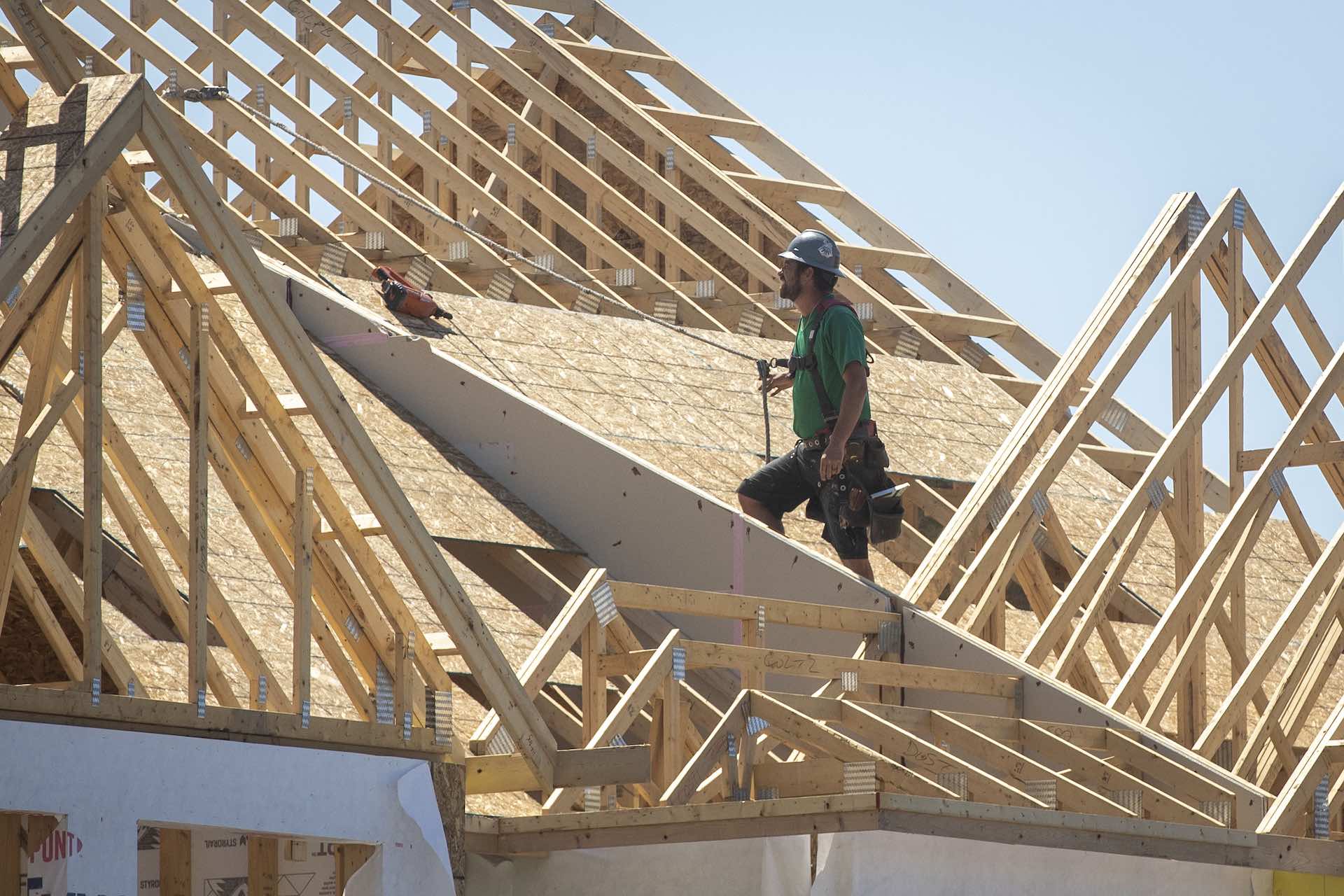
That didn’t happen here. The largest increases were in “professional, technical and scientific services,” the category that covers software engineers and other tech workers. A relatively miniscule number of immigrants got jobs in construction, odd because the industry has been lamenting a talent shortage for years. The Bank of Canada paper estimates that “a near tripling” of the number of non-permanent residents that currently work in construction would be required to match their share of employment in the industry to that of the general population.
Bottom line: It would take 10 months of housing starts to balance supply and demand, compared with about two and a half months in 2019, the researchers said.
Ottawa recently figured out that their overall approach to immigration—a points-based system that prioritizes newcomers who can immediately go to work in high-paying jobs—might be part of the problem. The Canadian approach is admired elsewhere, but an unintended consequence appears to have been short-changing some industries. In August, Immigration Minister Marc Miller said applicants with experience in 10 trades, including carpenters, plumbers and contractors, would be eligible for express entry.
It could be more complicated than that. The construction industry is dominated by smaller companies that either lack the capacity to navigate the immigration system or have little interest in doing so. “It’s easier for larger businesses to access the system,” Parisa Mahboubi, a senior policy analyst at the C.D. Howe Institute who studies immigration, said in an interview.
Evidence that Ottawa is adjusting its policy as it learns is positive. It’s just a shame that it took a crisis for it to happen. Housing markets might eventually rebalance, but not before without exhausting our tolerance for elevated levels of immigration. Our longer-term prospects will suffer as a result.
Kevin Carmichael is The Logic’s economics columnist and editor-at-large. He has spent more than two decades covering economics, business and finance for outlets including Bloomberg News, The Globe and Mail and the Financial Post, where he also served as editor-in-chief.
Editor’s note: The story has been updated to clarify that immigration’s contribution to shelter costs wasn’t discussed at the House finance committee’s hearing on housing affordability.