The family name of the interim parliamentary budget officer Jason Jacques is pronounced “Jakes.” Get to know it ahead of Prime Minister Mark Carney’s first budget Nov. 4. Jacques has had the job for barely a month and already has demonstrated a willingness to supply the opposition with good material. That will make him a popular guest at parliamentary committees and earn him cameos in short-form political propaganda videos.
Skip to content


Commentary
Carmichael: It’s the wrong time to fret about the debt
Canada’s finances may be delicate, but austerity won’t meet the moment
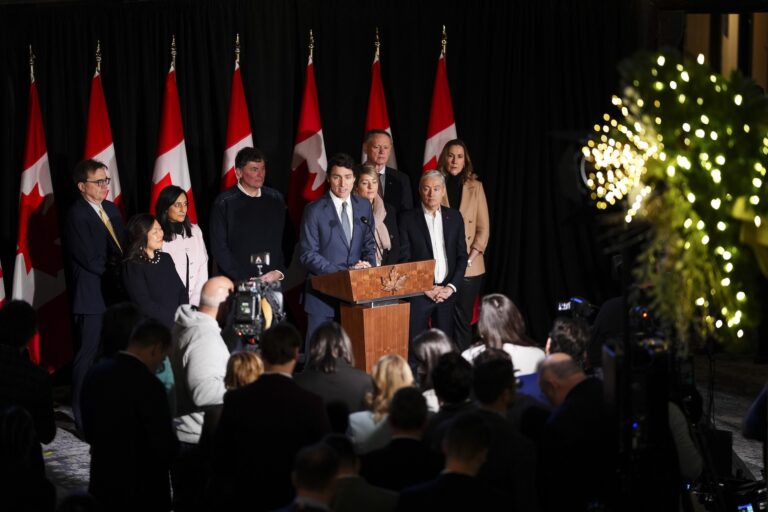
Minister of Finance and National Revenue François-Philippe Champagne speaks to the media at the Liberal cabinet retreat in Toronto in September. Photo: The Canadian Press/Chris Young
The family name of the interim parliamentary budget officer Jason Jacques is pronounced “Jakes.” Get to know it ahead of Prime Minister Mark Carney’s first budget Nov. 4. Jacques has had the job for barely a month and already has demonstrated a willingness to supply the opposition with good material. That will make him a popular guest at parliamentary committees and earn him cameos in short-form political propaganda videos.
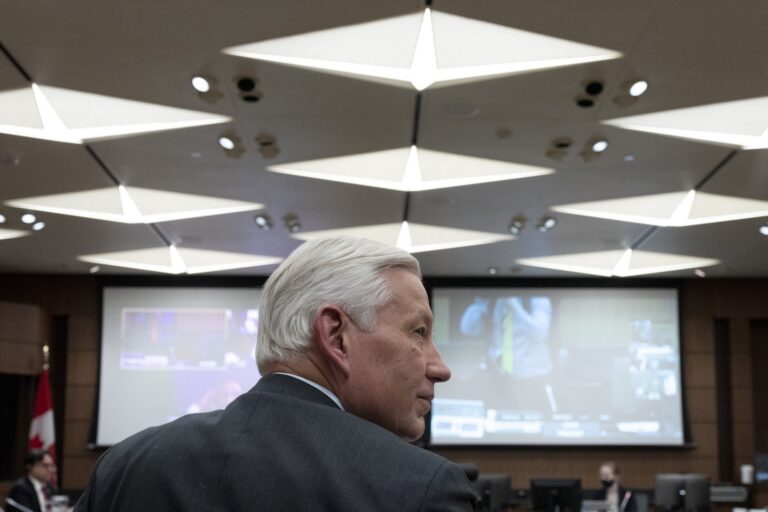
Jacques told the House operations committee on Sept. 25 that he chooses his words carefully. Here are some of the words he chose during his testimony to describe the Parliamentary Budget Office’s latest fiscal outlook. “It should be very alarming,” he said when asked to describe how concerned Canadians should be by the PBO’s forecast, which has the budget deficit hovering around two per cent of gross domestic product for the next five years, and the debt increasing to 43.7 per cent of GDP in 2031 from about 42.5 per cent currently.
“Stupefying,” Jacques added. “Shocking, right? It’s not a funny fiscal outlook. It’s a really serious fiscal outlook. We don’t lightly use the word ‘unsustainable.’ Unsustainable means you don’t have the option of saying ‘Maybe I’ll wait a couple of years, I’ll see how things go.’ It means if you don’t change, you’re done. So it’s very serious.”
Related Articles

Unsustainable is a tricky word no matter how carefully you use it.
Chicken Licken was certain the sky was falling, Thomas Malthus had math that showed humanity was on course to devour the planet and Karl Marx confidently predicted that capitalism was merely a way station on the way to something better. Predicting the future is hard. Mental traps make it even harder.
Japan’s net debt as a percentage of GDP climbed to about 40 per cent in 1996, exceeded 100 per cent in 2008 and is currently around 135 per cent, according to the International Monetary Fund. The country has been muscling through its share of economic problems for a few decades, but Japanese society hasn’t collapsed. In some ways, it continues to thrive. Fiscally imprudent Japan has added hundreds of kilometres of track each decade since its first high-speed trains started running between Tokyo and Osaka in the 1960s. Fiscally prudent Canada has finally decided it would like high-speed rail, but still needs at least four years to put a plan together.
High-speed rail is a values test. (You could replace it with any number of major projects.) We’ll continue to spew excess carbon emissions while flying between Montreal and Toronto for at least another decade, making it that much harder to contain climate change, another challenge that is on an unsustainable trajectory. Talented researchers at the world-class universities along the corridor between Quebec City and southwestern Ontario will continue to work in silos for lack of transportation links between their cities, impeding our ability to generate breakthrough ideas.
But at least we have a sterling credit rating. If building a successful economy followed the rules of the marshmallow test—where children are promised a second marshmallow if they can resist gobbling the one in front of them for a certain period of time—we’d be world beaters. Instead, Canada has dropped to 17th on the World Intellectual Property Organization’s innovation index.
The organization also ranked innovation clusters. Toronto was the highest Canadian location at 33. Japan’s Tokyo-Yokohama was second. Osaka-Kobe-Kyoto was 11th and Nagoya was 28th. The U.S. and China dominate the list. Despite all its debt, Japan is the only other country with more than two clusters in the top 35.
Given where mastery of delayed gratification has landed us, it might be time to try a more nuanced conversation about fiscal policy, one that recognizes the current context and leaves morality tales to the Brothers Grimm. The Business Council of Canada (BCC) is trying. Theo Argitis, the BCC’s head of policy, and Serge Dupont, a senior adviser at Bennett Jones and a former high-ranking public servant, led a consultation that included more than 50 CEOs and nearly 20 economists. Their report expresses concern about Canada’s finances, but it isn’t obsessed with them. “Canada’s fiscal starting point is fragile, though not a crisis,” Argitis and Dupont wrote. Elsewhere, they concede that “the pure ‘balanced budget’ message no longer commands the consensus it once did.”
The only opinion of Canada’s debt trajectory that really matters is that of those who purchase the bonds. Jacques explained his shock by telling the operations committee that it’s the first time in 30 years that the debt-to-GDP ratio is on track to worsen over the longer term.
Thirty years ago was 1995, the year former finance minister Paul Martin gutted federal spending to stave off an actual debt crisis. Back then, the yield on 10-year federal debt was nine per cent. Today, the government of Canada’s borrowing costs are creeping higher, but the 10-year rate is hovering around 3.5 per cent. Creditors aren’t stupefied by anything they see in Canada, so maybe we shouldn’t be either.
It makes sense to keep debt from racing out of control. In case it wasn’t obvious, I was using Japan as a figurative foil for Canada’s situation, not a literal one. In a chaotic world where the U.S. is no longer a haven, places that value stability have an opportunity to gain comparative advantages that had previously been unavailable to them. The BCC recommends a “dashboard” of fiscal anchors and guardrails to demonstrate future spending will be done with purpose as opposed to politically motivated abandon. It’s an approach that would keep Finance Minister François-Philippe Champagne accountable, while also avoiding the false ceilings that balanced-budget rules and fiscal buffers impose.
Flexibility is important because thirty years from now, the conversation will be about what Canada’s leaders did in 2025 when the country realized its economy had become too weak to stand on its own. The debt is going to rise because it’s the only way to overhaul the economy at the pace the moment demands. That needn’t be shocking. Some crises demand austerity. What we face isn’t one of them.
Kevin Carmichael is The Logic’s economics columnist and editor-at-large. He has spent more than two decades covering economics, business and finance for outlets including Bloomberg News, The Globe and Mail and the Financial Post, where he also served as editor-in-chief.



Loading...
Thanks for sharing!
You have shared 5 articles this month and reached the maximum amount of shares available.
CloseThis account has reached its share limit.
If you would like to purchase a sharing license please contact The Logic support at [email protected].
CloseGift the full article!
You have gifted 0 article(s) this month and have 5 remaining.
Recipients will be able to read the full text of the article after submitting their email address. They will not have access to other articles or subscriber benefits.
Photo: The Canadian Press/Chris Young
Most Popular This Week



In-depth, agenda-setting reporting
Great journalism delivered straight to your inbox.
News
EDC wants to help sell the full stack of Canadian technology abroad
Briefing
Mark Carney promises $2B to subsidize home energy retrofits
Mecka raises US$60M to gather data for robot training
Businesses should expect AI to get better, but not necessarily cheaper
Best business newsletter in Canada
Get up to speed in minutes with insights and analysis on the most important stories of the day, every weekday.
Exclusive events
See the bigger picture with reporters and industry experts in subscriber-exclusive events.
Membership in The Logic Council
Membership provides access to our popular Slack channel, participation in subscriber surveys and invitations to exclusive events with our journalists and special guests.





