An all-out trade war with the U.S. isn’t deterring Desjardins from its acquisition spree. The financial services group is willing to take on additional tariff-related costs as it hunts for property and casualty insurance companies to beef up its portfolio, according to its chief executive.
Skip to content

News
Desjardins CEO eyes fresh acquisitions as trade war escalates
Guy Cormier sees an opportunity for deal-making amid a bruising trade war instigated by Canada’s closest ally
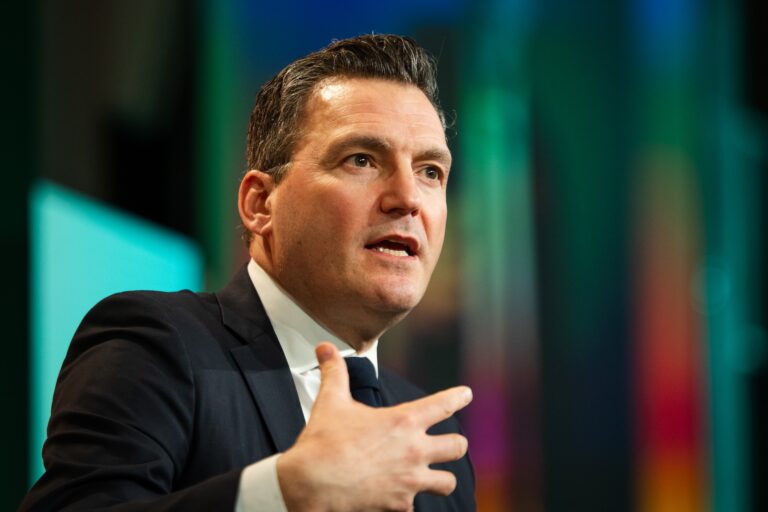
Desjardins president and CEO Guy Cormier delivers a statement during a news conference in Montreal on Thursday, June 20, 2019. Photo: The Canadian Press/Paul Chiasson
An all-out trade war with the U.S. isn’t deterring Desjardins from its acquisition spree. The financial services group is willing to take on additional tariff-related costs as it hunts for property and casualty insurance companies to beef up its portfolio, according to its chief executive.
Talking Points
- Desjardins’ chief executive isn’t afraid of making bold moves to acquire more property and casualty insurance companies, even if it means facing additional costs from tariffs
- Higher premiums and lower storm-related costs helped boost the company’s insurance business during its last fiscal year
The Lévis, Que.-headquartered company is currently in talks with P&C companies, and is looking for targets at a time when many other firms are retrenching. “[Tariffs] won’t stop our ambition to see if there’s options for more acquisitions,” Desjardins’ CEO Guy Cormier told The Logic. “We’ll incorporate this risk in our strategy.”
His aspirations come as U.S. President Donald Trump has imposed sweeping tariffs against its closest ally and doubled down on threats to annex Canada.
There will be new acquisition targets coming on the market soon, Cormier said, and despite the recession risk, he’s focused on transactions that serve the company in the long run. “Is it going to be a tough moment? Yes, but we will manage it.”
The company, which had $470.9 billion in assets as of December, closed a series of acquisitions in spring 2023, including The Insurance Company of P.E.I., and Toronto-based Guardian Capital Group. Cormier also wants to add commercial insurance companies to its business, and is keen to bring on more manufacturing capacity.
Related Articles

M&A in the brokerage industry has slowly increased over the past five years, with 82 publicly announced transactions in 2024, according to professional services firm Smythe LLP. That’s down from 116 in 2023, but more than the yearly totals for the three years leading up to it. Cormier said he’s expecting “more losses” due to weather-related events that will affect net profit negatively in 2025 and 2026. Products are renewed every year so there’s not necessarily a “forecast” to adjust, but tariffs could increase repair costs in P&C, he said.
But Desjardins isn’t deploying an amount of capital that would put pressure on the business, he added, and is working on reducing costs in other areas.
Earnings for the 2024 fiscal year, which Desjardins reported on Feb. 25, were exceptional for the company’s P&C segment, Cormier said. Revenue for that division rose 84.6 per cent to $1.89 billion from last year, making up nearly 13 per cent of the overall top line. While P&C was a major driver of insurance revenue growth this year, its wealth management and health insurance segment as well as personal and business services remained relatively stagnant.
Last year’s revenue bump was unusual. There were fewer collisions and catastrophes in 2024, according to Cormier, though he rattled off a few extreme weather events—wildfires in Alberta, flooding in Toronto. Desjardins also recently brought on a batch of new clients in Quebec, Cormier said, which increased business volume and premiums.
Cormier’s comments follow his interview with The Logic last October, in which he emphasized the insurer had “capital to deploy” for acquisitions.
Loading...
Thanks for sharing!
You have shared 5 articles this month and reached the maximum amount of shares available.
CloseThis account has reached its share limit.
If you would like to purchase a sharing license please contact The Logic support at [email protected].
CloseGift the full article!
You have gifted 0 article(s) this month and have 5 remaining.
Recipients will be able to read the full text of the article after submitting their email address. They will not have access to other articles or subscriber benefits.
Photo: The Canadian Press/Paul Chiasson
Most Popular This Week




In-depth, agenda-setting reporting
Great journalism delivered straight to your inbox.
News
Solomon says new laws will address Canada’s AI trust deficit
Briefing
Feds should have rules for weighing military needs and economic benefits in defence buys, ombud advises
Peblik executive director sentenced to jail for crypto marketing fraud
PSP posts 6.5% return, boosts Canadian assets
Best business newsletter in Canada
Get up to speed in minutes with insights and analysis on the most important stories of the day, every weekday.
Exclusive events
See the bigger picture with reporters and industry experts in subscriber-exclusive events.
Membership in The Logic Council
Membership provides access to our popular Slack channel, participation in subscriber surveys and invitations to exclusive events with our journalists and special guests.