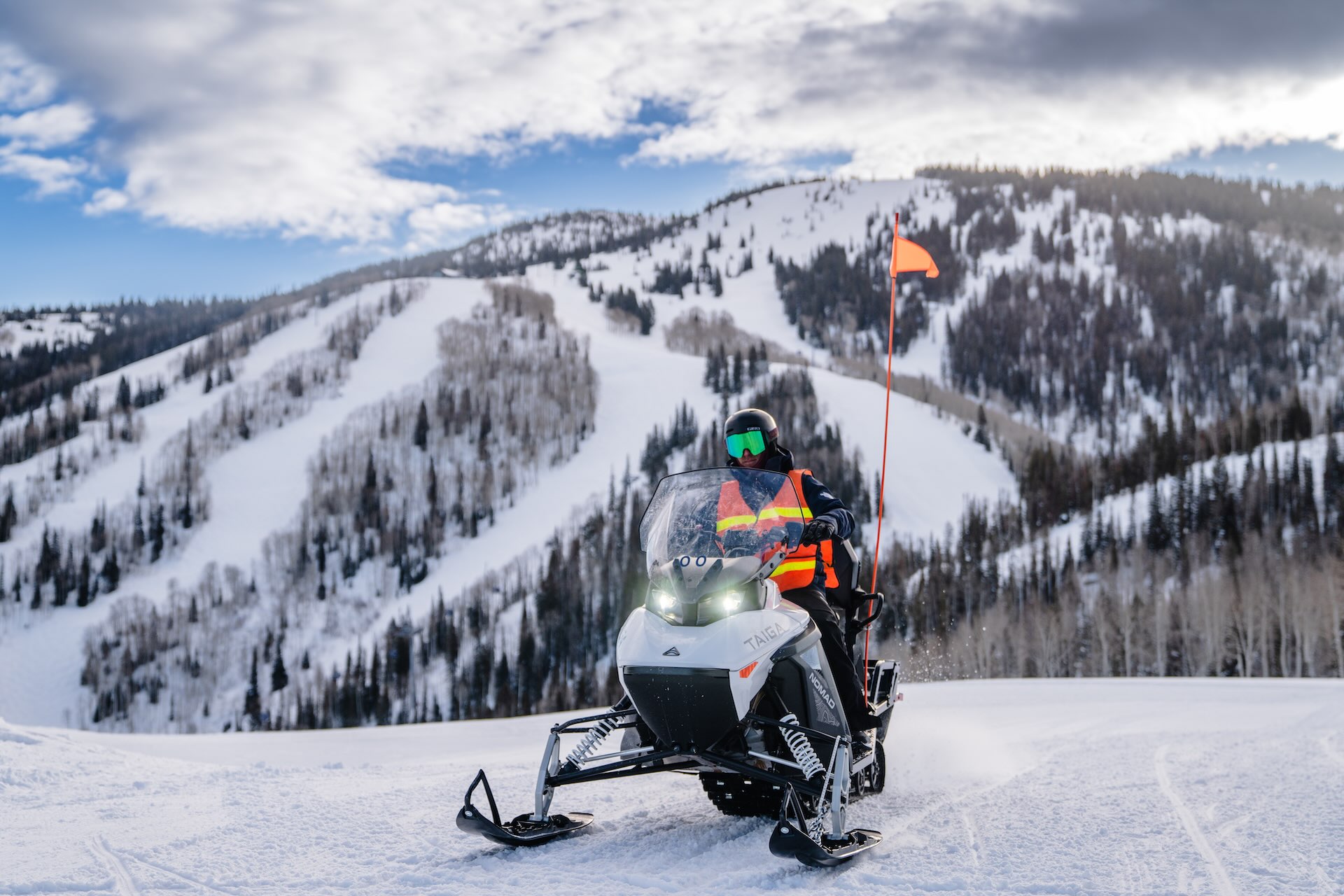
The ride on a Taiga snowmobile is exactly the same as it was before the startup went bust seven months ago. Hit the thumb throttle and you are at highway speeds on a frozen lake in about the time it takes to sneeze, with none of the noise and fumes of a gas-powered sled. The Taiga was the first EV snowmobile to hit the market. It remains the best.
Skip to content

 Samuel Bruneau, pictured, remained at Taiga when the company emerged from bankruptcy protection last October. Photo: Taiga/Handout
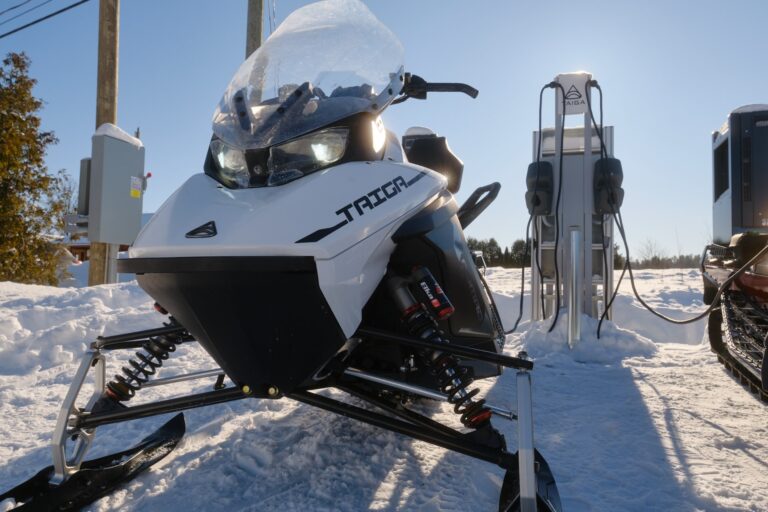
 Under its new ownership, Taiga has said it will ditch its direct-to-consumer model. Photo: Taiga/Handout

Commentary: Quebec Ink
Taiga nearly destroyed itself. Now it’s back with a new EV plan
The Montreal-based EV startup suffered from an epic boom and bust. Its new plan? Slow and steady.
Taiga aims to produce 8,000 snowmobiles and watercraft by 2028—a far cry from the 25,000 projected in its SPAC heyday. Photo: Taiga/Handout
The ride on a Taiga snowmobile is exactly the same as it was before the startup went bust seven months ago. Hit the thumb throttle and you are at highway speeds on a frozen lake in about the time it takes to sneeze, with none of the noise and fumes of a gas-powered sled. The Taiga was the first EV snowmobile to hit the market. It remains the best.
Here’s another thing that hasn’t changed with Taiga: its executive team. Samuel Bruneau, Paul Achard and Gabriel Bernatchez remained at the helm when the Montreal-based EV company emerged from bankruptcy protection last October, with a new owner in Stewart Wilkinson, the founder of U.K.-based electric boat company Vita Power.
Related Articles
Wilkinson has big plans for Taiga. As part of his commitment to keep Taiga as a going concern, he invested $15 million in the company and has worked out a business plan with the Export Development Bank (EDC), which both invested in Taiga and led its restructuring. Taiga recently shipped product to two dealers and a fleet operator in Norway, as well as ski resorts in France and Italy.
The company’s electric personal watercraft will bolster Vita Power’s existing range, while Wilkinson plans to sell white-label versions of Taiga’s motors to boat manufacturers looking to go electric. He hopes to take the company public, again, in 2028.
The cynic might wonder why Bruneau, Achard and Bernatchez remain an integral part of Wilkinson’s plans. Under the three McGill graduates, Taiga went from whiteboard concept to a half-billion dollar valuation in 2021 when the company went public via special-purpose acquisition company (SPAC)—but also oversaw its subsequent collapse, with nearly $100 million in liabilities and hundreds of layoffs.
To that same cynic, Taiga’s travails are indicative of the trope that founders often don’t make good managers. From Jerry Yang to Jack Dorsey, the startup world is littered with the bodies of founders tossed aside at pivotal moments, replaced by phalanxes of management types tasked with wringing profits from demonstrably fantastic products.
“It’s a good question,” Bruneau, 33, said when I asked him how he still had a job. In answering, Bruneau spoke of what he considers in hindsight to be Taiga’s biggest mistake: entering into that SPAC in 2021. Once the banking instrument du jour, SPACs essentially allow companies to pool fundraising and leapfrog the procedural rigmarole when going public. As Le Journal de Montréal noted in 2021, the deal made paper millionaires out of Bruneau et al.
The SPAC gave Taiga a dizzying market valuation, and effectively allowed it to service a market of its own creation—which, in the province that birthed the snowmobile nearly a century ago, is saying something. Yet Bruneau said the company couldn’t manage the ensuing weight of the market’s expectations. “When you try to drive hypergrowth, it’s inefficient at some point, compared to being a bit more cautious and trying to move super fast,” Bruneau said. In this, he isn’t wrong: the product of the money-bubbled, COVID-addled days of 2020 and 2021, SPACs are generally considered to have been a flop.
Because they never sold their shares, the three founders are no longer paper millionaires, and Bruneau expressed frustration at being lumped in with “opportunistic executives that took in large compensation while their companies struggled.”
There are other differences with Taiga’s second act. The company is down to 40 employees, far from the 340 in its SPAC heyday. Originally, the company planned on 200 per cent growth a year, topping out at 25,000 snowmobiles and watercraft by the end of 2028. The plan now is to produce about 8,000 by then, Wilkinson told me.
Taiga originally sold its wares direct-to-consumer, à la Tesla, using dealers as delivery points and service providers. It is, as it turns out, not a great way to sell snowmobiles in an era of climate change and associated unpredictable weather. Taiga is moving to a traditional dealer-based sales model as a result. Because dealers buy inventory upfront, it will allow Taiga to derisk the possibility of snowless winters.
One dealer, at least, isn’t convinced with Taiga 2.0. “They went bankrupt. Got a new investor. Still the same people at the top. They need to bring in new leadership,” said Eric Peterson, president of Minnesota-based Centre Powersports. The company, Peterson claimed, pressured him to take inventory he didn’t want and then delayed paying him as the company circled the drain. Despite its great product, Peterson said he’s lost trust in the brand.
“Doing SPACs is like drinking the Kool-Aid,” Wilkinson said after I put Peterson’s concerns to him, of the easy money and perma-grin optimism of yore. Having brought Taiga to the stratosphere, and seen it through the gutter, Wilkinson reckons that Bruneau, Achard and Bernatchez are ready to aim for somewhere in between. “I have quite a strong belief in learning from failure,” he said.
Martin Patriquin is The Logic’s Quebec correspondent. He joined in 2019 after 10 years as Quebec bureau chief for Maclean’s. A National Magazine Award and SABEW winner, he has written for The New York Times, The Guardian, The Walrus, Vice, BuzzFeed and The Globe and Mail, among others. He is also a panelist on CBC’s “Power & Politics.”
Loading...
Thanks for sharing!
You have shared 5 articles this month and reached the maximum amount of shares available.
CloseThis account has reached its share limit.
If you would like to purchase a sharing license please contact The Logic support at [email protected].
CloseGift the full article!
You have gifted 0 article(s) this month and have 5 remaining.
Recipients will be able to read the full text of the article after submitting their email address. They will not have access to other articles or subscriber benefits.
Photo: Taiga/Handout
Samuel Bruneau, pictured, remained at Taiga when the company emerged from bankruptcy protection last October.
Under its new ownership, Taiga has said it will ditch its direct-to-consumer model.
Most Popular This Week



In-depth, agenda-setting reporting
Great journalism delivered straight to your inbox.
News
Diversifying trade requires banks to take bigger risks, official advised Carney before CIBC meeting
Briefing
Beleaguered Goeasy removed from Canada’s main stock index
Manitoba judge dismisses lawsuit against Winnipeg businessman Sandy Riley
Ottawa piloting use of AI tool to profile prisoners
Best business newsletter in Canada
Get up to speed in minutes with insights and analysis on the most important stories of the day, every weekday.
Exclusive events
See the bigger picture with reporters and industry experts in subscriber-exclusive events.
Membership in The Logic Council
Membership provides access to our popular Slack channel, participation in subscriber surveys and invitations to exclusive events with our journalists and special guests.