MONTREAL — There was once a Tesla-like vibe to Taiga Motors. The Montreal-based electric powersport vehicle startup was the first-to-mass-market producer of snowmobiles and personal watercraft powered by free electrons, not dead dinosaurs.
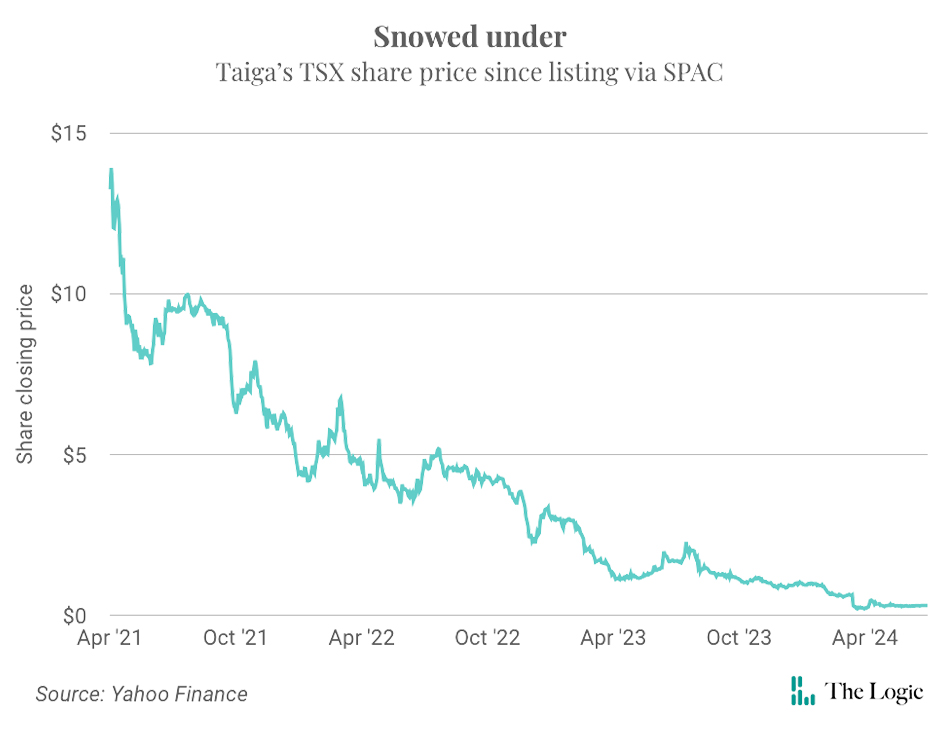
It competed in a segment of the market where people spend $25,000 or more on their rides without blinking. Its wares slackened the jaws of EV nerds and oil-drenched slednecks alike, and scored a $537-million valuation when it went public via SPAC in 2021. What could possibly go wrong?
Everything, as it turns out. Earlier this month, Taiga filed for creditor protection. Despite cost-cutting efforts and attempts to find further funding, the filing said, there was no path forward for the company. The documents offer a stark contrast to Taiga’s often cheery, front-facing spiel, with gobs of red ink trailing the company throughout its decade-long history.
Creditors include Investissement Québec (IQ), the investment arm of the Quebec government, as well as Export Development Canada and Economic Development Agency of Canada. All told, this alphabet soup of government agencies sunk $34 million into the longtime startup darling.
There are cautionary tales galore to glean from Taiga’s demise, not least of which is the folly of government investment in a teetering company, as IQ’s $15 million bet just over a year ago underscores. If anything, though, its demise is further evidence of how it is not nearly enough for a startup to offer a good product and generate good press. This is particularly true when it comes to the EV segment, in which market forces and customer whims can be particularly cruel.
Taiga’s electrified toys were handsome, groundbreaking and faster than hell. They brought neck-snapping, emissions-free performance to the lake and tundra. The machines seemed ready-made for fleet sales at ski mountains, where maintenance snowmobiles mostly travel set routes—and where the clientele doesn’t much like the noise they emit. Despite all this, the company couldn’t capitalize on the inherent benefits of its product, with Taiga executives in part blaming “lack of sales distribution channels” for the revenue dearth. This, despite being a big player in a US$9.2-billion worldwide market.
Taiga is hardly alone in this respect. California-based Fisker promised “extreme luxury” and better range than the comparable Tesla Model Y. Ohio-based Lordstown promised better reliability than the competition. Swedish EV truck maker Volta sought to revolutionize last-mile fleet trucking. All three went bankrupt trying to service their respective niches.
It speaks to the reductive mathematics of the EV space. Harley-Davidson can afford to weather an expensive, not particularly successful jaunt into the EV world. Ford can lose a comical amount of money for each EV it sells and still remain very much in the black. Bombardier Recreational Products (BRP) can offer a lower range, and thus objectively inferior (and subjectively dowdier) electrified snowmobile, and not sweat it if it doesn’t sell, thanks to its $7-billion market cap cushion. As a startup, Taiga didn’t have the luxury of legacy.
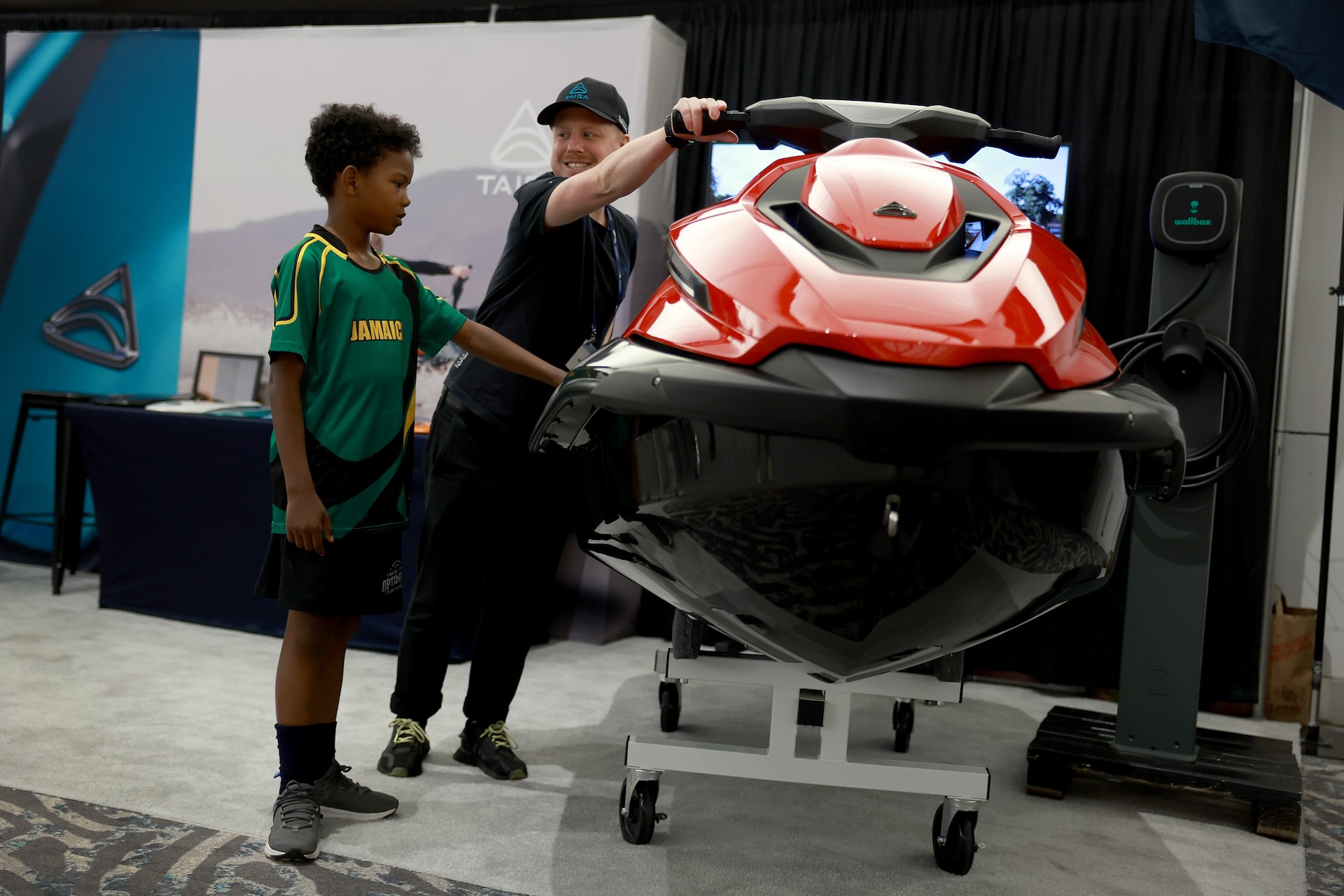
Taiga Motors’ all-electric watercraft on display at the Discover Boating Miami International Boat Show in Miami in 2023. Photo: Joe Raedle/Getty Images
Taiga’s failure also speaks to the difficulty of breaking into the $40-billion powersports market. At first blush, selling a snowmobile to someone who rides snowmobiles seems a lucrative endeavor. The margins are bonkers—more than 25 per cent for BRP’s wares, for example—and the customer himself (it’s a dude-dominated sport) is comparatively flush. Yet the snowmobiler tends to be picky, and he has lots of options. Taiga is “going up against gas-powered competitors that are very high performing, have decades of experience in refining their product lines,” as powersports consultant Gary Gustafson told me.
Taiga was also the victim of range anxiety. Though largely irrational, the phenomenon is widespread, understandable and particularly acute when one is riding a 750-pound battery through the forest in winter. Quebec has mitigated the anxiety somewhat, as the province has a well-developed charging network extending well into the sticks. Michigan? Not so much.
It makes Taiga’s value proposition that much less compelling. You can spend $22,000 on a Taiga and go 100 kilometres. Or spend the same amount on this fluorescent monstrosity and go at least twice as far on a tank of gas. At that price, “you’d be lucky to hit 4,000 unit sales a year, and that’s if everything goes great,” Gustafson said. It didn’t go great for Taiga last year. It sold just over 1,000 vehicles.
This is likely why there are so few successful off-road EV startups around today. It has taken California-based Zero Motorcycles, one of the few successful exceptions, the better part of two decades to convince customers both that its product is awesome (I’ve ridden one, and it is) and that the company itself isn’t going to crash into bankruptcy court tomorrow afternoon.
Taiga could well pull itself out of the ashes. It has generated significant interest from buyers since entering creditor protection, according to Deloitte, which is handling the process, meaning it could be sold as a whole and not liquidated for parts. Any buyer would have an incredible product with incredible buzz in their hands. Hopefully, they’ll know that won’t be nearly enough.
Martin Patriquin is The Logic’s Quebec correspondent. He joined in 2019 after 10 years as Quebec bureau chief for Maclean’s. A National Magazine Award and SABEW winner, he has written for The New York Times, The Guardian, The Walrus, Vice, BuzzFeed and The Globe and Mail, among others. He is also a panelist on CBC’s “Power & Politics.”