Skip to content

Canada's Business and Tech Newsroom

  • Professional Subscription
  • Partnerships & Advertising
  • Licensing & Syndication
Log In Subscribe
Welcome,
  • My Account
  • Log Out
  • Business
  • Tech
  • National
  • The Big Read
  • Briefings
  • Commentary
Search
Log In Subscribe
Welcome,
  • My Account
  • Log Out
Exclusive

Queen’s University signs research deals with two controversial Chinese tech giants

Queen’s University has signed three research deals with controversial Chinese tech giants, two with Huawei and one with iFlytek for a combined $1.1 million, The Logic has learned.

The university is standing behind the funding partnerships, which include artificial intelligence (AI) and speech-detection research, despite a national security warning from the Canadian Security Intelligence Service (CSIS) about working with Huawei. A number of U.S. universities have recently cancelled their partnerships with iFlytek over its work with Chinese police, which includes building a national database of voice patterns.

Exclusive

Queen’s University signs research deals with two controversial Chinese tech giants

By Iain Sherriff-Scott
Ontario Hall at Queen’s University during orientation week Photo: Iain Sherriff-Scott/The Logic
Sep 5, 2019
A A
A Small A Medium A Large
Share

Gift

Share

Queen’s University has signed three research deals with controversial Chinese tech giants, two with Huawei and one with iFlytek for a combined $1.1 million, The Logic has learned.

The university is standing behind the funding partnerships, which include artificial intelligence (AI) and speech-detection research, despite a national security warning from the Canadian Security Intelligence Service (CSIS) about working with Huawei. A number of U.S. universities have recently cancelled their partnerships with iFlytek over its work with Chinese police, which includes building a national database of voice patterns.

Talking Point

Queen’s University has signed two research deals with Huawei and one with iFlytek, worth a combined $1.1 million. The deals come amid diplomatic tensions between Canada and China, and as U.S. universities are cancelling partnerships with the firms.

Bhavin Shastri, assistant professor of engineering and applied physics at Queen’s, confirmed via phone that he is the lead researcher for one of the Huawei-funded projects, but declined to answer any other questions. 

Shastri leads a joint project between Queen’s and the University of British Columbia backed with $267,500 in funding from Huawei for the former university. The project is focused on neuromorphic photonic circuits, which are designed to support neural networks and high-performance computing. It aims to make the technology scalable.

The university also received about $727,000 from iFlytek, a Chinese natural language-processing and AI giant with a market value of over US$9 billion. It’s one of a handful of firms the U.S. has considered adding to its export blacklist. The money iFlytek is giving Queen’s is for a three-year project led by Xiaodan Zhu, an assistant professor of computer engineering at Queen’s, to develop deep learning modeling that detects and processes speech.

Zhu confirmed he is the lead researcher on the project, but declined to answer further questions. 

Reuters reported in June that a subsidiary of iFlytek has business ties to police and prison bureau administrators in the Xinjiang region of China, where more than one million Uighur Muslims and other ethnic minorities are being held in detention camps. In 2016, an iFlytek subsidiary sold 25 voice-collection systems to police in the region. The year after, another subsidiary of the company entered into an agreement with the prison administration bureau in Xinjiang. The company’s voiceprint technology can identify unique signatures in a person’s voice, which human rights activists have said can be used to track people.

In May, The Globe and Mail reported that a federal research funding-agency was trying to screen out people with “strong political opinions” on Huawei to help assess a new potential partnership between Huawei and the University of Laval. The same month, the Vancouver Sun reported that UBC is continuing with two other Huawei-funded projects this year worth a combined $219,750. And, according to a spreadsheet UBC provided to The Logic, the university has approved 16 projects with support from Huawei since 2017, totalling over $7.8 million in contributions, though the partnership with Queen’s does not appear on the sheet.

Queen’s did not specify who is leading the second project, for which Huawei is providing about $131,000 in funding. It aims to make power systems for data centres—like those that manage telecommunication networks—more efficient.

iFlytek and Huawei did not respond to multiple requests for comment.

In May 2018, The Globe and Mail reported that the company had established a network of partnerships with Canadian research universities, allowing Huawei to secure patents related to 5G technology. The company spent $180 million in Canadian R&D in 2018, about 10 per cent of which was put toward projects with academics. Queen’s said Huawei will not secure patents as part of its research partnerships with the school. 

Gift the full article

The U15 Group of Canadian Research Universities, which represents Canada’s 15 largest research schools, has several members with research agreements with Huawei. CSIS cautioned the group about collaborating with the company at an October 2018 meeting in Ottawa. UBC and Queen’s are U15 members. In January, The Queen’s Journal reported that Huawei had approved one research project with the university. 

“Queen’s and the other U15 members regularly meet with representatives from Canada’s intelligence and security community as a matter of course to discuss issues of relevance to the sector,” said Kimberly Woodhouse, vice-principal of research at Queen’s, who attended the October 2018 meeting on behalf of the university. 

“Should the government change its directives or regulations regarding our global research efforts, the university would absolutely comply with their direction while respecting any legal obligations we have already undertaken,” said Woodhouse.


#Huawei #iFlyTek #Queen's University #University of British Columbia

Sponsored Content

What organizations get wrong when operationalizing AI

By Jessica Aftimus Rosa

How do we invest in tomorrow, today?

By Jessica Aftimus Rosa

The road to risk-smart regulation

By Deborah Aarts
Paid promotional content

Loading...

Thanks for sharing!

You have shared 5 articles this month and reached the maximum amount of shares available.

Close
This account has reached its share limit.

If you would like to purchase a sharing license please contact The Logic support at [email protected].

Close
Want to share this article?

Upgrade to all-access now

Close
Gift the full article!

You have gifted 0 article(s) this month and have 5 remaining.

Copy link and gift
Copy Link
Email to a friend
Send Email
Gift on Social Media

Recipients will be able to read the full text of the article after submitting their email address. They will not have access to other articles or subscriber benefits.

Photo: Iain Sherriff-Scott/The Logic

Most Popular This Week

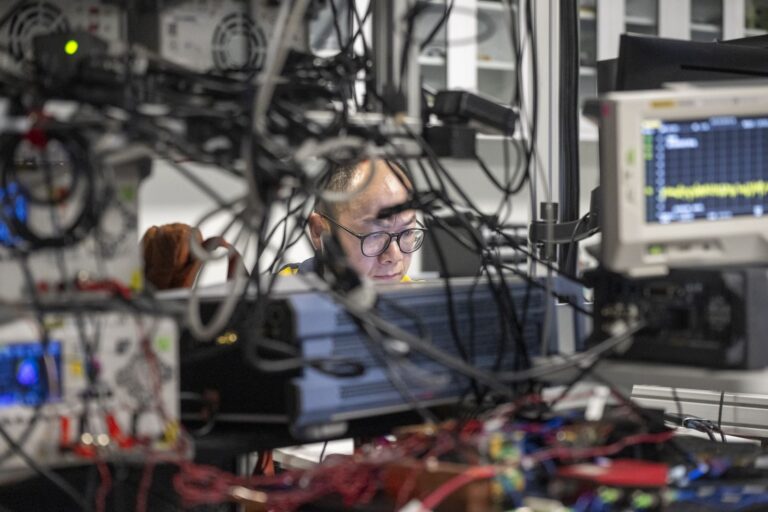
A shot taken through a tangle of wires, circuits and computer modules of a man working at a desk. He's looking downward through black-rimmed glasses.
The Big Read

Quantum startups are shrinking the gap between theories and things that actually work

By David Reevely
Person holding a smartphone in one hand and a credit card in the other, indicating online payment or shopping activity.
News

Ottawa chooses the U.S.-based Financial Data Exchange to set open banking data standards

By Claire Brownell
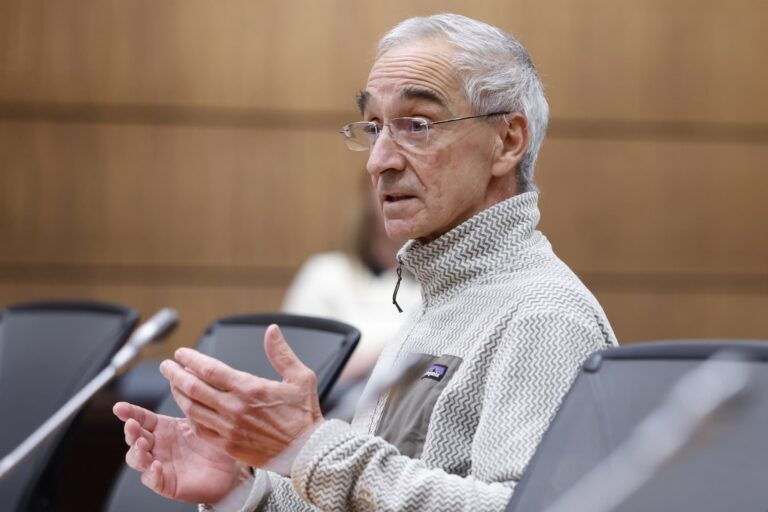
An image of an older man sitting in a desk chair in a room with brown walls. He is speaking into a microphone and gesturing, with a neutral facial expression. He is wearing glasses and a grey zip-up sweater.
News

MPs grill Patrick Pichette over his ties to Cohere

By Catherine McIntyre
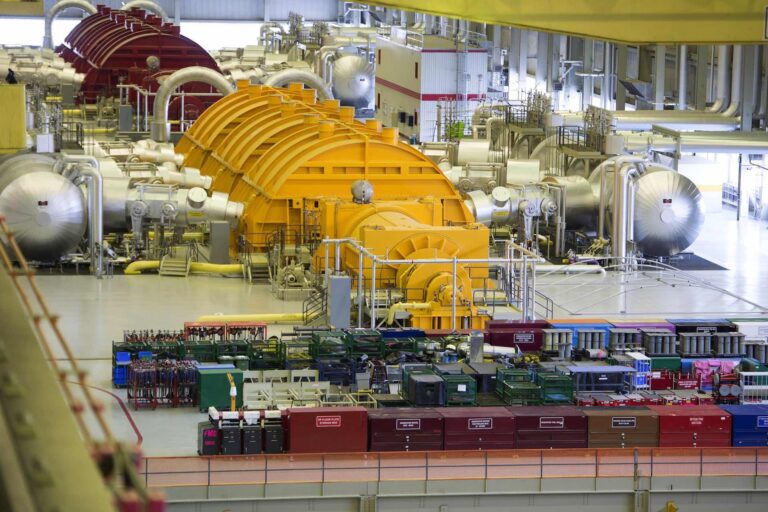
A wide, high-angle shot of steel-clad turbines in cavernous but well-lit industrial space. There are tanks and pipe networks all around the turbine housings, one of which is painted red; the other yellow.
News

Canada’s plan for new Candu reactors depends on heavy water it no longer makes

By David Reevely

In-depth, agenda-setting reporting

Great journalism delivered straight to your inbox.

A man wearing glasses and a blue suit and tie sits at a wooden table with a glass of water in front of him. He is gesturing and speaking. There is a blue and yellow abstract painting on the wall behind him.
Commentary

Carmichael: Macklem steels the Bank of Canada for a more shock-prone world

By Kevin Carmichael

Briefing

Mackenzie Valley Highway project gets national-interest designation

By David Reevely   |   Nov 27, 2026

Ottawa pumps $6.5B into Canada’s tariff-battered forest industry

By Charlie Gillis   |   Nov 27, 2026

Wealthsimple users slam cuts to perks and interest rates

By Claire Brownell   |   Nov 27, 2026

Best business newsletter in Canada

Get up to speed in minutes with insights and analysis on the most important stories of the day, every weekday.

Exclusive events

See the bigger picture with reporters and industry experts in subscriber-exclusive events.

Membership in The Logic Council

Membership provides access to our popular Slack channel, participation in subscriber surveys and invitations to exclusive events with our journalists and special guests.

Recent Popular Stories

Commentary

Carmichael: Mark Carney’s leadership style is creating key-man risk

By Kevin Carmichael   |   Nov 21, 2026
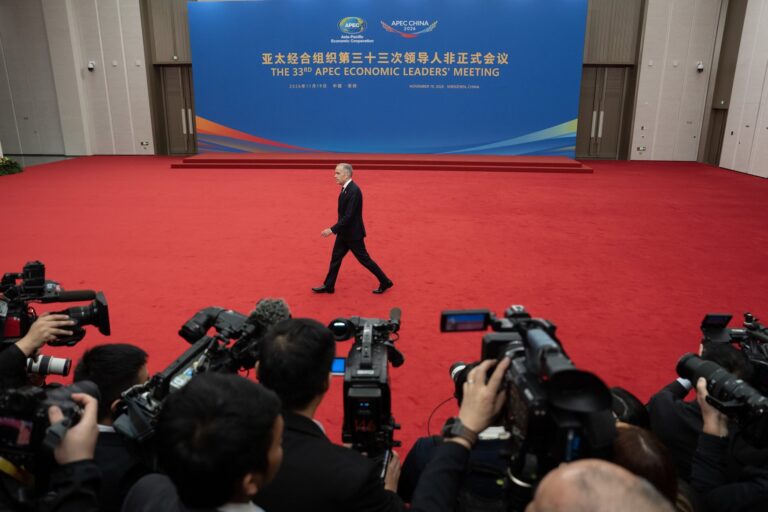
An image of Prime Minister Mark Carney walking across a red carpet. He is wearing a dark suit and tie. Behind him is a large blue banner. In front of him are many cameras and people behind them.
News

Canada’s plan for new Candu reactors depends on heavy water it no longer makes

By David Reevely   |   Nov 20, 2026
A wide, high-angle shot of steel-clad turbines in cavernous but well-lit industrial space. There are tanks and pipe networks all around the turbine housings, one of which is painted red; the other yellow.
News

MPs grill Patrick Pichette over his ties to Cohere

By Catherine McIntyre   |   Nov 20, 2026
An image of an older man sitting in a desk chair in a room with brown walls. He is speaking into a microphone and gesturing, with a neutral facial expression. He is wearing glasses and a grey zip-up sweater.
Exclusive

Dominion Dynamics lands $17M contract to build a drone minehunter for the navy

By David Reevely   |   Nov 20, 2026
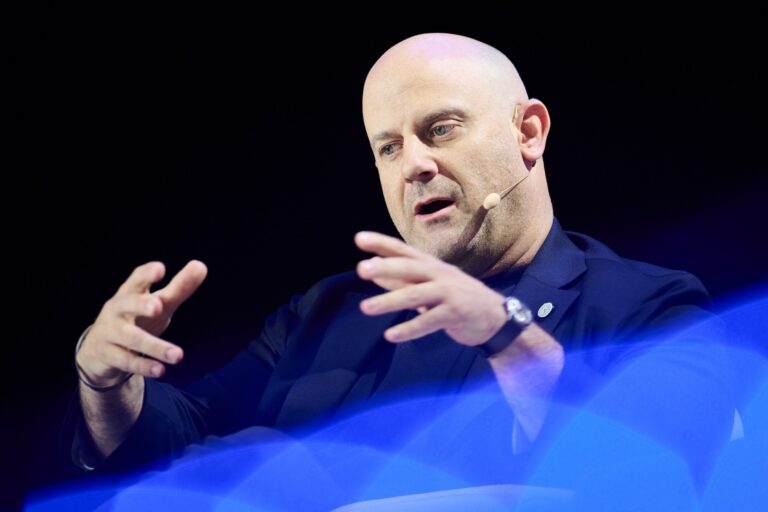
A shot of Eliot Pence seated onstage with a headset mic. He is speaking, and gesturing with both hands.
News

Conservatives push Carney to seal EU trade deal before Canada becomes an associate member

By Joanna Smith   |   Nov 23, 2026
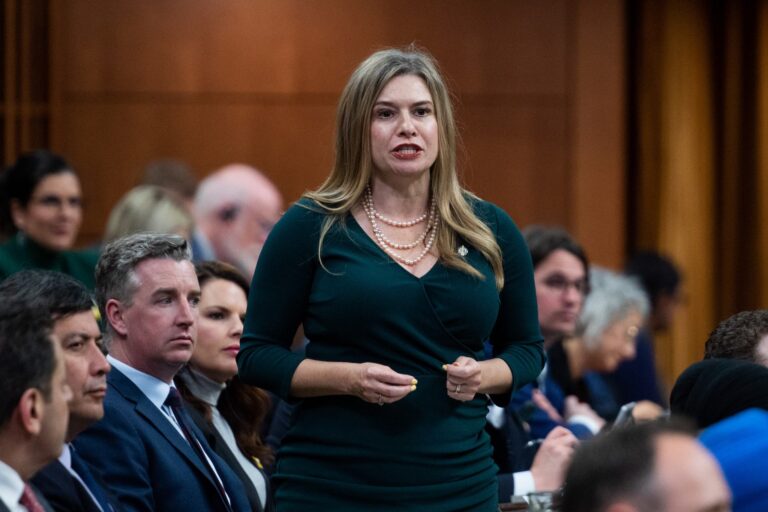
A photo of Stephanie Kusie standing and speaking in the House of Commons while MPs seated around her look on.
News

Koho says it’s going after fraudsters who used a tech glitch to falsely credit accounts

By Claire Brownell   |   Nov 17, 2026
An image of a man with dark hair and a beard, wearing a blue-grey suit jacket and a white shirt. He is standing with his hands in his pockets while leaning against a glass railing.

Canada's most influential executives and policymakers are reading The Logic

  • CPP Investments
  • Sun Life Financial
  • C100
  • Amazon
  • Telus
  • Mastercard
  • bdc
  • Shopify
  • Rogers
  • RBC
  • General Motors
  • MaRS
  • Government of Canada
  • Uber
  • Loblaw Companies Limited
logic-logo

Canada's Business and Tech Newsroom

100% human-crafted journalism

Newsroom

  • News Tips
  • AI Policy
  • Editorial Disclosures
  • Story Pitches

Company

  • About Us
  • Terms of Service
  • Privacy Statement
  • Corporate Information

Contact

  • Contact Us
  • Advertise
  • FAQs
  • Work at The Logic

© 2026 The Logic Inc. All Rights Reserved.

Trusted by leaders

Error

Account creation failed.

Please email us at [email protected].

Create Account

[wppb-register form_name=”cozmo-registration-form-for-modal”]

I do have an account
Login
or

[wppb-login]

I don’t have an account