OTTAWA — After winning a Canadian-sponsored competition run out of Toronto, computer scientist Karina dos Santos Machado can say her team’s artificial-intelligence–enhanced methods for finding potential new medicines are some of the best in the world.
Skip to content
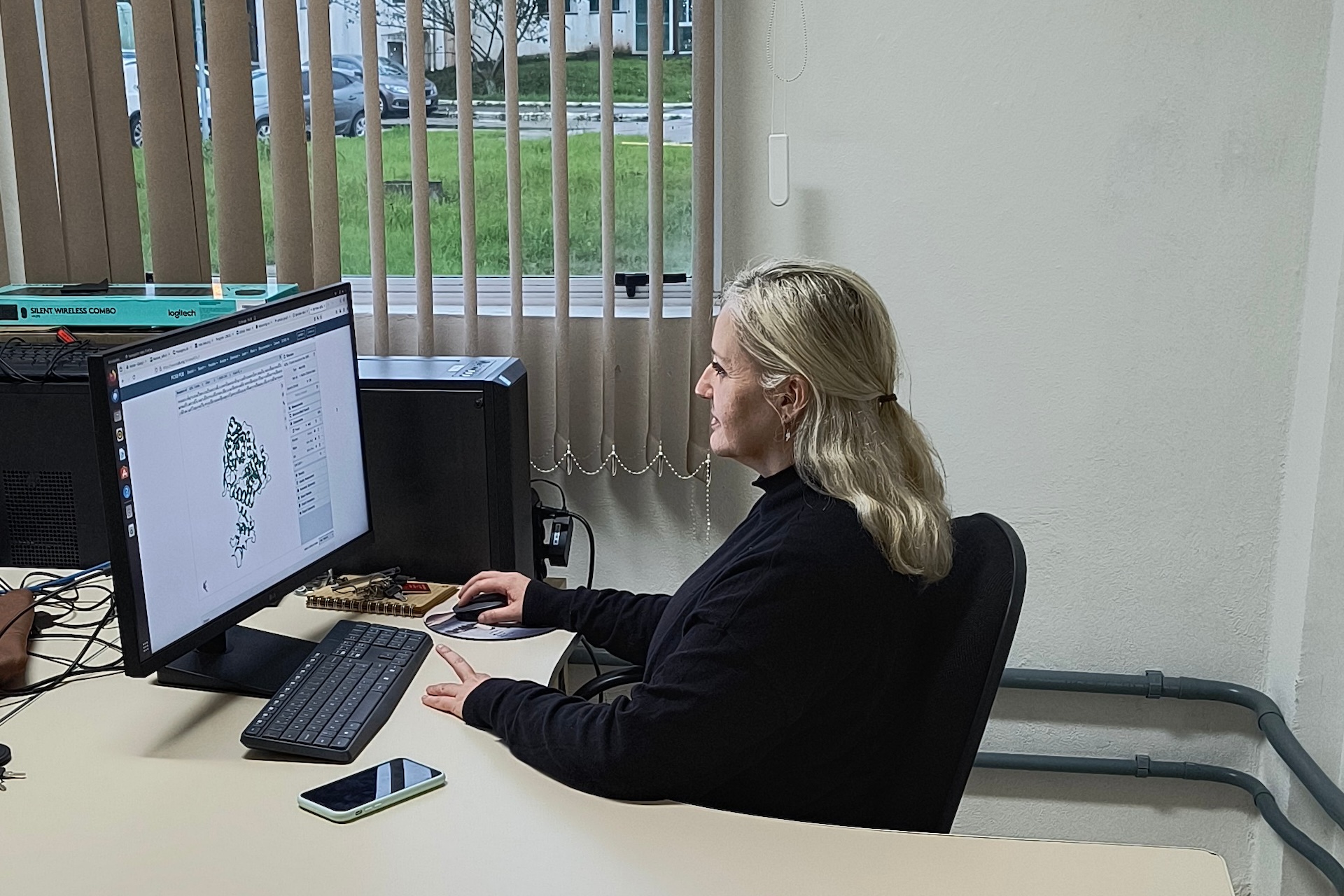 Computer scientist Karina dos Santos Machado's team identified a molecule that could become the basis of a drug to treat COVID-19. Photo: Conscience/Handout

News
The global contest, run by Toronto’s Conscience, hunting for the best AI tools to find new medicines
Brazil-based winners of competition for a COVID-19 drug wouldn’t get a glance from Big Pharma
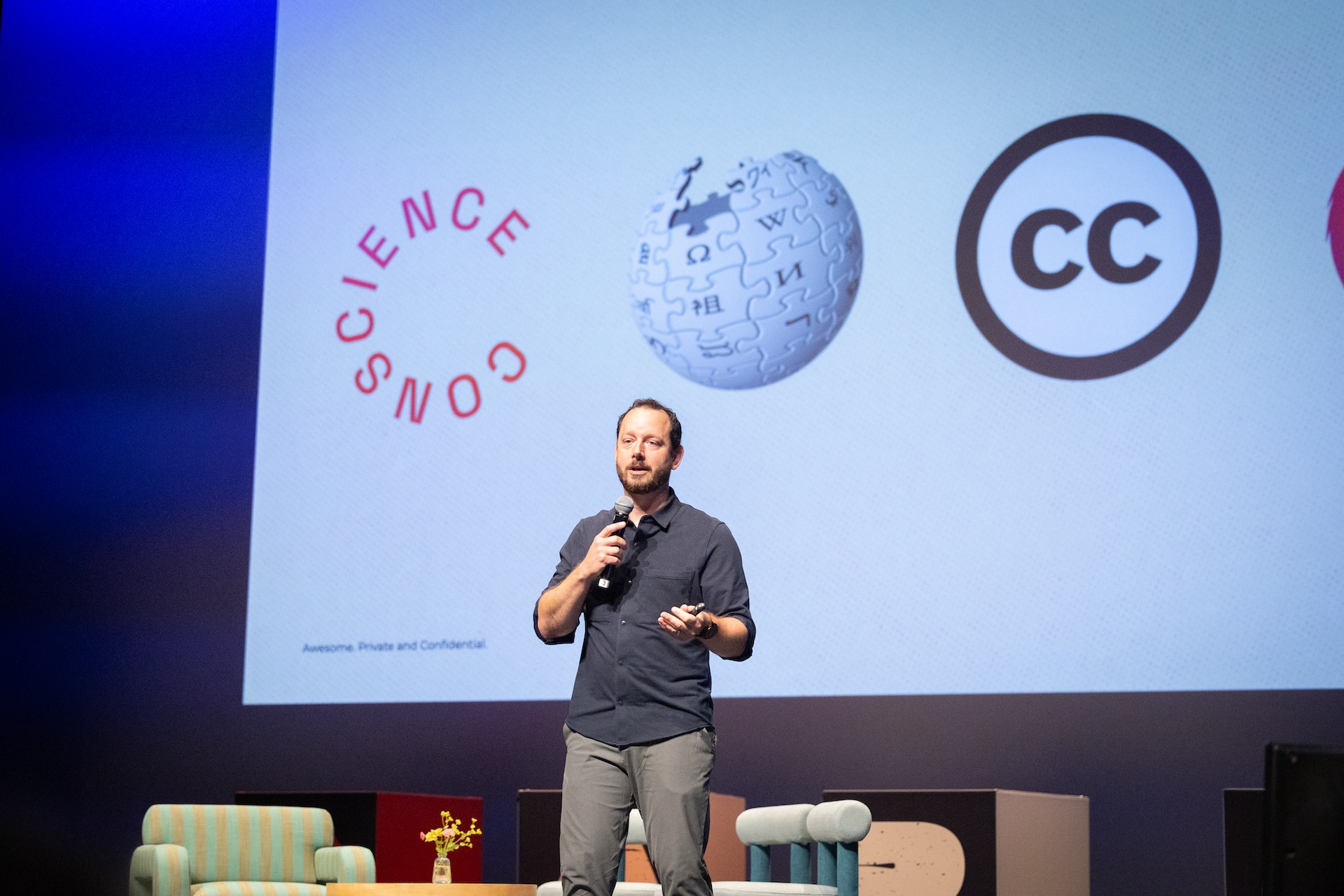
Conscience CEO Ryan Merkley on stage at a conference in Stowe, Vt., in July 2024. Photo: Handout/Amanda Nagy
OTTAWA — After winning a Canadian-sponsored competition run out of Toronto, computer scientist Karina dos Santos Machado can say her team’s artificial-intelligence–enhanced methods for finding potential new medicines are some of the best in the world.
Machado is a professor at Universidade Federal do Rio Grande, a regional university in a port town in Brazil’s most southerly state, near the border with Uruguay.
Talking Points
- With $49 million in seed money from the federal government’s Strategic Innovation Fund, Toronto non-profit Conscience runs competitions looking for the best computer-assisted tools for finding new molecules that could become drugs for under-researched illnesses
- By making all participants try to solve the same problem, the contests can cut through hype and hoopla to determine whose methods are the best
“We decided to participate even though we always thought that we didn’t have a chance to win,” she said in an interview.
Yet Machado’s research group came out on top of the latest contest by Conscience, a non-profit partly funded by the Canadian government whose mission is to promote open science and spread information about computing techniques for identifying new drugs. Canada’s prowess in AI has given it an early head start in the burgeoning field.
Conscience’s CACHE competitions (for “Critical Assessment of Computational Hit-Finding Experiments”) target under-researched illnesses as a means of identifying the best new drug-discovery technologies.
“We focus on AI and collaborative science for areas of market failure,” said Conscience’s CEO Ryan Merkley. “Places where competitive models of drug development have left folks behind.”
Pharmaceutical companies are besieged by AI experts who say they have the best tools for finding new drugs. “You are awash in hype. It is hard to know fact from fiction. It’s really hard to know whose tools work well and whose don’t, and that’s true across the entire industry,” Merkley said.
Related Articles

A team like Machado’s wouldn’t stand out, Merkley said.
“If Big Pharma returned their email, I would be shocked,” he said. “And I wouldn’t blame them, because Big Pharma is probably getting 20 pitches a day.”
Conscience’s value in telling fool’s gold from the real thing is why the governing board overseeing its contests includes representatives from drug companies like Bayer, AstraZeneca, Boehringer-Ingelheim and UCB.
Merkley himself is neither a biologist nor a computer scientist. A former political aide at Toronto City Hall, he moved on to organizations like the Mozilla Foundation (where he became chief strategy officer), Creative Commons (CEO) and the Wikimedia Foundation (chief of staff to the CEO).
A common thread in those jobs has been “radical collaboration,” he said—trying to get competitors to work together to benefit themselves and others.
Conscience grew from the Structural Genomics Consortium, a global private-public partnership that promotes research- and knowledge-sharing on proteins in human biology. The consortium launched the CACHE competitions, but Conscience now runs them.
The federal government gave Conscience $49 million over five years from the Strategic Innovation Fund last autumn, which matching funds and industry partnerships increased to $105.7 million. Part of Conscience’s mission now is to get more Canadian teams into its competitions.
“Canadian industry wants to compete with the world, and they want to sell to the world, and so our intention is to help them do that,” Merkley said.
In this, the second completed contest, the quest was to find molecules that could attack the virus that causes COVID-19 by binding to a particular chemically vulnerable spot.
A molecule that can hit the SARS-CoV-2 virus and its variants could be the basis of a drug that treats a wide array of coronaviruses, including some yet-unseen one that pounces on us in the future.
CACHE contest participants get their proposed molecules synthesized and tested experimentally. For a researcher like Machado, this is extraordinarily rare.
She recounted one time it happened, when she worked on a problem involving biological methods for making alcohol industrially.
“We had this opportunity, but it was just one—not usually thousands of molecules,” she said. “Usually, we stay in the computer.”
In fact, she said, much of the research on AI-based drug discovery tools starts with a molecule that’s already known to do something useful. AI tools that can replicate previous human-driven inventions might then be useful for finding new ones.
The CACHE contests fast-forward through all that. Contest participants whose computer methods come up with the most molecules that show the most promise in lab experiments, as judged by industry experts, are the winners.
To be “promising” is a really high bar. Twenty-two teams made it past a first cut in the coronavirus contest. Between them, they proposed 2,576 molecules. After the test-tube stage, just seven of those are considered promising.
All the molecules, and the data about them, are public at the end of the competition.
“If you were a startup, if you’re a pharma company, if you’re a medical charity working on that particular condition, you can pick that up without asking anybody,” said Merkley.
The first CACHE challenge, run with the Michael J. Fox Foundation, looked for a treatment for Parkinson’s disease. Two research teams are working further on molecules that emerged from it, Merkley said.
Other contests, in earlier stages, are looking for treatments for rare cancers (“Childhood cancers are notoriously underfunded,” says Merkley) and obesity.
Even knowing about the failures helps avoid wasted effort in fields with scarce resources, he said.
The exact algorithms that produced the most successful molecules are not made public, though the researchers who devised them do have to describe their methods so others can learn from their approaches.
Machado’s work has previously focused on tuberculosis, which infects millions of people every year, including in Brazil, but is relatively uncommon in wealthy Europe and North America. Winning the CACHE competition will bring attention—and maybe money—to her lab and university, she hopes.
“I believe that having this strategy validated, we can now start using it to search for drugs, for other targets, and it can be useful for any other disease,” she said.



Loading...
Thanks for sharing!
You have shared 5 articles this month and reached the maximum amount of shares available.
CloseThis account has reached its share limit.
If you would like to purchase a sharing license please contact The Logic support at [email protected].
CloseGift the full article!
You have gifted 0 article(s) this month and have 5 remaining.
Recipients will be able to read the full text of the article after submitting their email address. They will not have access to other articles or subscriber benefits.
Photo: Handout/Amanda Nagy
Computer scientist Karina dos Santos Machado's team identified a molecule that could become the basis of a drug to treat COVID-19.
Most Popular This Week



In-depth, agenda-setting reporting
Great journalism delivered straight to your inbox.
Commentary
Carmichael: What Finland can teach Canada about sleeping next to an elephant
Briefing
Financing instability is slowing down Ottawa’s housing agency, CEO says
Cleveland-Cliffs CEO says federal lawsuit would be a bad business decision for Canada
BoC shows off its new forecasting model, Prima
Best business newsletter in Canada
Get up to speed in minutes with insights and analysis on the most important stories of the day, every weekday.
Exclusive events
See the bigger picture with reporters and industry experts in subscriber-exclusive events.
Membership in The Logic Council
Membership provides access to our popular Slack channel, participation in subscriber surveys and invitations to exclusive events with our journalists and special guests.