MONTREAL — The good news, EV owners would-be and otherwise, is that you can ignore the haters. While it seems everyone is saying the electric-car project has gone into the ditch, with The Wall Street Journal serving as pessimist–in–chief, the EV revolution continues apace. Consider this: EVs more than tripled their worldwide market share between 2020 and 2022. U.S. sales of EVs reached their highest level in 2023. In tech, they call this explosive growth. In the politically charged world of electric vehicles, naysayers dance on lithium-ion graves.
Skip to content


Commentary: Quebec Ink
The EV movement hits a roadblock in Quebec
The province that welcomed the shift to electric cars decides it can no longer afford generous subsidies
Quebec Premier François Legault at an announcement on EV battery components in Becancour, Que., in May 2023. Photo: The Canadian Press/Jacques Boissinot
MONTREAL — The good news, EV owners would-be and otherwise, is that you can ignore the haters. While it seems everyone is saying the electric-car project has gone into the ditch, with The Wall Street Journal serving as pessimist–in–chief, the EV revolution continues apace. Consider this: EVs more than tripled their worldwide market share between 2020 and 2022. U.S. sales of EVs reached their highest level in 2023. In tech, they call this explosive growth. In the politically charged world of electric vehicles, naysayers dance on lithium-ion graves.
Now, the bad news. A constellation of government subsidies and incentives have fueled the revolution since its outset—a necessity, proponents say, to steer consumers toward a lower carbon future. But one of these governmental pioneers has announced an end to its long-running EV subsidy program, a move that could stifle one of Canada’s most successful EV adoption drives and create an unfortunate precedent for jurisdictions across the country and beyond.
The Quebec government wielded the knife in last week’s budget, cutting the $7,000 subsidy for a fully electric vehicle to $4,000 in 2025 and $2,000 in 2026. In 2027, the only remaining subsidy for individual users will be a $600 rebate on home charging stations. To be sure, Finance Minister Eric Girard telegraphed the end of EV subsidies last year, if only because the price gap between a gas car and a (more expensive) EV has narrowed significantly. It’s probably fair to say, too, that the $1.3-billion subsidy program was ripe for culling, given the whopping $11-billion hole in this year’s provincial budget.
Quebec, which has long thrown shade at Alberta’s oil and gas industry, has said it wants to wean itself off fossil fuels, reducing its use of the stuff by about 40 per cent by 2030. And it is clear that its subsidies have been redonkulously effective in changing the gas-powered status quo, in Quebec and elsewhere.
Related Articles
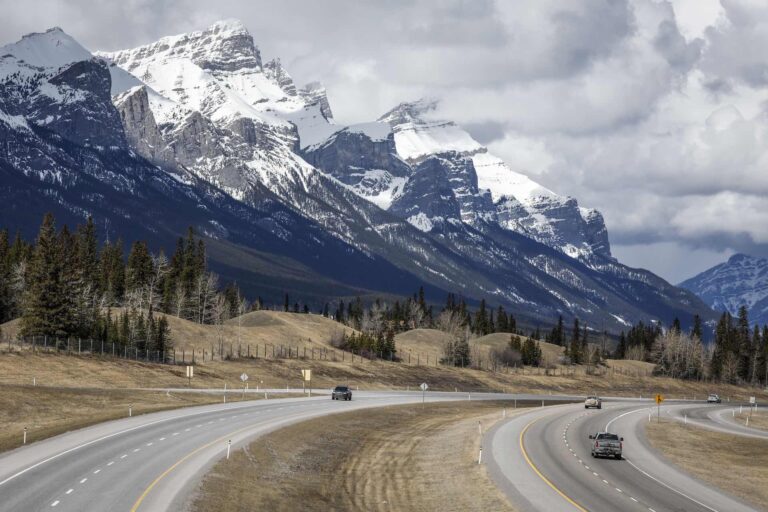

In 2011, the year Quebec launched what would become its “Roulez vert” (roll green) program, all of 64 new fully electric vehicles were registered in the province, according to Statistics Canada data. By 2023, the number reached almost 56,000. All told, Roulez vert has kept over an estimated 161,000 gas-powered cars off Quebec roads since 2011, resulting in a yearly reduction of 625,000 tonnes of carbon dioxide, according to the province’s environment ministry. (In British Columbia, home to a similarly comprehensive EV subsidy, the number of new registrations rose by an astounding 86,000 per cent over the same time period.)
The elimination of the subsidies in Quebec has two likely knock-on effects. First, it will almost certainly stifle adoption in the near term. The cautionary tale is Germany, where a cut to EV subsidies will lead to 200,000 fewer registered electric cars on the road in 2024, according to one estimate. “Demand craters once subsidies are removed in markets where EVs account for 20 to 30 per cent of vehicle sales,” Simon-Pierre Rioux, founder and spokesperson for Quebec’s electric vehicle association, told me.
The second effect is less measurable. Fomenting a product’s mass adoption usually requires an army of early adopters to muddle through said product’s bugs, snafus and assorted annoyances. Commercially available EVs, having been around for less than 15 years, are still in the early adoption phase. Cutting it short now, before charging infrastructure has even come close to the gas station’s ubiquity, “sends the wrong signal,” as Electric Mobility Canada president Daniel Breton told me. (A side note: prior to mass adoption, car owners had to plan their trips around bulk fuel depots, often located outside city limits.)
It is certainly worth questioning the wisdom of using public money to subsidize private vehicle ownership. An honest discussion, though, would factor in the trillions of governmental lucre—estimates range from US$1 trillion, according to the International Energy Agency, to the International Monetary Fund’s US$7 trillion—forked over directly and indirectly to the oil and gas industry around the world every year. In the U.S, where governments have subsidized oil extraction for over a century, oil and gas reaped US$757 billion of incentives in 2023 alone.
The end of Quebec’s subsidies arrives at a hyper-political moment. Allegedly serious politicians consider EVs to be the woke mob’s vehicle of choice, and have legislated accordingly, making EV supports part of the red-blue culture war. Spoiler alert: California is a great place to buy an electric car; West Virginia is not.
In Canada, where woke-baiting politicians are just catching up to their stateside brethren, Alberta recently instituted a $200 EV surcharge because, according to Alberta, EVs weigh more. (Another side note: a Ford F-150, far and away the most popular vehicle in Wild Rose Country, weighs about the same as a Tesla Model Y.)
Quebec was one of the first to acknowledge the necessity of EVs in reducing carbon emissions, long before “woke” became an insult. And tumbling prices, coupled with increasing range, mean EVs are here to stay. Eliminating their subsidization won’t snuff out the revolution here or elsewhere. But it will almost certainly stall it.
Martin Patriquin is The Logic’s Quebec correspondent. He joined in 2019 after 10 years as Quebec bureau chief for Maclean’s. A National Magazine Award and SABEW winner, he has written for The New York Times, The Guardian, The Walrus, Vice, BuzzFeed and The Globe and Mail, among others. He is also a panelist on CBC’s “Power & Politics.”



Loading...
Thanks for sharing!
You have shared 5 articles this month and reached the maximum amount of shares available.
CloseThis account has reached its share limit.
If you would like to purchase a sharing license please contact The Logic support at [email protected].
CloseGift the full article!
You have gifted 0 article(s) this month and have 5 remaining.
Recipients will be able to read the full text of the article after submitting their email address. They will not have access to other articles or subscriber benefits.
Photo: The Canadian Press/Jacques Boissinot
Most Popular This Week



In-depth, agenda-setting reporting
Great journalism delivered straight to your inbox.
News
A tech firm born from post-Brexit trade chaos sets its sights on Canada
Briefing
Dozens of Canadian researchers join chorus of scientists calling for a global AI oversight
TC Energy strikes deal with Indigenous groups for ownership stake in Coastal GasLink pipeline
Canada’s Tailscale taps Google Moonshot alum to lead sovereign AI push
Best business newsletter in Canada
Get up to speed in minutes with insights and analysis on the most important stories of the day, every weekday.
Exclusive events
See the bigger picture with reporters and industry experts in subscriber-exclusive events.
Membership in The Logic Council
Membership provides access to our popular Slack channel, participation in subscriber surveys and invitations to exclusive events with our journalists and special guests.