The Bank of Canada didn’t embed a warning about the inflationary potential of excessive government spending in its latest economic outlook like it did last fall. But when the question came at a press conference on Wednesday, governor Tiff Macklem didn’t shy from reminding finance ministers that the inflation fight isn’t over yet.
Skip to content

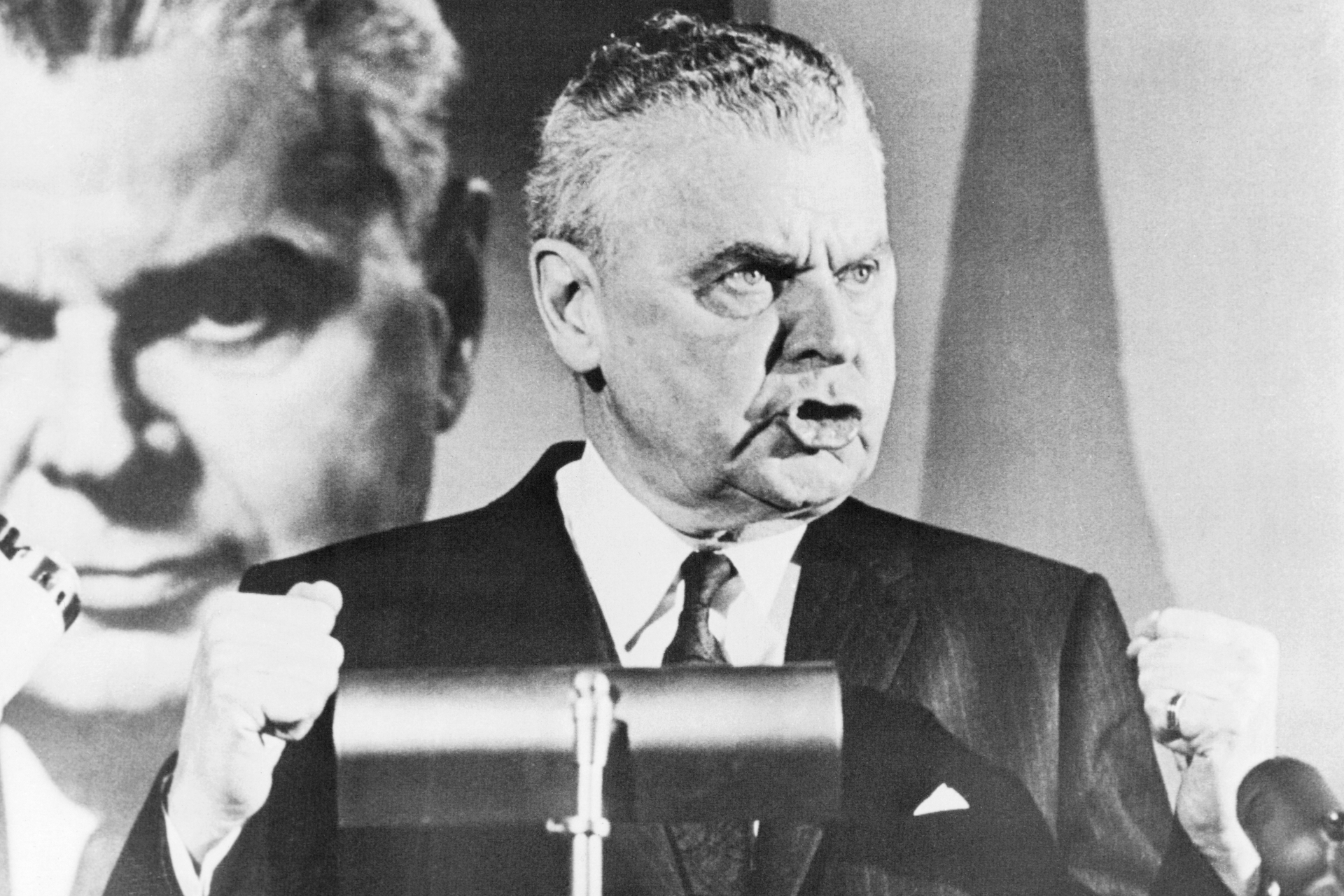 John Diefenbaker’s clash with Bank of Canada governor James Coyne led to Coyne’s resignation in 1961 and, eventually, changes to the Bank of Canada Act that enshrined the bank’s operational independence. Photo: Getty Images
Commentary
Carmichael: The inflation struggle proves the case for the Bank of Canada’s independence
Political actors have decided Tiff Macklem is fair game, but the bank’s credibility will be key to delivering a soft landing
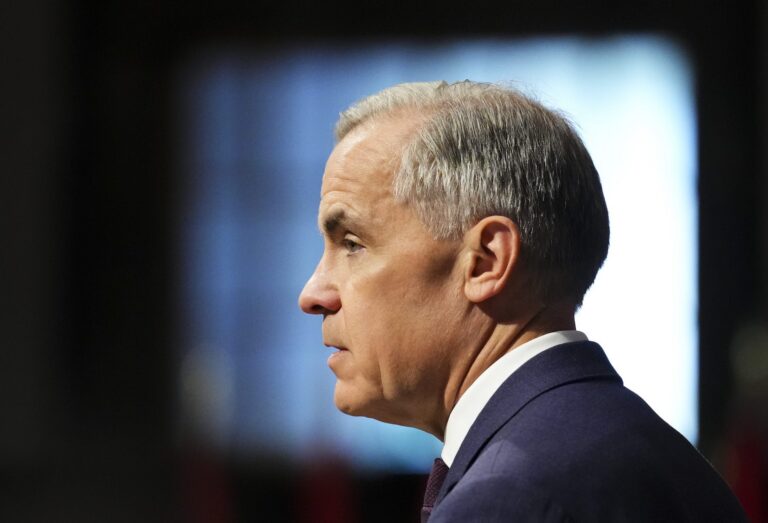
Tiff Macklem, governor of the Bank of Canada, holds a press conference in Ottawa on Wednesday, Jan. 24, 2024. Photo: The Canadian Press/Sean Kilpatrick
The Bank of Canada didn’t embed a warning about the inflationary potential of excessive government spending in its latest economic outlook like it did last fall. But when the question came at a press conference on Wednesday, governor Tiff Macklem didn’t shy from reminding finance ministers that the inflation fight isn’t over yet.
“If governments were to add more spending on top of what they already planned for this year, it certainly could start getting in the way,” Macklem said. “This is an important year to continue to make progress towards the inflation target,” he added. Additional spending “would not be helpful.”
We’re fortunate we have a system that lets the Bank of Canada governor speak up when political decisions risk interfering with the mission he has been appointed to execute. Governments aren’t obliged to listen, of course; the central bank takes fiscal policy as a given. But if they don’t like the higher interest rates that result from excessive spending, they can’t say they weren’t warned. With trust in democratic institutions at such a low ebb, evidence that the Bank of Canada is more concerned about price stability than the political fortunes of elected leaders is something worth highlighting.
Related Articles


Still, central bank independence shouldn’t be taken for granted. It emerged from great tumult in the 1960s and 1970s, a period marked by geopolitical conflict, large government deficits, cultural clashes and bruising political battles between “populists” and “elites.” Sound familiar? Macklem has endured more broadsides than any governor in recent memory. The Opposition leader says he will fire him if he wins the next election, and one of the country’s most prominent union leaders accused him of conducting a “class war.” Political actors have decided that Macklem is fair game.
Successive Progressive Conservative, Liberal and Conservative governments have respected the convention of central bank independence since a clash of views between Prime Minister John Diefenbaker and Bank of Canada governor James Coyne resulted in Coyne’s resignation in 1961, a year before his term was scheduled to end.
In the aftermath, the Bank of Canada Act was amended to make it clear that cabinet was ultimately responsible for monetary policy, while accepting that the central bank would be given operational independence to achieve price stability. If the finance minister disliked the central bank’s direction, it would have to issue a written directive on what it wanted done. The governor could accept the order or resign.
No such order has ever been given.
There are lots of ideas about how monetary policy should be conducted, but once policymakers decide on an approach, there’s little debate over how important the central bank’s credibility is to securing the outcome. If the public doubts its commitment to price stability, businesses and households will make decisions based on the prices they see in front of them and ignore central bankers’ assurances that they will get inflation under control. That’s why the bank’s day-to-day independence is so important. It helps ensure monetary policy is guided by the economy’s trajectory, not public opinion.
Why review this history now? Because we’ve entered the phase of the inflation struggle where mistakes can happen. The Bank of Canada’s new outlook projects economic growth will stall through the first half of the year, suggesting it’s time for cuts. Inflation, as measured by year-over-year increases in the consumer price index, has fallen to 3.4 per cent from a peak of 8.1 per cent in June 2022. That’s why interest-rate cuts are back on the table. But Macklem’s mandate is to get headline inflation to two per cent. There’s still some distance to travel.
“We need those higher interest rates to stay where they are to squeeze out that last bit of steam in inflation,” he said. “So, it is a difficult phase, but I do think that we will get through this. I definitely think it will be worth it.”
Persuading the political class of that could be a challenge. The next election is likely almost two years away, yet the Liberals and Conservatives already are in campaign mode and borrowing costs remain a sensitive topic. MB Policy, a consultancy started by former Liberal adviser Tyler Meredith and former Conservative adviser Ken Boessenkool, partnered with Abacus Data to conduct a survey that found about 60 per cent of respondents think Canada is on the “wrong track.” Meredith and Boessenkool wrote in a Substack post that they think the despondency is correlated to the interest-rate increases more than anything else. A promise to do something about borrowing costs might be well received by voters who haven’t already made up their minds.
It wouldn’t be difficult to make a convincing argument that the time to cut interest rates is now. The Bank of Canada’s latest quarterly report on the economy shows Canada risks sliding into a recession, even as the U.S. economy posts impressive rates of economic growth. One of the main drivers of inflation is now mortgage costs, something over which the central bank has almost total control. If the target is the problem, then the target could be raised to three per cent, a controversial idea that nonetheless has its share of backers.
Voters on the other end of such a pitch would have to weigh the prospect of immediate interest-rate relief against the risk of causing unnecessary harm to a valuable institution. It’s worth having a think about monetary policy after all we’ve been through. But this probably isn’t the moment to do it.
Kevin Carmichael is The Logic’s economics columnist and editor-at-large. He has spent more than two decades covering economics, business and finance for outlets including Bloomberg News, The Globe and Mail and the Financial Post, where he also served as editor-in-chief.



Loading...
Thanks for sharing!
You have shared 5 articles this month and reached the maximum amount of shares available.
CloseThis account has reached its share limit.
If you would like to purchase a sharing license please contact The Logic support at [email protected].
CloseGift the full article!
You have gifted 0 article(s) this month and have 5 remaining.
Recipients will be able to read the full text of the article after submitting their email address. They will not have access to other articles or subscriber benefits.
Photo: The Canadian Press/Sean Kilpatrick
John Diefenbaker’s clash with Bank of Canada governor James Coyne led to Coyne’s resignation in 1961 and, eventually, changes to the Bank of Canada Act that enshrined the bank’s operational independence.
Most Popular This Week


In-depth, agenda-setting reporting
Great journalism delivered straight to your inbox.
Special Report
Carney courts trillions in capital with airport privatization, tax breaks and faster approvals
Briefing
Coinbase lets Canadians lend stablecoins out through DeFi protocol
Cohere’s Gomez says Silicon Valley giants shouldn’t get to set the rules for AI
TD pledges $150B in new financing and support in key Canadian sectors
Best business newsletter in Canada
Get up to speed in minutes with insights and analysis on the most important stories of the day, every weekday.
Exclusive events
See the bigger picture with reporters and industry experts in subscriber-exclusive events.
Membership in The Logic Council
Membership provides access to our popular Slack channel, participation in subscriber surveys and invitations to exclusive events with our journalists and special guests.