OTTAWA — The federal government wants the private companies that will take over and rebuild Via Rail service in central Canada to join the planning early, hoping to avoid the failures that have beset other multibillion-dollar rail projects in Canada.
Skip to content
 Passengers in Montreal try out the Réseau express métropolitain (REM) light rail system on July 29, 2023, two days before it opened to fare-paying riders. Photo: The Canadian Press/Graham Hughes
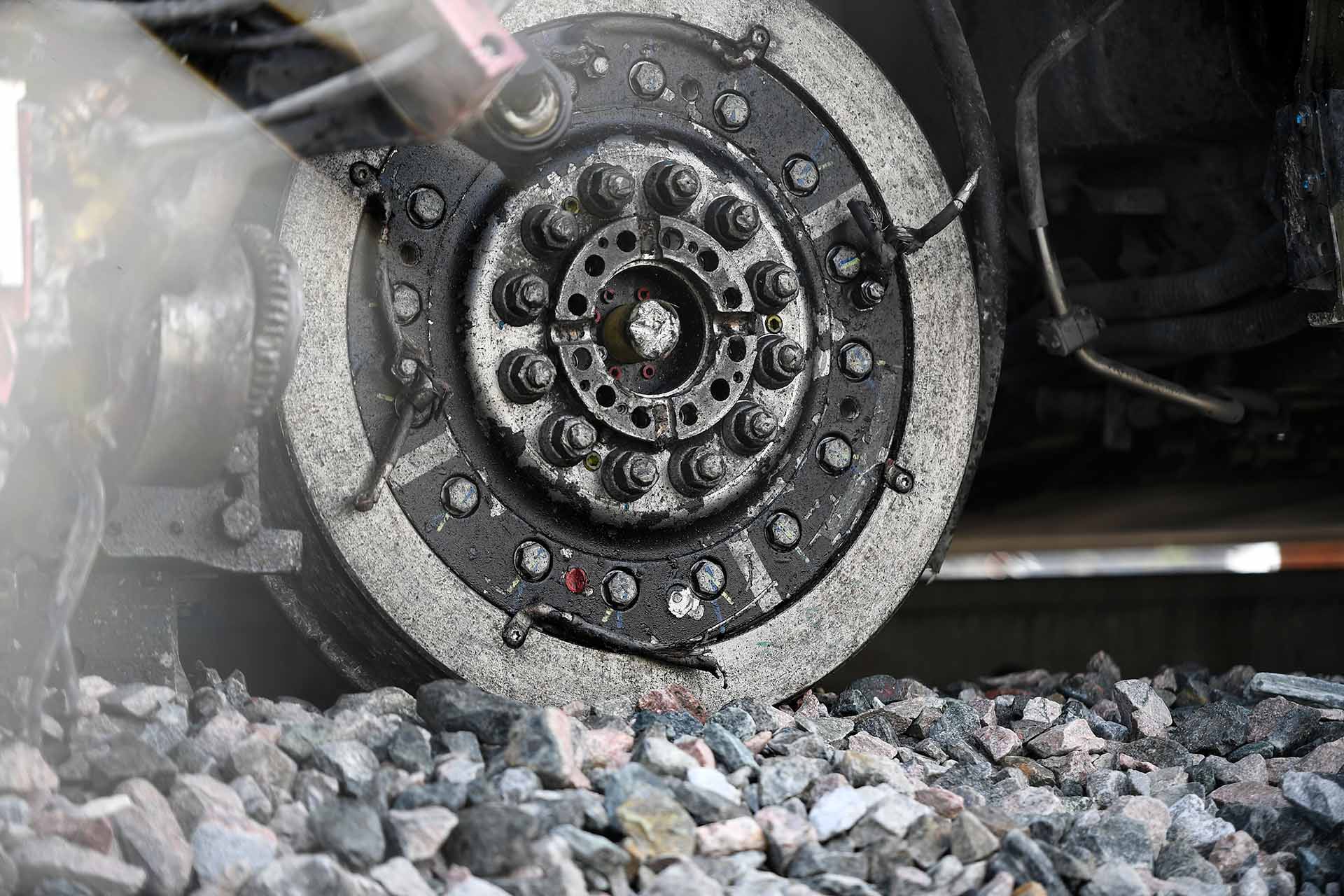 A wheel of an OC Transpo train is seen off the tracks on Monday, Sept. 20, 2021 after it derailed the day before, in Ottawa. Photo: The Canadian Press/Justin Tang

Via hopes more private involvement will keep its rebuild in central Canada on the rails
Tweaked public-private partnership model is meant to fix failings in smaller train projects
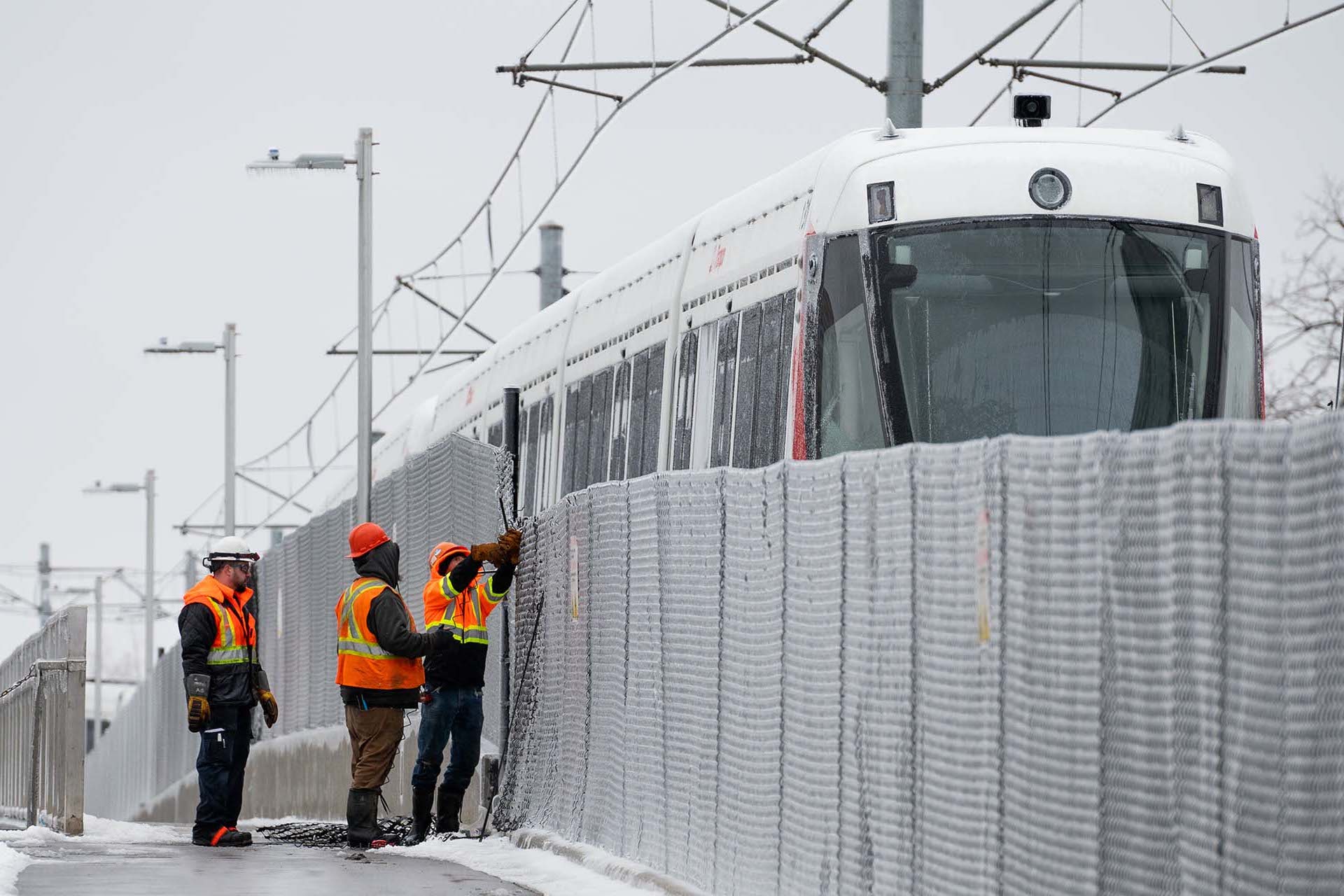
Maintenance workers repair a section of fencing surrounding an OC Transpo LRT car that lost power as a result of freezing rain in Ottawa, on Wednesday, April 5, 2023. Photo: The Canadian Press/Spencer Colby
OTTAWA — The federal government wants the private companies that will take over and rebuild Via Rail service in central Canada to join the planning early, hoping to avoid the failures that have beset other multibillion-dollar rail projects in Canada.
Ottawa’s light-rail system opened in 2019 and has never consistently worked right. Toronto’s Eglinton Crosstown project is three years overdue. Edmonton’s new Valley Line LRT is also three years behind schedule. All three are public-private partnerships (P3s), a procurement model that’s supposed to protect the public interest by harnessing private innovation and get-it-done spirit but that, in the case of these high-profile rail projects, hasn’t delivered on its promise.
Talking Points
- Public-private partnerships have produced rail failures in Ottawa, Toronto and Edmonton recently, but the federal government plans to use one to build Via’s high-frequency rail network
- The key lesson from the previous transit projects is to get the private sector in earlier, the feds believe
The Via high-frequency rail (HFR) project is also such a partnership—one that will be much, much bigger.
The government launched the next phase of its procurement process Friday, sending a detailed request for proposals to a shortlist of three consortiums. The winner will run Via’s current services between Toronto and Quebec City as it builds a new dedicated line that it will eventually also operate.
The bidders will have until next summer to make their cases. In a statement, Transport Minister Pablo Rodriguez said they’re being asked to propose two alternatives—one version with trains that can run at 200 km/h, and one with “high speed segments for faster travel,” so the government can compare its options.
It will be one of the biggest construction projects in Canada in decades. Former transport minister Omar Alghabra estimated the cost at $6 billion to $12 billion in 2021, before inflation picked up. The budget just for the planning operation, led by a new Via subsidiary, is nearly $43.7 million this year.
The government is looking for a “co-developer,” a consortium of companies that will spend years working with the feds on the plan before anybody lays an inch of track. That differentiates it from the municipal transit projects that have come before.
Related Articles
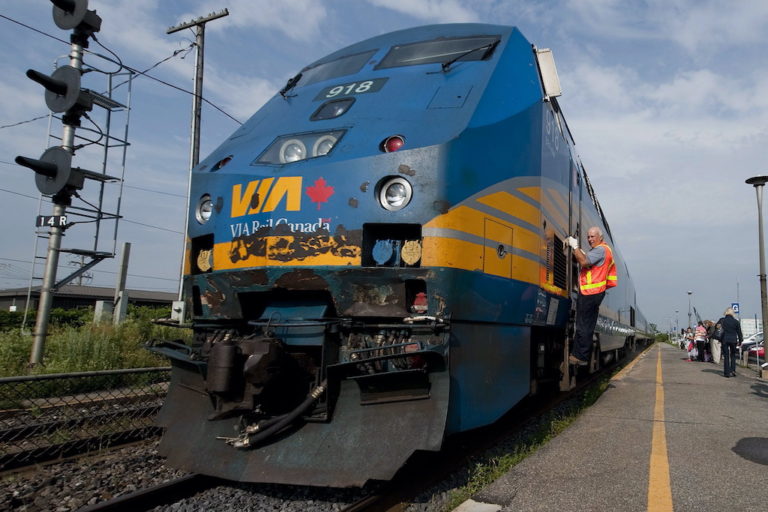

“Integrated delivery models with early private sector involvement (the co-development approach) can produce better project outcomes for megaprojects by boosting innovation and collaboration between the public and private sectors,” Laura Scaffidi, a spokesperson for Rodriguez, told The Logic in an email.
P3s come in different flavours, but the core idea is to leave more planning and design decisions to the private consortium and give it lasting responsibilities as well. If the same people who design and build the new thing are responsible for maintaining it, the thinking goes, they will have a direct incentive to do good work.
Sometimes governments pump the pressure further by having the private consortium finance some or all of the construction, too, putting their dollars on the line.
“We’ve got over 300 projects across the country and lots of them work very, very well,” said Lisa Mitchell, chief executive of the Canadian Council for Public-Private Partnerships, an industry group that includes both private players and governments. The P3 approach has been used in Canada for hospital buildings, courthouses, bridges and roads.
“It really is a model to protect taxpayers when things go wrong. And to incentivize things to not go awry.”
The first phase of Montreal’s REM rail system, a project led by a specially created subsidiary of the Caisse de dépot et placement du Québec, has so far been a success. It opened late, but the COVID-19 pandemic was a factor. So was another extraordinary problem: explosives left in a tunnel under Mount Royal when a previous train line was first built more than a century ago went boom as the REM builders renovated it.
But things do go awry, especially on the biggest, most complex jobs.
“When it came to public transit, [public-private partnerships] didn’t travel all that well. We’ve had some projects that have really struggled,” said Matti Siemiatycki, a geography and planning professor who specializes in studying big public projects as director of the University of Toronto’s Infrastructure Institute.
The first phase of Ottawa’s new light rail system, which was delayed in part by a massive sinkhole that flooded an unfinished tunnel, has had mechanical failures and derailments. The litany of problems prompted the Ontario government to call a judicial inquiry. The city manager resigned and the head of the construction consortium was replaced.
Four years after it opened it’s still not working right: After a 21-day shutdown over the summer, shortened trains are running at restricted speeds and the overhead power lines are vulnerable in freezing rain. A second phase, involving separate P3s for extending the first phase and rebuilding an older line, is far behind schedule.
After 12 years of work, Toronto’s Eglinton Crosstown light-rail line has no completion date; an internal assessment last year, obtained by the CBC, said the private consortium working on it had no credible plan then to ever finish it. The Finch West line is also behind, though not as badly.
The chair of the Via HFR subsidiary, Robert Prichard, was CEO and then chair of Metrolinx, the Ontario government agency responsible for both of those Toronto P3s, until he suddenly quit in 2018. He declined to speak to The Logic about what lessons he’ll apply from those experiences.
In Edmonton, the opening of the new Valley Line light-rail has been delayed four times; Mayor Amarjeet Sohi, a former federal infrastructure minister, has said the P3 model behind it is part of the problem. (A previous Edmonton rail project, the Metro line, suffered years of signalling problems that led the city to fire contractor Thales in 2019, but that project had a more traditional procurement.)
In Waterloo, Ont., a P3 delivered the Ion LRT line more than a year late and $50 million over its $818-million budget.
Maybe without P3s these would have turned out worse. Mitchell pointed out that public-private partnerships have been intended to address the litany of problems with traditionally procured projects—cost overruns, delays, litigation, and so on. But they aren’t shining successes.
The private companies involved are leaders in their fields. Ottawa’s LRT consortium is led by AtkinsRéalis (the former SNC-Lavalin), EllisDon and Spain’s ACS Infrastructure, with trains from France’s Alstom. The Eglinton Crosstown project in Toronto is a joint venture of AtkinsRéalis, EllisDon and ACS, plus Aecon. Edmonton’s Valley Line is a project of U.S.-based Bechtel, EllisDon, Alstom and financier Fengate.
What happens when things go wrong? How do people respond? — Matti Siemiatycki, director of U of T’s Infrastructure Institute.
AtkinsRéalis and EllisDon have been in separate bid teams for the Via HFR project, though on Friday the government said EllisDon is leaving its group, which is seeking a replacement. Neither responded to The Logic’s requests for interviews on what the companies have learned from the rail projects they’re involved in.
“As the complexity has gone up, the model has really been stressed and has not performed,” said Siemiatycki.
He sees two ways these projects have fallen short.
One is handing over too much design work to the private partner. “The contractor is doing all the design without much input from the owner, who is the representative of the public and the public interest. So that relationship has been severed,” Siemiatycki said.
The public interest will be important when dealing with questions about how Via’s new rail route will enter and leave the cities it serves—especially big ones with stations in crowded downtown cores.
“Are they using existing lines where they’re coming in? If they’re building new tracks, where are those going? And if not, do they have to tunnel?” Siemiatycki said. The answers will involve trade-offs of speed and cost and risk that he said shouldn’t be determined by a private consortium.
The other difficulty is what happens when something goes badly wrong.
“The goal in a public-private partnership is to really transfer risk to the private sector. What we’ve learned is that actually, when those risks materialize, the government ultimately continues to hold a fair amount of the risks,” Siemiatycki said. The Ottawa rail line’s summer breakdown cost the city transit agency $725,000 just for workers to redirect riders to buses, for instance.
Mitchell sees a central problem that spawns others, especially where “long linear projects” like roads and rail lines are concerned: “Whether the private sector took on a risk that maybe, in the end, they weren’t best suited to manage.”
Unrealistic construction schedules devised to please politicians who want to be there for the “shovels in the ground and then the ribbon-cutting” can crash into unexpected problems with ground conditions and property owners and utility companies that the builders simply can’t control, she said. The longer the line, the greater the odds of trouble.
Talking about how these events can sink a project, Siemiatycki conjured similar images.
“On the first day, when you’re signing the contractor or putting the first shovel in the ground, everyone is smiling. And it’s really what happens when things start to go wrong—how do people respond?” he said.
In Ottawa, the city government and the private partners building its LRT line sued each other but eventually settled, on terms the city will not reveal to the public. In Toronto, the builders of the Eglinton Crosstown have sued Metrolinx. In Montreal, P3s got two new hospitals opened but also produced two lawsuits the Quebec government settled for more than $200 million.
Siemiatycki echoed concerns raised by Justice William Hourigan, the judge who investigated Ottawa’s LRT project, in his report last year. Although Hourigan picked apart problems with the P3, he also pointed out that top city officials, including the mayor, had kept key information from city council and concluded they’d even testified dishonestly in the inquiry to try to justify their actions.
“People were still people, who will have their strengths and foibles. When things started to go wrong, then the model struggled and the different stakeholders and people struggled in that environment,” Siemiatycki said.
We have learned from that, Siemiatycki said, he’d like to see a more systematic approach.
“We’re spending billions and billions and building projects right across the country,” he said. “What I’d really like to see are venues where we create training academies, we create data-collection systems, so that we’re actually learning from what’s happened.”



Loading...
Thanks for sharing!
You have shared 5 articles this month and reached the maximum amount of shares available.
CloseThis account has reached its share limit.
If you would like to purchase a sharing license please contact The Logic support at [email protected].
CloseGift the full article!
You have gifted 0 article(s) this month and have 5 remaining.
Recipients will be able to read the full text of the article after submitting their email address. They will not have access to other articles or subscriber benefits.
Photo: The Canadian Press/Spencer Colby
Passengers in Montreal try out the Réseau express métropolitain (REM) light rail system on July 29, 2023, two days before it opened to fare-paying riders.
A wheel of an OC Transpo train is seen off the tracks on Monday, Sept. 20, 2021 after it derailed the day before, in Ottawa.
Most Popular This Week



In-depth, agenda-setting reporting
Great journalism delivered straight to your inbox.
Commentary
Carmichael: Macklem steels the Bank of Canada for a more shock-prone world
Briefing
Mackenzie Valley Highway project gets national-interest designation
Ottawa pumps $6.5B into Canada’s tariff-battered forest industry
Wealthsimple users slam cuts to perks and interest rates
Best business newsletter in Canada
Get up to speed in minutes with insights and analysis on the most important stories of the day, every weekday.
Exclusive events
See the bigger picture with reporters and industry experts in subscriber-exclusive events.
Membership in The Logic Council
Membership provides access to our popular Slack channel, participation in subscriber surveys and invitations to exclusive events with our journalists and special guests.