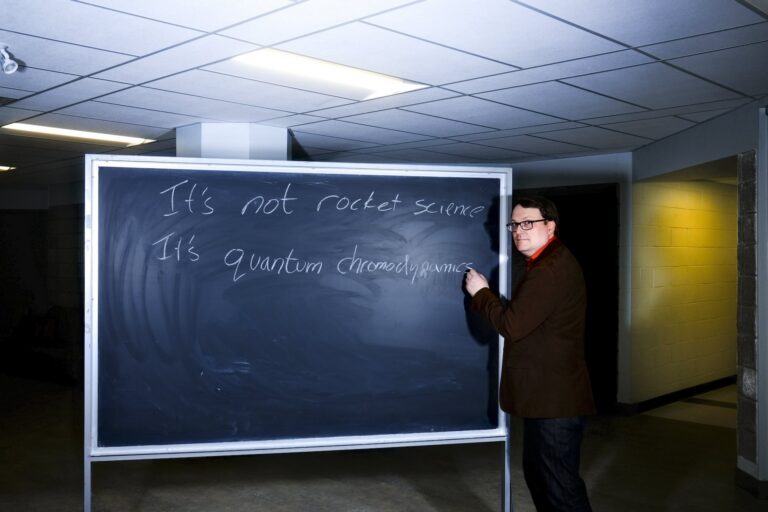
Venture funds that spent decades fueling software as it ate the world are now looking to feed the AI that’s eating software. “We’re at the beginning of this cycle where there’s going to be a lot of new winners,” said Jordan Jacobs, managing partner of Toronto-based Radical Ventures, which figures it has a better understanding of AI’s ingredients than most.
Skip to content


The Interview
Radical’s Jordan Jacobs on investing in AI before its breakout moment—and after
‘We’re trying to find the things that can actually change the world’
Jordan Jacobs at the Collision conference in Toronto on June 27, 2023. Photo: Christopher Katsarov Luna for The Logic
Venture funds that spent decades fueling software as it ate the world are now looking to feed the AI that’s eating software. “We’re at the beginning of this cycle where there’s going to be a lot of new winners,” said Jordan Jacobs, managing partner of Toronto-based Radical Ventures, which figures it has a better understanding of AI’s ingredients than most.
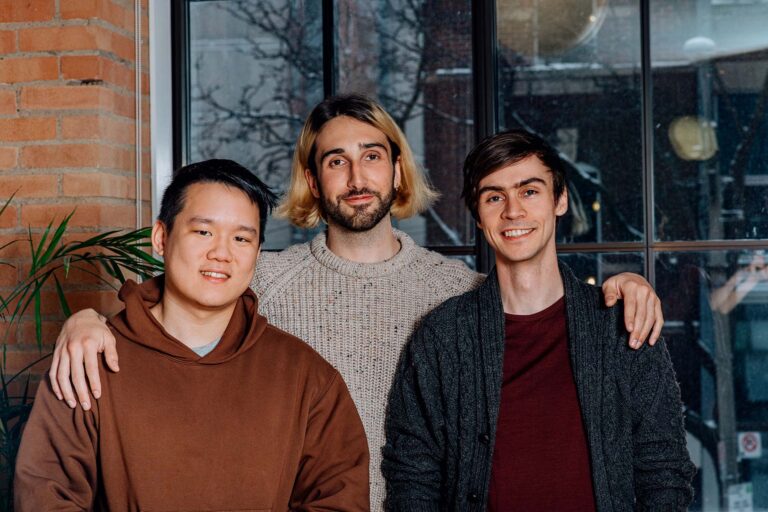
The firm’s portfolio includes generative star Cohere, chip innovator Untether AI, autonomous driving platform Waabi and quantum-computer maker Xanadu. Former McKinsey managing partner Dominic Barton and AI pioneer Fei-Fei Li are among several recent high-profile additions to its partnership.
Talking Points
- Toronto-based Radical Ventures has backed some of the country’s—and the world’s—most prominent AI startups
- Managing partner Jordan Jacobs says the technology will replace static software over the next decade, but field experience and technical know-how is crucial to avoiding losing money amid the hype
Jacobs and co-founder Tomi Poutanen started Radical in June 2017 with a small seed fund. The following January, they sold AI startup Layer 6 to TD Bank, with Jacobs joining the financial institution as chief AI officer. In May 2019, he left to invest full-time, raising a US$350-million, AI-focused fund from limited partners including the Canada Pension Plan Investment Board, Public Sector Pension Investment Board and Wittington Investments. It’s currently taking cheques for a new, US$550-million fund.
The former entertainment lawyer and startup founder has played a lead role in Toronto’s current AI moment, including the launch of the city’s Vector Institute. But while all of Radical’s funds and many of its LPs and staff are based in Canada, Jacobs’s ambitions reach further. “Our view is we should be the leading AI investor in the world,” he said. While half of the fund’s 74 deals to date were for firms headquartered in Canada, nearly as many were in the U.S., per PitchBook data.
In a recent interview with The Logic, Jacobs discussed how generative systems can solve problems beyond making memes; whether the traditional venture models still work in the world of AI mega-rounds; and why he welcomes the conversation on regulation.
This interview has been edited for length and clarity.
What is the Radical thesis?
Related Articles

What does AI mean in this context?
Our conception of AI is neural nets—deep learning and forward from there. That’s what we built in Layer 6. That is the technology that powers the Googles and Microsofts and OpenAIs and everyone else in the world.
I read the pre-print of the transformer paper in 2017 when we were deciding between a big fundraise for Layer 6 or selling the company and doing the fund full time as an institutional fund. That paper helped put our decision over the top, because we believed it was the next iteration of AI. We also believed it would take five years to get into production outside of Google, and ChatGPT came exactly five years—less two weeks—later.
We like to invest in founders who are leading the field technically, but building a product and a business. So it’s not blue-sky research—that’s why we created Vector. It can be creating a new technology and inventing the direction of AI, but inside an industrial setting that is product focused and customer focused.
What areas are top of mind right now?
We started investing in generative AI about four years ago. Cohere was a thesis we had in late 2018, early 2019, before we even had the fund launched: large language models are going to change everything in terms of generation and summarization and classification. We knew what OpenAI was doing. We knew they partnered with Microsoft and were tied to Azure. We looked at it and said: “What about serving everyone who’s using a different cloud or [on premises]? That’s still 90 per cent plus of the world. If we can build a company focused on that, we can build one of the biggest companies in the world, and we can do it here in Canada.”
We met the team and worked with them for six months before they even incorporated the company. We’ve invested a lot of money in that company, but it’s been an incredible performer.
“People are thinking of generative AI as typing, “Show me a picture of a monkey riding a unicorn past the moon.” We’re trying to find things that can change the world.”
We’ve invested in other areas that are also generative AI, that people would not think of as generative AI. Aspect Biosystems is a Vancouver company [that uses] generative AI to design human tissues, which they print using a microfluidic proprietary printer. They print patches that are implanted into the pancreas, causing regeneration. They’ve cured Type 1 diabetes in animals. They’ve also cured liver disease in animals. Just for the pancreatic patch for diabetes, they did a US$2.6-billion partnership with Novo Nordisk, one of the biggest pharma companies in the world.
We invested in Unlearn. It’s able to take the [people in a pharma trial] that gets dosed with the drug and create digital twins that replace the arm that is given placebos. You don’t have to recruit or pay them. It shortens the drug trial and reduces the cost pretty dramatically; those drug trials can cost hundreds of millions or more. The patent life of the medication is finite, so if you can get the drug to market sooner, it’s very valuable. For patients who want a cancer drug, the sooner you get it to market, the better. They’ve gotten regulatory approval in the U.S. and in Europe, and been signing one deal after another.
People are thinking of generative AI as typing in a text box, “Show me a picture of a monkey riding a unicorn past the moon.” Lovely, that’s fun. But we’re trying to find the things that can actually change the world.
We’re seeing giant amounts going into AI companies today—cheque sizes in the hundreds of millions. To what extent does the traditional VC model scale to the levels of capital being raised in this space?
Software is hard-coded—it ships and it’s static. It does not improve. So I get Office, and it does not improve until I get the next version. AI is learning software—you ship it, and it’s improving all the time. We believe very strongly—and I think our belief is validated by Microsoft investing US$13 billion into OpenAI and Google’s reorientation of the company—all the software in the world gets replaced by AI.
The big companies that can afford to build it, or buy OpenAI, will infuse it in their products. The next group that cannot hire this talent or build it themselves will license it from companies like Cohere. Then you have everybody else. If you go to a bank, they use thousands of different pieces of software for HR, for risk management, for call centres. All of it will have AI infused in it.
The scale of the opportunity in the next decade is so enormous—we’re talking about trillions of dollars a year going into this space. You’ll have so many new companies that are going to license to old companies, or build new categories that couldn’t exist before.
“There’ll be tons of money lost. Generalists who don’t understand what they’re investing in, or what works and what doesn’t, will get burned.”
As VCs, our job is to still invest smartly and not get caught up in hype. We add a lot of value beyond just the money, and [founders] will take our money even at a discount compared to the top funds. We have a disproportionate number of the companies become big—instead of 10 or 20 per cent, maybe it’s 35 or 40 per cent that have huge upside. You end up with a massively successful fund, just because you end up with more winners.
You’re seeing the rush of capital [into AI] because people are seeing this moment where enormous value creation is happening. There’ll be tons of money lost. This is a very technical area, so generalists who don’t understand what they’re investing in, or what works and what doesn’t, will get burned.
We have the technical depth to understand what’s real. We’ve built products before, so we understand how to write the software to wrap around the algorithms; how to sell it into enterprise.
Can Radical write the size of cheque that goes into a growth round for a winner in your portfolio?
In our first institutional fund, we had some early massive winners. Because we came in so early, we owned a significant portion of the company and exhausted our capacity to invest out of the main fund. So we created an opportunity fund to continue investing.
The new fund is bigger, intentionally, so that we can keep our pro rata and write those follow-on cheques. Not for every company and not indefinitely, but for the next round or two after we first invest. If a company ends up being a $10-billion company, we own 20 per cent of it and they raise $1 billion, it’s a $200-million cheque. It doesn’t work in a $550-million fund. At some point we get tapped out. There’s always other ways of doing it—you can create a new vehicle; you can do an opportunity fund; you can give the pro rata over to your LPs.
This is the same issue that every successful VC faces. It’s a nice problem to have, because it means you’re writing cheques into massive winners. Relatively speaking, we have a pretty big fund for early stage. It gives us a lot of firepower to continue investing in the winners.
There’s a big conversation happening about regulation of AI. At the boards you’re sitting on and with your LPs, is the governance stuff in the air right now?
It’s definitely in the air. LPs ask about it much more in the last two to three months than a year ago. But the world has changed. ChatGPT opened everyone’s eyes to the impact and the possibility of AI. There’s been a lot of talk from key people—researchers and people in industry—about the need for regulation.
We are heavily engaged in those discussions with governments, providing our views [as well as] connection to companies and academics with opinions. I think this is a good thing. Good clear regulation that is consistent across geographies will foster excellent outcomes for this technology.
This technology is going to be used to cure cancers. It’s going to help mitigate and solve the climate crisis. I don’t want to act like an author of fiction—this is happening now. So it’s important to regulate and mitigate the bad uses of it, and support the beneficial uses of it, because it has the possibility of dramatically improving people’s lives at an unprecedented scale.



Loading...
Thanks for sharing!
You have shared 5 articles this month and reached the maximum amount of shares available.
CloseThis account has reached its share limit.
If you would like to purchase a sharing license please contact The Logic support at [email protected].
CloseGift the full article!
You have gifted 0 article(s) this month and have 5 remaining.
Recipients will be able to read the full text of the article after submitting their email address. They will not have access to other articles or subscriber benefits.
Photo: Christopher Katsarov Luna for The Logic
Most Popular This Week



In-depth, agenda-setting reporting
Great journalism delivered straight to your inbox.
Commentary
Carmichael: What Finland can teach Canada about sleeping next to an elephant
Briefing
Financing instability is slowing down Ottawa’s housing agency, CEO says
Cleveland-Cliffs CEO says federal lawsuit would be a bad business decision for Canada
BoC shows off its new forecasting model, Prima
Best business newsletter in Canada
Get up to speed in minutes with insights and analysis on the most important stories of the day, every weekday.
Exclusive events
See the bigger picture with reporters and industry experts in subscriber-exclusive events.
Membership in The Logic Council
Membership provides access to our popular Slack channel, participation in subscriber surveys and invitations to exclusive events with our journalists and special guests.