OTTAWA — As the world wakes up to the rewards and risks of artificial intelligence, Canada’s ecosystem is looking to build on the country’s role in creating the foundations of the modern field.
Skip to content








Special Report
The people to watch in Canadian AI
The founders, funders and policy shapers who are helping to build the country’s red-hot artificial intelligence industry
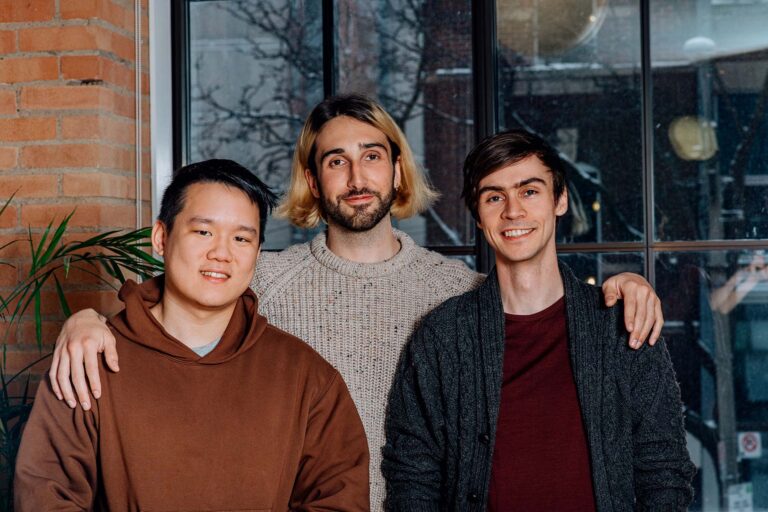
From left: Cohere co-founders Ivan Zhang, Aidan Gomez and Nick Frosst; Ubenwa CEO Charles Onu; Arteria CEO Shelby Austin; University of Ottawa professor Shelby Austin; Radical Ventures managing partner Jordan Jacobs; Untether CTO Martin Snelgrove; and University of Ottawa professor Sanja Fidler. Photo: Handout
From left: Cohere co-founders Ivan Zhang, Aidan Gomez and Nick Frosst; Ubenwa CEO Charles Onu; Arteria CEO Shelby Austin; University of Ottawa professor Shelby Austin; Radical Ventures managing partner Jordan Jacobs; Untether CTO Martin Snelgrove; and University of Ottawa professor Sanja Fidler. Photo: Handout
OTTAWA — As the world wakes up to the rewards and risks of artificial intelligence, Canada’s ecosystem is looking to build on the country’s role in creating the foundations of the modern field.
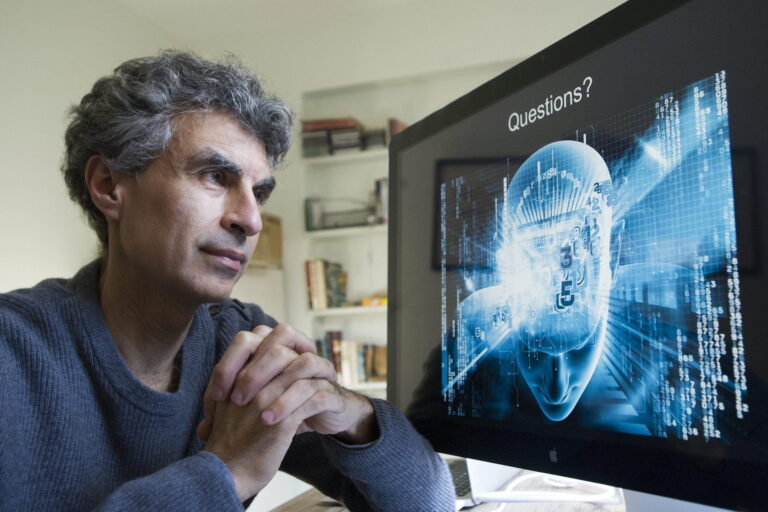
The country’s three AI pioneers remain hugely influential in the sector and much covered, as Geoffrey Hinton and Yoshua Bengio warn of the technology’s potential existential dangers, while Richard Sutton considers a new path to pursue his reinforcement learning work.
But plenty of other researchers across the country are advancing the field’s fundamentals, even as officials and experts jostle over the Liberal government’s proposed Artificial Intelligence and Data Act (AIDA). Meanwhile, entrepreneurs are bringing the technology to corporations and consumers, backed by the dollars of domain-trained investors.
Here’s a look at some of the key players shaping Canadian AI.
The founders
Aidan Gomez, Nick Frosst and Ivan Zhang (Cohere)
Canada has its very own generative AI standard bearer in Cohere. Clients use the Toronto-headquartered scale-up’s technology to add machine-made text to their products and services, like search that considers meaning rather than just keywords, or predictive copywriting.
“The technology that we’re building on is the same technology that we see emerging now, both in Big Tech as well as in some other startups like ourselves—these big language models trained on the web,” CEO Aidan Gomez said in a January interview with The Logic. “What Cohere does is really try to present them in a way to the world that is maximally accessible.”
At Google Brain, Gomez was on the team that published what’s come to be known as the “transformer paper” in 2017. The device it proposed forms the basis for the large-language and other models that underpin most current generative systems—it’s the “T” in “ChatGPT.” Gomez and Ivan Zhang went on to start Cohere in September 2019, with third co-founder Nick Frosst joining them shortly thereafter.
Related Articles

Backed from the beginning by Toronto’s Radical Ventures, the firm has raised capital from the likes of Index Ventures, Salesforce Ventures and Tiger Global. Last week, the firm announced a US$270-million Series C led by Montreal-based Inovia Capital. While ChatGPT host OpenAI has tied itself to Microsoft’s cash and compute resources, Gomez said firms don’t need to lock themselves into one tech giant and that there’s room in the market for many players.
And Cohere’s plans don’t end at language. “The most exciting project in AI is modelling the internet,” he said.
Shelby Austin (Arteria)
Years before the current hype hit, Shelby Austin was alive to AI’s potential to help automate and streamline the busywork of large enterprises.
Most of the data that corporations hold is unstructured, contained in communications or files that aren’t indexed or linked together. Toronto-based Arteria’s platform takes in information from financial-services firms’ systems, staff and clients, then produces analytics, paperwork and recommendations. A bank might use the technology to handle the documentation to onboard one customer faster, or monitor transactions with another, explained CEO Austin.
Clients include Goldman Sachs and Citi. “Everyone cares who the large banks use to help with their technological challenges,” Austin said. While Arteria’s technology could be adopted well beyond financial services, she noted that the market for AI and automation in its current target sector is projected to be worth hundreds of billions over the next decade.
Austin spun Arteria out of Deloitte, where she’d led the AI practice, in October 2020. The lawyer had joined the consulting giant, where she was highly regarded, in January 2014 when it acquired her previous startup. Detaching Arteria provided an opportunity for it to scale up and raise outside capital, she said. Local funds Golden Ventures, Information Venture Partners and StandUp Ventures joined its $11-million Series A in March 2021. Last June, Citi’s investment arm and BDC Capital co-led another round, the terms of which were not disclosed.
“All the software in the world gets replaced by AI in the next decade.”
While the company uses LLMs, model makers like OpenAI aren’t a threat to Arteria, according to Austin. “Domain-specific AI is outperforming generalist AI,” she said, noting that new applications will struggle to replicate her firm’s grasp of the workflow requirements and business processes of corporate investment banking.
Arteria now has about 65 staff. Austin said she’s in “no particular rush” to raise, even though AI is the rare subsector for which investors are willing to shell out right now. “We’re trying to build a company that will be here in 10 or 20 years, which is a different way of building than one that you plan to exit quickly,” she said.
Charles Onu (Ubenwa)
Charles Onu wants to do for babies’ cries what smartwatches have done for adults’ heart rates and oxygen saturation levels. Ubenwa, his Montreal-based startup, applies AI to analyze the infant noises for health insights.
In the early months of a child’s life, wailing isn’t just a cry for attention, said Onu. It’s an involuntary action triggered by the central nervous system. “The baby has no control over it,” he said. “They can’t choose when to cry, how much to cry, how loud to cry.” Medical conditions modify those sounds, something an experienced doctor or midwife might identify. But a parent’s untrained ear might not be able to hear what’s wrong. So last month, 11-person Ubenwa launched an app aimed at caregivers that uses its AI models to interpret those sounds.
The data to train the system—recordings and clinical annotations—came from pediatricians at five hospitals across Brazil, Canada and Nigeria. The firm and its research collaborators initially focused on brain-injury detection, and Onu said they’re planning to publish their results in a prominent scientific journal shortly.
“My research has always been at the intersection of machine learning and medicine,” Onu said. He did his PhD in machine learning at McGill University under Doina Precup, who also heads Google DeepMind’s Montreal office; she’s now an adviser to his firm. Onu launched this iteration of Ubenwa out of Mila, the research institute McGill shares with Université de Montreal.
Last July, the startup raised US$2.5 million in a pre-seed round from Radical Ventures, Mila’s Bengio and other AI researchers. “We’ve crossed the venture rubicon—there’s no going back,” he said, noting a seed round will follow soon. Ubenwa will also eventually enter regulatory- and clinical-trial processes with the U.S. Federal Drug Administration and Health Canada so that it can offer its technology in medical devices.
Arun Iyengar and Martin Snelgrove (Untether); Jim Keller (Tenstorrent)
The advent of AI has realigned the semiconductor sector, altering decades-old hierarchies among the industry’s titans and seeding a new crop of chip startups designing components specifically for machine-learning workloads. Two nascent firms a dozen kilometres apart in Toronto are among the most promising.
Semiconductor superconnector Martin Snelgrove co-founded Untether in June 2017 to create “a new generation of computer architecture that’s built around the mathematics that neural nets like to do.” (That’s the kind of AI system that’s currently proliferating.) The technology’s users include General Motors’s Canadian Technical Centre and other carmakers, which are testing the chips in autonomous-vehicle perception systems, as well as defence contractors and financial-services firms.
Snelgrove is now CTO, after Arun Iyengar, a veteran business executive, joined Untether as CEO in September 2019. The firm’s forthcoming second-generation chipset will be “the most efficient” of its peers, Iyengar told The Logic in March.
Tenstorrent is the other Toronto AI semiconductor star. AMD alumnus Ljubisa Bajic founded the firm in March 2016, but earlier this year stepped back from an operational role. Palo Alto, Calif.-based Jim Keller took over as CEO in January; the former Apple, Intel and Tesla executive was an early investor in Tenstorrent. The startup’s as-yet unlaunched Grayskull cards are designed for servers running machine-learning systems. Last month, LG Electronics licensed its technology to develop chiplets for its TV and auto products.
Developing semiconductors is a capital-intensive business, and both firms closed mega-rounds in mid-2021, with Tenstorrent raising more than US$200 million led by a Fidelity Investments subsidiary and Untether raising US$125 million co-led by Intel Capital.
The funder
Jordan Jacobs (Radical Ventures)
AI remains a rare bright spot in a gloomy global venture capital market. Radical Ventures got in early on many of the startups in the field still raising mega-rounds today. Jordan Jacobs is managing partner of the Toronto-headquartered financier, which he co-founded in June 2017.
“All the software in the world gets replaced by AI in the next decade,” he predicts; Radical plans to own a piece of many of the companies running or selling the technology for that transformation. The firm’s public portfolio includes nearly four dozen firms, mostly in Canada and the U.S. Notable names north of the border include tissue-printing firm Aspect Biosciences, Untether, autonomous-vehicle startup Waabi and quantum computing company Xanadu.
And then there’s Cohere. In mid-2017, Jacobs was running the startup Layer 6 when he read a preprint version of the “transformer paper” co-authored by Gomez. In it, he saw “the next iteration of AI.” It helped seal the decision to sell Layer 6—TD Bank acquired it in January 2018—and convert Radical into a full-time institutional fund. The firm’s investment in Cohere is a bet that LLMs will be transformative, but that there’s a big space in the market for a provider not tied to Microsoft, as OpenAI is.
Jacobs is himself prominent in Toronto’s AI ecosystem, as one of the key figures behind the creation of the Vector Institute. Radical may be headquartered in the city, but Jacobs wants to be “a global elite fund” winning the best AI deals. The firm has recently added a raft of high-profile partners, including ex-McKinsey chief Dominic Barton, pioneering researcher Fei Fei Li and former DeepMind executive Aaron Rosenberg. Radical is currently in the late stages of raising its third venture fund, with a US$550-million target.
Investors have jumped on the perceived market opportunity of AI, and some will lose money, Jacobs acknowledged. “We have the technical depth to understand what’s real,” he said, noting that Radical’s partners have experience with “how to write the software to wrap around the algorithms [and] sell it into enterprise.”
The policy shapers
Samir Chhabra, Surdas Mohit and Jaxson Khan (Government of Canada)
Innovation Minister François-Philippe Champagne introduced Bill C-27, which includes AIDA, in June 2022. But key details—including how the “high-impact” systems it targets would be identified—are left to regulations that Innovation, Science and Economic Development Canada (ISED) is proposing to draft in the two years after Parliament passes the bill.
Business executives have raised concerns that lack of specificity could stifle innovation and use of the technology. Federal officials Chhabra, Mohit and Khan didn’t write AIDA, but they’re at the forefront of the government’s efforts to explain it to stakeholders, according to industry sources.
Samir Chhabra is director general of ISED’s Marketplace Frameworks Policy Branch, charged with the upkeep of the laws and regulations in Champagne’s portfolio. He took the job last November, after stints at the federal employment and finance departments. Surdas Mohit has been acting director for AI and data policy in the branch’s privacy directorate since June 2022. Jaxson Khan, meanwhile, joined Champagne’s office as a policy advisor last March from Toronto tech startup Fable, having previously worked at Influitive and Nudge AI.
AIDA “doesn’t address the human-rights implications of algorithmic systems.”
Since AIDA was tabled, ISED staff have had “dozens” of conversations with stakeholders and fielded many questions about the regulations, said a senior government official, whom the department made available on condition they not be named. In March, it published a document to provide more detail about the law’s intent and the subsequent rulemaking process.
“We are alive to the concerns that have been raised about the bill,” the official said; the department is working to give the Liberal government’s elected representatives the ability to respond as the legislation moves through Parliament. Still, “there is increasingly broad agreement across civil society and business leaders that regulating AI should be a current priority.”
Teresa Scassa (University of Ottawa); Christelle Tessono et al.
Teressa Scassa, a University of Ottawa law professor, dubbed AIDA “statutory Mad Libs” shortly after it was tabled. While “AI is big and the risks it poses are big,” the legislation doesn’t adequately address those downsides, the oft-cited privacy expert told The Logic in April.
Passing “an empty shell of a law” and then filling it in via regulations doesn’t make the rulemaking process more agile, Scassa said. Nor will it resolve what she considers problematic provisions written into the bill, such as giving enforcement responsibility to the same minister charged with promoting the AI sector. While Scassa sits on Champagne’s AI advisory council, she did not join fellow members in April who signed an open letter urging Parliament to rapidly move AIDA forward.
A month earlier, a group of policy researchers and rights organizations published their own open letter calling for MPs to vote the legislation down. AIDA “doesn’t address the human-rights implications of algorithmic systems,” said Christelle Tessono, a Montrealer who’s currently a fellow at Princeton University’s Center for Information Technology Policy. The provisions require an individual to prove they were personally affected by an AI system, but harms can be collective, she said. And unlike the EU’s AI Act, it doesn’t outright ban uses that are “inherently discriminatory or simply flawed,” like live facial recognition technology.
Tessono helped craft the March letter with the International Civil Liberties Monitoring Group, an Ottawa-based umbrella body. The House of Commons has since sent Bill C-27—including AIDA—to committee for study, but signatories are still looking for the government to hear and address concerns. “First we want public consultation,” said Ana Brandusescu, a doctoral candidate at McGill University, calling for ISED to fund town halls across the country to discuss the proposed law in addition to more online methods.
The explorers
Jeff Clune et al. (University of British Columbia)
The federal government’s $568.8-million Pan-Canadian AI Strategy devotes a significant share of its dollars to bringing top researchers to the country and keeping them here, in part so that they can train more algorithmically conversant graduates. Jeff Clune and his UBC lab are a case in point.
The computer scientist had stints at OpenAI and Uber before the West Coast institution appointed him to its faculty in January 2021. His research focuses on advancing and analyzing neural networks, using evolutionary biology as a guide.
Clune’s UBC is working on “open-ended learning,” said Jenny Zhang, a first-year PhD student there—systems that set themselves new challenges and gain new skills, in a continuous-improvement loop. One aim is to help an AI agent “automatically update its environment in a way that’s suitable for learning in the most efficient way,” said Zhang. Her own work focuses on getting machines to innovate like people do, using the very human habit of pursuing interesting tasks and avoiding boring ones.
The lab is also exploring the technology’s downsides. “We are quite concerned about AI existential risk and how AI will impact society,” said Zhang. Clune has chronicled algorithmic systems doing unexpected—and sometimes problematic—things to meet their programmed objectives. Another researcher in the lab is working on ways to get an AI agent to explain what it is trying to achieve before taking an action, so it can be prevented from one that’s potentially dangerous.
After an undergraduate degree at Imperial College London, Zhang chose UBC for the chance to work with Clune, whose prior research matched her interests. Drawing both professor and PhD student to the country is the kind of story the AI strategy was intended to produce.
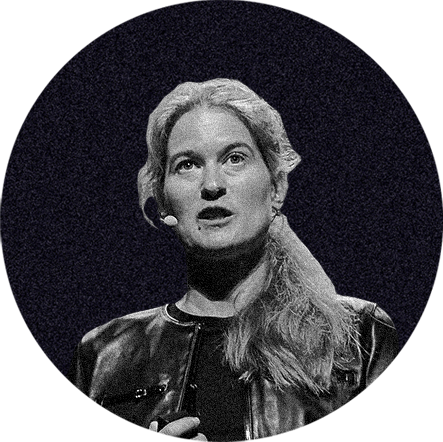
Sanja Fidler (University of Toronto)
To figure out how to deal with the things in the real world around them, machines need to know what and where they are. Sanja Fidler’s computer-vision research has long focused on such object-detection problems, even as she’s trying to make it easier for AI systems and the humans that command them to talk to one another.
After getting her PhD at the University of Ljubljana, Fidler arrived at U of T in February 2011 as a postdoctoral fellow. The following year, Hinton and two students published a seminal paper about classifying images using neural nets. “All the eyes in the world turned to Toronto at the time,” Fidler recalled in an interview with The Logic last year. She’s since helped the city attract and retain AI talent, supervising dozens of graduate and PhD students and co-founding the Vector Institute, opened in March 2017. Fidler’s team has built tools for other researchers, like a system for data annotation and labelling.
She’s also working on the industry side. In June 2018, Santa Clara, Calif.-headquartered Nvidia announced it would open a Toronto AI research lab led by Fidler, who’s now vice-president for the discipline across the company. Long a leader in graphics components for gamers, Nvidia has built a huge business in AI-specialized semiconductors. The products of the Toronto lab include a model released last September that generates 3D, animation-style renderings of buildings, animals and other objects from flat images.
Fidler said U of T’s willingness to let faculty like her hold corporate roles has contributed to the city’s deep-learning boom. “Me and my students get to be part of academia … and at the same time we get the resources of industry and the insights and learnings of what’s actually important in industry.”



Loading...
Thanks for sharing!
You have shared 5 articles this month and reached the maximum amount of shares available.
CloseThis account has reached its share limit.
If you would like to purchase a sharing license please contact The Logic support at [email protected].
CloseGift the full article!
You have gifted 0 article(s) this month and have 5 remaining.
Recipients will be able to read the full text of the article after submitting their email address. They will not have access to other articles or subscriber benefits.
Photo: Handout
Most Popular This Week




In-depth, agenda-setting reporting
Great journalism delivered straight to your inbox.
Commentary
Carmichael: Being boxed in will help Canada focus on what matters
Briefing
Rio Tinto gets nearly $165M in additional federal funds for Quebec aluminum
U.S. to lift tariffs on some Canadian products crucial to Maine: Collins
Carney warns of tech dependence after Starlink disruptions in Ukraine
Best business newsletter in Canada
Get up to speed in minutes with insights and analysis on the most important stories of the day, every weekday.
Exclusive events
See the bigger picture with reporters and industry experts in subscriber-exclusive events.
Membership in The Logic Council
Membership provides access to our popular Slack channel, participation in subscriber surveys and invitations to exclusive events with our journalists and special guests.






