VANCOUVER — Elizabeth Grant, who founded her eponymous skincare company almost 75 years ago, turned to The Shopping Channel to grow sales in the late 90s. Now, her granddaughter, the company’s vice-president, also sells Elizabeth Grant beauty products live, but through the efficient, one-stop medium of an internet livestream rather than the distinctly 20th-century combination of TV and telephone.
Skip to content

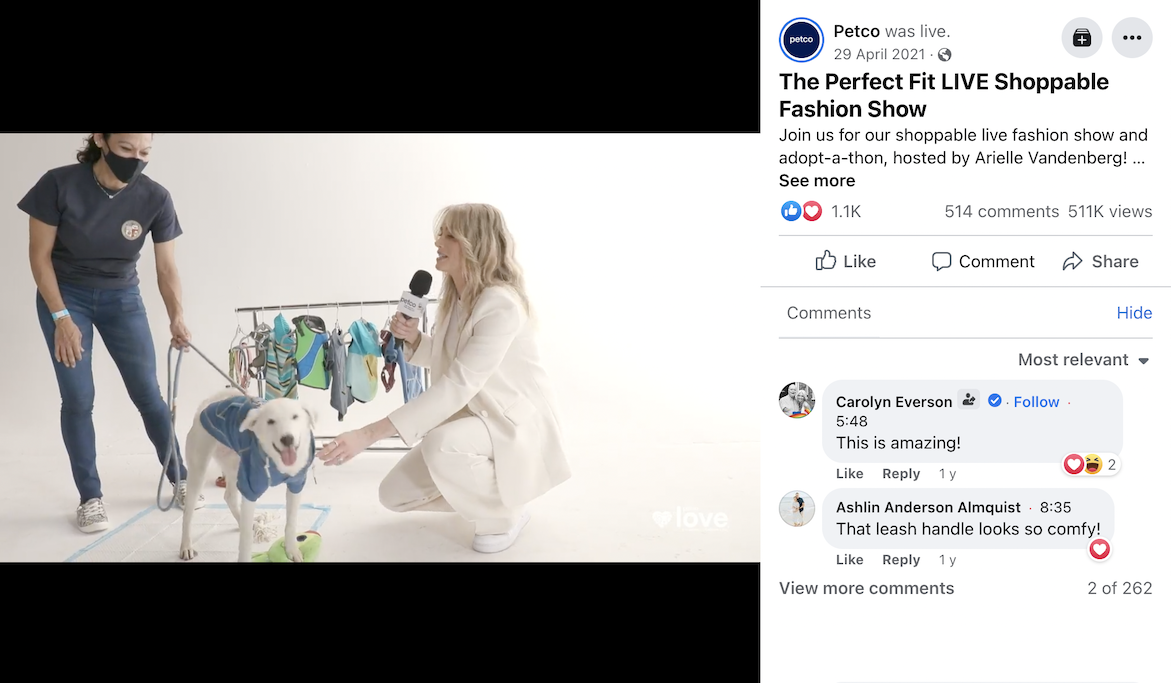 Screenshot of The Perfect Show live shoppable fashion show. Photo: Petco/Handout

The Big Read
Buying into the live-shopping phenomenon
Livestreamed shopping events have been a feature of the retail landscape in Asian countries for years. Will the model click with North Americans?
Live-shopping events have been a feature of the retail landscape in Asian countries for years. Now, North America has taken notice of its immense global potential. Photo: Handout. Photo illustration by The Logic
Live-shopping events have been a feature of the retail landscape in Asian countries for years. Now, North America has taken notice of its immense global potential. Photo: Handout. Photo illustration by The Logic
VANCOUVER — Elizabeth Grant, who founded her eponymous skincare company almost 75 years ago, turned to The Shopping Channel to grow sales in the late 90s. Now, her granddaughter, the company’s vice-president, also sells Elizabeth Grant beauty products live, but through the efficient, one-stop medium of an internet livestream rather than the distinctly 20th-century combination of TV and telephone.
“In the middle of the pandemic, we saw the opportunity and we jumped on,” Margot Grant-Witz told The Logic a day before one of the skincare firm’s pre-holiday live-shopping events. “It’s been going on in China for years and it is such a powerhouse … that it’s funny that it took so long to come over to the Western Hemisphere.”
Talking Points
- Live shopping, where people can tune into a livestream and purchase featured products within the same tab, has grown in popularity in China and other Asian countries after Alibaba debuted Taobao Live in 2016
- Retail brands, entrepreneurs and venture capitalists in North America have taken notice of the model’s immense global potential
Live shopping, where people can tune into a livestream and purchase products featured without leaving that stream, started to grow in popularity in Asian countries after Alibaba debuted Taobao Live in May 2016. Between 2017 and 2019, the gross merchandise value (GMV) sold through the tech giant’s livestream commerce channel grew more than 150 per cent annually, according to Alibaba. In 2020, it was creating US$61 billion in GMV.
But while brands, influencers and consumers in China and other Asian countries have embraced live shopping, it remains in its infancy in North America, said Eric Bellomo, an emerging-technology analyst with PitchBook. The gap reflects differences between the regions in the development of technological culture. Not only were Chinese consumers quick to buy smartphones, they’ve been fast to embrace online shopping, far outpacing their American counterparts in adopting mobile payments.
Meanwhile, superapps—ones that consolidate multiple functions into one central platform—proliferated in China. WeChat, for example, is best known as a messaging app, yet also functions as a digital wallet, newsfeed and portal to ride-hailing and other services. “So a consumer really doesn’t have to leave their family group chat to go watch a livestream shopping experience,” said Bellomo. “That native superapp, I think it’s one of the biggest difference-makers.”
Related Articles


Due in part to regulatory scrutiny, superapps have been slower to gain footing in North America. The idea behind this vigilance is to curb monopolistic activity on the part of Big Tech. But the relative absence of such apps makes it harder for new business models to gain momentum, according to a PitchBook report. Investors must be convinced that Western consumers will shop online in droves, and that a livestream platform can muster enough popularity to overcome the downsides of fragmentation.
The potential for live shopping outside Asia, though, is huge. Sales from the sector could account for up to 20 per cent of all e-commerce by 2026, according to an analysis by global consulting firm McKinsey & Company. That opportunity spurred interest from entrepreneurs, venture capitalists and retail brands looking to cash in on what they’re betting is the future of retail.
Elizabeth Grant runs many of its events using Livescale, which launched in 2016 as a livestreaming company that helped content creators stream video simultaneously on Facebook, YouTube and other platforms. Its co-founder, Virgile Ollivier, shifted the firm’s focus to live shopping after discovering the popular e-commerce strategy in 2019 while attending a family reunion with relatives from Japan. The company leveraged its existing platform, which allowed its customers to host multiple, high-traffic livestream events, to build one that helps sellers build and operate their own live-shopping events. Customers subscribe to its live-shopping platform, paying an additional fee depending on the size of their audience. Livescale also earns revenue from advising services, including strategy and production.
Sometimes things will go wrong—Grant-Witz’s dog will bark, or she’ll drop a jar on the floor. But that’s part of the spontaneity of livestreaming. “There’s a humanity to it,” she says.
The Montreal-based startup is one of several North American entrants into the space. Whatnot, Firework, Verishop and Flip, all based in California, are among the biggest North American names, said Bellomo, with each one offering a slightly different focus. Ollivier knows he has competition, but believes his firm has first-mover advantage, having learned the technical models used in Asia and how to provide advisory services to clients.
Since its strategic shift, Livescale has raised a $2.5-million seed round in February 2021, according to PitchBook. In addition to Elizabeth Grant, its clients have included L’Oréal, which Ollivier called an “early adopter,” as well as Vans, jewelry-maker Ana Luisa and Montreal restaurant Knuckles Cantine et Vins.
On a Wednesday evening in November, Grant-Witz sat in her kitchen, a white backdrop with plants and beauty products strategically placed behind her. The so-called get-into-your-skin show “is a fabulous opportunity because you get to shop right here, right now, with us,” said Grant-Witz, wearing a black shirt, her pink lipstick adding a pop of colour as she introduced viewers to the experience.
Grant-Witz quickly explained how to purchase products, though the process is intuitive. The lower quarter of the screen shows product names, images and prices, with a “buy” button beside each one. If a customer clicks on a product, a more in-depth description appears on the right-hand side of the screen. They can then choose to add the product to their cart or buy it immediately. The rest is much like any online shopping transaction: they fill in their shipping information, review the order and add a payment method. But they do it all without leaving the livestream, which continues to play in the same tab.
To Grant-Witz, the key to a successful show is leaning into the live, interactive nature of the medium, as opposed to the more fixed constraints of selling on TV without audience input. “We have a lot more fun. I think there’s a lot less sell and a lot more connect,” she said of the difference between the two. Viewers typically type questions into a chatbox during the stream, which Grant-Witz or her co-host readily answer, even if that dialogue changes the direction of the show. Sometimes things will go wrong—her dog will bark, or she’ll drop a jar on the floor. But that’s part of the spontaneity of livestreaming. “There’s a humility to it,” she said. “There’s a humanity to it.”
Grant-Witz knows she needs to give viewers a reason to show up, so the company offers specials during its shows—discounts, or product bundles—that can’t be found on its website: “Everything is only good for that one hour. Once it’s gone, it’s gone,” she said.
Like many other brands, Elizabeth Grant turned to live shopping as COVID-19 spread across North America in March 2020 and stay-at-home orders prompted more people to shop online. For Livescale, the difference amounted to 40 times more inbound leads—that is, potential customers making cold inquiries— in the first three months of the pandemic.
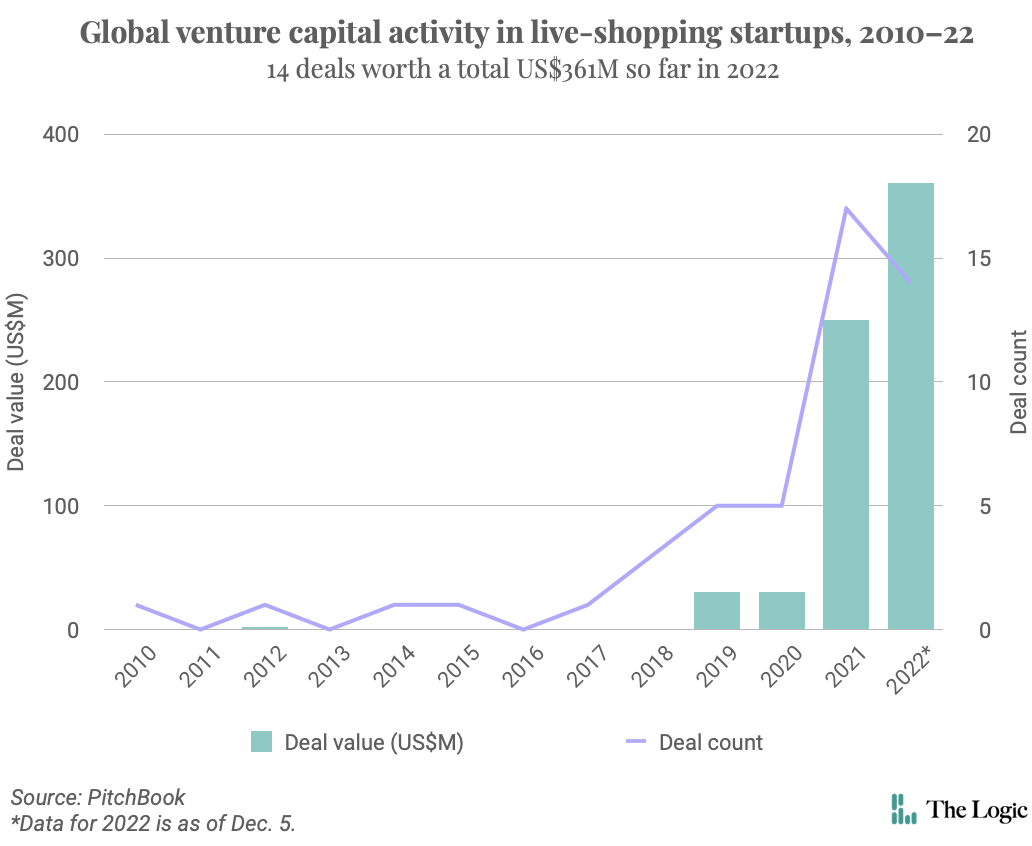
The first full year of the pandemic was a record one for venture-capital investment in the sector, according to PitchBook data. In 2021, 17 deals in live-streaming startups around the world attracted a total of nearly US$250 million, up from US$30.5 million across five deals the year prior.
Livescale had been looking to raise a $10-million round, but decided to postpone until next year, as soaring inflation, interest rate hikes and Russia’s ongoing war in Ukraine have changed the landscape for VC investment. The current environment is holding down valuations, said Ollivier, and he believes conditions will improve next year. In the meantime, he added, Livescale achieved profitability in the first summer of the pandemic—faster than expected—by adapting its strategy to offer strategic advice as another source of revenue. “So we are not in a hurry,” he said.
The brands experimenting with Livescale and other live shopping services are seeing some success, too. Some of Livescale’s clients now make six to eight per cent of their total GMV through live shopping, said Ollivier. Grant-Witz, whose company uses the platform as well as others, said live shopping has grown from one or two per cent of Elizabeth Grant’s e-commerce revenue to 10 per cent. While she’s aiming to have it bring in $1 million annually within the next several years, she hopes the firm’s live-shopping revenue will one day match the annual $22 million its shopping-channels business generates.
For now, the brands in North America incorporating live shopping into their strategies are mostly major, established ones, said Bellomo. Petco hosted an animal fashion show where the models were rescue pups available for adoption. Lowe’s, the hardware chain, has held online workshops where DIY-types can purchase tools and materials while they learn. Lululemon paid US$500-million to acquire connected-fitness device Mirror, through which it plans to sell its apparel while customers watch livestreams of fitness classes. Much of the potential, though, lies below these larger players on the retail hierarchy. “There’s a massive long tail of small merchants who aren’t really diving in headfirst to this experience,” he said.
When the pandemic first hit, many smaller retailers had little or nothing in the way of e-commerce offerings, and had to catch up. They were too focused on moving online or optimizing their e-commerce to tackle new frontiers such as live shopping, Bellomo said.
Meanwhile, he noted, some of the Big Tech players that have entered the space in North America have faltered—most notably TikTok. The social media firm’s U.K. live shopping venture struggled and the Financial Times reported in July that the company was abandoning a planned European expansion. It later planned a U.S. launch, which happened with little fanfare. Facebook announced this summer it would shut down its live-shopping feature on Oct. 1, focusing on its video tool reels instead. “Some of the early reports just haven’t been home runs out of the gate,” Bellomo said.
One obstacle to adoption in North America, he added, is the smaller market. In China, sector-wide live-shopping GMV can amount to hundreds of billions of dollars. In 2020, during the shopping frenzy that is Singles’ Day in China, Taobao Live posted roughly US$7.5 billion in transactions in just half an hour during a presale campaign. By comparison, Amazon’s “biggest ever” Prime Day sale brought in nearly US$12 billion last July over two days. “We’re just talking about different scales here,” Bellomo said.
Still, enthusiasm to see live shopping grow outside of Asia hasn’t dampened. This year, by Dec. 5, there had been 14 venture capital deals worth a total US$361 million for live shopping startups, according to PitchBook. The largest to date is US$260 million into Whatnot—a Series D co-led by DST Global and Alphabet’s independent growth fund, CapitalG.
Last month, Pinterest launched its live-shopping feature, Pinterest TV, in Canada after a 2021 U.S. rollout. Iram Blajchman, founder and CEO of Maverick Sales, a Toronto-based firm that helps companies grow revenue, plans next to invest in supporting Maverick’s clients with live-shopping events. The companies in Canada best positioned for live shopping, he said, are those that must educate consumers about purchases: skincare, cosmetics and tool brands, for example.
Blajchman wouldn’t predict when the experience will become mainstream outside of Asia. But consumers, he noted, want a convenient way to learn about the items that interest them, and live shopping offers that. “Because it solves the consumer pain points,” he said, “it inevitably will become a meaningful contributor in the commercial environment.”



Loading...
Thanks for sharing!
You have shared 5 articles this month and reached the maximum amount of shares available.
CloseThis account has reached its share limit.
If you would like to purchase a sharing license please contact The Logic support at [email protected].
CloseGift the full article!
You have gifted 0 article(s) this month and have 5 remaining.
Recipients will be able to read the full text of the article after submitting their email address. They will not have access to other articles or subscriber benefits.
Photo: Handout. Photo illustration by The Logic
Screenshot of The Perfect Show live shoppable fashion show.
Most Popular This Week




In-depth, agenda-setting reporting
Great journalism delivered straight to your inbox.
Commentary
Carmichael: Canadian ignorance about India is a strategic weakness
Briefing
Aritzia shares pop after earnings rise 204%
First Nation in Alberta goes to court over fast-tracked oil pipeline
Chinese EV maker Geely Auto Group to launch in Canadian market in 2027
Best business newsletter in Canada
Get up to speed in minutes with insights and analysis on the most important stories of the day, every weekday.
Exclusive events
See the bigger picture with reporters and industry experts in subscriber-exclusive events.
Membership in The Logic Council
Membership provides access to our popular Slack channel, participation in subscriber surveys and invitations to exclusive events with our journalists and special guests.





