Listen Now
0:00
The federal government is still assessing how the Democrats’ success in the U.S. midterm elections will affect its dealings with Washington, according to Jean Charest, a member of Prime Minister Mark Carney’s advisory committee on Canada-U.S. trade relations.
“I don’t think we know yet how this new outcome of the midterms will affect the negotiating position of the Americans,” the former Quebec premier said Tuesday in an interview with The Logic, although he said he thinks the White House wants to secure a deal.
Canada’s chief U.S. trade negotiator, Janice Charette, warned a parliamentary committee last Tuesday that Canada may no longer be able to secure fully tariff-free access to the U.S. market.
Talking Points
- Ottawa is still evaluating how the Democrats’ gains in the U.S. midterm elections will affect trade negotiations, Jean Charest said in an interview, warning that any tariffs Canada agrees to could remain in place even under a future Democratic president
- Charest warned Ottawa may need to provide COVID-19-style financial relief to keep some tariff-hit companies afloat
Two days later, the advisory committee on Canada-U.S. economic relations met virtually for the first time since the Nov. 3 midterms. After the meeting, Canada-U.S. Trade Minister Dominic LeBlanc said Ottawa is seeking an interim deal to lower the Section 232 tariffs that apply to sectors such as steel, aluminum, autos and lumber and eliminate the Section 338 tariffs on nearly $28 billion worth of Canadian goods that came into effect in August after talks with the White House collapsed.
Ottawa had made some progress in negotiations, but not enough to reach a deal, LeBlanc had said, adding that some sectoral tariffs were likely to remain.
Democratic U.S. Senator Chris Coons has also recently pushed Canada to pursue an interim trade deal with the Trump administration before seeking a longer-term solution once the new Democrat-controlled Congress is sworn in next January.
Related Articles
Charest said there is a risk to securing a deal that accepts tariffs on Canadian goods, despite the duty-free access that is meant to come through the Canada-United States-Mexico Agreement (CUSMA).
“All of us who have been involved in these negotiations believe that a new administration, Democrat or not, would maintain whatever tariffs were [agreed upon],” Charest said. He pointed to former U.S. president Joe Biden’s decision to retain some tariffs imposed during Trump’s first term and Washington’s growing reliance on tariff revenue amid mounting government debt.
“Even if we reach a deal today, what stops President Trump from reneging six months later? That’s what he’s done on CUSMA” he said.
While Ottawa weighs its options, a more immediate threat looms over Canada’s automotive industry: the prospect of higher auto tariffs. In August, Trump threatened to double those duties to 50 per cent beginning Jan. 1, while extending them to auto parts. The president has not made that move official through an executive order.
The proposed tariffs would be a “disaster for the American automotive industry,” Charest said, noting that manufacturers rely heavily on parts moving across borders and often keep only enough inventory to last 24 to 48 hours.
Ottawa is trying to impress upon the Trump administration the extent of the damage the tariffs would inflict on its own economy, he said, but American automotive executives and unions need to put more pressure on the White House.
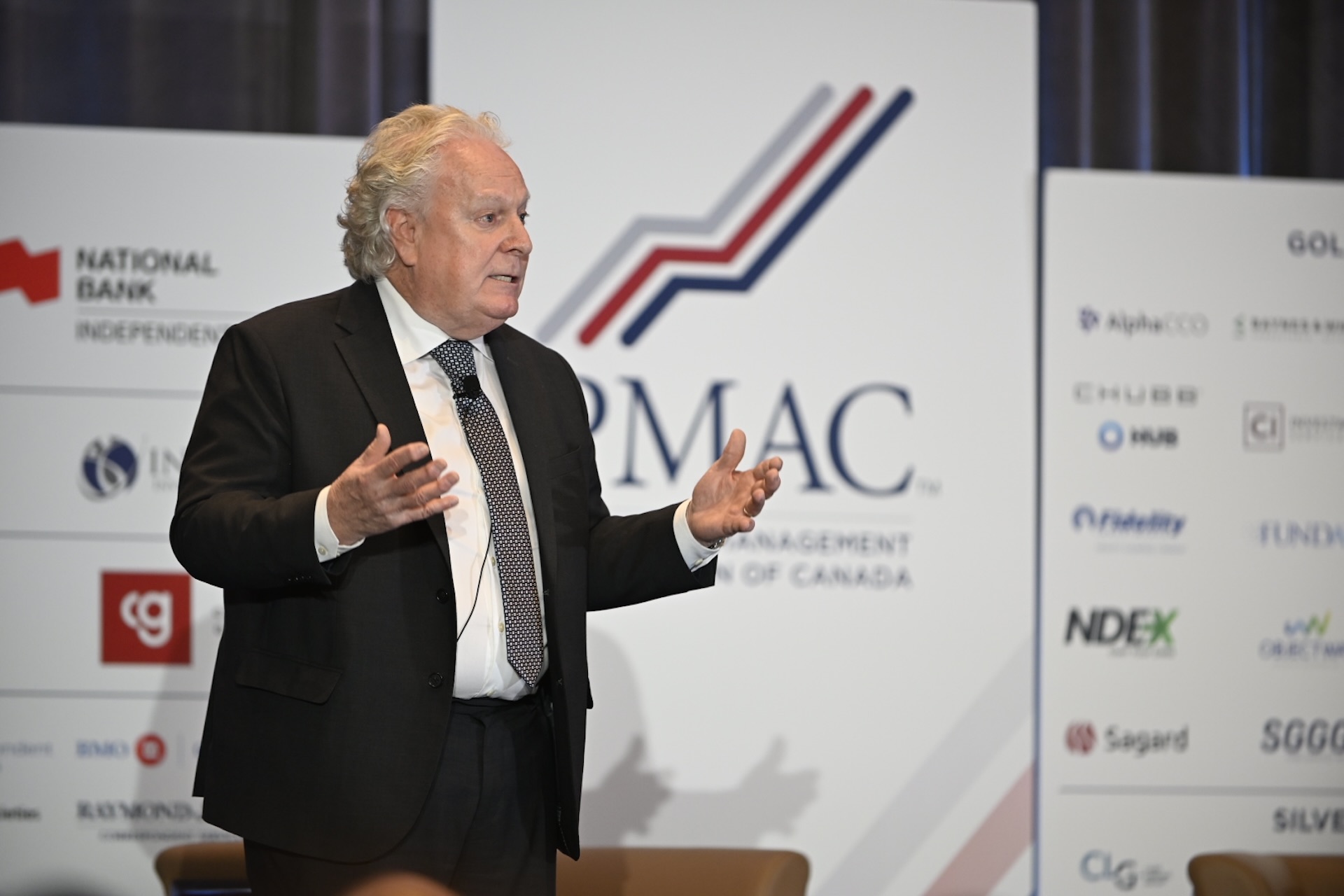
Meanwhile, some American businesses have found ways to use tariffs to their advantage. Speaking at a Portfolio Management Association of Canada conference earlier Tuesday, Charest said U.S. companies are increasingly using their influence in Washington to undermine Canadian competitors.
“You can actually identify your Canadian competitor and wipe them out with a tariff, and then buy them,” he said. “We are seeing a trend of that happening right now, and I speak from experience,” he added, without specifying which companies were affected.
He also cautioned against interpreting Canada’s strong foreign direct investment figures as a sign of economic strength, saying American acquisitions of Canadian businesses account for part of that investment. The value of U.S. acquisitions of Canadian companies announced in the first half of 2026 nearly matched that of all of 2025, according to Bloomberg data compiled by Torys.
But for some tariff-hit businesses, the more immediate concern is survival. Charest said some of his Quebec-based law firm’s clients won’t survive another three months under 50 per cent tariffs. If Ottawa chooses to hold out for a favourable trade agreement, he said, it will have to provide another round of financial support—beyond loans—as it did in the COVID-19 pandemic.
That is one reason Charest said it can be risky to wait for the Democrats.
“Companies can close. They can go. They can be gone. And once they close, they’re not coming back. So we’re faced with a dilemma for which there is no good answer.”